
Which Mug Heights Trigger Dishwasher Clearance Issues in US/EU Models?
Your customer loves the mug. They toss it in the dishwasher. It doesn't fit. You just lost a repeat order. This happens more than you think.
A mug triggers dishwasher clearance issues when it exceeds the top rack height limit of the dishwasher. In most US models, that limit sits between 6 and 8 inches. In EU models, it is often even tighter. Any mug taller than 8.5 inches risks not fitting at all.
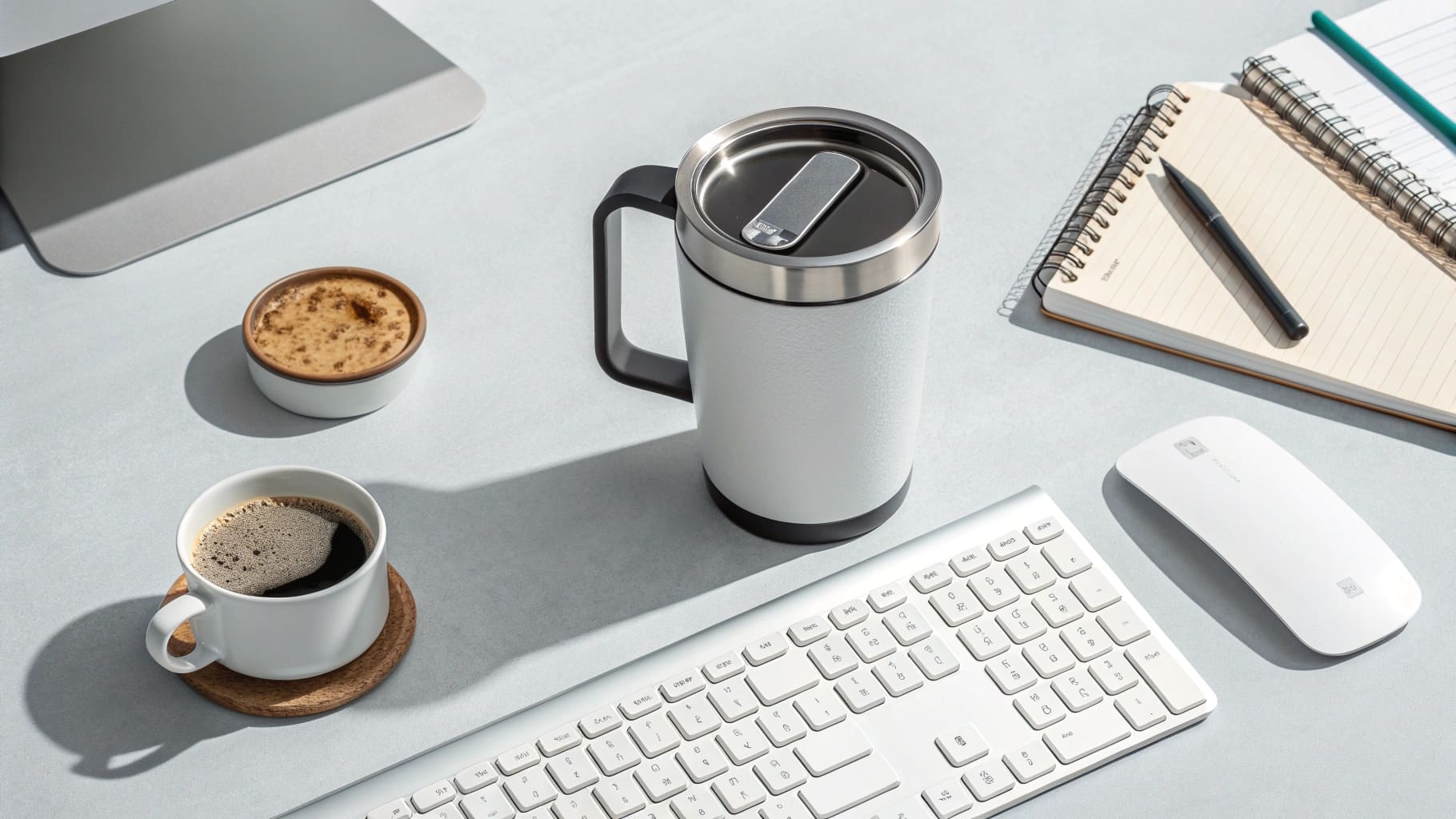
I have seen this problem kill product lines. A brand spends months developing a "dishwasher-safe" stainless steel mug, prints it on the packaging, and ships it to retailers. Then the returns start. Not because the material failed. Because the mug physically does not fit inside the dishwasher. The label says safe. The product says otherwise. That gap is exactly what I want to walk you through here.
Which Mugs Are Dishwasher Safe?
Most buyers assume "dishwasher safe" is about the material. It is not just that. Dimensional fit matters just as much, and most suppliers never mention it.
A mug is dishwasher safe when it meets two conditions. First, the material must handle heat, water pressure, and detergent without degrading. Second, the mug must physically fit inside a standard dishwasher rack without blocking the spray arm or the door. Both conditions must be true at the same time.

What Makes a Material Dishwasher Safe?
Material safety is the part most suppliers get right. For stainless steel mugs, 304 and 316 grade steel are the standard choices. Both grades resist rust, handle high water temperatures, and do not react with dishwasher detergent.1 The structural integrity of the mug stays intact across hundreds of wash cycles.
The table below shows how 304 and 316 stainless steel compare on the key properties that matter in a dishwasher environment.
| Property | 304 Stainless Steel | 316 Stainless Steel |
|---|---|---|
| Heat Resistance | Up to 870°C | Up to 870°C |
| Rust Resistance | Good | Excellent |
| Detergent Resistance | Good | Excellent |
| Common Use Case | Standard household mugs | Marine, medical, premium mugs |
| Cost | Lower | Higher |
For most B2B buyers sourcing mugs for office or household use, 304 stainless steel is sufficient. If your customer base is in coastal regions or uses particularly strong cleaning agents, 316 is worth the price difference. But here is what I want to be clear about: passing the material test does not guarantee the mug fits in the machine. That is a completely separate question, and one that far fewer suppliers address proactively.
What Is Dishwasher Cutout Height?
Most procurement officers I speak with have never been told what dishwasher cutout height actually means. That is a problem. It is the single measurement that decides whether your product works in a customer's home or not.
Dishwasher cutout height refers to the vertical space available inside a dishwasher rack for an item to sit upright. It is not the total interior height of the machine. It is the usable clearance between the rack surface and the inner roof or the rack above it.

How Much Clearance Do US and EU Dishwashers Actually Have?
This is where the numbers matter. US and EU dishwashers are built to different spatial standards. Kitchen layouts in Europe are generally more compact.2 That drives appliance manufacturers to design tighter interiors. The result is that a mug that fits in a US dishwasher may not fit in a European one.
The table below gives you a practical reference for the clearance ranges you are working with.
| Market | Dishwasher Type | Typical Top Rack Clearance |
|---|---|---|
| United States | Standard full-size | 7 to 8 inches |
| United States | Compact / apartment | 6 to 7 inches |
| European Union | Standard 60cm width | 6.5 to 7.5 inches |
| European Union | Slimline 45cm width | 5.5 to 6.5 inches |
Based on these numbers, a mug that sits at or below 8.5 inches in total height will fit in the vast majority of standard US dishwashers. For EU compatibility, the safer ceiling is closer to 7 inches. If you are sourcing mugs that need to sell well in both markets, I recommend targeting a product height between 6 and 7.5 inches. This range gives your end customer the highest chance of a clean, conflict-free dishwasher experience.
I started specifying this height range to my own clients a few years ago after one of my North American buyers came back with complaints about a well-reviewed tumbler line. The mugs looked great. The material was solid. But a significant portion of their customers had compact apartment dishwashers, and the 9-inch height made the mugs impossible to wash on the top rack. That one number changed everything about how I communicate product specs.
How to Tell If a Ceramic Mug Is Dishwasher Safe?
Most people ask this question about ceramic because ceramic mugs are everywhere. But the logic applies to any mug material. The answer starts with what is on the mug, not just what it is made of.
A ceramic mug is dishwasher safe when it carries a confirmed symbol or text on the base, and when that claim has been tested against a recognized standard.3 The symbol or text alone is not enough. It needs to be backed by real testing.

What Symbols and Certifications Should You Look For?
For B2B buyers, taking a supplier's word for "dishwasher safe" without documentation is a risk. Returns and customer complaints trace back to you, not the factory. Knowing what legitimate certification looks like protects your business.
The table below covers the main indicators of verified dishwasher safety for mugs sold in the US and EU.
| Indicator | What It Means | Where It Appears |
|---|---|---|
| Dishwasher-safe symbol (plates and water drops) | Item tested for dishwasher use | Mug base or packaging |
| FDA food contact compliance | Material safe for food and beverage contact | Supplier documentation |
| LFGB (Germany) | European food contact safety standard | Supplier certification |
| CA Prop 65 compliance | Restricted substances standard for California market | Product spec sheet |
| NSF certification | Independent safety and sanitation standard | Packaging or spec sheet |
For stainless steel mugs specifically, the physical symbol matters less than the paperwork. When I work with buyers who are distributing in North America, I always recommend asking for written documentation, not just a verbal confirmation. Certification fraud is real. I have heard from buyers who received certificates that looked legitimate but could not be verified against the issuing body's records. The safe approach is to request the certificate number and check it directly with the issuing organization.
One more thing worth saying clearly: a mug that carries a dishwasher-safe symbol but stands 10 inches tall is not truly dishwasher safe in practice. The symbol addresses material. The dimensions address real-world usability. Both need to be confirmed before you commit to a production order.
Conclusion
Dishwasher compatibility is about two things: material that survives the cycle and dimensions that fit the machine. Check both before you order.
-
"[PDF] Studies Related to Microbially Induced Corrosion of Stainless Steel ...", https://openprairie.sdstate.edu/cgi/viewcontent.cgi?article=2758&context=etd. Metallurgical references describe 304 and 316 stainless steels as corrosion-resistant austenitic alloys, with 316 offering improved chloride resistance; this supports their general resistance to hot-water and detergent environments in dishwashing, subject to concentration and exposure limits. Evidence role: mechanism; source type: research. Supports: 304 and 316 stainless steels resist corrosion and tolerate typical dishwasher heat and detergent exposure.. Scope note: Resistance does not mean immunity: harsh chlorides, prolonged exposure, or abrasive cleaners can still damage stainless steel surfaces. ↩
-
"Which dishwasher? Dishwasher Buying Guide - Bosch", https://www.bosch-home.jp/en/products/dishwashers/buying-guide. Comparative housing and appliance-size data show that European kitchens and appliances often use smaller standardized footprints, including 60 cm and 45 cm dishwasher formats; this supports the contextual explanation for tighter appliance design, not a direct measurement of every kitchen. Evidence role: historical_context; source type: institution. Supports: European kitchen layouts are generally more compact than U.S. layouts, influencing appliance dimensions.. Scope note: Regional averages mask substantial variation between countries, housing types, and premium kitchen installations. ↩
-
"EN 12875-4:2006 - Rapid Test for Mechanical Dishwashing ...", https://standards.iteh.ai/catalog/standards/cen/1f5417d3-9327-4d8f-906f-d4534e2d5fd1/en-12875-4-2006?srsltid=AfmBOorGl843xRkm5G64XO9T-tmb7QfUVSWvhbWgYQ_V4CAHwzOuLGNj. Standards for domestic ware, including dishwasher-resistance testing such as EN 12875, provide methods for assessing whether decorated or ceramic articles withstand repeated dishwashing; this supports the need for test-backed labeling rather than relying only on a symbol. Evidence role: expert_consensus; source type: institution. Supports: A ceramic mug's dishwasher-safe claim should be backed by recognized testing, not merely a printed symbol.. Scope note: Dishwasher-safe symbols are not uniformly regulated worldwide, so the evidentiary strength depends on the specific test method and jurisdiction. ↩
