
What AQL Should You Set for Lid Seals on Travel Coffee Mugs to Prevent Leaks?
One leaking mug can cost you far more than you think. Returns, bad reviews, lost customers — all from a seal that failed. Here is what you need to know.
AQL 1.5 is the standard most experienced B2B buyers use for lid seals on travel coffee mugs1. For critical defects like leaks, anything higher than 1.5 puts too many defective units into the hands of your end customers. This number is the line between protecting your brand and gambling with it.

Most buyers I talk to focus on price and lead time. They treat AQL as a checkbox. But when 10,000 mugs land in your warehouse and 250 of them leak, no price discount covers that damage. The real cost is not the replacement shipment. The real cost is the customer who never comes back and the review that lives online forever. That is what this post is about.
How to Fix a Leaky Travel Mug Lid?
You ordered a batch. Some lids leak. Your customers are angry. What do you do now?
The three most common causes of a leaking travel mug lid are a worn silicone seal, debris stuck in the seal groove, and a misaligned lid thread. Each one has a fix, but none of them should have reached your customer in the first place.
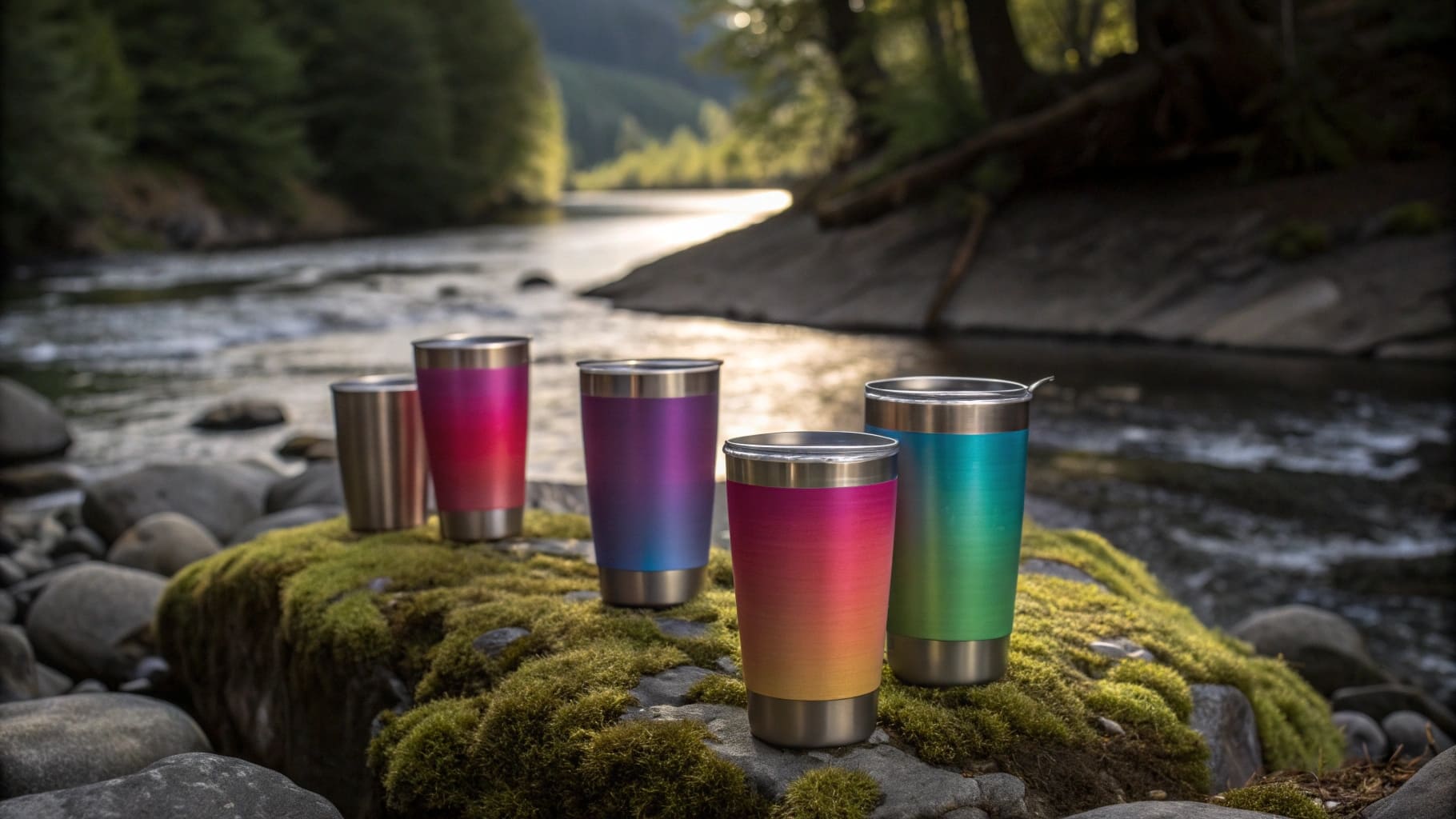
Let me break this down so you understand what is actually happening inside the lid.
What Causes the Leak?
A travel mug lid has one job: keep liquid inside. When it fails, the failure almost always comes from one of these three places.
| Failure Point | What Happens | Short-Term Fix |
|---|---|---|
| Silicone seal wear | Seal loses shape after repeated washing | Replace the silicone seal ring |
| Debris in groove | Residue breaks the seal contact | Clean groove with a small brush |
| Lid thread misalignment | Lid sits crooked, seal does not compress evenly | Re-seat the lid and check threading |
Each of these fixes is something your end customer can do at home. But here is the honest truth: if they are doing this, your quality control failed before the product left the factory. A well-made silicone seal, placed correctly during assembly, does not fail after a few weeks of normal use. When customers Google "how to fix a leaky travel mug lid," it means defective products reached the market. That trail leads back to the factory — and to the AQL level you accepted.
I have seen buyers accept AQL 2.5 on lid seals to save a small amount on inspection costs. For a 10,000-unit order, that decision can send 250 leaking mugs to end customers. The inspection saving is maybe a few hundred dollars. The return shipping, replacement units, and lost repeat business can run into thousands.
This is why I always tell buyers: treat lid seal leaks as a critical defect. Assign them AQL 1.5 or lower. Do not group them with minor cosmetic issues.
Is Yeti Travel Mug Leakproof?
Yeti markets itself as leakproof. But is any travel mug truly leakproof, and what does that mean for your sourcing decisions?
Yeti uses precision-molded silicone seals and multi-point quality checks2. Their lids perform well under normal use. But even Yeti mugs can leak if the seal degrades over time or if the lid is not maintained properly.
This matters to you as a B2B buyer for one reason: your customers compare your product to Yeti. They expect the same performance. If your mug leaks and a Yeti does not, your brand loses.
What Makes a Lid Seal Hold Up Over Time?
Yeti does not have a secret material. They have a system. That system includes tighter tolerances, better silicone grades, and consistent assembly checks. You can ask for the same standards from your supplier.
Here is what to look for when you evaluate lid seal quality from any factory:
| Quality Factor | What to Check | Why It Matters |
|---|---|---|
| Silicone grade | Food-grade, FDA or LFGB certified | Low-grade silicone deforms faster3 |
| Seal thickness tolerance | Ask for the spec sheet and measure samples | Thin spots cause uneven compression |
| Assembly process | Ask if seals are hand-placed or machine-placed | Machine placement is more consistent |
| Aging test | Ask for wash cycle test data (50+ cycles minimum)4 | Seals must hold after repeated use |
I always request a seal aging test when I work with buyers on large orders. A silicone seal that passes a static leak test in the factory does not always hold up after 60 dishwasher cycles5. That gap between the factory test and real-world use is where most lid failures come from.
Yeti's consistency comes from controlling that gap. You can do the same by adding aging tests to your product specification before production starts. If your supplier cannot provide wash cycle test data, that is a red flag worth paying attention to.
How to Fix a Leaking Coffee Mug?
Your end customer bought your mug. It leaks. They search for a fix. What do they find, and what does that tell you?
The most common DIY fixes for a leaking coffee mug are replacing the seal ring, cleaning the groove, and checking if the lid threads are damaged. These are simple fixes. But they point to a production problem that should have been caught earlier.

As a B2B buyer, you have more control over this than you think. The fix starts at the specification stage, not the customer service stage.
How to Stop the Problem Before It Starts
Here is how I look at this. Every consumer searching "how to fix a leaking coffee mug" is a symptom. The cause is upstream. It is either a material issue, an assembly issue, or an AQL level that was too loose.
| Root Cause | Where It Starts | What to Do Before Production |
|---|---|---|
| Poor silicone quality | Material sourcing at the factory | Request material certification (FDA/LFGB) |
| Inconsistent seal placement | Assembly line | Ask for assembly process documentation |
| AQL too loose | Inspection standard | Set AQL 1.5 for lid seal leaks as a critical defect |
| No aging requirement | Product specification | Add wash cycle test (minimum 50 cycles) to your spec |
I have had buyers come to me after a bad batch. The first question I ask is: what was your AQL for the lid seal? Most of the time, they either did not set one or they accepted AQL 2.5 as a default. Both of those decisions let defective units through.
The buyers who never have this problem are the ones who set AQL 1.5 for lid seals from the start, add a wash cycle aging test to the spec, and ask for silicone material certifications before production begins. They are not lucky. They are specific.
When you are specific with your supplier, you take away the guesswork. The factory knows exactly what you will reject. That changes how they build your product.
Conclusion
Set AQL 1.5 for lid seal leaks. Add aging tests. Require silicone certifications. Doing this upfront costs far less than handling returns later.
-
"Acceptable Quality Level, AQL Sampling Chart and Calculator - QIMA", https://www.qima.com/aql-acceptable-quality-limit. ISO 2859-1 (Sampling procedures for inspection by attributes) defines acceptable quality limits and provides the framework within which AQL 1.5 is classified as appropriate for defect categories where functional failure is likely; the standard does not prescribe AQL levels by product type, so application to lid seals specifically reflects industry practice rather than a codified requirement. Evidence role: definition; source type: institution. Supports: The ISO 2859-1 standard defines AQL levels and their application to critical, major, and minor defects in product inspection. Scope note: The standard defines the AQL framework but does not mandate AQL 1.5 for lid seals specifically; the claim of industry consensus is not directly verifiable from the standard alone. ↩
-
"YETI Manufacturing FAQ", https://www.yeti.com/manufacturing-faq.html. Yeti's published product specifications describe their lids as leak-resistant and engineered for durability; the specific manufacturing details cited in the article — precision molding and multi-point quality checks — are not publicly documented in technical detail and represent an inference from product performance claims rather than verified process documentation. Evidence role: case_reference; source type: other. Supports: Yeti's product documentation and marketing materials describe their lids as engineered for leak resistance, implying controlled manufacturing tolerances for seal components. Scope note: Yeti does not publicly disclose detailed manufacturing process specifications; the claims about their production methods cannot be independently verified from open sources. ↩
-
"Food Grade Silicone Rubber UK: FDA Approved", https://deltarubber.co.uk/food-grade-silicone-rubber/. Technical literature on silicone elastomers indicates that compression set — the tendency of a seal to permanently deform under sustained load — is influenced by polymer purity, crosslink density, and filler composition, with lower-grade formulations typically exhibiting higher compression set values and reduced sealing effectiveness over time. Evidence role: mechanism; source type: research. Supports: The mechanical properties of silicone, including compression set and resistance to permanent deformation, vary with formulation and filler content, with higher-purity grades generally exhibiting better long-term sealing performance. Scope note: The term 'low-grade' is not a standardized classification; performance differences depend on specific formulations, and the article's characterization is a generalization of a more complex materials relationship. ↩
-
"Energy Conservation Program: Test Procedure for Dishwashers", https://www.federalregister.gov/documents/2021/12/22/2021-26880/energy-conservation-program-test-procedure-for-dishwashers. Industry durability testing frameworks, such as those referenced in ASTM International standards for consumer housewares, use repeated dishwasher cycle exposure to assess material degradation; the specific threshold of 50 cycles cited in the article reflects a common practical benchmark rather than a universally codified minimum. Evidence role: mechanism; source type: institution. Supports: Standardized durability testing protocols for food-contact consumer products often specify repeated wash cycle exposure to simulate real-world use conditions. Scope note: No single international standard mandates exactly 50 cycles for travel mug lid seals; the figure represents a practical industry convention and may vary by buyer specification or market requirement. ↩
-
"Analysis of O-Ring Seal Failure under Static Conditions and ... - PMC", https://pmc.ncbi.nlm.nih.gov/articles/PMC6723462/. Materials science research on silicone elastomers documents that repeated exposure to elevated temperatures and alkaline detergents, as encountered in dishwasher cycles, causes progressive changes in hardness, compression set, and sealing force that are not detectable in single-point static pressure tests. Evidence role: mechanism; source type: paper. Supports: Silicone elastomers undergo measurable degradation in mechanical properties when subjected to repeated thermal cycling and detergent exposure, which static tests conducted at ambient conditions do not capture. Scope note: The specific rate of degradation depends on silicone grade, detergent chemistry, and temperature; the article's implied threshold of 60 cycles is illustrative rather than derived from a specific study. ↩