
How to Price Insulated Tumblers: MOQ Tiers, EXW/FOB Quotes, and Margins?
You get a quote from a supplier. It looks cheap. Then the final invoice hits and the number is nothing like what you expected. This happens more than you think.
Tumbler pricing works in layers. The unit cost depends on your order volume, the trade terms you agree to, and the features you request. A basic 20oz tumbler can run anywhere from $3 to $9 per unit at the wholesale level1, depending on all three of these factors combined.
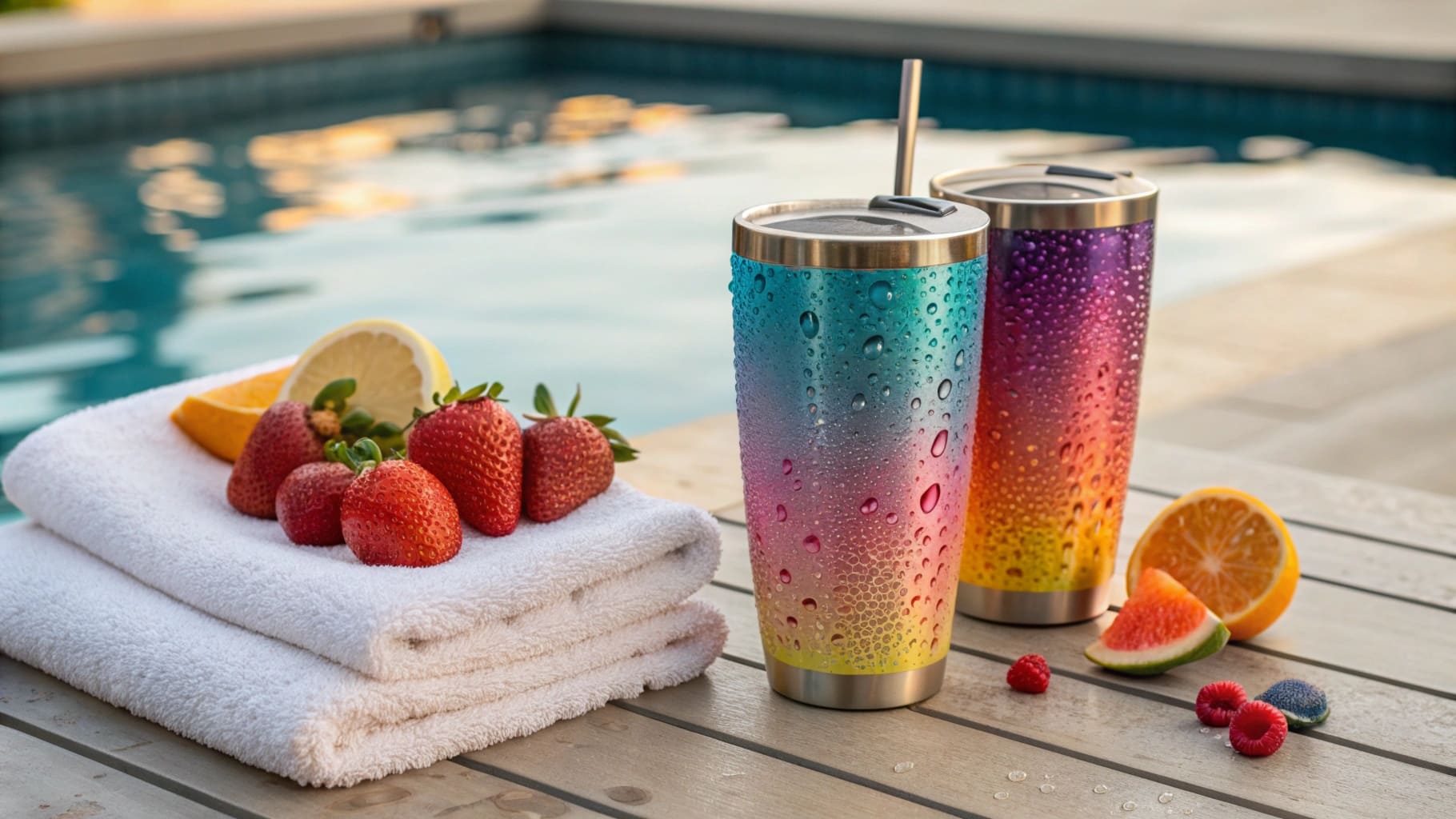
I have worked with buyers from North America and Europe for years. The ones who get burned on pricing are almost always the ones who compare quotes without understanding what each quote actually includes. The ones who get good deals are the ones who know what questions to ask before they place an order. In this post, I am going to walk you through exactly how tumbler pricing works, from raw material costs to final margins.
How Much Does a Tumbler Actually Cost?
You see a price on a supplier's website. It says $4 per unit. You place the order and the real cost ends up closer to $7. Where did the extra money go?
The unit cost of a tumbler is not one number. It is the sum of material costs, production costs, and the features you add. A plain 20oz stainless steel tumbler with no customization starts around $3 to $5 EXW. Add a leak-proof lid, powder coating, and your logo, and that number moves to $6 to $9.
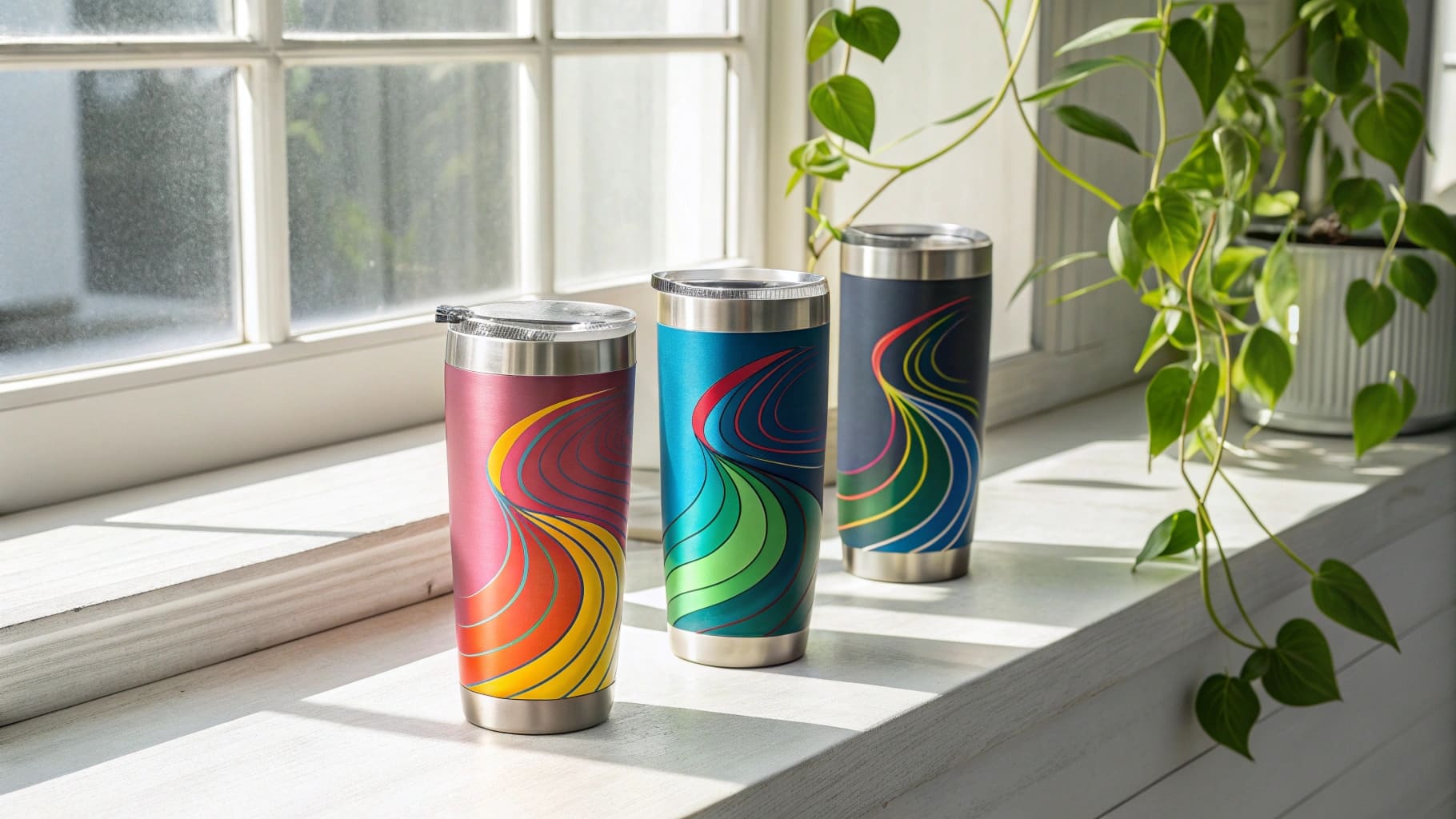
Let me break this down further so the numbers make more sense.
What Goes Into the Cost of One Tumbler?
There are three main cost layers in every tumbler you buy.
Layer one is material cost. The body of the tumbler is made from 304 stainless steel2. The price of that steel changes based on nickel prices and global supply. This is a real cost that moves up and down, and it directly affects what you pay per unit.
Layer two is manufacturing cost. This covers the labor to form the steel, the energy to run the machines, quality control checks, and the overhead costs of running the factory. This part of the cost does not change much between orders, but it does change between factories. A factory with better equipment and trained workers will charge slightly more, but the reject rate will be lower.
Layer three is added features. This is where most buyers lose control of their budget. Every feature you add costs money.
| Feature | Typical Added Cost Per Unit |
|---|---|
| Powder coating (single color) | $0.30 – $0.60 |
| Laser engraving (logo) | $0.20 – $0.50 |
| Leak-proof lid upgrade | $0.50 – $1.00 |
| Custom packaging (box) | $0.40 – $0.80 |
| Eco or safety certification | Spread across MOQ |
When you see a quote, always ask the supplier to list each cost separately. A clean, itemized quote tells you the supplier understands their own cost structure. A single lump-sum number with no breakdown is a warning sign.
What Is the Current 304 Stainless Steel Price?
Steel prices shift every few months. If you signed a contract six months ago and you are placing a new order today, the price may have changed. Most buyers do not track this. That is a mistake.
304 stainless steel currently trades in the range of $2,200 to $2,800 per ton, depending on nickel market conditions3. Nickel is the key variable. When nickel prices rise, steel prices follow within one to two months4.

This matters for you as a buyer because responsible suppliers will explain price changes and tie them back to material costs. Suppliers who raise prices with no explanation, or who refuse to discuss raw material costs at all, are harder to work with over the long term.
How Steel Prices Flow Into Your Unit Cost
Here is the direct connection between steel price and what you pay per tumbler.
A standard 20oz double-wall tumbler uses roughly 80 to 120 grams of 304 stainless steel. At $2,500 per ton, that is $0.20 to $0.30 in raw material cost per unit just for the steel body. It sounds small, but when nickel spikes and steel moves to $2,800 per ton, that cost shifts. Across an order of 5,000 units, the difference adds up fast.
| Steel Price Per Ton | Material Cost Per Tumbler (100g) | Cost Difference vs. $2,500 Baseline |
|---|---|---|
| $2,200 | $0.22 | -$0.03 |
| $2,500 | $0.25 | Baseline |
| $2,800 | $0.28 | +$0.03 |
The steel cost per unit looks small in isolation. But remember it compounds with labor, overhead, and features. A supplier quoting you a fixed price without acknowledging market movement is either absorbing the difference quietly or cutting quality somewhere else to cover it. Neither outcome is good for you.
I always recommend asking your supplier directly: what is your current 304 steel input price? A supplier who answers this question clearly is one you can work with. A supplier who deflects is one you should watch carefully.
What Is the Trend in the Tumbler Market?
Five years ago, buyers competed almost entirely on price. The cheapest tumbler won the shelf. That model is breaking down fast, and if you are still buying on price alone, you are behind the market.
The tumbler market is moving toward premiumization5. Buyers and end consumers want better lids, better finishes, certifications, and brand-aligned customization. The average wholesale unit price is rising because the average product is getting better.

This shift changes how you should think about supplier selection and pricing strategy.
Three Market Shifts That Affect Your Buying Decisions
Shift one: Customization is now expected, not premium.
In the past, getting a custom color or your logo on a tumbler was considered a premium service that cost extra. Today, most serious B2B buyers expect basic customization as standard. Suppliers who cannot offer it are losing orders. Suppliers who offer it efficiently have built systems for it and will turn your order around faster.
Shift two: Certifications are becoming a purchase requirement.
Buyers in North America and Europe are increasingly required to show that their products meet safety and quality standards6. LFGB, FDA, and similar certifications are moving from nice-to-have to must-have7. Suppliers who carry these certifications charge slightly more, but they save you from compliance problems down the line. I have seen buyers lose whole seasons of sales because a shipment got held at customs over a missing certificate.
Shift three: Lead times are getting shorter.
The standard lead time used to be 45 to 60 days. Market pressure is pushing that down. Buyers want faster turnaround, especially for seasonal products. Suppliers who can deliver in 30 to 35 days are commanding a small premium, and for many buyers, that premium is worth it.
| Market Trend | What It Means for Price | What It Means for Supplier Selection |
|---|---|---|
| Premiumization | Unit cost rises $1–$3 on average | Choose suppliers who invest in product development |
| Certification requirements | Slight cost increase, spread over MOQ | Verify certifications independently |
| Shorter lead times | Small premium for faster production | Prioritize suppliers with efficient scheduling |
| Customization as standard | Minimal added cost at scale | Look for in-house printing and coating capability |
The buyers who are winning in this market are not finding the cheapest supplier. They are finding the supplier with the best value-to-cost ratio, locking in a long-term relationship, and using that stability to negotiate better pricing over time. That is the model I see working consistently across the buyers I work with.
Conclusion
Tumbler pricing is not one number. It is material costs, production economics, trade terms, and market positioning working together. Know each layer and you will always buy smarter.
-
"The Stainless Depot: Stainless Steel Sublimation Tumblers & Add-Ons", https://thestainlessdepotcompany.com/?srsltid=AfmBOopHFrmAZ9Amy-HtDSjf4Q1zoNjgUPui5XybLQ9afFn1xMLOCJTl. Industry sourcing platforms and trade data aggregators document wholesale unit prices for 20oz double-wall stainless steel tumblers generally falling between $3 and $9 depending on order volume, finish, and supplier tier, though exact figures vary by market cycle and specification. Evidence role: statistic; source type: institution. Supports: Typical wholesale unit price range for 20oz insulated stainless steel tumblers. Scope note: Wholesale pricing is highly dynamic and platform-reported ranges may not reflect current nickel or freight cost conditions. ↩
-
"How to test if you are buying the real 304 stainless steel Insulated ...", https://www.haers.com/how-to-test-if-you-are-buying-the-real-304-stainless-steel-insulated-tumbler/. AISI 304 stainless steel, also designated as 18/8 for its approximate 18 percent chromium and 8 percent nickel composition, is widely documented as the standard food-grade alloy used in consumer drinkware manufacturing due to its corrosion resistance, formability, and compliance with food-contact safety regulations in major markets. Evidence role: definition; source type: encyclopedia. Supports: 304-grade stainless steel as the predominant material specification for food-contact insulated drinkware manufacturing. Scope note: Some manufacturers use 316-grade or 18/10 stainless steel for premium product lines; 304 represents the common baseline rather than a universal industry specification. ↩
-
"[PDF] The Case of LME Nickel Contracts on March 8, 2022", https://www.financialresearch.gov/working-papers/files/OFRwp-24-09_central-clearing-and-trade-cancellation.pdf. Commodity indices and metals exchanges, including the London Metal Exchange, document nickel as a primary input cost driver for 304-grade stainless steel, with market prices fluctuating in response to global nickel supply and demand conditions. Evidence role: statistic; source type: institution. Supports: Current trading range for 304 stainless steel and its dependence on nickel pricing. Scope note: Specific per-ton figures cited in the article require verification against a dated commodity source, as prices shift on a monthly or quarterly basis. ↩
-
"Multiscale Price Lead-Lag Relationship between Steel Materials ...", https://pmc.ncbi.nlm.nih.gov/articles/PMC9319814/. Industry analyses of stainless steel alloy surcharge systems describe a documented pass-through mechanism whereby nickel price movements are reflected in mill-level stainless steel pricing with a delay typically ranging from four to eight weeks, depending on contract structure and regional market. Evidence role: mechanism; source type: research. Supports: The transmission mechanism and timing between nickel spot price changes and stainless steel mill pricing. Scope note: The one-to-two month figure cited in the article is a general approximation; actual lag varies by supplier contract terms and regional pricing conventions. ↩
-
"Consumer demand for healthy beverages in the hospitality industry", https://pmc.ncbi.nlm.nih.gov/articles/PMC9060329/. Market research reports covering the global insulated drinkware segment document consistent growth in the premium tier, driven by consumer preference for branded, customized, and certified products, with average unit prices in the wholesale channel rising in parallel with product specification upgrades. Evidence role: expert_consensus; source type: research. Supports: A documented trend toward premium positioning, higher average selling prices, and increased customization demand in the insulated drinkware market. Scope note: The term 'premiumization' encompasses multiple sub-trends; available market reports may define the segment differently or cover retail rather than wholesale pricing dynamics. ↩
-
"General Use Products: Certification and Testing | CPSC.gov", https://www.cpsc.gov/Business--Manufacturing/Testing-Certification/General-Use-Products-Certification-and-Testing. The U.S. Consumer Product Safety Commission and the European Commission's General Product Safety framework establish baseline compliance obligations for consumer goods including food-contact drinkware; major retailers in both markets have additionally implemented private certification requirements that importers must satisfy as a condition of supply agreements. Evidence role: historical_context; source type: government. Supports: Regulatory and retailer-driven compliance requirements for food-contact consumer products imported into North American and European markets. Scope note: Compliance requirements differ substantially between jurisdictions and retail channels; the article's characterization of a uniform trend should be read as directional rather than as a description of a single binding regulatory standard. ↩
-
"Food Packaging & Other Substances that Come in Contact ...", https://www.fda.gov/food/food-ingredients-packaging/food-packaging-other-substances-come-contact-food-information-consumers. The U.S. Food and Drug Administration regulates food-contact materials under 21 CFR, while the German LFGB (Lebensmittel- und Futtermittelgesetzbuch) establishes food safety standards for consumer goods sold in Germany and referenced across EU markets; compliance with these frameworks is increasingly required by major retailers as a condition of purchase. Evidence role: expert_consensus; source type: government. Supports: Regulatory basis for FDA and LFGB certification requirements on food-contact drinkware imported into the United States and European markets. Scope note: Certification requirements vary by retailer and jurisdiction; the article's characterization of these as universally 'must-have' reflects market trend rather than a single binding legal mandate. ↩