
Hip Flask Private Label Options: Engraving, Coatings, Gift Boxes, MOQ 2026?
Are you losing customers to competitors with better-branded flasks? Private label hip flasks can set your brand apart — but only if you know what options actually matter in 2026.
Private label hip flasks in 2026 offer engraving, powder coating, PVD plating, ceramic coatings, and custom gift boxes ranging from branded sleeves to premium wooden presentation boxes. MOQ requirements are becoming more flexible, with many manufacturers willing to negotiate lower minimums for buyers with proven reorder history.
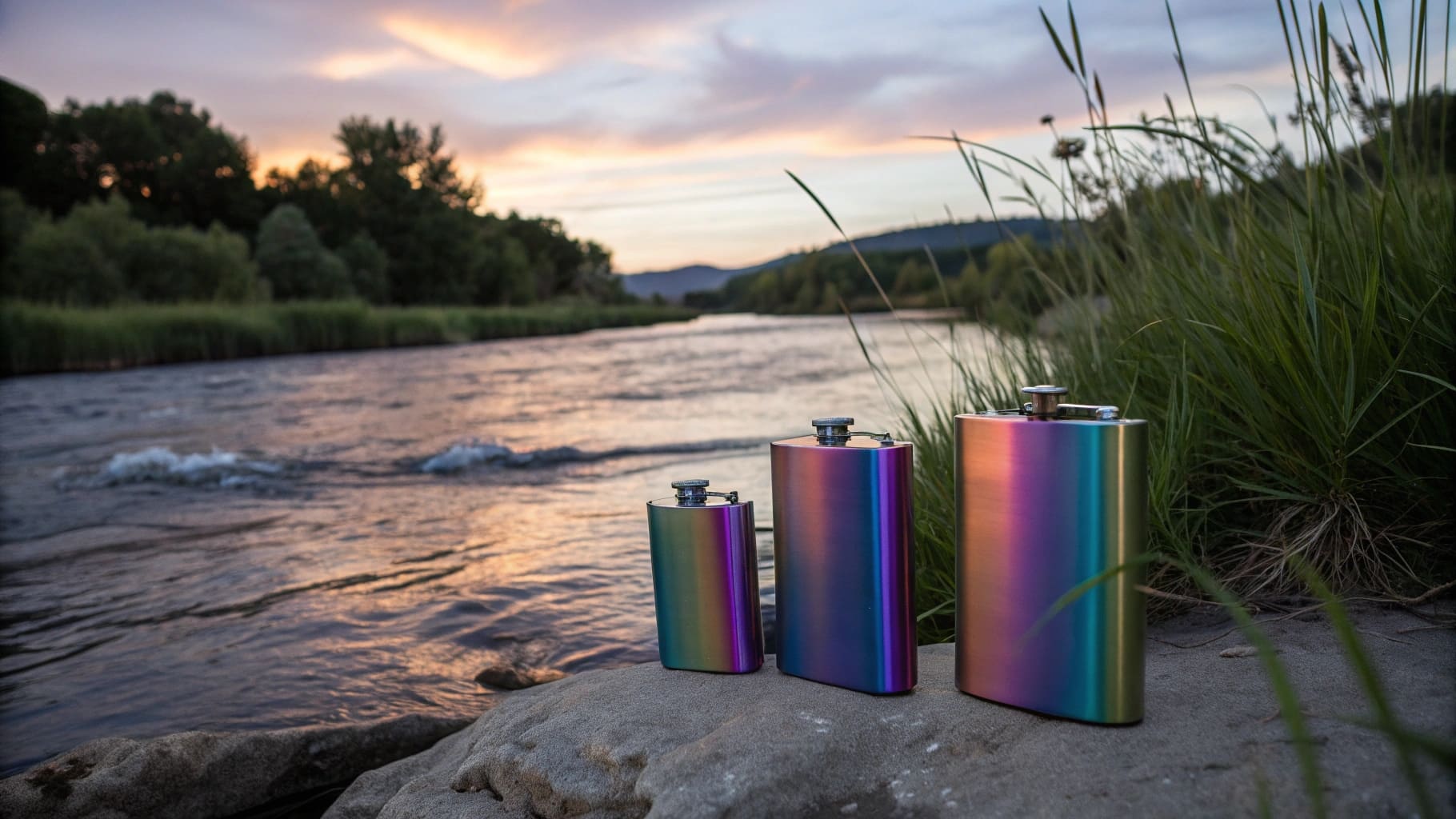
I have worked with dozens of B2B buyers who came to me asking the same thing: "How do I make my hip flask stand out on the shelf?" The answer is never one thing. It is a combination of surface treatment, packaging, and smart minimum order negotiations. If you get all three right, you are not just selling a flask — you are selling a brand experience. In this article, I will walk you through everything you need to know before placing your next private label order.
What Engraving and Coating Options Are Available for Private Label Hip Flasks?
You have seen it before — a hip flask with a barely visible logo that fades after a month of use. That is not a branding asset. That is a liability.
For private label hip flasks in 2026, engraving options include laser etching, deep engraving, color-filled engraving, and 3D embossed designs. Coating options include powder coating, PVD plating, and ceramic coatings. Each option affects both the look and the durability of the finished product.
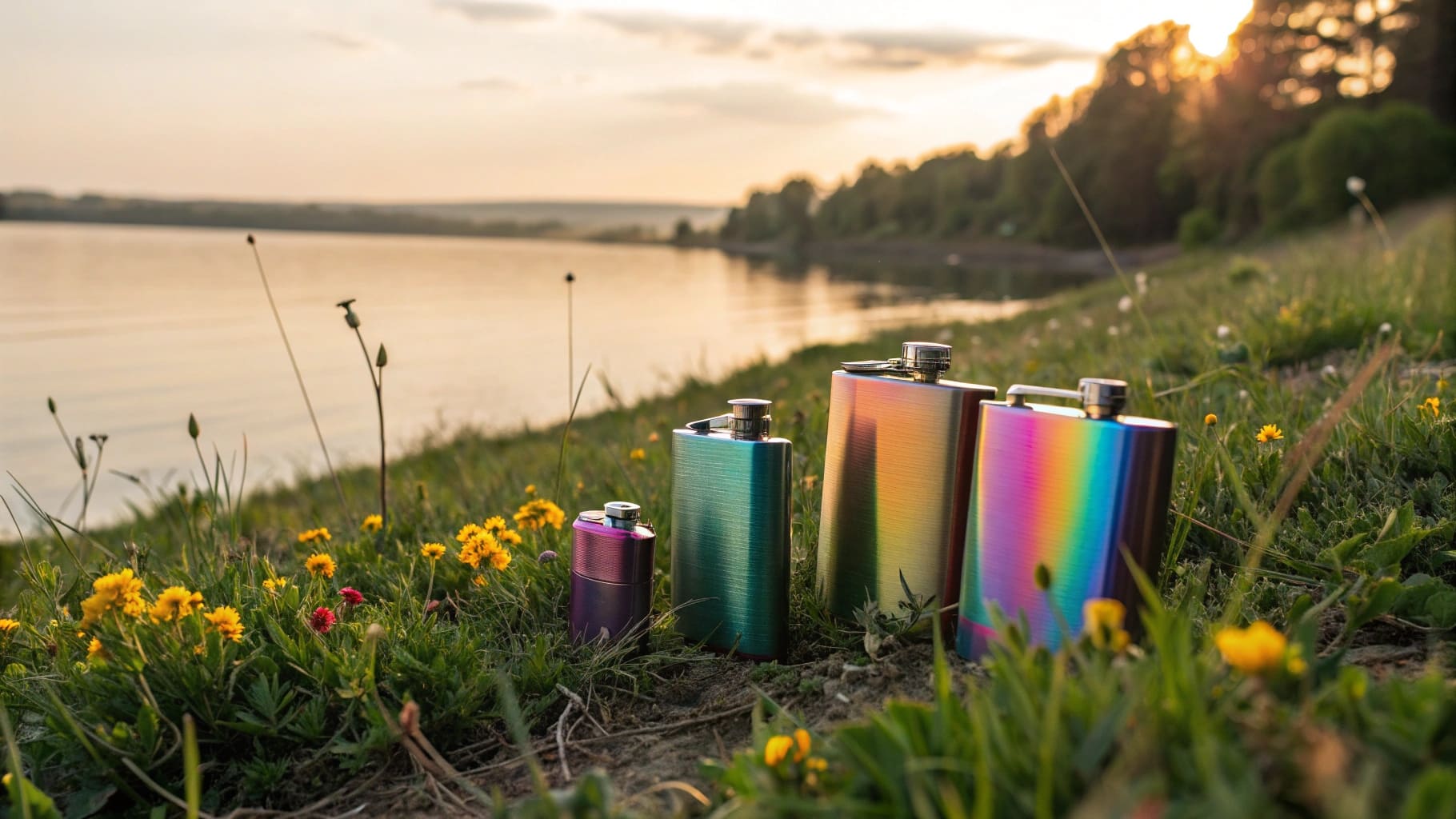
Let me break down what each option actually means for your brand, your end customer, and your bottom line. When I talk to buyers like you, I find that most people know what they want visually, but they do not always know which technique holds up over time.
Engraving Techniques: Which One Fits Your Brand?
Laser etching is the most common starting point1. It is fast, clean, and works well on brushed stainless steel surfaces. But it sits on the surface, which means it can feel subtle to the touch.
Deep engraving cuts further into the metal. It creates a stronger tactile impression. If your customer is going to hold this flask in their hand every weekend, deep engraving tells them they are holding something real.
Color-filled engraving adds a layer of paint or resin into the engraved area. This gives your logo visible contrast. It works especially well on dark or matte-coated flasks where bare metal would not show through clearly.
3D embossed designs push the brand mark outward from the surface. This is the premium tier. It requires more tooling investment, but for high-end gift products or corporate branding campaigns, it creates a lasting first impression.
Here is a simple comparison to help you decide:
| Technique | Tactile Feel | Visual Impact | Cost Level | Best Use Case |
|---|---|---|---|---|
| Laser Etching | Low | Medium | Low | Standard branded merchandise |
| Deep Engraving | High | Medium | Medium | Everyday carry products |
| Color-Filled Engraving | Medium | High | Medium | Lifestyle brands, retail |
| 3D Embossed | Very High | Very High | High | Premium gifts, corporate orders |
Coating Technologies: Function and Appearance Together
Powder coating is the most widely used option2. It comes in hundreds of colors, it resists scratches, and it gives the flask a consistent matte or gloss finish. It is a solid default choice for most private label orders.
PVD plating is a vacuum-based process3 that bonds a thin metallic layer to the flask surface. It produces finishes like rose gold, black chrome, and gunmetal. These finishes are harder and more wear-resistant than electroplating. They also look more premium.
Ceramic coating is newer in the hip flask space. It adds a layer of grip to the outer surface, which makes the flask easier to hold in outdoor conditions. It also adds a layer of corrosion resistance. If your target market includes outdoor lifestyle brands or sporting goods distributors, ceramic coating is worth the conversation with your supplier.
How Long Can You Leave Whisky in a Hip Flask?
Your end customer fills the flask on Friday night and finds it again on Monday morning. Do they drink it? Should they?
Whisky can safely stay in a quality stainless steel hip flask for up to three days4 without any noticeable change in flavor. Beyond three days, the spirit may pick up a metallic taste, especially if the flask uses lower-grade stainless steel or has a poorly finished interior.
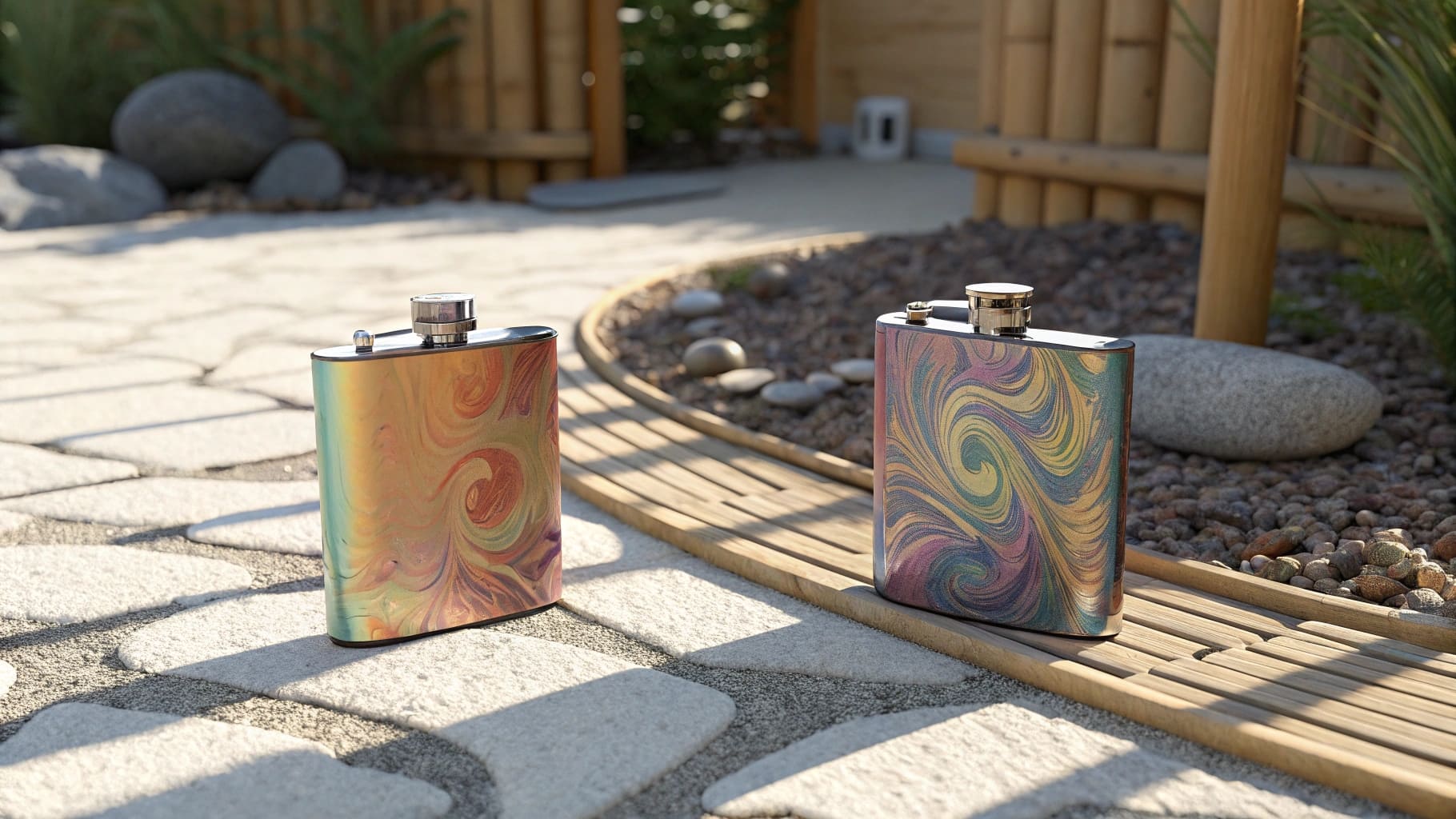
This is practical information that most private label buyers never think to include in their product documentation. I think that is a missed opportunity. When your brand provides clear, honest guidance, it builds trust with the end customer. It also reduces the number of taste complaints that come back to you as returns or negative reviews.
Why Does the Three-Day Rule Exist?
The science behind it is simple. Stainless steel is not completely inert. Over time, trace amounts of metal ions can transfer into the liquid sitting against the interior surface. In a high-proof spirit like whisky, this process is slowed down because alcohol itself acts as a barrier. But it is not stopped entirely.
The grade of stainless steel matters here. Most quality hip flasks use 304-grade stainless steel, which has a higher chromium and nickel content5. This makes the interior more resistant to reaction with acidic or alcoholic liquids. Lower-grade steel, or steel with a rough interior finish, speeds up the transfer process.
Here is what this means for your private label program:
| Storage Duration | Expected Taste Impact | Recommended Action |
|---|---|---|
| Up to 24 hours | No change | Normal use |
| 24 to 72 hours | Minimal to none | Still acceptable |
| 3 to 7 days | Possible metallic notes | Not recommended |
| Over 7 days | Likely flavor degradation | Do not consume |
If you are writing care instruction cards for your branded packaging, I recommend stating this clearly and simply. Something like: "Empty and rinse your flask after each use. Do not store spirits for more than three days." That single sentence protects your brand from a large category of complaints that have nothing to do with a product defect.
Do You Wash a Hip Flask?
Most people who buy a hip flask for the first time have no idea how to clean it. They either ignore it completely, or they throw it in the dishwasher and ruin the finish.
Yes, you should wash a hip flask after every use. The correct method is warm water with mild dish soap, followed by a thorough rinse and full air drying with the cap left open. Never put a hip flask in the dishwasher.
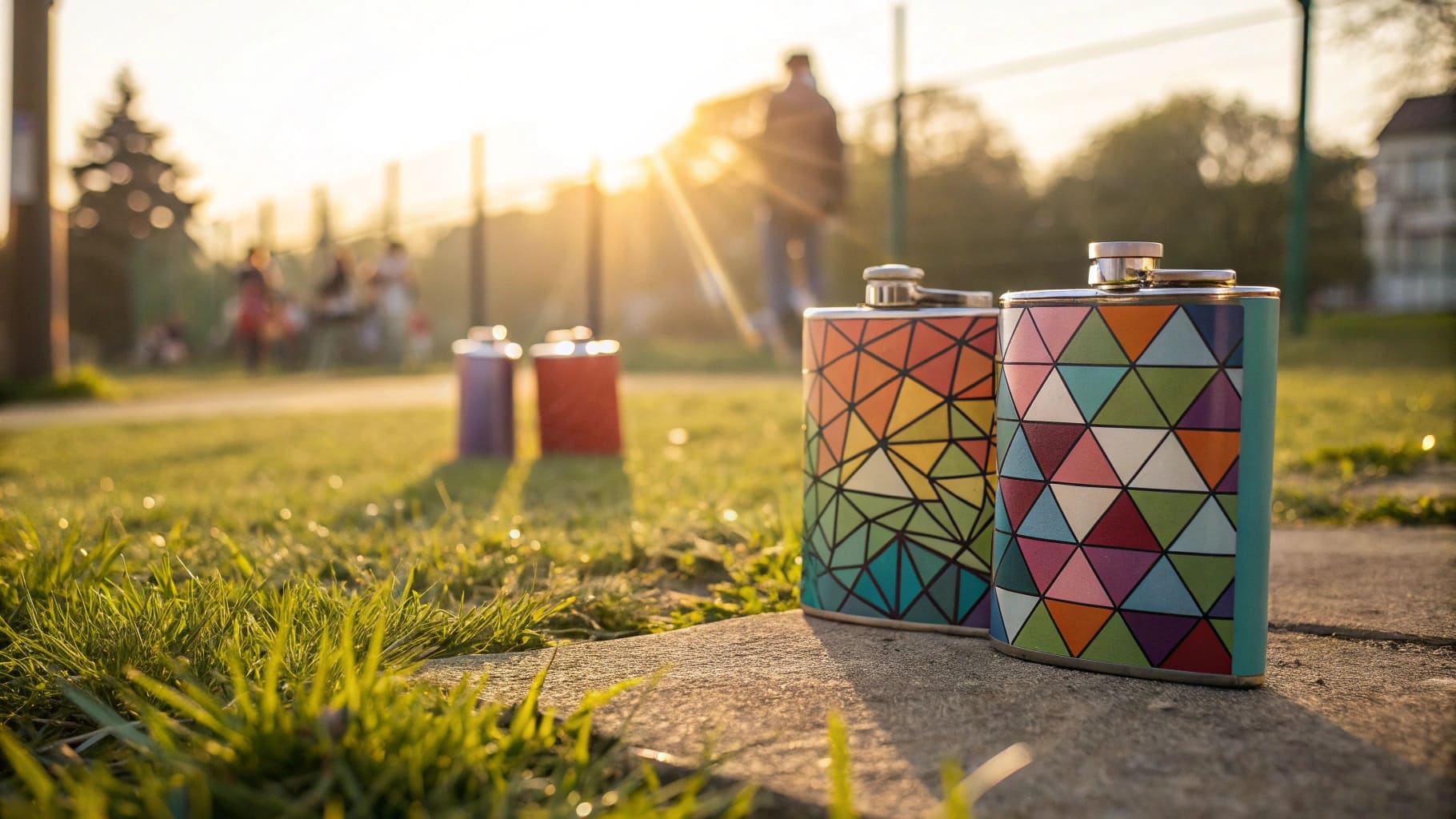
I have seen this issue come up repeatedly with private label buyers who skip the care instructions in their packaging. The customer uses the flask for a month without cleaning it, then complains that it tastes strange. The product is fine. The problem is the residue sitting inside the flask from the last three uses.
What Happens If You Do Not Clean It?
Spirit residue does not stay neutral inside a closed flask. It starts to oxidize. Over time, it breaks down into compounds that leave behind a stale, sour taste. This residue also creates a surface layer that speeds up the metallic taste transfer discussed in the previous section.
The narrow opening of a hip flask makes cleaning harder than a standard water bottle. This is why I always recommend that private label buyers consider including a small cleaning brush as part of the product bundle. It is a low-cost accessory that solves a real problem. It also adds perceived value to the unboxing experience.
Here is a cleaning method comparison to help you build your care documentation:
| Cleaning Method | Effectiveness | Risk to Finish | Recommended? |
|---|---|---|---|
| Warm water + mild soap | High | None | Yes |
| Dishwasher | Medium | High | No |
| Baking soda + water | High | Very low | Yes |
| Vinegar rinse | Medium | Low | Occasional use only |
| Dry only / no rinse | None | None | Never |
One more thing worth noting here. If your private label flask uses powder coating or PVD plating on the exterior, high-heat dishwasher cycles will damage the finish over time. Even if the steel itself survives, the decorative layer will not. Your brand name is on that flask. You do not want your customer seeing it peel.
Can I Put Soda in a Hip Flask?
Your customer picks up your branded flask, fills it with cola at a party, and the cap flies off. That is not a product failure you want associated with your brand.
You should not put soda or any carbonated drink in a hip flask. Carbonation creates internal pressure that stresses the cap threading and seal. Standard hip flasks do not have a pressure-release mechanism, which means the pressure has nowhere to go.
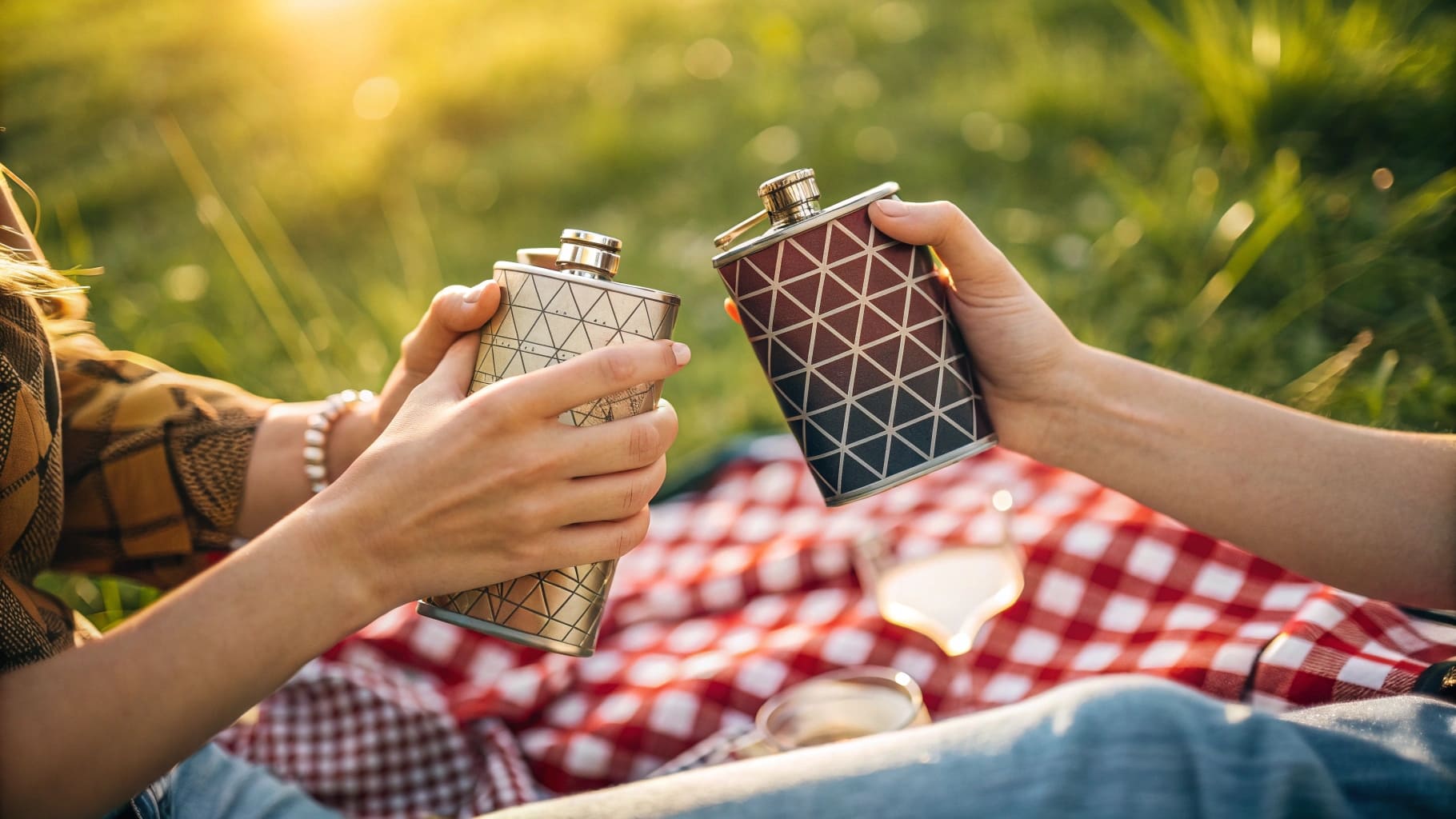
This is a question that comes up more often than you would expect, especially in markets where hip flasks are positioned as general-purpose portable containers rather than spirit flasks. If your product description or packaging does not address this clearly, you will eventually hear about it in a return request or a negative review.
The Engineering Reason Behind the Limitation
A standard hip flask is a sealed container with no pressure valve. When you fill it with a carbonated drink and close the cap, the carbon dioxide dissolved in the liquid begins to release as gas. This gas needs space. In a closed system, it builds pressure against the cap, the seal, and the threading.
Most hip flask caps use a simple screw thread with a rubber or silicone gasket. This design works well for still liquids. It is not designed to hold internal pressure. Over time, even moderate carbonation pressure will degrade the gasket and loosen the threading fit. In high-temperature conditions, like a bag left in a hot car, the process accelerates.
Here is a quick compatibility guide you can use in your product documentation:
| Beverage Type | Compatible with Hip Flask? | Notes |
|---|---|---|
| Whisky, rum, vodka | Yes | Ideal use case |
| Wine, beer (flat) | Yes | Short-term storage only |
| Water, juice | Yes | Rinse thoroughly after |
| Soda, sparkling water | No | Pressure risk |
| Carbonated cocktails | No | Not suitable |
| Hot beverages | No | Use a thermal flask instead |
Positioning your flask clearly as a spirit and still-beverage container is not a limitation. It is a smart branding decision. It tells your customer exactly what they are getting, which is a dedicated flask built for the job. That kind of clear positioning reduces misuse complaints and builds a more loyal customer base over time.
Conclusion
Private label hip flasks in 2026 reward buyers who understand customization options, storage limits, cleaning requirements, and beverage compatibility — and communicate all of it clearly to their customers.
-
"Laser engraving", https://en.wikipedia.org/wiki/Laser_engraving. Technical descriptions of laser marking explain that laser etching is widely used for permanent, precise marking on metals such as stainless steel, supporting its relevance as a common entry-level branding method. Evidence role: mechanism; source type: institution. Supports: Laser etching is the most common starting point for private label hip flask branding.. Scope note: The source may establish widespread industrial use of laser etching but not rank it as the most common option specifically for hip flasks. ↩
-
"Powder Coat Applications Final Report - epa nepis", https://nepis.epa.gov/Exe/ZyPURL.cgi?Dockey=P10120TC.TXT. Powder-coating industry and technical references describe powder coating as a widely used dry finishing process for metal substrates, supporting the article’s characterization of it as a mainstream coating option. Evidence role: general_support; source type: institution. Supports: Powder coating is the most widely used option for private label hip flask coatings.. Scope note: The source would support broad use in metal finishing rather than quantify usage specifically for hip flasks. ↩
-
"Physical vapor deposition - Wikipedia", https://en.wikipedia.org/wiki/Physical_vapor_deposition. Materials-science references define physical vapor deposition as a vacuum process in which material is vaporized and deposited as a thin film, directly supporting the article’s description of PVD plating. Evidence role: definition; source type: encyclopedia. Supports: PVD plating is a vacuum-based process that bonds a thin metallic layer to the flask surface.. ↩
-
"Shelf-Stable Food Safety", http://www.fsis.usda.gov/food-safety/safe-food-handling-and-preparation/food-safety-basics/shelf-stable-food. Food-safety and spirits references can support the contextual basis that high-alcohol spirits are microbiologically low-risk and that stainless steel is commonly used for food-contact applications, while not directly establishing a universal three-day flavor threshold. Evidence role: general_support; source type: government. Supports: Whisky can safely stay in a quality stainless steel hip flask for up to three days without noticeable change in flavor.. Scope note: This evidence would contextualize safety and material suitability; the exact three-day limit is likely practical guidance rather than a rigorously standardized safety cutoff. ↩
-
"SAE 304 stainless steel - Wikipedia", https://en.wikipedia.org/wiki/SAE_304_stainless_steel. Standard materials references list Type 304 stainless steel as an austenitic alloy containing substantial chromium and nickel, supporting the article’s description of its composition. Evidence role: definition; source type: institution. Supports: 304-grade stainless steel has a higher chromium and nickel content.. Scope note: The source establishes composition but does not by itself prove superior performance in every flask design. ↩