
Which Mouth Styles and Lids Keep Coffee Tumblers Car-Friendly in Use Today?
Spills in the car are not just annoying. They cost you customers. If your coffee tumbler fails during a sharp turn, your brand takes the hit.
A car-friendly coffee tumbler needs three things: a lid that seals under pressure, a mouth opening sized for easy sipping, and a body that fits a standard cup holder. Without all three, the product will disappoint commuters and hurt your repeat purchase rate.
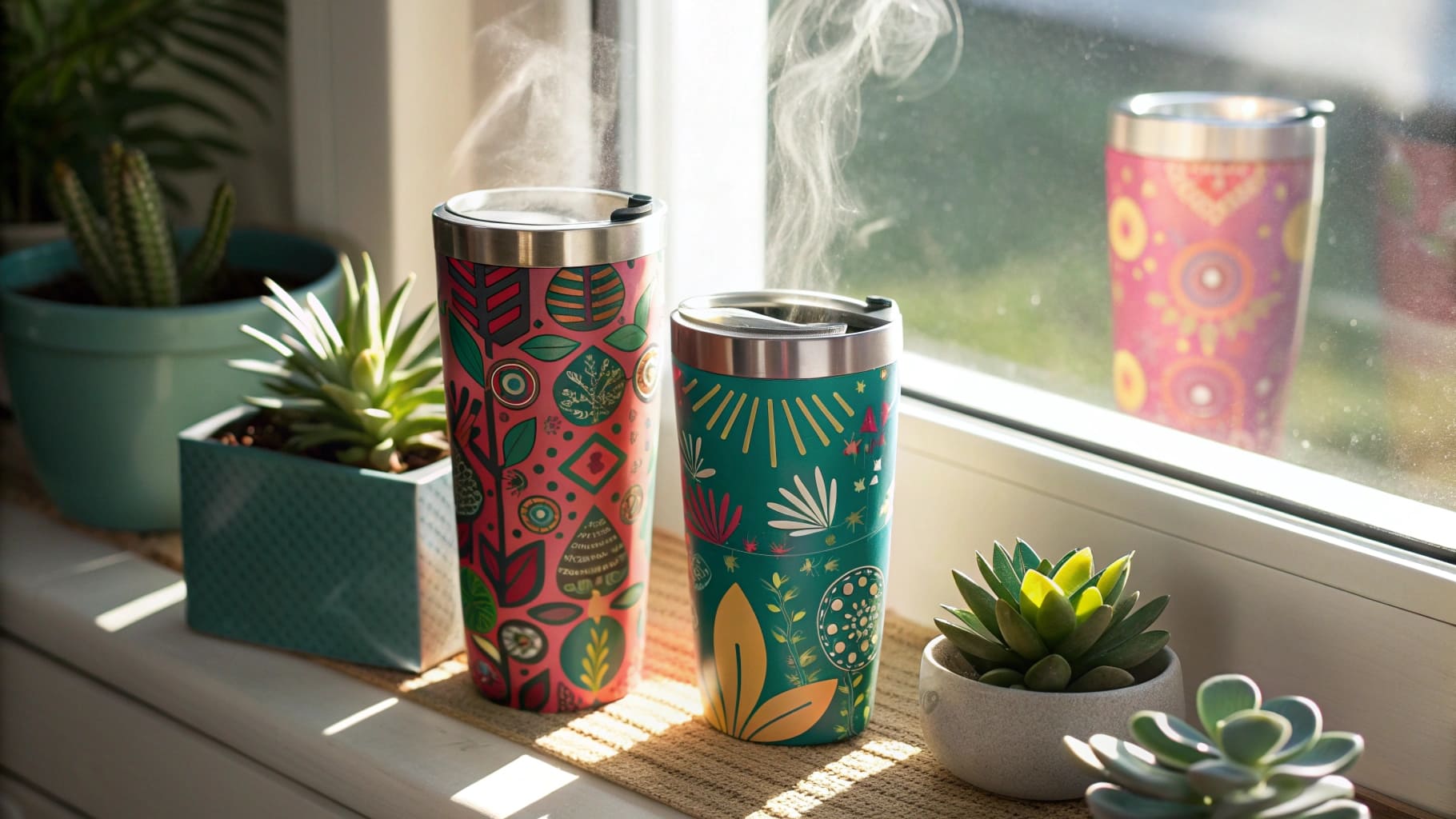
I have spent years sourcing stainless steel drinkware for wholesale buyers across North America and Europe. What I keep hearing from procurement officers like you is the same thing: car-friendly is no longer a bonus feature. It is the baseline. The buyers who understand this early are the ones who move more units. Let me break down exactly what to look for.
What Is the Best Coffee Travel Mug on the Market?
There is no single answer here. And honestly, suppliers who tell you there is one best product are wasting your time.
The best coffee travel mug for your market depends on your target buyer. For commuters, the best mug seals tight, fits a cup holder, and works with one hand. For office professionals, comfort and style matter more. Match the product to the person first.

This is the first mistake I see wholesale buyers make. They search for the "best" product without defining who they are selling to. In my experience, the buyers who nail this category always start with one question: who is drinking from this mug and where?
Let me break this down into the factors that actually matter when you are sourcing at volume.
Key Features That Define the Best Coffee Travel Mug
The word "best" in drinkware almost always points back to the same core set of features. Here is how I evaluate them:
| Feature | What to Look For | Why It Matters |
|---|---|---|
| Lid mechanism | Push-button auto-seal or slider with silicone gasket | Prevents spills during movement |
| Mouth diameter | 2.5 to 3 inches | Easy sipping without excessive heat loss |
| Wall construction | Double-wall vacuum, 0.6mm inner and outer | Heat retention with manageable weight |
| Steel grade | 304 minimum, 316 for premium lines | Corrosion resistance, especially with acidic drinks like coffee |
| Cup holder fit | Straight-wall design under 3.5 inches base diameter | Fits most standard car cup holders |
Each of these features directly affects how the end consumer feels about the product after one week of daily use. If the lid leaks once, the product fails in the customer's mind, regardless of everything else. If the base does not fit the cup holder, the mug sits on the passenger seat and eventually spills.
For buyers targeting the North American commuter market, I recommend starting with a push-button lid and a straight-wall body. These two choices alone will eliminate the most common complaints your retail customers will have.
What Type of Mug Is Best for Coffee?
The wrong mug type does not just disappoint the end consumer. It creates returns, complaints, and lost reorder business for you.
For coffee specifically, stainless steel double-wall vacuum tumblers outperform all other materials. They hold temperature longer, resist staining, and survive daily car use. Ceramic and glass options simply do not hold up in mobile environments1.
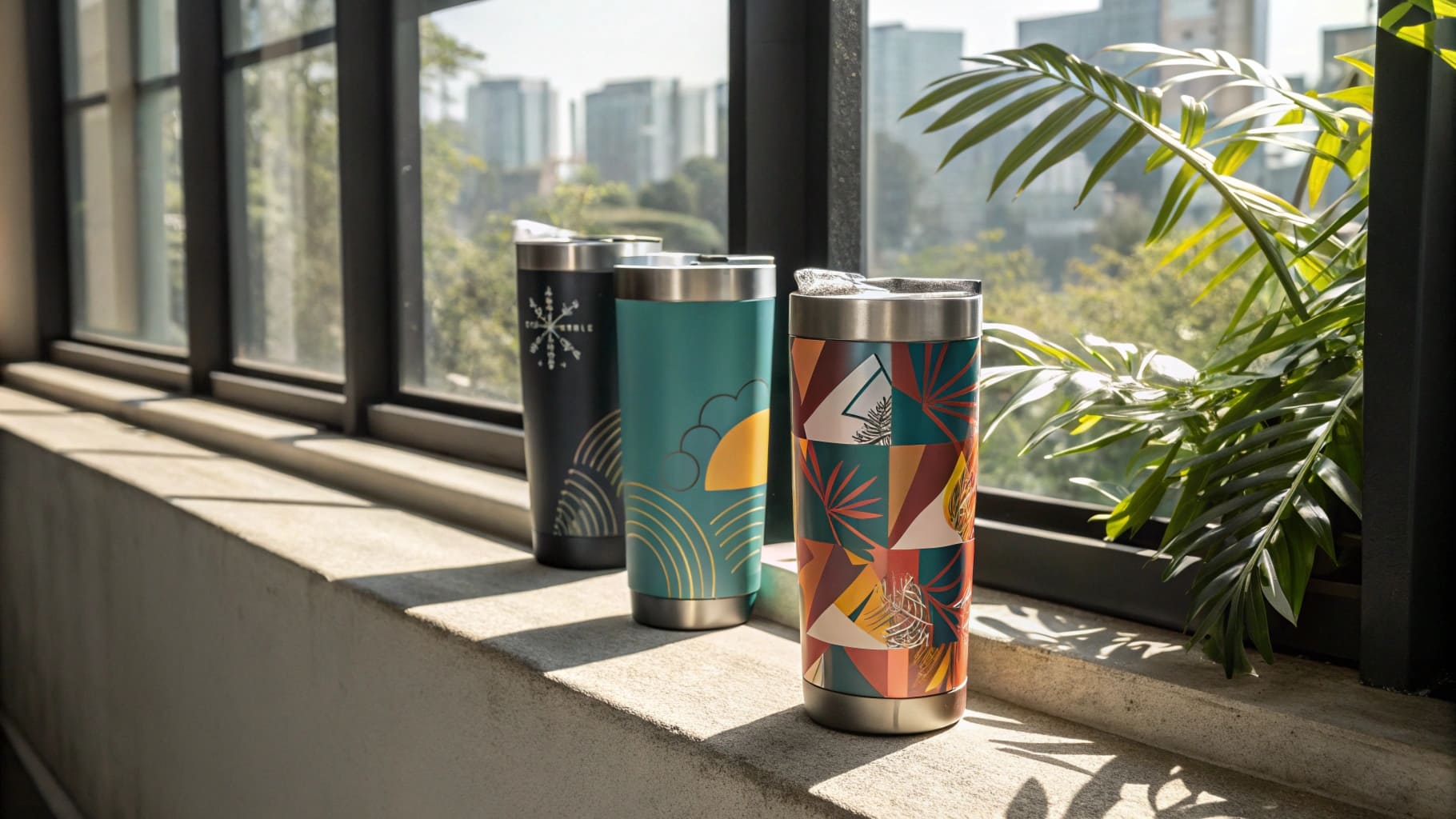
I have handled a lot of product categories over the years. Coffee drinkware is one of the most technical when it comes to material choice. The reason is simple: coffee is acidic. It reacts with certain materials over time2. And when a buyer sources 10,000 units of the wrong mug, that becomes a very expensive lesson.
How Material Choice Affects Coffee Mugs at Scale
Here is what I tell every procurement officer who comes to me for sourcing advice on coffee-specific drinkware:
Steel grade matters more than most buyers realise.
304-grade stainless steel is the industry standard. It is food-safe, durable, and cost-effective3. Most of the products you will find on the market use this grade. But there is a growing segment of wholesale buyers moving toward 316-grade steel for their premium product lines.
| Steel Grade | Coffee Resistance | Price Point | Best For |
|---|---|---|---|
| 304 Stainless Steel | Good | Standard | Mid-range retail products |
| 316 Stainless Steel | Excellent | Premium | High-end brand positioning |
The difference between 304 and 316 comes down to molybdenum content. 316 contains it. 304 does not. That extra element gives 316 better resistance to acidic liquids over time4. If you are building a premium brand and your customers drink black coffee every day from the same mug, 316 is worth the added cost.
Beyond the steel grade, the wall construction also affects coffee performance. A double-wall vacuum design with 0.6mm walls on both the inner and outer shell gives you the best balance between heat retention and production cost. Go thinner and the insulation weakens. Go thicker and the manufacturing cost climbs without a meaningful benefit to the end user.
For coating, I recommend food-grade powder coating on the exterior and a plain polished interior. Powder coating on the inside of a coffee mug creates a surface that absorbs flavour over time5. Your customers will notice this after a few weeks, and they will not be happy.
What's the Difference Between a Tumbler and a Travel Mug?
Most of your customers use these words interchangeably. That is a problem when you are building a product line and need to position each item correctly.
A tumbler has straight walls and no handle. A travel mug usually has a tapered shape, a fixed or removable handle, and a more enclosed lid design. Both can be car-friendly, but they serve different buyers.
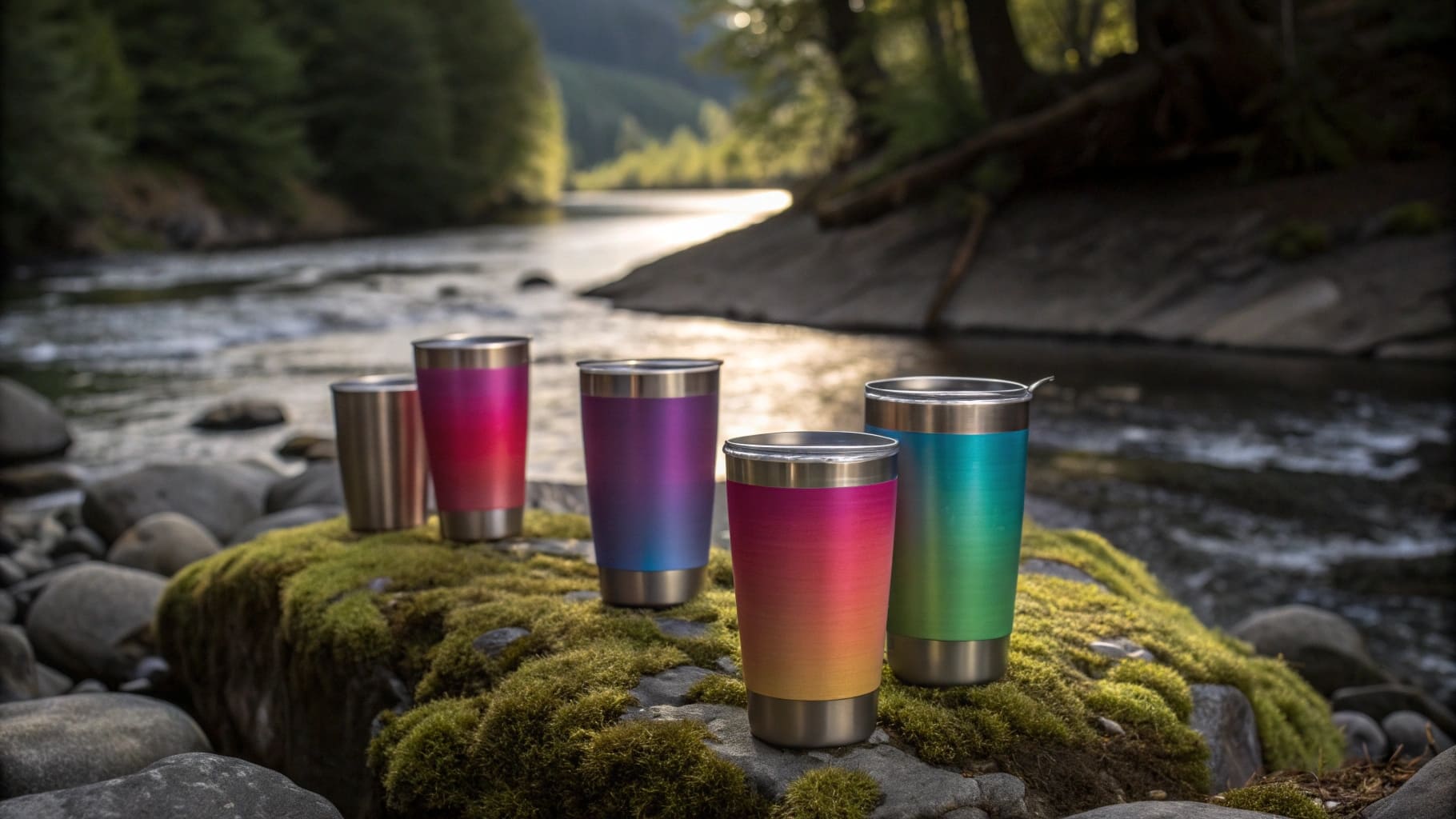
When I sit down with wholesale buyers who want to expand their drinkware line, this question always comes up. And my answer is always the same: sell both, but market them differently. They are not competing products. They cover different parts of your customer base.
Tumbler vs Travel Mug: A Side-by-Side Breakdown
Understanding the structural and market differences between these two product types will help you make smarter sourcing decisions. Here is how I see the two categories:
| Category | Tumbler | Travel Mug |
|---|---|---|
| Wall shape | Straight | Tapered |
| Handle | No | Optional |
| Cup holder fit | Usually yes | Sometimes no, due to taper |
| Target consumer | Younger, active users | Traditional coffee drinkers |
| Lid type | Slider or push-button | Twist-lock or press-fit |
| Popular markets | North America, Europe | North America, Asia |
| Cleaning ease | Moderate | More complex |
The tumbler has become the dominant form factor in the North American and European wholesale market6. Younger consumers and active professionals prefer it because it fits the cup holder, looks minimal, and works with one hand. It also photographs well, which matters when your retail customer is selling through e-commerce channels.
The travel mug still has a strong base, particularly among buyers over 40 and traditional coffee drinkers who associate the handle with comfort and familiarity7. If you are supplying a brand that targets older demographics or office gift markets, handled travel mugs remain a smart addition to your line.
One more thing I want to point out from a car-usability perspective: the lid on a tumbler and the lid on a travel mug behave differently in a moving vehicle. Tumbler lids with 360-degree drinking surfaces are gaining popularity in European markets. North American buyers tend to prefer directional spout designs. The spout controls where the liquid flows, which reduces splashing during sudden stops8. If your end market is North American commuters, source the directional spout version.
Conclusion
Car-friendly drinkware comes down to lid technology, mouth diameter, steel grade, and the right body shape for your target buyer. Get these right and you build a product line that earns repeat orders.
-
"Drinkware Material Comparison: Stainless Steel vs Tritan vs Glass for", https://modofo.net/blogs/modofo-global/drinkware-material-comparison-stainless-steel-vs-tritan-vs-glass-for-coffee-daily-use?srsltid=AfmBOopO3mPLGaOH7y5no-ajZRUSnMAJq9ZqUevOKY2a4swWAGpLXnAY. Materials science literature consistently documents that soda-lime glass and ceramic composites have substantially lower fracture toughness and impact resistance compared to austenitic stainless steels, a property difference that is directly relevant to drinkware performance in dynamic environments such as vehicle use. Evidence role: mechanism; source type: paper. Supports: That ceramic and glass materials exhibit significantly lower impact resistance than stainless steel, making them less suitable for mobile or high-vibration use environments. Scope note: Published comparisons typically address bulk material properties rather than finished consumer drinkware products; real-world breakage rates for ceramic or glass travel mugs in vehicle use are not widely reported in peer-reviewed sources. ↩
-
"Acids in brewed coffees: Chemical composition and sensory threshold", https://pmc.ncbi.nlm.nih.gov/articles/PMC10074501/. Coffee typically has a pH between 4.5 and 6.0, placing it in the mildly acidic range; research on beverage-container interactions suggests prolonged contact with acidic liquids can influence the surface integrity of certain metals and coatings. Evidence role: mechanism; source type: paper. Supports: Coffee's pH range and its potential to interact with container materials over repeated use. Scope note: Most studies focus on corrosion in industrial or medical contexts; direct evidence of consumer drinkware degradation from coffee acidity specifically is limited. ↩
-
"Stainless Steel (SS) Safety Profile", https://www.fda.gov/media/165146/download. Regulatory bodies including the U.S. Food and Drug Administration and equivalent international agencies recognize austenitic stainless steels such as AISI 304 as generally suitable for food contact applications due to their corrosion resistance and low reactivity. Evidence role: expert_consensus; source type: government. Supports: That 304 (18/8) stainless steel is widely recognized as food-safe and suitable for food contact applications under relevant regulatory frameworks. Scope note: Regulatory acceptance of 304 stainless steel for food contact does not constitute an explicit endorsement of it as the sole or superior material for coffee drinkware specifically. ↩
-
"[PDF] Effect of Molybdenum Additions on the Microstructures and ... - OSTI", https://www.osti.gov/servlets/purl/1439854. According to materials science references, AISI 316 stainless steel contains approximately 2–3% molybdenum not present in AISI 304, a compositional difference that measurably improves resistance to pitting corrosion in acidic and chloride-rich environments. Evidence role: mechanism; source type: institution. Supports: That 316 stainless steel contains molybdenum (approximately 2–3%) absent in 304, and that this addition improves resistance to pitting and corrosion in acidic or chloride-containing environments. Scope note: Published corrosion data typically addresses industrial or marine environments; direct testing against coffee specifically is not widely documented in peer-reviewed literature. ↩
-
"Balancing Functionality and Safety in Food Packaging Coatings - PMC", https://pmc.ncbi.nlm.nih.gov/articles/PMC12896733/. Research on polymer coatings and beverage containers indicates that certain coating materials exhibit sorption of flavor compounds, particularly aromatic molecules present in coffee, which can result in flavor transfer or retention after repeated use cycles. Evidence role: mechanism; source type: paper. Supports: That porous or polymer-based interior coatings on beverage containers can absorb and retain flavor compounds from repeated use. Scope note: Most sorption studies focus on plastic polymers rather than powder coatings specifically; direct peer-reviewed evidence for powder-coated drinkware interiors and coffee flavor absorption is limited. ↩
-
"Drinkware Market Analysis: Size, Share, & Trends 2025-2030", https://www.apparelnbags.com/blog/drinkware-market-analysis/?srsltid=AfmBOoryegPQz8489unNr6mEz3Q82N6u6WeQiSD6cmxQu9hKcvNQxDPG. Market research reports on the reusable drinkware segment indicate sustained growth in tumbler-style products across North American and European markets, driven by consumer preference for minimalist design and compatibility with vehicle cup holders. Evidence role: statistic; source type: institution. Supports: The growth and market share of insulated tumbler-style drinkware relative to traditional travel mugs in North American and European retail and wholesale channels. Scope note: Specific wholesale market share figures distinguishing tumblers from travel mugs are not consistently reported in publicly available sources; this claim reflects a widely observed industry trend rather than a precisely quantified statistic. ↩
-
"Design Principles to Accommodate Older Adults - PMC", https://pmc.ncbi.nlm.nih.gov/articles/PMC4777049/. Ergonomics research on grip and vessel design indicates that handled cups reduce wrist strain and improve perceived stability during use, factors that may be particularly salient for older adults and consumers habituated to traditional mug formats. Evidence role: general_support; source type: paper. Supports: That older adult consumers show preference for handled vessels due to ergonomic familiarity and grip security. Scope note: Available ergonomics literature focuses primarily on clinical populations or general grip studies rather than consumer drinkware preference by age cohort; the specific claim about buyers over 40 preferring handled travel mugs is not directly confirmed by identified peer-reviewed sources. ↩
-
"ELI5 : why do certain containers cause the liquid to disastrously pour ...", https://www.reddit.com/r/explainlikeimfive/comments/bst77c/eli5_why_do_certain_containers_cause_the_liquid/. Fluid dynamics principles support the premise that restricting liquid egress to a single directional aperture reduces the volume of liquid displaced during sudden deceleration events, as the effective opening area and flow path geometry limit sloshing-induced spillage. Evidence role: mechanism; source type: paper. Supports: That constrained or directional openings in beverage container lids reduce liquid spillage under dynamic conditions such as vehicle deceleration. Scope note: Controlled comparative testing of directional versus 360-degree drinkware lids under simulated driving conditions does not appear to be widely published in peer-reviewed literature; this claim is supported by general fluid mechanics principles rather than product-specific empirical data. ↩
