
Which Insulated Tumbler Finishes Resist Fingerprints, Stains, and Abrasion?
Scratched tumblers. Greasy fingerprints. Faded logos. These problems kill repeat orders and hurt your brand. The finish you pick matters more than most buyers realize.
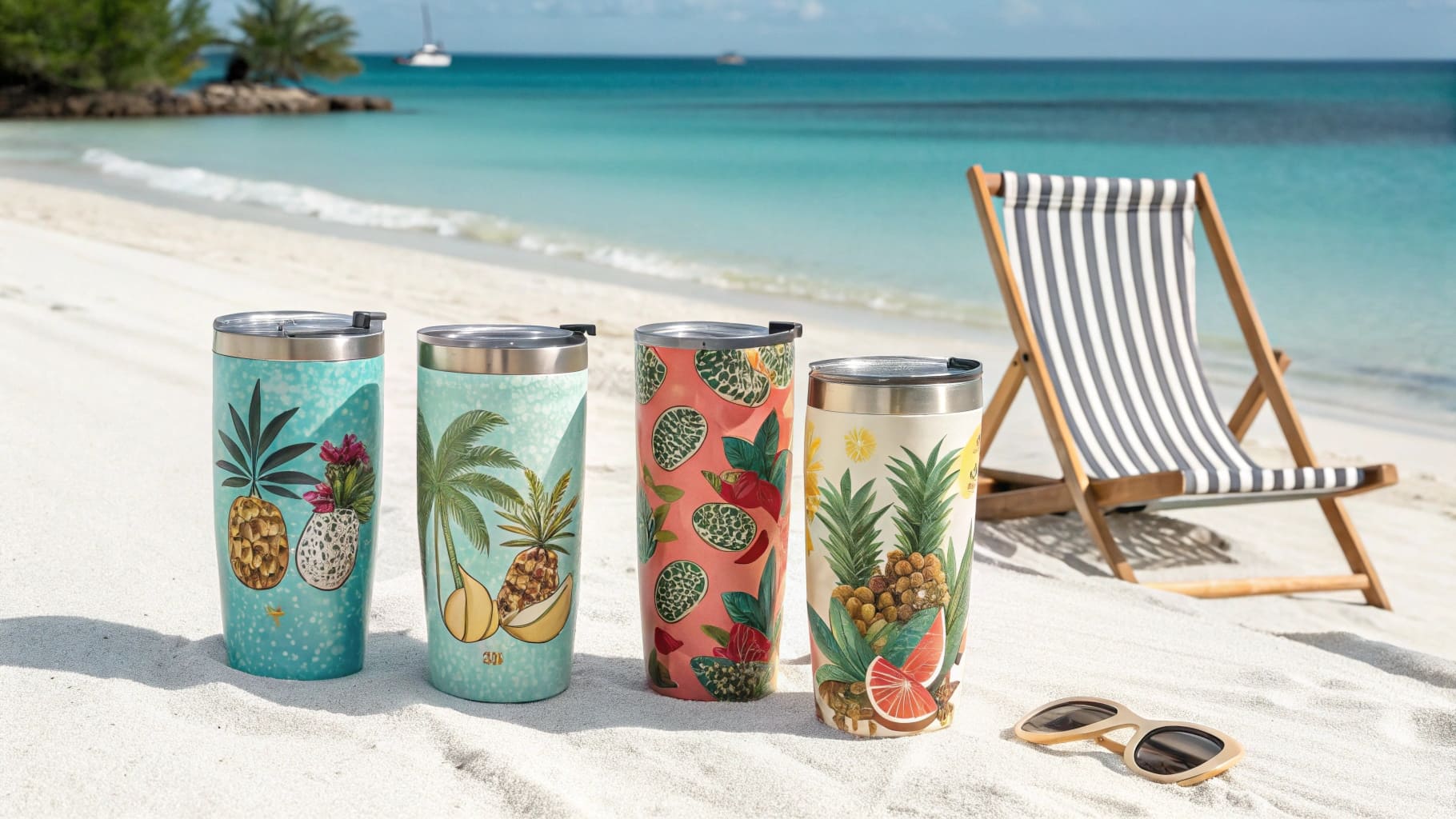
Powder-coated finishes resist fingerprints, stains, and abrasion better than painted or bare stainless steel surfaces.1 The textured surface hides fingerprint oils naturally. The coating also blocks common staining agents like coffee and tea. For B2B buyers, this means fewer complaints and lower return rates.
I have worked with procurement teams across North America and Europe. The question I hear most is simple: which finish holds up in real use? The answer changes depending on how the tumbler will be used, how it will be branded, and what your customers expect. Let me walk you through each part of that answer.
What Is the Best Material for Insulated Cups?
Most buyers focus on price first. Then a shipment arrives, and the tumblers dent, rust, or lose heat too fast. That is when material choice starts to matter.
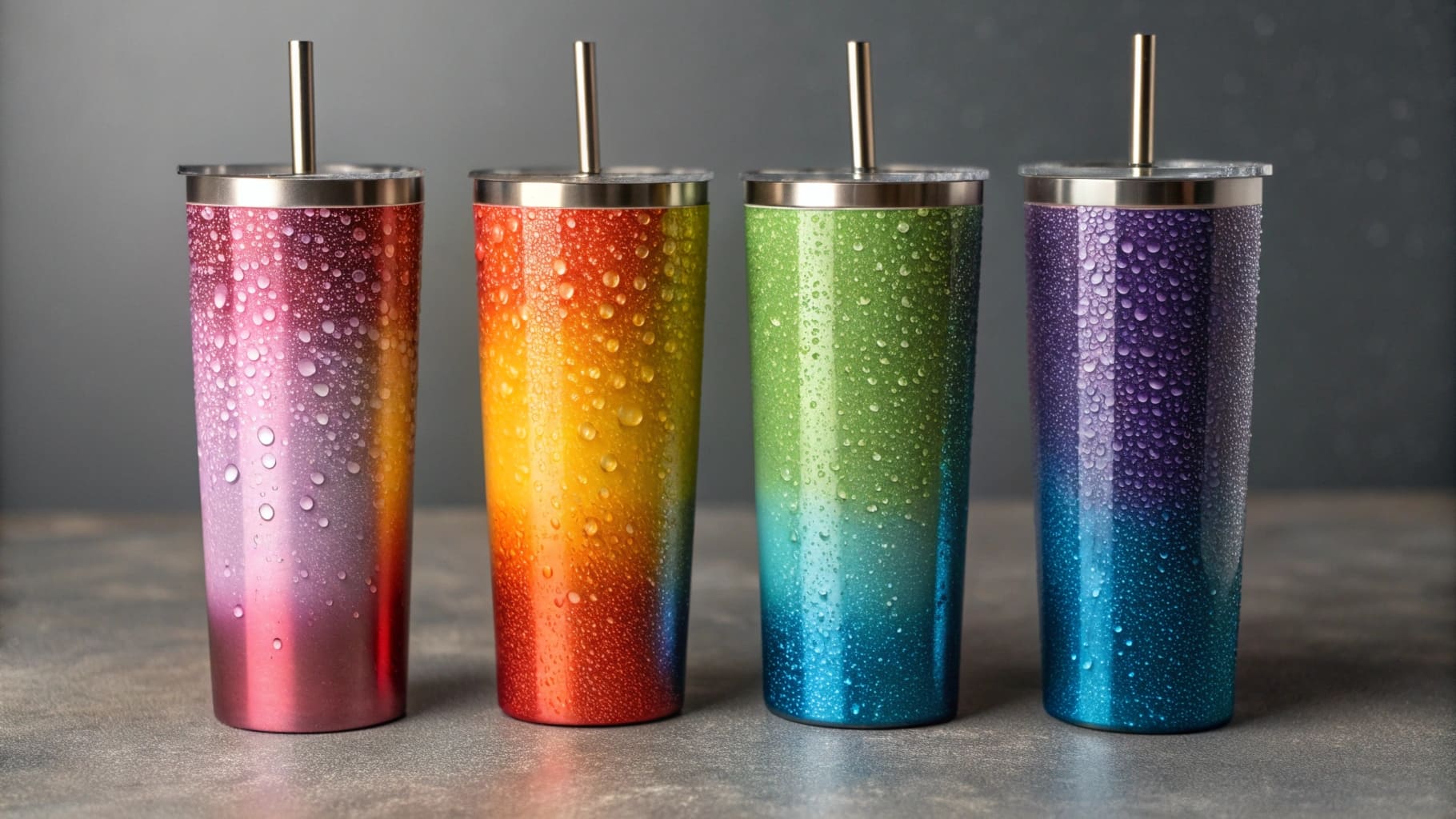
Double-wall vacuum-insulated stainless steel is the best material for insulated cups.2 Among stainless steel grades, 18/8 food-grade steel gives the best balance of temperature retention, durability, and cost.3 It does not rust, does not add taste to beverages, and holds up well under daily commercial use.
I want to break this down further, because not all stainless steel is the same. The grade of steel affects everything from rust resistance to interior finish quality.
Understanding Stainless Steel Grades
The number 18/8 refers to the chromium and nickel content of the steel. 18% chromium gives the steel its rust resistance. 8% nickel adds strength and surface smoothness. Some suppliers use lower grades to cut costs. This is where buyers without technical backgrounds get caught.
Here is a quick comparison of common grades:
| Grade | Chromium % | Nickel % | Best Use | Risk |
|---|---|---|---|---|
| 18/8 (304) | 18 | 8 | Food and beverage contact | None for standard use |
| 18/10 (316) | 18 | 10 | Marine and high-acid use | Higher cost |
| 201 | 16 | 4 | Non-food applications | Rust risk with food contact |
Most B2B buyers in North America and Europe should specify 18/8 as the minimum standard. If your customer base uses tumblers with acidic drinks like lemon water or sports drinks, 18/10 is worth the extra cost.
The interior finish also plays a role. An electropolished interior is smoother than a standard brushed interior.4 Smoother means less surface area for bacteria and staining agents to grip. I always recommend electropolished interiors for buyers who plan to sell into the health and wellness market.
The double-wall vacuum layer is what keeps heat in and cold out.5 A good vacuum seal maintains temperature for 12 hours hot and 24 hours cold. When evaluating suppliers, ask for test data, not just claims. Any credible factory should have this on file.
Is a Ceramic-Lined Tumbler Better?
Ceramic-lined tumblers are everywhere right now. Social media has made them look like the obvious upgrade. But are they actually better for your product line?
A ceramic lining improves taste neutrality and makes cleaning easier for some beverages. But it also adds weight, raises the unit cost, and increases breakage risk during shipping. For most B2B buyers, a high-quality electropolished stainless steel interior delivers similar performance without those trade-offs.
This is one area where I see buyers make expensive mistakes. The ceramic lining looks like a premium feature. And in some cases, it is. But the decision should depend on your end customer, not just the look of the product.
When Ceramic Lining Adds Real Value
A ceramic interior does two things well. It does not react with acidic or strongly flavored beverages. And it cleans easily without absorbing odors over time. For certain customer segments, these are real benefits.
Here is how the two interior options compare across key performance factors:
| Factor | Ceramic Lining | Electropolished Stainless Steel |
|---|---|---|
| Taste neutrality | Excellent | Very good |
| Cleaning ease | Easy | Easy |
| Odor resistance | High | High |
| Weight | Heavier | Lighter |
| Breakage risk | Moderate (if dropped) | Very low |
| Unit cost | Higher | Lower |
| Shipping durability | Requires more padding | Standard padding works |
For most bulk orders destined for corporate gifting, outdoor retail, or everyday consumer use, electropolished stainless steel is the smarter choice. It performs well, ships safely, and costs less per unit.
Ceramic lining makes more sense when your end customers are sensitive to taste, or when your brand positioning is focused on clean ingredients and health-forward messaging. Coffee subscription brands and specialty tea companies are good examples of buyers who benefit from the ceramic option.
One more thing to check: the ceramic coating must be FDA-compliant and free from lead and cadmium. Always ask for the relevant certification before placing a bulk order. Supplier certificate fraud is a real risk in this category, and your reputation depends on getting this right.
Do You Have to Seal Vinyl on a Tumbler?
You ordered 500 tumblers with vinyl logos. Three months later, your customers are sending photos of peeling graphics. That conversation is painful and expensive. Sealing is what prevents it.
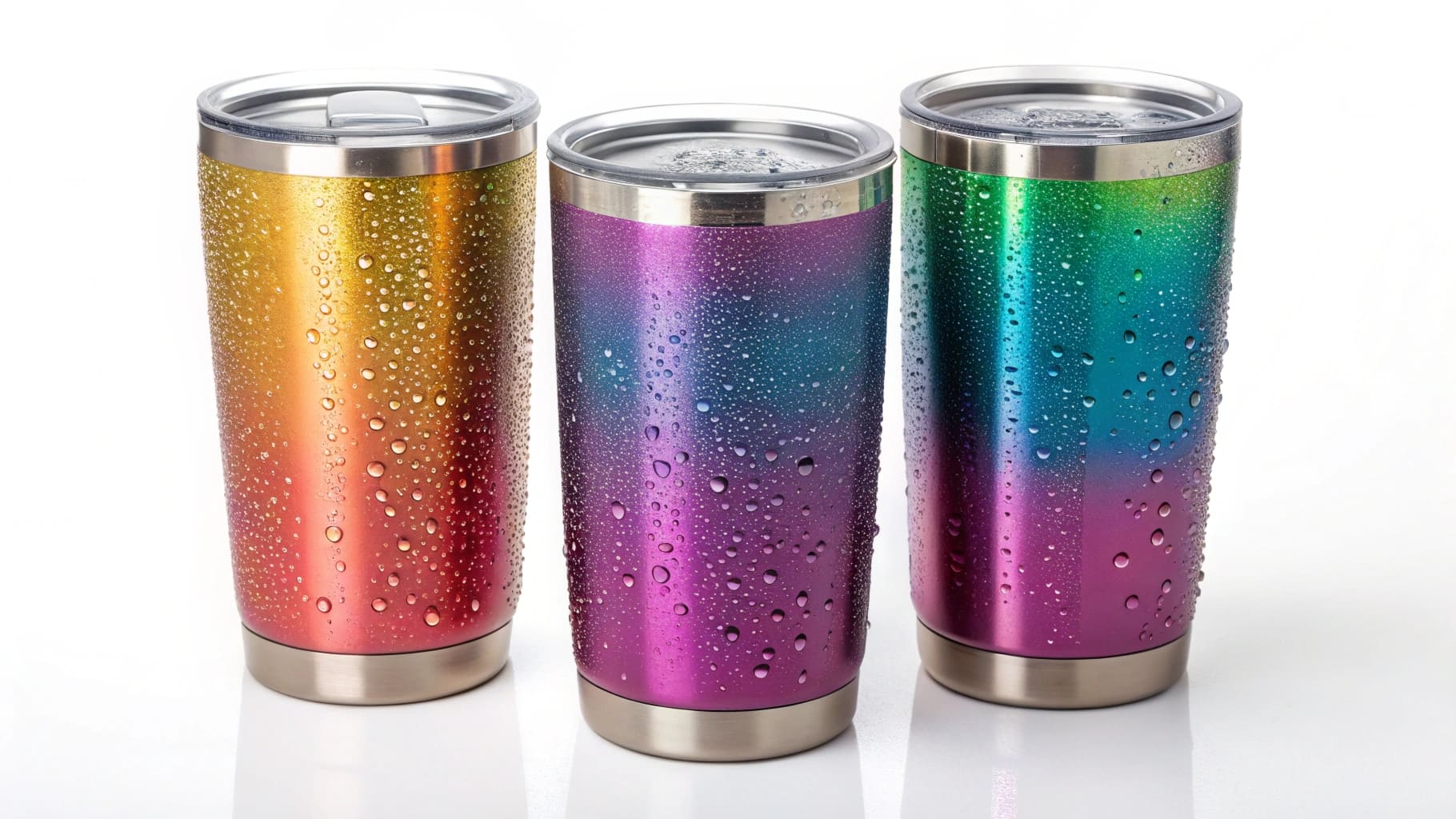
Yes, you must seal vinyl on a tumbler for commercial use. Proper sealing requires two steps: cleaning the surface with isopropyl alcohol before application, and coating the finished vinyl with an FDA-compliant clear epoxy or polyurethane after application. Without this, the vinyl will peel during regular washing.
I want to be direct here: vinyl is a fine decoration method for small runs and custom orders. But it has real limitations at scale. Understanding those limitations helps you make better decisions for your product line.
Vinyl vs. Other Decoration Methods for Bulk Orders
The two-step sealing process I described above works. When done correctly, it extends the life of a vinyl graphic from a few months to several years. But that process adds labor cost and time. It also requires quality control at the application stage. For buyers managing large volumes, this becomes a sourcing headache.
Here is a side-by-side view of the most common tumbler decoration methods:
| Method | Durability | Min. Order Qty | Cost per Unit | Dishwasher Safe |
|---|---|---|---|---|
| Vinyl + epoxy seal | Good | Low (50+) | Moderate | With sealing |
| Screen printing | Very good | Medium (200+) | Low to moderate | Yes |
| Laser engraving | Excellent | Medium (500+) | Low at scale | Yes |
| Pad printing | Good | Medium (300+) | Low | Limited |
For orders above 500 units, laser engraving is almost always the better choice. The unit cost drops significantly at volume. The finish is permanent. And it holds up through commercial dishwasher cycles without any sealing step. Screen printing is a solid middle option for buyers who need color branding at medium volume.
Vinyl makes the most sense for short-run custom orders, event merchandise, or situations where you need fast turnaround with limited budget. In those cases, seal it properly. Use a UV-resistant epoxy, not a standard craft-store sealer. And make sure the surface is clean and dry before the vinyl goes on.
Conclusion
Powder coating resists fingerprints and stains best. 18/8 stainless steel is the smartest material choice. Seal vinyl properly, or switch to laser engraving at scale.
-
"Manufacturing of Corrosion-Resistant Surface Layers by Coating ...", https://pmc.ncbi.nlm.nih.gov/articles/PMC10420097/. A materials-science source on powder coatings can support that thermoset powder coatings are used to improve surface durability, chemical resistance, and wear resistance compared with uncoated metal; it would not, by itself, prove every tumbler finish outperforms every painted finish. Evidence role: general_support; source type: paper. Supports: Powder-coated tumbler finishes generally resist fingerprints, stains, and abrasion better than painted or bare stainless steel surfaces.. Scope note: Support is likely contextual because performance depends on coating chemistry, surface preparation, cure conditions, and test method. ↩
-
"Vacuum Flask - HyperPhysics", http://hyperphysics.phy-astr.gsu.edu/hbase/thermo/vacfla.html. A heat-transfer reference can support that vacuum insulation reduces conductive and convective heat transfer, and food-contact guidance can support stainless steel’s common use in drinkware; this contextual evidence does not establish a universal “best” material ranking. Evidence role: mechanism; source type: education. Supports: Double-wall vacuum-insulated stainless steel is a strong material choice for insulated cups because vacuum insulation limits heat transfer and stainless steel is durable and widely used for food contact.. Scope note: The word “best” is evaluative and depends on cost, weight, durability, safety standards, and intended use. ↩
-
"Study of the Corrosion Behavior of Stainless Steel in Food Industry", https://pmc.ncbi.nlm.nih.gov/articles/PMC11012613/. A stainless-steel standards or metallurgy source can support that 18/8 commonly corresponds to AISI 304 stainless steel and is widely used for corrosion-resistant food-contact applications; it would not directly prove the claimed cost-performance optimum for all tumblers. Evidence role: general_support; source type: institution. Supports: 18/8 stainless steel is a common food-contact grade that provides corrosion resistance and practical durability for insulated drinkware.. Scope note: Temperature retention is mainly determined by insulation design, not steel grade alone, so the source would only partly support the combined claim. ↩
-
"Electropolishing of 316L Stainless Steel Small-Diameter Tubes", https://ui.adsabs.harvard.edu/link_gateway/2025JMEP...3413697F/PUB_HTML. A surface-finishing source can support that electropolishing removes microscopic surface peaks and reduces surface roughness on stainless steel compared with mechanically finished surfaces. Evidence role: mechanism; source type: paper. Supports: Electropolishing can make stainless-steel interiors smoother than brushed mechanical finishes.. Scope note: The exact roughness improvement depends on the starting finish, electrolyte, processing time, and quality control. ↩
-
"Vacuum Flask - HyperPhysics", http://hyperphysics.phy-astr.gsu.edu/hbase/thermo/vacfla.html. A thermodynamics or heat-transfer reference can support that a vacuum gap suppresses conduction and convection between walls, thereby reducing heat transfer in vacuum flasks and insulated containers. Evidence role: mechanism; source type: education. Supports: Double-wall vacuum construction improves thermal retention by reducing conductive and convective heat transfer.. Scope note: Actual temperature-retention time also depends on lid design, wall geometry, radiation barriers, initial liquid temperature, and ambient conditions. ↩
