
Are Stainless Steel Cups Dishwasher-Safe? Lab Methods and Label Wording
You thought stainless steel cups were tough enough for anything. Then customers started complaining. Peeling logos, dull finishes, and ruined insulation — all from the dishwasher.
Stainless steel cups are not always dishwasher-safe.1 The steel body itself can handle dishwasher heat just fine. But the full product — coatings, logos, vacuum seals, and lids — often cannot. Whether a cup is dishwasher-safe depends on how it is built, not just what it is made of.

I have been working with B2B buyers in the drinkware space for years. One thing I keep seeing is the same mistake made over and over again. A buyer orders a batch of stainless steel cups. The cups look great. The quality feels solid. Then the end customers start washing them in the dishwasher. A few weeks later, the complaints roll in. This is not a small problem. It can damage your brand and cost you real money. So let me break this down clearly for you.
Are Stainless Steel Cups Dishwasher-Safe?
You picked stainless steel because it seemed like the safest choice. Now you are not sure it was. That uncertainty is costing you customer trust every single day.
A bare stainless steel cup with no coating and no vacuum insulation is dishwasher-safe. The steel itself does not rust, warp, or break down under normal dishwasher conditions. However, most finished drinkware products include coatings, painted logos, rubber seals, or plastic lids — and these components are often not dishwasher-safe.

The steel grade matters, but it is not the main issue here. Both 304 and 316 stainless steel hold up well in dishwashers.2 The problems come from what is added on top of or around the steel.
Here is a breakdown of the most common product types and how they hold up in a dishwasher:
| Product Type | Steel Body | External Coating | Vacuum Seal | Dishwasher-Safe? |
|---|---|---|---|---|
| Single-wall cup, no coating | ✅ Safe | None | None | Yes |
| Single-wall cup, powder coated | ✅ Safe | ⚠️ May peel | None | Often No |
| Double-wall vacuum bottle | ✅ Safe | ⚠️ May peel | ⚠️ May weaken | Usually No |
| Double-wall, laser engraved | ✅ Safe | ✅ No coating | ⚠️ May weaken | Partial |
| Lid with rubber gasket | ✅ Safe | Varies | N/A | Often No |
The table above shows that the steel itself is almost never the problem. The real risk sits in the coatings and seals. When a customer puts a powder-coated vacuum bottle in the dishwasher, the hot water and detergent strip the coating. The bottle looks bad after just a few washes. This leads directly to returns and negative reviews.
For B2B buyers, this means one thing. You need to know exactly how each product is finished before you place an order. Ask your supplier for a full breakdown of materials used — not just the steel grade, but every component. Then match your care instructions to that information. If the coating cannot handle a dishwasher, the label must say so clearly.
Can a Stainless Steel Thermos Go in the Dishwasher?
You bought a vacuum-insulated thermos because it keeps drinks hot for hours. Now you are wondering if the dishwasher will kill that performance. It might.
A stainless steel thermos should generally not go in the dishwasher. The high heat inside a dishwasher can weaken the vacuum seal over time. Once the vacuum is compromised, the thermos loses its insulation ability.3 The steel body itself is fine, but the function of the product is not.
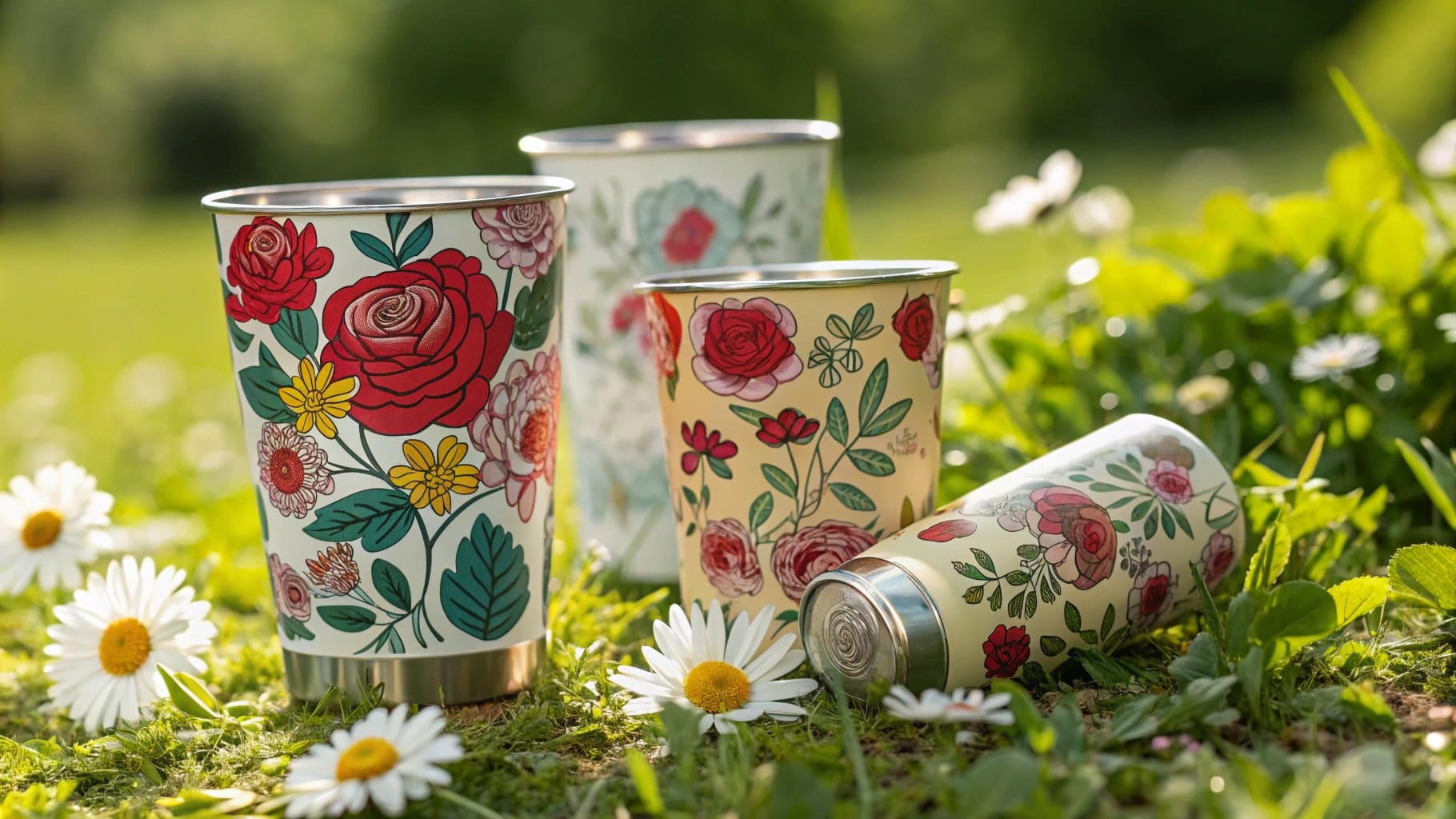
A thermos works because of a vacuum layer trapped between two walls of steel.4 That vacuum does the insulating work. It keeps cold drinks cold and hot drinks hot for hours. The vacuum is sealed during manufacturing. It is not something that can be repaired if it fails.
Here is what actually happens inside a dishwasher that hurts a thermos:
Heat stress on the vacuum seal
Dishwashers run at high temperatures — often between 140°F and 160°F.5 Some have heated drying cycles that push temperatures even higher. This repeated heat exposure puts stress on the seal around the vacuum layer. Over many wash cycles, the seal can slowly fail. Once it fails, air enters the vacuum layer. The bottle stops insulating.
Detergent and coating damage
Most thermoses have an external finish. This could be powder coat, paint, or a printed design. Dishwasher detergents are strong. They are designed to cut through grease and food. They are not gentle on decorative finishes. After repeated washing, the finish fades, chips, or peels.
Lid and gasket damage
The lid of a thermos usually has a rubber or silicone gasket inside.6 This gasket creates a watertight seal. Dishwasher heat softens and deforms rubber gaskets over time. A deformed gasket no longer seals properly. This leads to leaks.
| Component | Risk in Dishwasher | Result of Damage |
|---|---|---|
| Vacuum layer | Seal failure from heat | Loss of insulation |
| Powder coat finish | Peeling from detergent | Poor appearance |
| Lid gasket | Warping from heat | Leaking lid |
| Printed logo | Fading from chemicals | Brand damage |
| Steel body | None | No damage |
For buyers who are sourcing thermoses for private label, this is important product knowledge. Your end customers will expect dishwasher-safe convenience. If your product cannot deliver that, your label must be honest about it. A clear "hand wash only" label prevents complaints. A missing or misleading label creates them.
Why Can't You Put Yeti Cups in the Dishwasher?
Yeti is one of the most recognized drinkware brands in North America.7 People pay a premium for Yeti cups. Then they put them in the dishwasher and ruin them. Why does that keep happening?
Yeti cups are marked "hand wash only" because their powder coat finish and vacuum seal do not hold up to repeated dishwasher use. The steel body is perfectly safe in a dishwasher, but the complete product is not. This is a deliberate design choice, not a flaw.

Yeti uses thick powder coat finishes that give their products a premium look and feel. That finish is what people are paying for. It protects the steel and carries the brand identity. But powder coat and dishwasher detergent do not mix well over time. The finish degrades. The color dulls. The surface starts to chip.
Why the label says "hand wash only"
Yeti is not the only brand with this label. Most premium vacuum-insulated drinkware carries the same instruction. The reason is simple. The brand is protecting the customer experience. A cup that looks faded or chipped after three months of dishwasher use is a cup that generates bad reviews.
What this means for private label buyers
If you are sourcing vacuum-insulated stainless steel bottles for your own brand, you face the same situation Yeti faces. You have a choice to make at the product design stage. That choice is between a dishwasher-safe product and a premium-looking product.
Here is how those two paths compare:
| Design Choice | Appearance | Dishwasher-Safe? | Customer Expectation Risk |
|---|---|---|---|
| Powder coat finish | Premium, colorful | No | High — customers expect dishwasher use |
| Laser engraving only | Minimal, silver | Partial | Lower — logo survives better |
| No external finish | Plain, industrial | Yes | Low — honest and clear |
| Electroplating | Glossy, premium | No | High |
The honest approach is always to match your label to your product's real capabilities. If you order powder-coated bottles, put "hand wash only" on the label. If you want to market a dishwasher-safe bottle, build one from the ground up with that purpose in mind. That means no powder coat, no painted logos, and no rubber gaskets that degrade in heat.
I always recommend that B2B buyers raise this question early in the sourcing process. Ask the supplier directly. Can you show me test results for dishwasher safety? A reliable supplier will have documentation. A supplier who cannot produce any test data is a supplier you should be cautious about.
What lab testing looks like
Manufacturers who claim dishwasher-safe certification typically run their products through a standardized cycle test. This usually means 100 or more full dishwasher cycles at temperatures between 140°F and 160°F. After testing, the product is inspected for coating integrity, seal performance, and structural changes. The results are documented in a lab report.
As a buyer, you have the right to ask for this report. If you are placing a large order and your supplier claims the product is dishwasher-safe, request the test documentation before you finalize the order. This protects you from liability and from delivering a product that fails your customers.
Conclusion
Stainless steel is dishwasher-safe. Most finished drinkware products are not. Know the difference, check your supplier's test reports, and label your products honestly.
-
"Mechanical and Chemical Resistance of UV Coating Systems ... - PMC", https://pmc.ncbi.nlm.nih.gov/articles/PMC10304988/. Dishwasher-safety guidance for food-contact articles distinguishes between the base material and the complete article, noting that repeated mechanical, thermal, and chemical exposure can affect finishes, decorations, and attached components. Evidence role: general_support; source type: institution. Supports: Stainless steel cups are not always dishwasher-safe because dishwasher performance depends on the complete product construction.. Scope note: This supports the general principle rather than proving the safety of any specific cup model. ↩
-
"Study of the Corrosion Behavior of Stainless Steel in Food Industry", https://pmc.ncbi.nlm.nih.gov/articles/PMC11012613/. Technical references on 304 and 316 stainless steels describe both grades as corrosion-resistant austenitic alloys commonly used in kitchen, food-processing, and wash-down environments. Evidence role: expert_consensus; source type: education. Supports: 304 and 316 stainless steels generally tolerate dishwasher-like moisture, heat, and detergent exposure better than less corrosion-resistant materials.. Scope note: The source would support general corrosion resistance, not guarantee dishwasher safety for every fabricated product or finish. ↩
-
"Vacuum flask - Wikipedia", https://en.wikipedia.org/wiki/Vacuum_flask. Heat-transfer sources on vacuum insulation explain that introducing gas into the evacuated layer increases conductive and convective heat transfer, reducing the insulating performance of a vacuum flask. Evidence role: mechanism; source type: education. Supports: A compromised vacuum layer reduces a thermos’s insulation performance.. Scope note: This supports the physical mechanism of insulation loss but does not quantify the rate of performance decline for a particular bottle. ↩
-
"Vacuum flask - Wikipedia", https://en.wikipedia.org/wiki/Vacuum_flask. Descriptions of vacuum flasks explain that a double-walled vessel with an evacuated space reduces heat transfer by conduction and convection, forming the basis of thermos-style insulation. Evidence role: definition; source type: encyclopedia. Supports: A thermos insulates by using a vacuum layer between walls to reduce heat transfer.. Scope note: This supports the operating principle of vacuum flasks generally, not the construction details of every stainless steel thermos. ↩
-
"4655.8810 - MN Rules Part", https://www.revisor.mn.gov/rules/4655.8810/. Public-health and appliance references commonly specify household or commercial dishwashing wash and rinse temperatures in approximately the 140°F–160°F range, depending on cycle type and sanitizing requirements. Evidence role: statistic; source type: government. Supports: Dishwasher cycles commonly expose items to temperatures around 140°F to 160°F.. Scope note: Actual temperatures vary by appliance model, selected cycle, water-heater setting, and whether the dishwasher is household or commercial. ↩
-
"21 CFR 177.1210 -- Closures with sealing gaskets for food containers.", https://www.ecfr.gov/current/title-21/chapter-I/subchapter-B/part-177/subpart-B/section-177.1210. Food-container and closure design references identify elastomeric gaskets, commonly silicone or rubber, as sealing components used to create leak-resistant closures in bottles and containers. Evidence role: definition; source type: education. Supports: Thermos and bottle lids commonly use elastomeric gaskets to form watertight seals.. Scope note: This supports common closure design rather than proving that every thermos lid uses a rubber or silicone gasket. ↩
-
"yeti-20221231 - SEC.gov", https://www.sec.gov/Archives/edgar/data/1670592/000167059223000006/yeti-20221231.htm. Market and brand-recognition sources can document YETI’s prominent position in the North American insulated drinkware market through brand-awareness, sales, or market-share indicators. Evidence role: historical_context; source type: other. Supports: Yeti is a highly recognized drinkware brand in North America.. Scope note: Recognition is a market-dependent metric and may vary by survey method, product category, and year. ↩