
Which Coffee Mugs With Handles Keep Flavor Neutral for Offices in 2026?
Your office just upgraded the coffee machine. But the mugs are ruining the taste. Wrong materials do that. Here is what actually works.
A flavor-neutral coffee mug uses a non-porous, non-reactive interior that does not absorb or transfer any taste into the drink. Food-grade stainless steel, specifically 304 or 316 grade, is the most reliable material for this. It does not interact with acidic coffee and stays neutral after thousands of washes1.

I have spent over a decade working with stainless steel drinkware manufacturers in China. In that time, I have sourced mugs for office clients across North America and Europe. One thing I hear constantly from procurement managers is this: the mug material matters more than the coffee brand. This post breaks down exactly what to look for when you are buying coffee mugs in bulk for an office environment in 2026.
What Is the Healthiest Material for Coffee Mugs?
You want your team drinking from something safe. But with so many materials on the market, it is easy to pick the wrong one and not know it until problems show up.
The healthiest material for a coffee mug is food-grade stainless steel, either 304 or 316 grade. It is non-porous, BPA-free, and does not leach chemicals even when holding hot acidic drinks2. Ceramic is a safe second option, but it can crack over time. Plastic should be avoided for hot beverages.

Let me break this down by material so you can see the differences clearly.
How Do the Main Materials Compare?
| Material | Flavor Neutral | Safe for Hot Drinks | Durability | Best For |
|---|---|---|---|---|
| 304 Stainless Steel | Yes | Yes | Very High | Bulk office orders |
| 316 Stainless Steel | Yes | Yes | Excellent | Acidic drinks, premium orders |
| Ceramic | Mostly | Yes | Medium | Light office use |
| Plastic (BPA-free) | No | Sometimes | Low | Cold drinks only |
| Glass | Yes | Yes | Low | Display, not daily office use |
316 stainless steel contains molybdenum, which gives it better resistance to corrosion from acidic liquids like coffee3. For offices where people drink espresso or cold brew with citrus, 316 is the smarter pick4. It costs a little more per unit, but it holds up longer and never affects taste.
Ceramic looks great and feels familiar, but it develops micro-cracks over time. Those cracks trap old coffee oils and bacteria. Once that happens, even a clean mug can make fresh coffee taste off. For an office with a high-volume dishwasher running daily, ceramic breaks down faster than most people expect.
Plastic is the one material I always tell buyers to stay away from for hot drinks. Even BPA-free plastic can release other chemical compounds when heated repeatedly. The science on this is still developing5, but the risk is not worth it when better options exist at similar price points.
If your client is a health-conscious company or a corporate wellness program, leading with 316 stainless steel as your material of choice is a strong selling point.
What Are the Disadvantages of Yeti?
Yeti is everywhere. Retail buyers love it. But when a procurement manager asks me if they should just order Yeti mugs in bulk for the office, my answer is always the same: it depends on what you are optimizing for.
Yeti's main disadvantages for bulk B2B office procurement are cost, limited branding options, and heavier shipping weight. A single Yeti mug retails for significantly more than a comparable double-wall vacuum-insulated mug from a mid-tier manufacturer6.
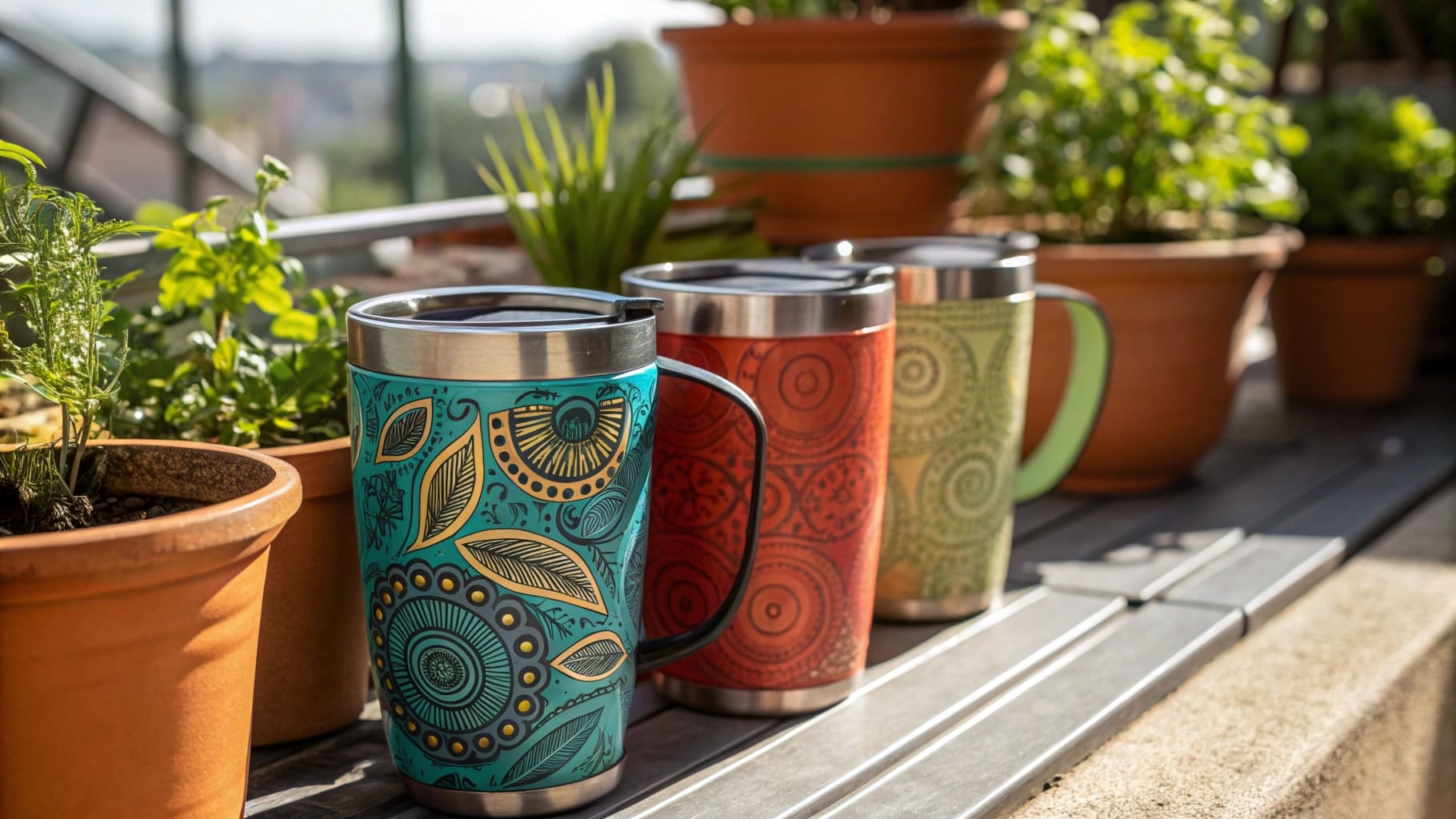
Here is how I explain it to procurement officers who come to me after exploring Yeti for corporate orders.
Where Does Yeti Fall Short for Office Bulk Orders?
| Factor | Yeti | Mid-Tier B2B Manufacturer |
|---|---|---|
| Unit Price | High | 30–40% lower |
| MOQ Flexibility | Limited | 500–1,000 units typical |
| Custom Logo | Limited options | Full customization available |
| Color Options | Set catalog | Custom powder coat available |
| Shipping Weight | Heavier | Varies by design |
| Insulation Quality | Excellent | Comparable at this tier |
The insulation technology in a well-made double-wall vacuum mug from a reputable Chinese manufacturer is nearly identical to what Yeti offers. The vacuum seal and inner wall design follow the same engineering principles7. What you are paying extra for with Yeti is the brand name.
For a company that is buying 1,000 mugs to put in office pantries or give as corporate gifts, that brand premium does not add value. The employees are not buying the mugs. The company is. What matters is that the mug looks good, holds temperature well, and has the company logo on it.
I have worked with startup founders who initially wanted to order Yeti because they thought it signaled quality. After we ran the numbers, the same budget that covered 400 Yeti mugs covered 900 custom-branded mugs with the same insulation performance. That is more than double the reach for the same spend.
The heavier weight of Yeti products also increases freight costs when shipping internationally. For buyers importing from China to Canada or the US, every extra gram adds up across a large order.
What Kind of Mug Does Coffee Taste Best In?
This is the question most buyers do not think to ask. They focus on insulation and price. But the interior surface of a mug directly affects how coffee tastes. Get this wrong and even great coffee tastes flat or off.
Coffee tastes best in a mug with an uncoated food-grade stainless steel interior. This surface is smooth, non-reactive, and does not absorb any previous flavors. Pair that with a powder-coated exterior for grip comfort, and you have the best setup for office use.

There are a few design details that directly affect coffee taste and overall experience. Let me walk through each one.
Which Design Features Matter Most for Flavor and Use?
| Feature | Why It Matters | What to Look For |
|---|---|---|
| Interior Surface | Affects taste directly | Uncoated 304 or 316 stainless steel |
| Exterior Finish | Grip and feel | Powder coat, no interior coating |
| Mouth Opening | Affects aroma delivery | Wide mouth, 70mm or wider |
| Handle Design | Comfort and control | Contoured, fits multiple grip styles |
| Lid Type | Prevents spills and heat loss | Leak-proof, easy to clean |
| Wall Construction | Temperature retention | Double-wall vacuum insulated |
The interior coating issue is something I see buyers overlook constantly. Some manufacturers apply a colored or epoxy coating to the inside of the mug to make it look cleaner or more polished. That coating can chip over time, especially in commercial dishwashers8. Once it chips, small fragments can end up in the drink. More importantly, coated interiors can hold onto coffee oils and affect the next cup's taste.
An uncoated stainless steel interior is the cleanest option. It releases nothing into the drink. It cleans completely in a standard dishwasher. And it does not degrade over time the way coatings do.
The mouth opening also matters more than people expect. Coffee aroma is a big part of how we taste it. A wide mouth opening lets that aroma reach your nose as you drink. A narrow opening traps it. For office mugs where people are taking quick sips between meetings, a wide mouth opening improves the perceived quality of the coffee without changing the coffee itself.
Handle design affects daily satisfaction. A flat, thin handle works for light ceramic cups but feels wrong on a heavier stainless steel mug. A contoured handle that supports multiple grip positions, full-hand wrap, two-finger hold, or thumb-and-forefinger grip, means different users can hold it comfortably. In an office with 50 or 500 people, that range of comfort matters.
Conclusion
For office bulk orders in 2026, choose uncoated 304 or 316 stainless steel mugs with wide mouths, contoured handles, and leak-proof lids. Skip the retail brand premium. Prioritize material and design.
-
"Study of the Corrosion Behavior of Stainless Steel in Food Industry", https://pmc.ncbi.nlm.nih.gov/articles/PMC11012613/. Regulatory and materials science sources confirm that austenitic stainless steels, including grades 304 and 316, are approved for food contact applications due to their corrosion resistance and low reactivity with acidic substances under normal use conditions. Evidence role: mechanism; source type: government. Supports: That 304 and 316 stainless steel are chemically stable and non-reactive when in contact with acidic food and beverages. Scope note: Sources may address general food-contact approval rather than specifically measuring flavor transfer after repeated wash cycles ↩
-
"Stainless Steel Leaches Nickel and Chromium into Foods During ...", https://pmc.ncbi.nlm.nih.gov/articles/PMC4284091/. Assessments by food safety authorities including the European Food Safety Authority (EFSA) and the U.S. Food and Drug Administration (FDA) classify food-grade stainless steel as acceptable for food contact, with metal migration levels under normal conditions considered negligible and within established safety thresholds. Evidence role: expert_consensus; source type: government. Supports: That food-grade stainless steel releases negligible levels of metals into beverages under normal use conditions and is considered safe for food contact. Scope note: Some studies note trace nickel and chromium migration under prolonged exposure to highly acidic solutions; regulatory approval reflects acceptable risk rather than absolute zero leaching ↩
-
"[PDF] Effect of Molybdenum Additions on the Microstructures and ... - OSTI", https://www.osti.gov/servlets/purl/1439854. Metallurgical references, including the ASM Handbook and Wikipedia's entry on stainless steel, document that the addition of 2–3% molybdenum in grade 316 stainless steel significantly improves resistance to pitting corrosion in acidic and chloride-rich environments relative to grade 304. Evidence role: mechanism; source type: encyclopedia. Supports: That molybdenum in 316 stainless steel enhances resistance to pitting and crevice corrosion in acidic or chloride-containing environments compared to 304. ↩
-
"Effect of HAc on the Metastable Pitting Corrosion of 304 SS in NaCl ...", https://pmc.ncbi.nlm.nih.gov/articles/PMC9144796/. Industry and standards bodies, including the British Stainless Steel Association and ASTM International, document that grade 316 stainless steel, owing to its molybdenum content, demonstrates improved resistance to pitting and crevice corrosion in environments containing organic acids, making it preferable for prolonged contact with acidic food and beverage products. Evidence role: general_support; source type: institution. Supports: That 316 stainless steel offers superior resistance to corrosion from organic acids and acidic food and beverage contact compared to 304. Scope note: The practical difference in corrosion performance between 304 and 316 in typical beverage-contact scenarios may be marginal under normal use conditions; 316 is primarily advantageous in more aggressive chemical environments ↩
-
"Estrogenic chemicals often leach from BPA-free plastic products that ...", https://pmc.ncbi.nlm.nih.gov/articles/PMC4063249/. Peer-reviewed studies, including research published in Environmental Health Perspectives, have identified that BPA substitutes such as bisphenol S (BPS) and bisphenol F (BPF) can migrate from plastic food-contact materials under thermal stress, with some exhibiting endocrine-disrupting properties similar to BPA. Evidence role: general_support; source type: paper. Supports: That BPA-free plastics may leach alternative bisphenol compounds or other chemicals when exposed to heat. Scope note: The body of evidence on BPA alternatives is still accumulating, and regulatory consensus on safe exposure thresholds for these compounds has not been fully established ↩
-
"YETI New Arrivals", https://www.yeti.com/collections/new-arrivals. Current retail listings on major e-commerce platforms show Yeti travel mugs priced in the $30–$45 range per unit, while comparable double-wall vacuum-insulated mugs from non-branded manufacturers are available at wholesale for $5–$15 per unit at volume, reflecting a significant brand premium. Evidence role: statistic; source type: other. Supports: That Yeti branded mugs carry a substantial retail price premium over functionally comparable vacuum-insulated mugs. Scope note: Retail pricing fluctuates and wholesale pricing varies by order volume, manufacturer, and customization requirements; figures cited are approximate and should be verified against current market data ↩
-
"The Best Travel Mug Ever (And It's Not Even Close) - YouTube", https://www.youtube.com/watch?v=5F3Z8J6GJF4. Thermodynamic principles governing vacuum-insulated vessels—specifically the suppression of conductive and convective heat transfer through an evacuated inter-wall space—are well established in engineering literature and apply uniformly across manufacturers employing equivalent construction standards. Evidence role: mechanism; source type: research. Supports: That double-wall vacuum insulation operates on consistent thermodynamic principles regardless of brand, with performance determined primarily by vacuum integrity and wall construction rather than brand identity. Scope note: Independent comparative testing of specific branded versus generic mugs is limited in peer-reviewed literature; performance equivalence depends on manufacturing quality control, which varies by supplier ↩
-
"Observation of the Effect of Aging on the Structural Changes ... - PMC", https://pmc.ncbi.nlm.nih.gov/articles/PMC10780686/. Materials science and food safety literature documents that organic coatings applied to food-contact surfaces are subject to mechanical and thermal degradation under repeated commercial dishwasher conditions, including exposure to alkaline detergents and temperatures exceeding 60°C, which can cause delamination and particulate release. Evidence role: mechanism; source type: research. Supports: That polymer-based interior coatings on food-contact vessels can degrade, chip, or delaminate under repeated high-temperature dishwasher cycles. Scope note: Specific testing data on interior coatings used in consumer stainless steel mugs is limited in publicly available literature; findings are extrapolated from broader food-contact coating research ↩