
Handle vs Strap: Which Carry Options Suit 750ml Water Bottles for OEM 2026?
If you are placing an OEM order for 750ml water bottles in 2026, the carry option you choose can make or break your product. Get it wrong, and returns follow.
The right carry option for a 750ml OEM water bottle depends on your end-user. Handles work best for office and gym users who need quick access. Straps work best for outdoor users who carry bags or backpacks. Knowing your buyer decides everything.
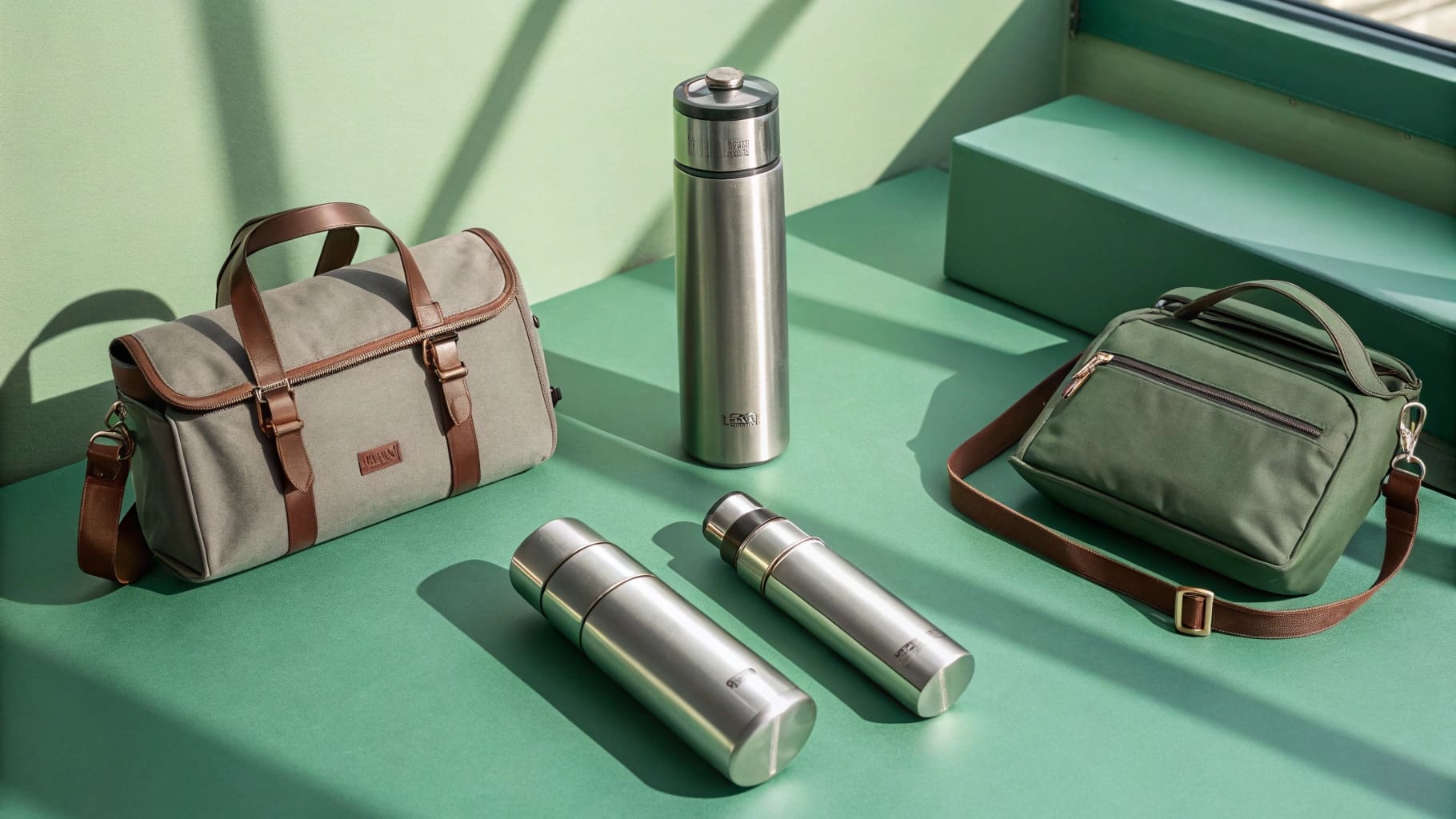
Carry options sound like a small detail. But I have seen B2B buyers lose margin because they locked into the wrong design too early. What follows is what I know about handles, straps, bottle sizing, and supplier quality — so you can place smarter orders in 2026.
What Is the Best Water Bottle to Carry?
Most buyers think the bottle itself is the product. It is not. The carry experience is the product.
The best water bottle to carry is one that matches how your end-user moves. A handle suits someone at a desk or in a gym. A strap suits someone on a trail or commute. Neither is better in every case — the use case decides.
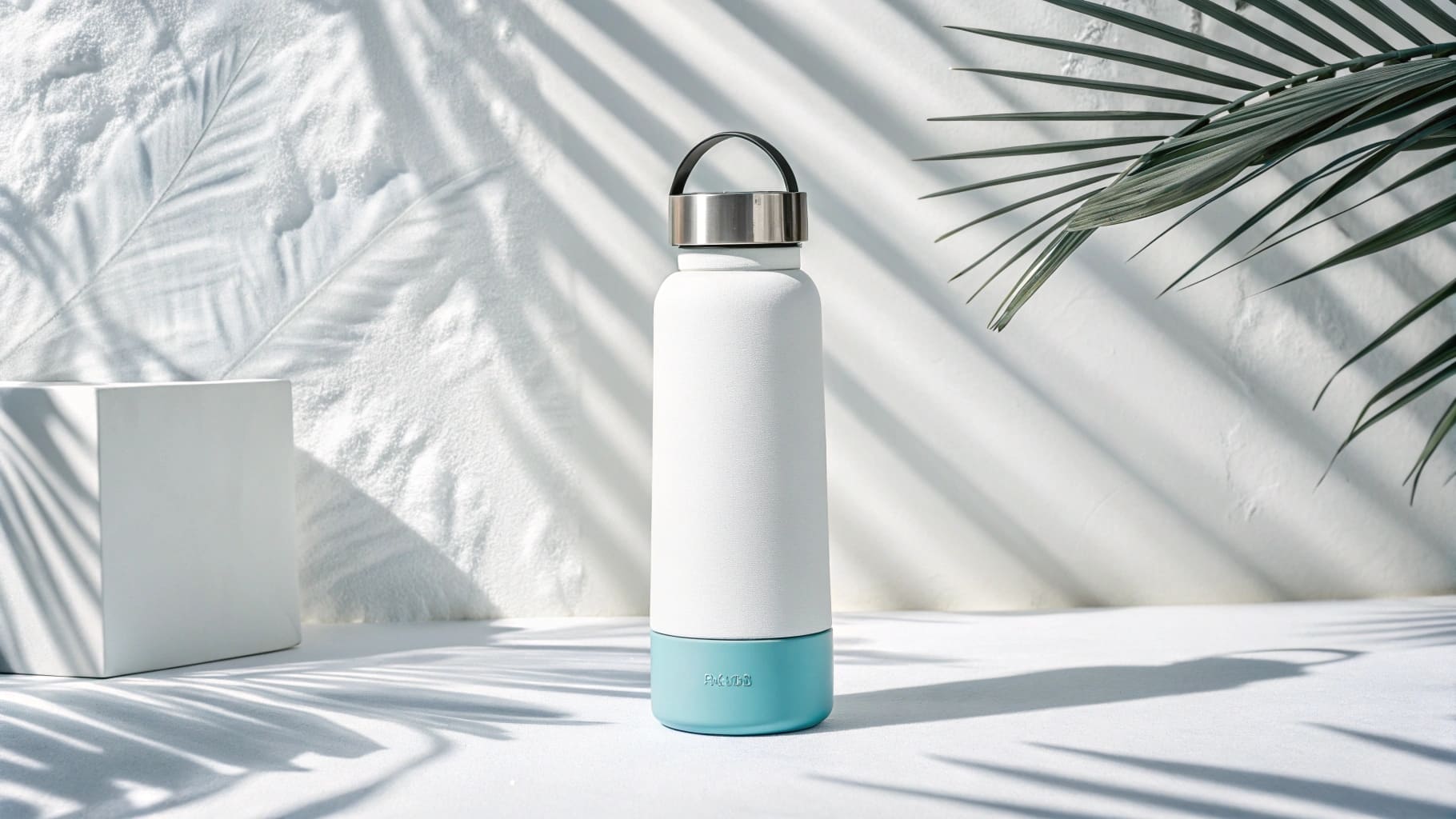
Handle vs Strap: What Is the Real Trade-Off?
I get this question from procurement buyers more than almost any other. The answer is not about aesthetics. It is about function, tooling cost, and lead time.
Handles: What You Get and What You Pay
An integrated handle on a 750ml bottle adds roughly 15 to 25 grams. That depends on whether you go hollow-core or solid construction. For buyers targeting office workers or gym users, a handle is the right call. It is intuitive. There is no extra part to lose or break.
The problem is cost and time. New handle molds typically require 8 to 12 weeks of lead time1. The tooling investment runs higher than a standard smooth-body bottle. If you are testing a new market, that is a big commitment before you have proof of demand.
| Factor | Handle | Strap |
|---|---|---|
| Added weight | 15–25 grams | 5–15 grams |
| Tooling cost | Higher | Lower |
| Lead time for new mold | 8–12 weeks | Shorter or none |
| Best use case | Office, gym, daily carry | Outdoor, commute, adventure |
| MOQ flexibility | Lower | Higher |
| Customization flexibility | Fixed design once molded | Easy to swap or upgrade |
Straps: What Is Gaining Ground in 2026
Strap systems — especially carabiner-compatible loops — are growing fast in 2026 order forecasts from both North American and European importers. The reason is simple. End-users want to attach their bottle to a bag or backpack. A strap makes that possible. A handle does not.
For OEM buyers, straps offer a different kind of value. You can source a standard base bottle at a lower MOQ and add an aftermarket strap to build a differentiated product line. You skip the expensive mold. You keep your cash flexible. I have worked with buyers who used this approach to test three product variants in one season — something that would have been impossible with handle-integrated bottles.
If your end customers are in the outdoor or adventure segment, straps are no longer optional. They are expected.
How Big Is a 750ml Water Bottle?
Size sounds straightforward. But I have seen buyers get surprised when their bottles do not fit standard cup holders or bag pockets. That surprise turns into customer complaints.
A 750ml stainless steel water bottle is typically 270 to 290mm tall with a diameter of 70 to 75mm2. That size fits most car cup holders and the side pockets of standard bags — but only if you stay within those ranges.
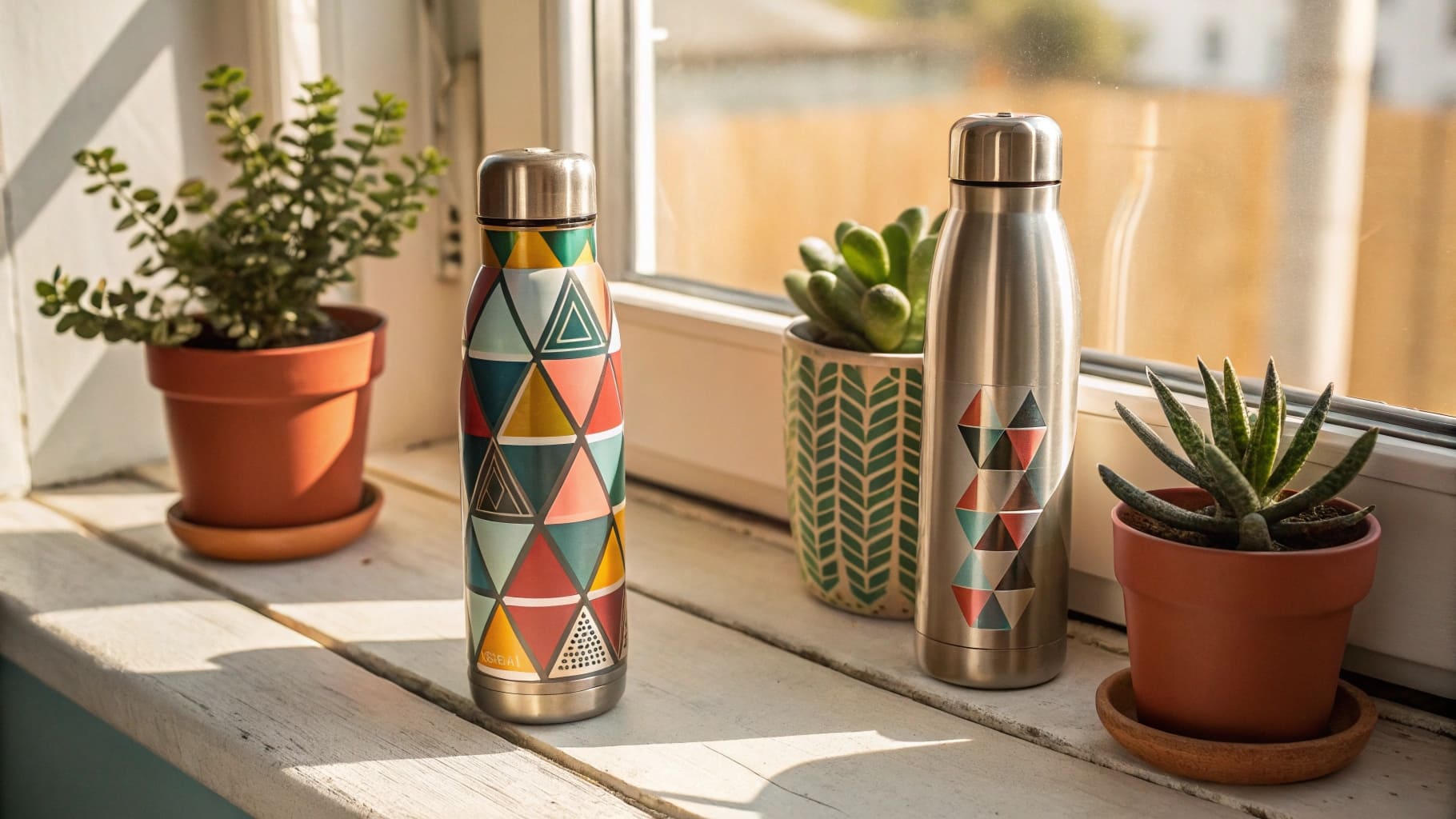
Why 750ml Is the Right Capacity for Most B2B Buyers
The 750ml size is not popular by accident. It sits at a functional sweet spot that most other capacities miss.
The Ergonomic Case for 750ml
A 500ml bottle runs empty too fast. A 1000ml bottle is too heavy and too wide for most bags. The 750ml size covers a full workday for most users without the bulk of a larger bottle. That matters in office environments, gym bags, and commuter backpacks where space is real and limited.
| Capacity | Height (approx.) | Diameter (approx.) | Fits cup holder? | Fits bag side pocket? |
|---|---|---|---|---|
| 500ml | 220–240mm | 65–70mm | Yes | Yes |
| 750ml | 270–290mm | 70–75mm | Yes (most) | Yes (most) |
| 1000ml | 300–320mm | 75–85mm | Rarely | Rarely |
For OEM customization in 2026, I am seeing more buyers ask for powder coating in matte finishes. The reason is grip. As the bottle gets taller and heavier, grip texture matters more. A smooth stainless steel surface on a filled 750ml bottle is harder to hold with one hand. Matte powder coating solves that without changing the form factor3.
If you are targeting the North American or European retail channel, matte finishes also photograph better on shelf and online. That is a small thing but it matters to your downstream buyer.
Who Makes the Best Stainless Steel Water Bottle?
Every supplier will tell you they are the best. That is not useful. What is useful is knowing what to check.
The best stainless steel OEM manufacturer for your 750ml order is the one who can prove quality with documentation — not just claim it in a sales call.
How to Evaluate an OEM Supplier Before You Commit
I have seen certificate fraud. I have seen bottles with walls too thin to hold vacuum insulation past six months. I have also worked with suppliers who deliver on every spec, every time. The difference comes down to three things: material proof, production control, and prototyping capability.
Material Certification: What to Ask For
Food-grade 304 stainless steel is the baseline for most markets. If your bottles are going into Europe, 316 stainless steel is worth asking about — it has higher corrosion resistance and a cleaner compliance story4. Either way, ask for mill certificates. A real supplier has them. A supplier who delays or deflects on mill certificates is a supplier I would not trust with my order.
For European market entry, check whether your supplier can provide EN12546-1 compliance documentation. This is a European standard for insulated vessels. Having it removes friction at customs and gives your retail or distribution partners confidence in the product.
| Certification | What It Covers | Market Relevance |
|---|---|---|
| EN12546-1 | Insulated vessels for household use | Europe |
| FDA compliance (food contact) | Material safety for food and drink contact | North America |
| Mill certificate | Steel grade and origin proof | All markets |
| SGS or Bureau Veritas test reports | Third-party product testing | All markets |
Production Control: Why Automation Matters
Wall thickness consistency is something many buyers never check until a batch fails. In a 750ml bottle, inconsistent wall thickness means inconsistent vacuum performance5. That means some bottles in your order keep drinks cold for 24 hours and some keep them cold for 8. That inconsistency damages your brand.
Suppliers who have invested in automation tend to produce tighter wall thickness tolerances. Ask about their quality control process on the production line, not just at final inspection.
Another thing to check: laser welding versus glue sealing for the vacuum chamber. Laser welding is stronger and lasts longer. Glue sealing is cheaper and fails sooner6. If a supplier is using glue sealing and not telling you, that is the kind of thing that shows up in product reviews 18 months after your order ships.
Prototyping: The Carry Mechanism Takes Iteration
If you are customizing a handle or strap on a 750ml bottle, expect two to three prototype rounds before you get it right. The balance between durability and comfort is harder to achieve than it looks on a spec sheet. A good OEM partner will tell you this upfront. A supplier who promises one prototype and final production is cutting corners or cutting corners in communication.
I always tell buyers: the supplier who manages your prototype process well is the supplier who will manage your production run well. How they handle early problems tells you everything.
Conclusion
For 2026 OEM orders, match your carry option to your end-user, confirm your 750ml dimensions fit your target channels, and verify your supplier with documentation before you commit.
-
"Understanding Lead Times in Injection Molding for Production ...", https://www.aprios.com/insights/lead-times-in-injection-molding-essential-insights-for-engineers. Industry sources on injection molding and tooling production generally cite lead times of 6–12 weeks for custom molds depending on complexity, material, and supplier capacity, which contextually supports the 8–12 week range stated in the article. Evidence role: general_support; source type: institution. Supports: Typical tooling and mold production lead times in consumer goods manufacturing. Scope note: Published lead time figures vary widely by region, mold complexity, and supplier workload; the cited range should be treated as a general benchmark rather than a guaranteed industry standard. ↩
-
"Water Bottle - Single-Use Dimensions & Drawings", https://www.dimensions.com/element/water-bottle-single-use. The stated dimensions of 270–290mm height and 70–75mm diameter for 750ml stainless steel bottles are consistent with commonly listed product specifications from major manufacturers, though no single international dimensional standard governs this capacity class. Evidence role: statistic; source type: other. Supports: Standard physical dimensions of 750ml stainless steel insulated water bottles. Scope note: Bottle dimensions vary by manufacturer and design; the ranges given represent a common market cluster rather than a formally standardized specification. ↩
-
"Wear Resistant Coatings with a High Friction Coefficient Produced ...", https://pmc.ncbi.nlm.nih.gov/articles/PMC6747828/. Surface texture influences the coefficient of friction between a container and the human hand; matte and textured coatings generally increase surface roughness compared to polished or glossy finishes, which tribological studies associate with improved grip under dry and wet conditions. Evidence role: mechanism; source type: research. Supports: The effect of surface texture and coating type on friction and grip for hand-held cylindrical objects. Scope note: Specific data on powder-coated stainless steel water bottles is not widely available in academic literature; the mechanism is supported by general tribology principles rather than product-specific testing. ↩
-
"Deciding on the Best Material – 304 vs. 316 Stainless Steel", https://www.polycase.com/techtalk/steel-enclosures/304-vs-316-stainless-steel.html. Grade 316 stainless steel contains 2–3% molybdenum, which increases resistance to pitting and crevice corrosion compared to grade 304, a distinction documented in materials science literature and relevant to food contact applications in corrosive or acidic environments. Evidence role: mechanism; source type: encyclopedia. Supports: The superior corrosion resistance of 316 stainless steel compared to 304, attributable to its molybdenum content. Scope note: The claim of a 'cleaner compliance story' for European markets is contextual; European food contact material regulations assess migration limits rather than steel grade alone, so 316 does not automatically confer regulatory advantage over 304. ↩
-
"Research on the design and thermal performance of vacuum ...", https://www.sciencedirect.com/science/article/pii/S2214157X24014680. In double-walled vacuum-insulated containers, thermal performance depends on the integrity of the vacuum gap and the uniformity of the inner and outer walls; variations in wall thickness can compromise vacuum gap consistency and increase conductive heat transfer, as described in heat transfer engineering literature. Evidence role: mechanism; source type: research. Supports: The relationship between wall thickness uniformity and thermal insulation effectiveness in vacuum-insulated double-walled containers. Scope note: Peer-reviewed studies specifically examining wall thickness variation in consumer water bottles are limited; the mechanism is supported by general heat transfer and vacuum insulation engineering principles. ↩
-
"Vacuum flask - Wikipedia", https://en.wikipedia.org/wiki/Vacuum_flask. Laser welding creates a continuous metallurgical bond that maintains vacuum integrity under thermal cycling and mechanical stress, whereas adhesive seals are subject to degradation from temperature variation and outgassing, characteristics documented in materials joining literature. Evidence role: mechanism; source type: research. Supports: The structural and longevity advantages of laser welding over adhesive bonding in vacuum-sealed metal assemblies. Scope note: Published comparisons specifically addressing vacuum-insulated consumer bottle manufacturing are limited; the general engineering principles of weld versus adhesive joint durability provide contextual rather than direct product-specific support. ↩