
Marine Stainless Cup Holders: Are 316 Steel, Drain Holes, and Salt Spray AQL Worth the Extra Cost?
Most buyers treat stainless steel as stainless steel. That mistake costs them returned goods, angry clients, and a damaged reputation — especially in marine markets.
Marine stainless cup holders require 316-grade steel, drain holes, and verified salt spray AQL testing. These three factors directly determine whether a product survives harsh coastal conditions or corrodes within months of use. Skipping any one of them is a sourcing risk you cannot afford.
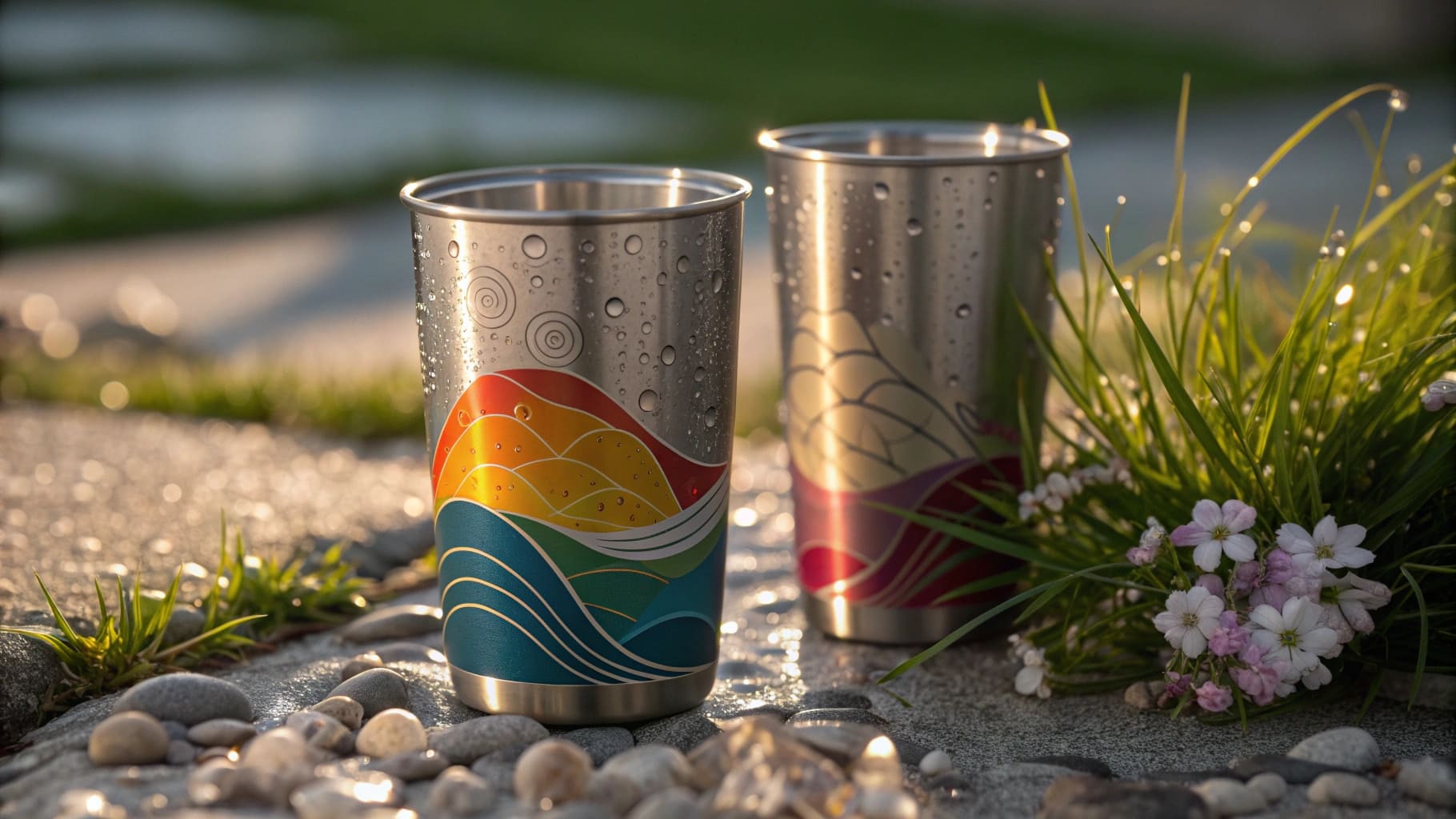
I have worked with buyers who sourced standard 304 stainless cup holders and shipped them to coastal hospitality clients. Six months later, the rust complaints came in. The product looked fine on paper. The problem was not price or branding. It was material specification. Marine environments are simply different, and your sourcing checklist must reflect that. Here is what you need to know before you place your next order.
Is It Healthy to Drink From a Stainless Steel Cup?
Many buyers focus on price and appearance. They never stop to ask whether the product is actually safe for their end customers to use.
Drinking from a stainless steel cup is healthy when the cup is made from certified food-grade steel. Food-grade 304 or 316 stainless steel does not leach chemicals into beverages. It is non-reactive and does not affect taste.1 The key condition is that no interior coatings or linings are applied.

This is a question I take seriously, because my clients' customers are the ones drinking from these cups every day. If the interior of a stainless steel cup has a paint coating, an epoxy lining, or an untested surface treatment, the safety picture changes completely. A plain, polished stainless steel interior is the safest choice.
The other factor is the steel grade itself. Not all stainless steel sold in the market is genuine 304 or 316. Some factories use lower-grade steel and label it incorrectly. This is one of the pain points I hear most from buyers — certificate fraud is real. The only way to protect yourself is to request mill certificates and verify them through a third-party lab.2
Here is what I look for when I review a sample for health safety:
| Check Point | What to Look For | Why It Matters |
|---|---|---|
| Interior surface | No coatings, smooth polish | Coatings can flake or leach |
| Material certificate | SGS or equivalent third-party test | Confirms actual steel grade |
| Steel grade marking | 304 or 316 stamped or documented | Rules out substandard substitutes |
| Welding areas | No dark staining or rough seams | Rough welds trap bacteria |
| Smell test | No chemical odor from interior | Indicates clean, uncoated surface |
When I ship stainless steel cups to buyers in North America and Europe, I always include documentation. Buyers like Mark, who distribute under their own brand, need this paperwork to protect themselves in their home market. A health scare with a private-label product has very serious consequences. Getting the certificate right at the sourcing stage is far cheaper than a product recall.
What Is the Healthiest Metal to Drink From?
You may be sourcing multiple product types for different clients. Knowing which metal is actually safest gives you a stronger position when your customers ask.
Stainless steel is the healthiest metal for drinking vessels. Unlike aluminum, it does not require an interior lining to prevent leaching. Unlike copper, it does not react with acidic drinks. Food-grade 304 and 316 stainless steel are both inert and stable across a wide range of beverages and temperatures.
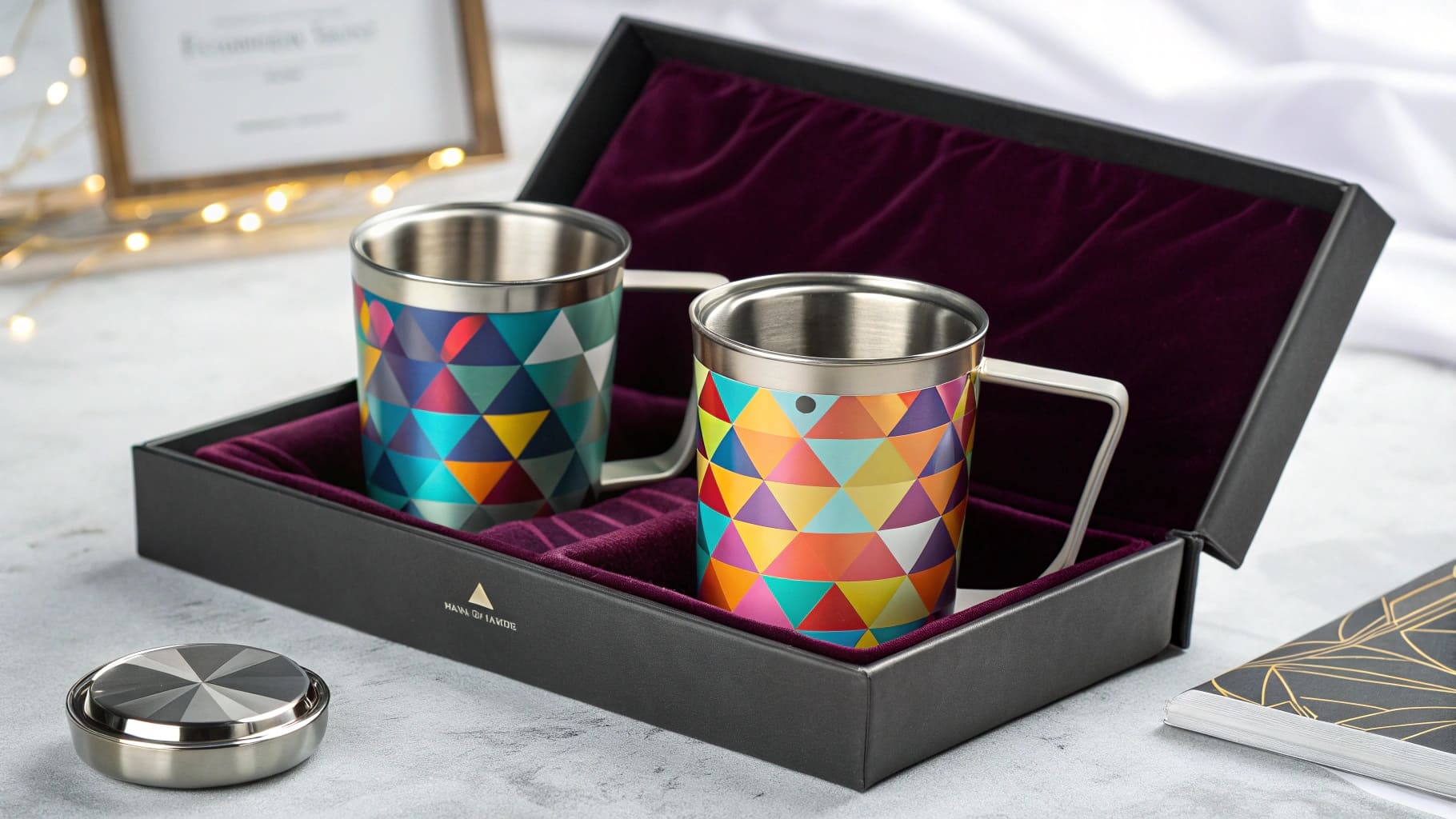
I want to be clear about why this comparison matters for B2B buyers. Your clients — whether they are corporate procurement teams or retail brands — will face questions from their own customers. The healthiest metal claim needs to hold up. Let me break down how stainless steel compares to the alternatives.
Aluminum is light and cheap. But it reacts with acidic drinks like coffee and juice. Most aluminum bottles use an interior lining to prevent this. That lining introduces its own material safety questions. If the lining chips or degrades, the user is exposed to whatever is underneath.
Copper has natural antibacterial properties. But copper reacts with acidic drinks and can leach into the liquid if used repeatedly over time. It also requires more careful cleaning.
Titanium is very safe and very light. But it is expensive at scale. It is a good option for premium individual products, not for bulk B2B orders where price plays a direct role.
Stainless steel sits in the middle. It is affordable at scale, genuinely inert, and well-supported by global food safety certifications. For marine cup holders specifically, 316-grade steel adds molybdenum to the alloy. That molybdenum content is what makes 316 resistant to chloride attack3 — the exact type of corrosion that salt spray causes.
| Metal | Leaching Risk | Suitable for Marine Use | Cost at Scale |
|---|---|---|---|
| 304 Stainless Steel | Very low | Moderate | Low |
| 316 Stainless Steel | Very low | High | Medium |
| Aluminum | Medium (lining dependent) | Low | Low |
| Copper | Medium | Low | Medium |
| Titanium | Very low | High | High |
For buyers sourcing marine cup holders, 316 stainless steel is the clear choice. It costs more than 304. But the cost difference between 304 and 316 is small compared to the cost of a product failure complaint or a warranty return from a marine client.
Can Water Bottles Grow Mold?
You might assume that stainless steel is mold-proof. That assumption has led more than a few buyers into trouble.
Yes, water bottles and cup holders can grow mold. Mold does not grow on the steel itself. It grows in trapped moisture — inside seams, under lids, around gaskets, and in any area where water sits and does not drain. This is especially common in marine cup holders without proper drain holes.
I want to explain exactly how this happens, because it is a design issue, not a material issue. A marine cup holder sits on a boat deck. It gets wet from rain, sea spray, and spilled drinks. If the holder has no drain holes, water pools at the bottom. Organic material — dirt, salt, drink residue — mixes with that standing water. Mold grows within days in the right temperature conditions.
This is not a rare edge case. I have seen photos from buyers whose marine clients reported mold growing under cup holders fixed to teak decking. The steel was fine. The problem was the design. No drain holes meant no drainage. No drainage meant constant moisture. Constant moisture meant mold.
The fix is simple but it must be specified at the design stage. Drain holes should be placed at the lowest point of the cup holder, sized large enough to allow free water flow, and smooth enough on the edge to prevent debris buildup.
Here is how I recommend specifying drain holes in a supplier brief:
| Specification Point | Recommended Standard | Notes |
|---|---|---|
| Hole position | Bottom of cup holder wall | Allows gravity drainage |
| Hole diameter | 6mm minimum | Prevents blockage from debris |
| Edge finish | Smooth, deburred | Prevents rust initiation at hole edge |
| Number of holes | Minimum 2 per holder | Redundancy if one hole blocks |
| Testing requirement | Water pour test at 0° and 15° tilt | Confirms drainage under real conditions |
Beyond drain holes, the interior surface finish of any cup or bottle matters. A mirror polish or brushed interior finish is easier to clean and leaves fewer micro-grooves where mold spores can anchor. Rough interior welds are a known problem area. Any buyer receiving samples should run a cotton swab along the interior seam. If the swab catches, the surface is too rough.4
For marine markets, I also recommend specifying a salt spray test, also called a salt fog test, with a clear AQL standard written into the purchase agreement. A standard test runs 48 to 96 hours of continuous salt spray exposure. Any pitting, rust spots, or surface breakdown within that period is a failure. Specifying this test in writing removes the ambiguity that often leads to disputes when products arrive damaged.
Conclusion
316 steel, drain holes, and salt spray AQL are not premium extras. For marine markets, they are the minimum standard that protects your clients and your business.
-
"Food Packaging and Chemical Migration: A Food Safety Perspective", https://pmc.ncbi.nlm.nih.gov/articles/PMC12096275/. Regulatory bodies including the U.S. Food and Drug Administration classify stainless steel as an acceptable food-contact material on the basis that it does not migrate harmful substances into food or beverages under intended conditions of use. Evidence role: expert_consensus; source type: government. Supports: That food-grade stainless steel does not leach harmful chemicals into beverages under normal use conditions.. Scope note: Regulatory approval addresses migration thresholds rather than absolute zero leaching; trace element migration under extreme conditions is not excluded. ↩
-
"A Supply Chain Management Perspective on Mitigating the Risks of ...", https://a-capp.msu.edu/article/a-supply-chain-management-perspective-on-mitigating-the-risks-of-product-counterfeiting/. Industry bodies and trade publications have documented instances of falsified mill test certificates and misrepresented alloy grades in steel supply chains, prompting recommendations for independent third-party verification of material composition. Evidence role: historical_context; source type: institution. Supports: That fraudulent or inaccurate material certification is a recognized risk in stainless steel procurement.. Scope note: Comprehensive quantitative data on the prevalence of stainless steel certificate fraud is not publicly available; the claim is supported by qualitative industry reporting rather than systematic study. ↩
-
"Stainless steel - Wikipedia", https://en.wikipedia.org/wiki/Stainless_steel. Materials science literature establishes that molybdenum additions of approximately 2–3% in AISI 316 stainless steel stabilize the passive oxide film and significantly increase resistance to pitting corrosion initiated by chloride ions, compared with molybdenum-free 304 grade. Evidence role: mechanism; source type: education. Supports: That molybdenum additions in 316 stainless steel enhance resistance to pitting and crevice corrosion in chloride-containing environments.. Scope note: The precise mechanism remains an area of ongoing research; some studies attribute the effect to passive film chemistry while others emphasize repassivation kinetics. ↩
-
"Antibacterial Effect of Stainless Steel Surfaces Treated with a ... - PMC", https://pmc.ncbi.nlm.nih.gov/articles/PMC7910924/. Food safety engineering literature has established a relationship between stainless steel surface roughness (Ra) and microbial adhesion, with smoother surfaces generally associated with reduced bacterial retention and easier cleaning; this principle underpins hygiene standards for food-contact equipment finishes. Evidence role: mechanism; source type: research. Supports: That surface roughness in stainless steel food-contact equipment is associated with increased microbial adhesion and retention.. Scope note: Most research addresses food processing equipment rather than consumer drinking vessels; the quantitative roughness thresholds relevant to cup holders specifically have not been independently established. ↩