
How to Validate Dishwasher-Safe Claims on Tumblers for Amazon Listings?
Selling tumblers on Amazon sounds simple. But one wrong claim about dishwasher safety can destroy your brand, spike your return rate, and get your account flagged.
Dishwasher-safe claims are one of the most common reasons for customer complaints on Amazon drinkware listings. To validate this claim, you need lab test reports showing at least 100 dishwasher cycles without coating or insulation damage1, plus material specs for every component, not just the steel body.
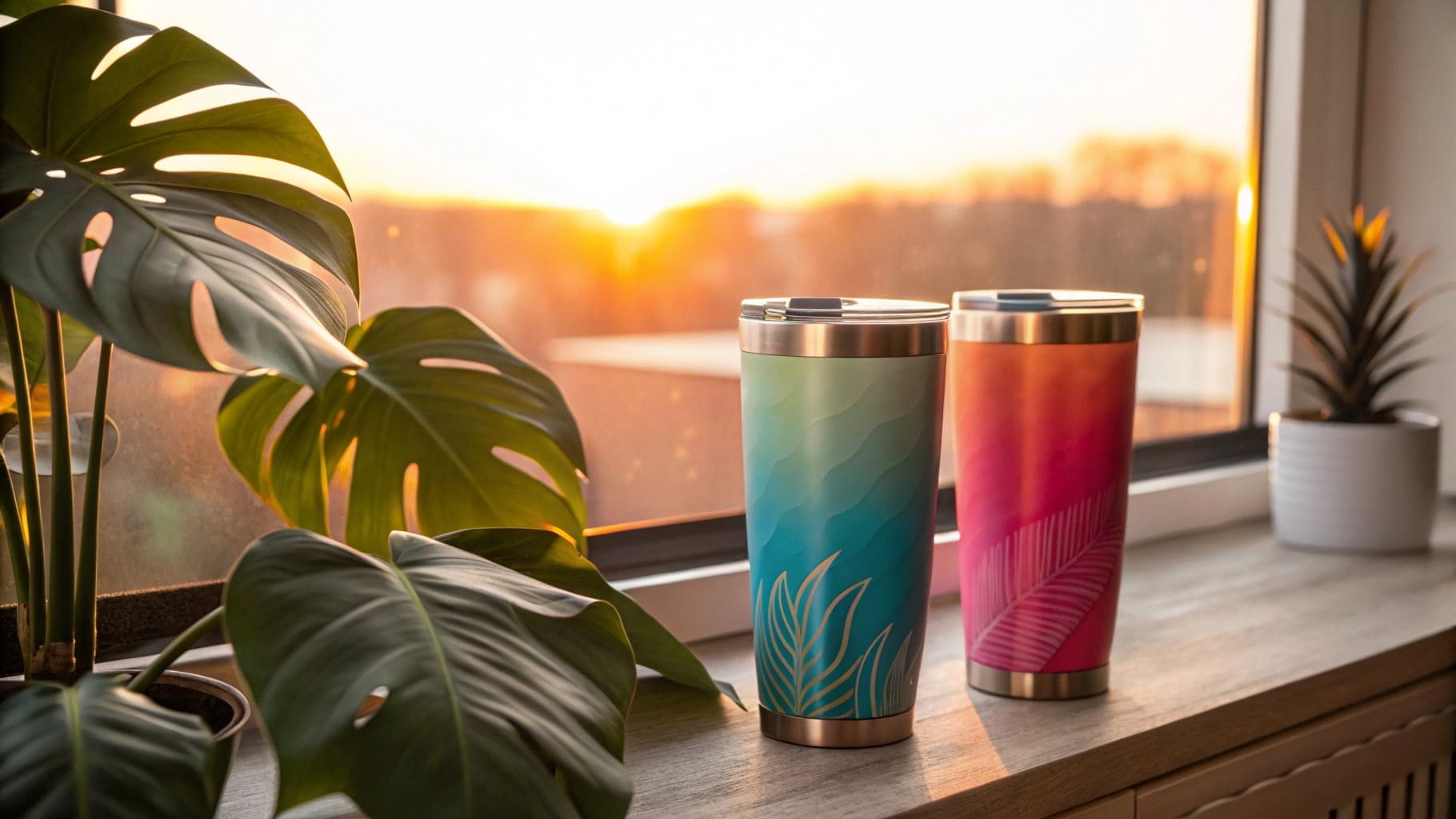
Most sellers think slapping "dishwasher safe" on a listing is fine as long as the steel body holds up. It is not. The lid, gasket, printed design, and powder coat are the parts that fail first. I have seen perfectly good tumblers come back in bulk because the label peeled off after three washes. This post breaks down exactly how to verify dishwasher-safe claims before your products go live on Amazon, and how to protect yourself at every step of the process.
How to Know If an Amazon Product Is Safe?
You found a tumbler listing on Amazon. It says dishwasher safe. But how do you actually know that claim is real?
Amazon does not run physical tests on most product claims. The platform works on a seller-declaration model.2 Sellers say the product is dishwasher safe, and Amazon takes that at face value unless complaints come in. As a buyer or reseller, you cannot rely on the listing alone to confirm safety.
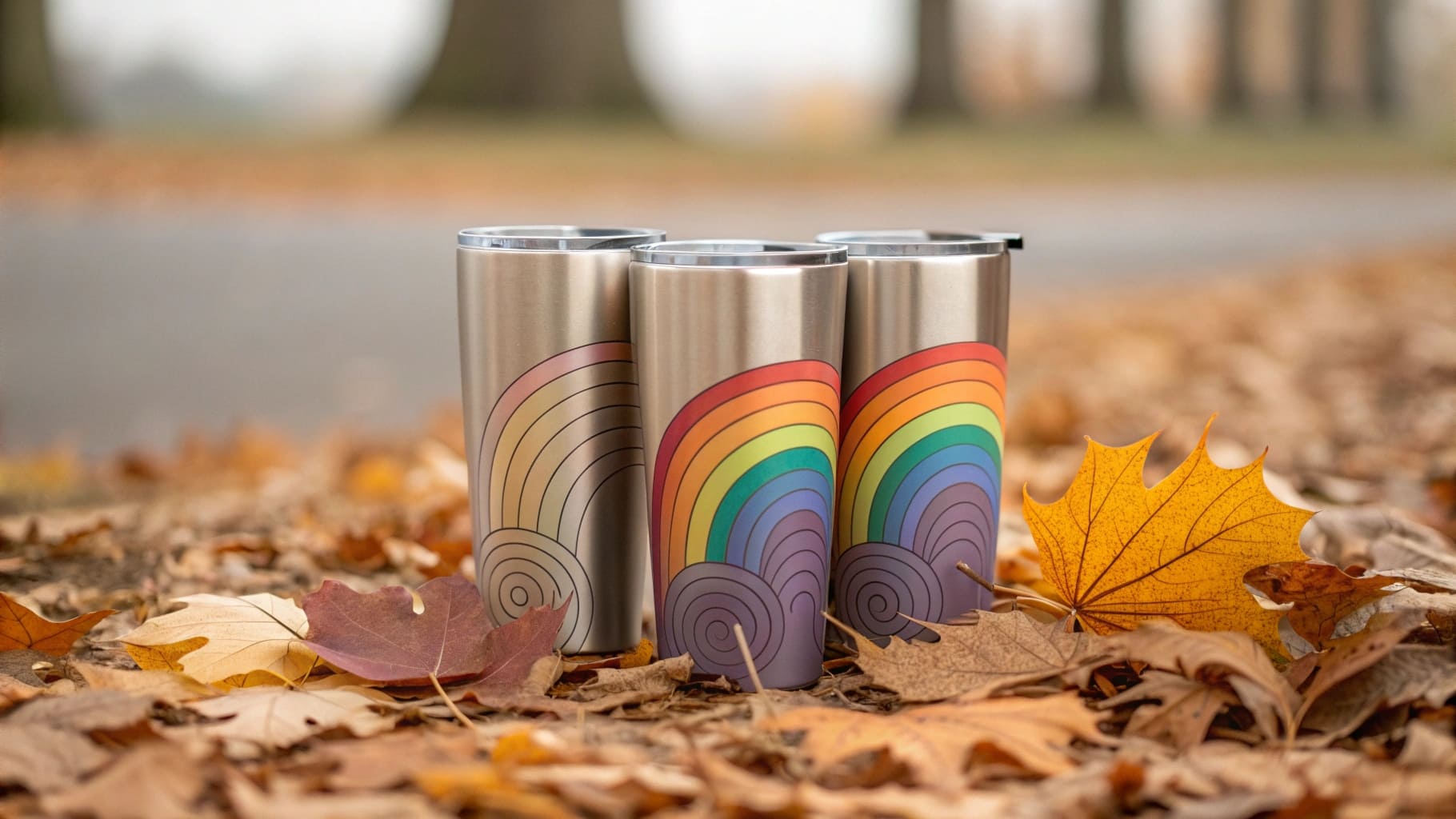
This matters a lot if you are sourcing tumblers from overseas and selling them under your own brand. You are the one responsible for what the listing says. If the claim is wrong, you take the hit.
Here is how the risk actually breaks down across the product:
| Component | Dishwasher Safe? | Risk Level |
|---|---|---|
| 304 stainless steel body | Yes, in most cases | Low |
| Powder coat or paint finish | Often no | High |
| Printed logo or design | Rarely | Very High |
| Plastic or rubber lid | Depends on grade | Medium |
| Silicone gasket/seal | Sometimes | Medium |
| Vacuum insulation layer | No direct risk, but heat may affect seal | Medium |
The steel body is rarely the problem. The problem is always the parts around it. A tumbler can have a food-grade 304 stainless steel body and still fail a dishwasher test because the lid threads warp or the gasket swells. When I first started working with overseas manufacturers, I assumed the whole product was tested as a unit. It was not. I had to push hard to get component-level material specs, and what I found changed how I place orders entirely.
Before you accept any dishwasher-safe claim from a supplier, ask for a full test report from an accredited third-party lab3. The test should cover at least 100 full dishwasher cycles. The report should show results for the coating, the print, the lid assembly, and the insulation performance. If the supplier cannot produce this document, the claim is not verified, no matter what the product page says.
Does Amazon Verify Product Authenticity?
Amazon says it cares about product accuracy. But does the platform actually check whether your dishwasher-safe claim is true before your listing goes live?
No, Amazon does not verify most product attribute claims before a listing is published. The platform enforces accuracy after the fact, through customer complaints, return data, and account performance metrics. By the time Amazon flags your listing, the damage is already done.

This creates a real problem for private label sellers in the stainless steel drinkware space. You are building a brand. Your reputation depends on every claim you make being accurate. Amazon's post-complaint enforcement model puts all the risk on you.
Here is what actually happens when a dishwasher-safe claim fails:
What triggers enforcement:
- Customer returns citing product damage after washing
- Negative reviews mentioning peeling, warping, or rust after dishwasher use
- A-to-Z guarantee claims filed for product not as described4
- Repeated complaints that raise your defect rate above Amazon's threshold
What the consequences look like:
| Issue | Short-Term Impact | Long-Term Impact |
|---|---|---|
| High return rate | Increased FBA fees | Listing suppression risk |
| Negative reviews | Lower conversion rate | Damaged brand reputation |
| A-to-Z claims | Direct cost per claim | Account health metric damage |
| Repeated complaints | Account warning | Potential suspension |
The only way to protect yourself inside Amazon's system is to verify the claim yourself before it goes live. Amazon will not do it for you. Your supplier will not catch it unless you make them. I learned this the hard way when a batch of printed tumblers came back after the first peak season. The print had faded badly after a few washes. The listing said dishwasher safe. The test report we had was for the steel body only, not the printed surface. That was a gap I should have caught before the order shipped.
To close that gap, build a verification checklist into your sourcing process. Require pre-production samples. Send them to an independent lab, not the one your supplier recommends. Test the full product as a unit, including every component that will touch a dishwasher. Keep that documentation on file. If Amazon ever asks for proof, you have it.
Is It Mandatory to Use Amazon Branded Packaging?
You are getting ready to ship your tumblers to Amazon's warehouse. Someone asks whether you need Amazon-branded packaging. The short answer is no. But the full answer matters more.
Amazon-branded packaging is not required unless you are enrolled in the Frustration-Free Packaging program. That program is optional. For most private label sellers, your own retail-ready packaging is both allowed and better for your brand.
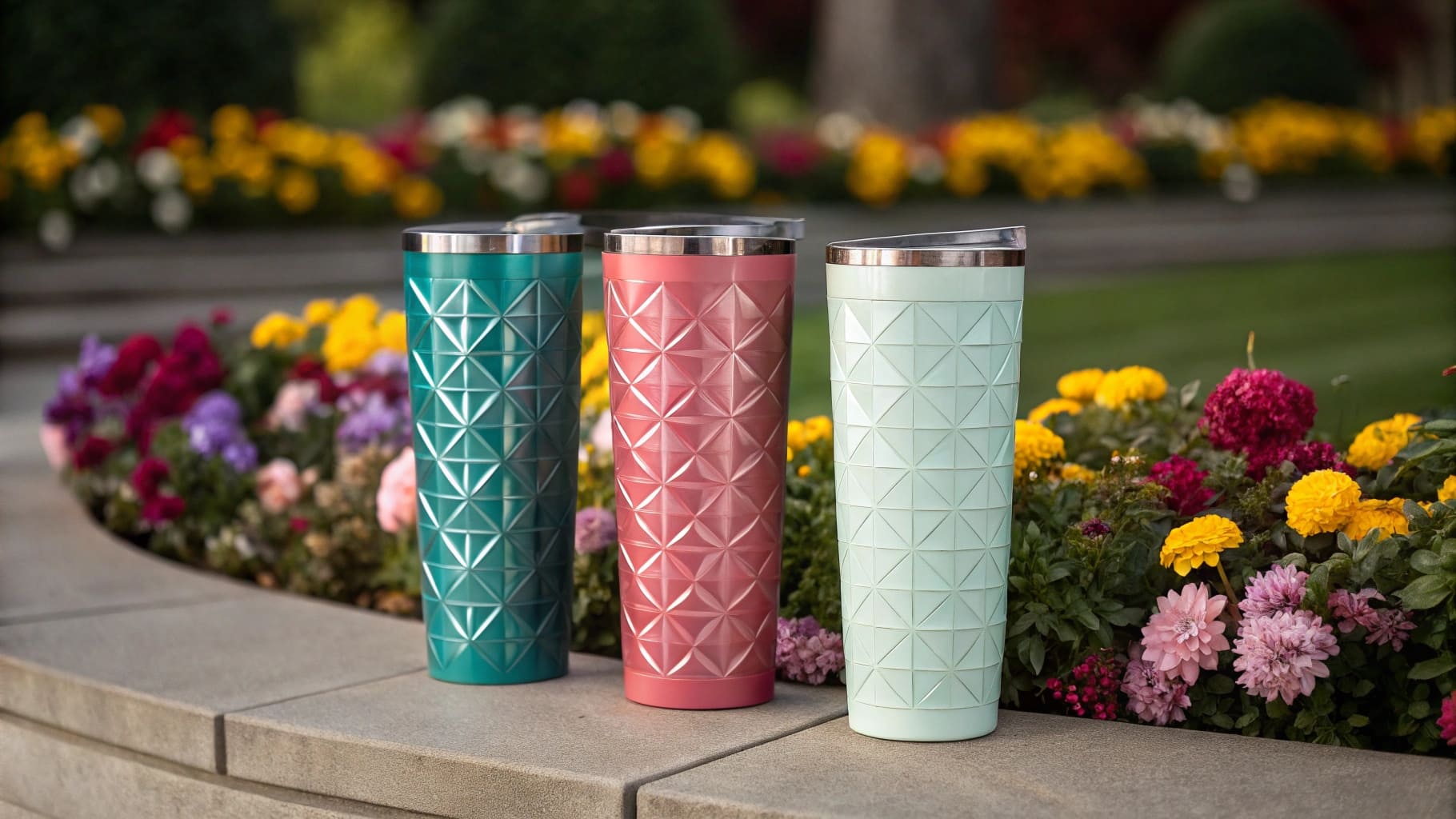
That said, Amazon does have packaging and prep requirements that every seller must meet. Your packaging has to protect the product through the fulfillment process, pass a drop test standard, and meet labeling requirements. If it does not, Amazon will charge you for re-prep at the warehouse, or reject the shipment.
For stainless steel tumblers, here is what your packaging should actually do:
Protection requirements:
- Prevent scratches and dents during fulfillment
- Keep the lid and body together without shifting
- Pass a basic drop test for standard parcel shipping
Brand and compliance requirements:
- Display your brand name clearly
- Include care instructions, especially for dishwasher use
- Meet FNSKU barcode labeling standards
- Show country of origin where required
Care instruction best practices for dishwasher claims:
| Claim Type | Recommended Language | Risk Level |
|---|---|---|
| Blanket claim | "Dishwasher safe" | High — do not use without full test data |
| Qualified claim | "Dishwasher safe, top rack only" | Medium — acceptable with lab support |
| Component-specific | "Body dishwasher safe, hand wash lid" | Low — most accurate for most products |
| Conservative claim | "Hand wash recommended for best results" | Lowest — protects against all component failure |
I always recommend putting care instructions on the outside of the retail box, not just inside as a small insert card. If a customer sees "hand wash lid" on the box before they buy, they are less likely to put the whole thing in the dishwasher and then return it saying it failed. That one change in packaging reduced return complaints significantly for one of the SKUs I worked on.
Packaging is also your last line of defense against misuse claims. A customer who damages a product through incorrect care and then leaves a one-star review is a real cost. Clear packaging language removes the excuse. It shows you disclosed the care requirements upfront, which also strengthens your position if a complaint escalates.
Conclusion
Validate dishwasher-safe claims through lab testing at the component level, write accurate listing language, and use your packaging to communicate care requirements before customers buy.
-
"[PDF] Energy Conservation Program: Test Procedure for Dishwashers", https://www.energy.gov/eere/buildings/articles/dishwashers-tp-rfi. Industry and international testing standards, such as those published by ASTM International or the International Electrotechnical Commission, specify cycle counts and conditions for evaluating dishwasher durability of coatings and materials; the 100-cycle threshold cited here should be verified against the applicable standard for the product category. Evidence role: definition; source type: institution. Supports: The number of dishwasher cycles used as a benchmark in standardized durability testing for consumer products. Scope note: The specific cycle count may vary by standard, jurisdiction, or product category; the article does not identify which standard the 100-cycle figure is drawn from. ↩
-
"Misleading and prohibited claims - Amazon Seller Central", https://sellercentral.amazon.com/help/hub/reference/external/G202024200?locale=en-US. Amazon's Seller Central policies and product listing guidelines state that sellers are responsible for ensuring the accuracy of product detail page content, including claims about product attributes; Amazon's enforcement is primarily reactive, triggered by complaints and performance metrics rather than pre-publication testing. Evidence role: general_support; source type: other. Supports: Amazon's seller policies place responsibility for listing accuracy on the seller rather than requiring pre-publication verification by Amazon. Scope note: Amazon's policies are subject to change; the characterization of the model as purely reactive may not capture all compliance programs Amazon operates, such as those for regulated product categories. ↩
-
"List of CPSC-Accepted Testing Laboratories", https://www.cpsc.gov/cgi-bin/labsearch/. ISO/IEC 17025 is the international standard for the competence of testing and calibration laboratories; accreditation to this standard by a recognized national accreditation body — such as A2LA in the United States or UKAS in the United Kingdom — provides assurance that a laboratory's test methods and results meet defined quality criteria, which is the basis for the recommendation to use accredited third-party labs for product claim validation. Evidence role: definition; source type: institution. Supports: The meaning and significance of laboratory accreditation in the context of consumer product testing, and which accreditation frameworks are relevant. Scope note: Accreditation confirms laboratory competence but does not guarantee that the specific test protocol used is the most appropriate one for the product claim being validated. ↩
-
"A-to-z Guarantee - Amazon Customer Service", https://www.amazon.com/gp/help/customer/display.html?nodeId=GQ37ZCNECJKTFYQV. Amazon's A-to-Z Guarantee, as described in Amazon's seller policies, permits buyers to seek refunds when items are materially different from the listing description; claims granted against a seller are recorded in account health metrics and can contribute to account suspension if the Order Defect Rate exceeds Amazon's stated threshold. Evidence role: definition; source type: other. Supports: Amazon's A-to-Z Guarantee program allows buyers to file claims when a product materially differs from its listing description, and granted claims negatively affect seller account health metrics. Scope note: Amazon's policies and thresholds are updated periodically; sellers should consult current Seller Central documentation for precise metric definitions. ↩
