
Which coatings resist spirits in stainless steel hip flasks for 2026 gifting?
A cheap coating looks fine in a sample room. It can fail after real spirit contact, and my buyer may face complaints after gifting.
Food-grade powder coating, ceramic interior lining, bare stainless interior, UV-cured exterior coating, and quality PVD finish resist spirits best.1 I avoid ordinary decorative electroplating for long alcohol contact, especially with high-proof liquor, because ethanol vapor and handling can expose weak layers.
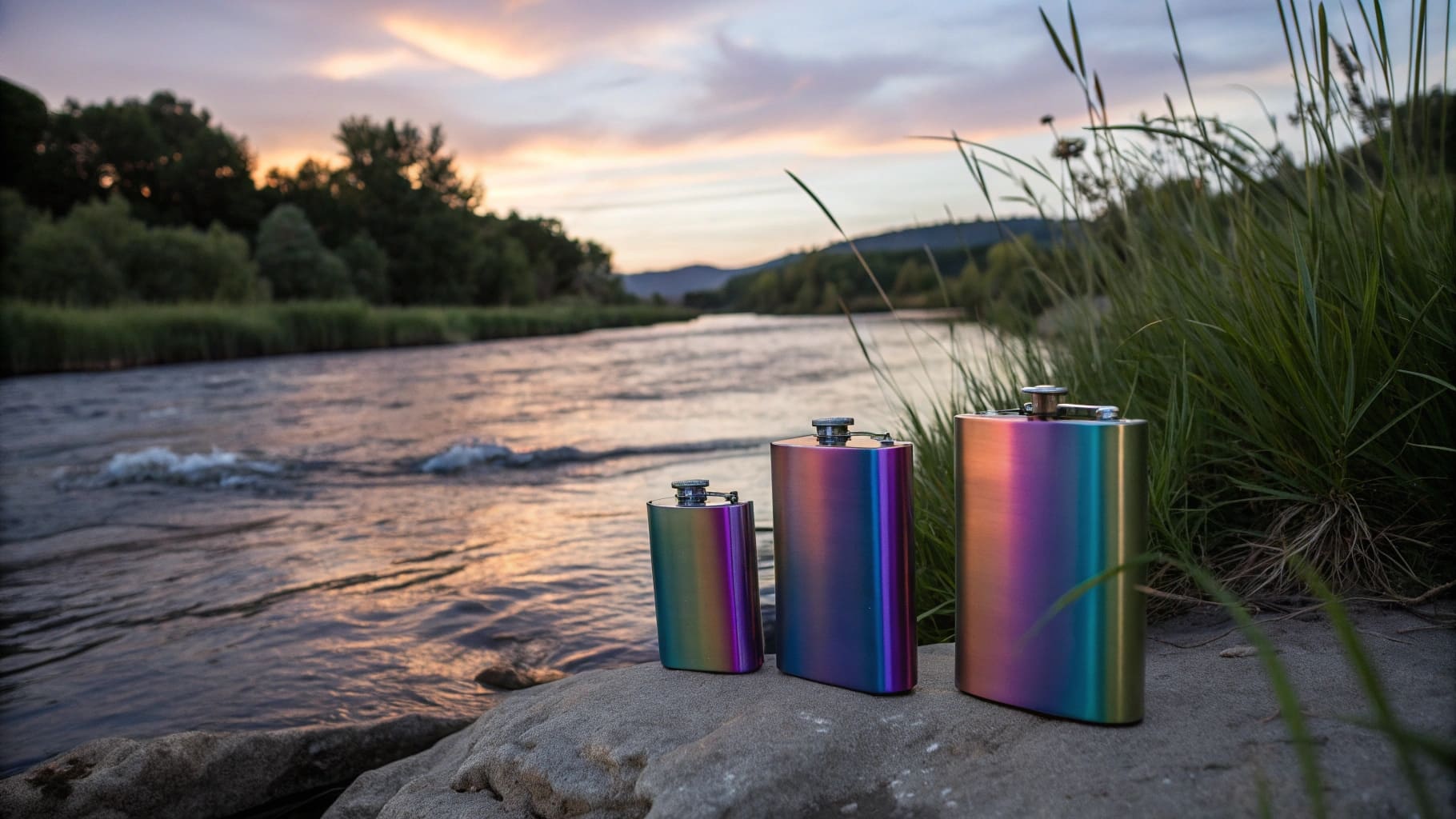
I see more corporate gifting buyers asking one hard question before they place bulk orders. They want a flask that looks premium in the box and still looks premium after the recipient uses it. I treat coating choice as a quality system, not only a surface decoration. I look at the drink, the storage habit, the cleaning habit, the logo process, and the shipment schedule before I confirm a finish. This is why I start with spirit resistance before I talk about shine, color, or packaging.
How long can you keep liquor in a stainless steel flask?
I see buyers lose trust when a flask changes taste or leaks odor. The product was not bad, but the storage habit was wrong.
I recommend short-term storage for best taste, usually during travel, events, or gifting use. A bare 304 or 316 stainless interior can resist spirits for a long time, but I still ask users to empty and rinse the flask after each use.
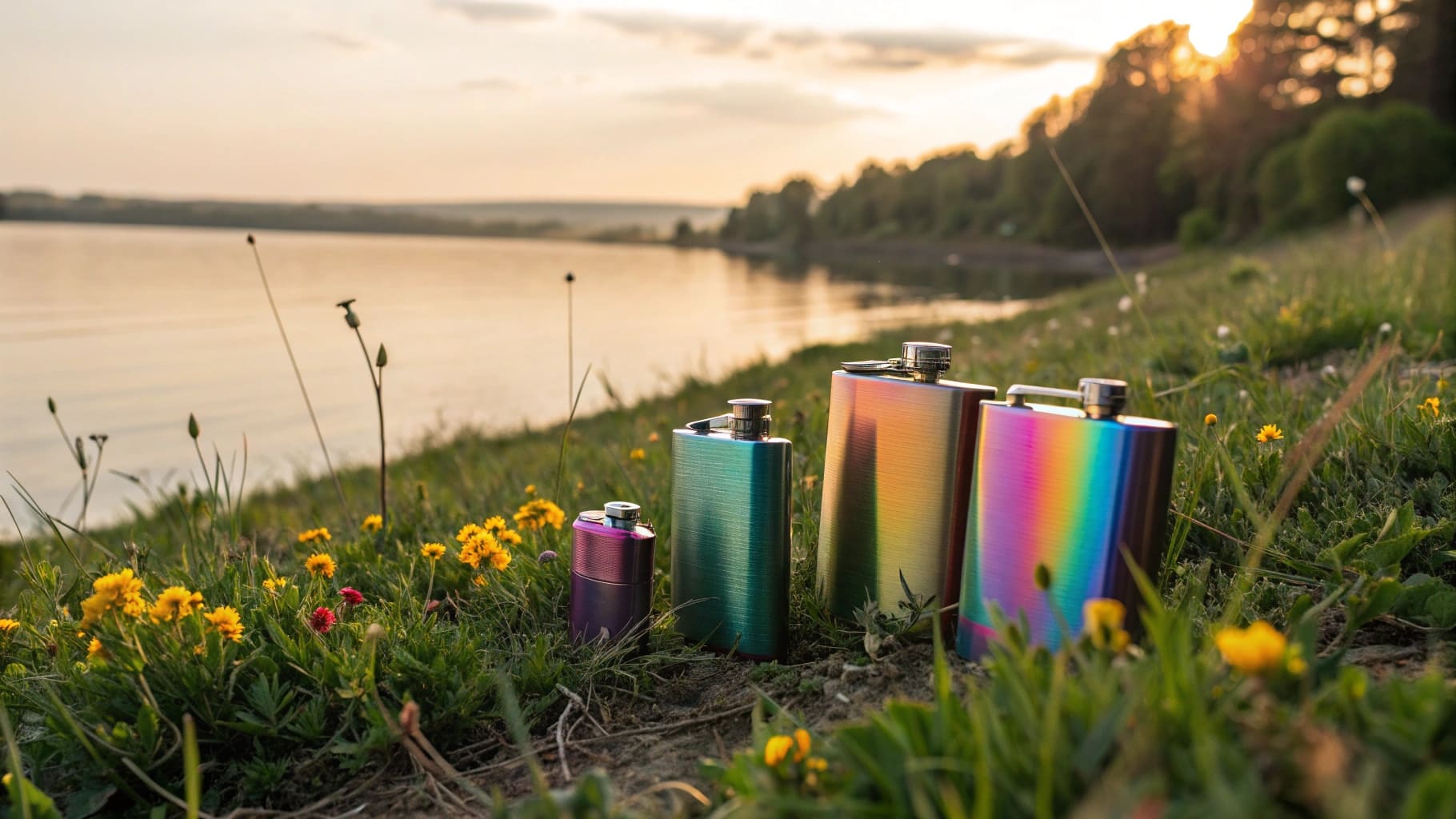
What I check before I approve storage claims
| My check | My preferred decision | My reason |
|---|---|---|
| Interior contact surface | I prefer bare 304 or 316 stainless steel2. | I reduce coating contact risk. |
| Spirit strength | I ask about high-proof liquor before production. | I know strong ethanol can stress weak coatings. |
| Storage habit | I suggest short-term carry use. | I protect taste and reduce after-sale issues. |
| Exterior finish | I prefer powder coating, UV-cured coating, or quality PVD. | I want the surface to resist vapor, sweat, and handling. |
| Logo process | I test laser, print, or engraving with the coating. | I avoid peeling around the logo edge. |
I separate the metal question from the coating question. I know 304 stainless steel is stable with normal spirits, and I know many buyers hear that fact and think the whole flask is risk-free. I do not stop there. I ask where the coating sits. If the inside is bare stainless steel, I feel much more confident. If the inside has a liner, I ask for a food contact test and an alcohol soak test. If the outside has a decorative finish, I also test it, because alcohol vapor, hand oils, and spilled whisky can attack weak paint.
I usually tell gifting buyers that a hip flask is a carry product, not a cellar. I want the recipient to fill it before an event and empty it after the event. I have seen samples that passed a quick visual check but failed after repeated spirit contact and rubbing. That kind of failure hurts a gift brand more than a normal retail product, because the buyer often puts a company logo on the flask. I prefer a bare stainless interior, a stable exterior coating, and a clear care card inside the gift box.
What can you put in a stainless steel flask?
I hear this question after the design talk is finished. A beautiful coating can still fail when the wrong drink goes inside.
I put straight spirits in a stainless steel flask, such as whisky, vodka, rum, brandy, gin, and tequila. I avoid citrus cocktails, acidic mixers, carbonated drinks, dairy drinks, and sugary blends unless the supplier proves multi-beverage compatibility.
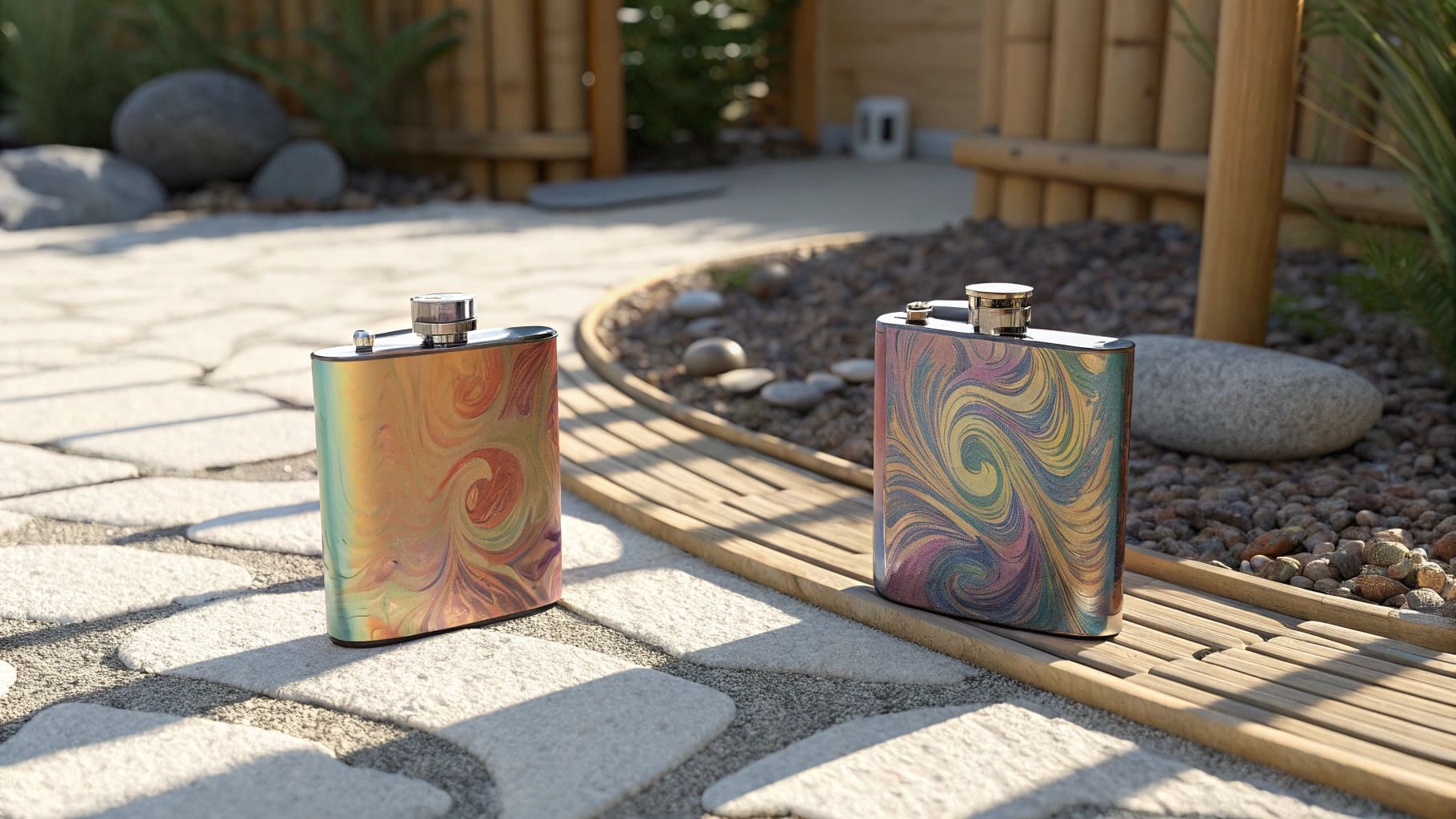
What I match with the beverage type
| Beverage type | My usual decision | My coating concern |
|---|---|---|
| Straight whisky or vodka | I accept it for normal flask use. | I still test alcohol resistance on the finish. |
| High-proof spirits | I accept it only with stronger coating control. | I watch for softening, odor, and color change. |
| Citrus cocktails | I avoid them unless tested. | I worry about low pH and flavor residue. |
| Carbonated drinks | I avoid them in hip flasks. | I worry about pressure and seal stress. |
| Sweet liqueurs | I accept them with cleaning advice. | I worry about sticky residue and odor. |
| Coffee or tea blends | I do not position a hip flask for them. | I worry about staining and taste transfer. |
I design coating advice around the real drink, not around a catalog word like premium. I see many buyers request one flask for every beverage because it sounds easier for marketing. I understand that idea, but I do not like vague claims. I ask whether the buyer wants to position the flask for spirits only or for wider drink use. If the answer is wider drink use, I ask for a stronger test plan. I want to see alcohol resistance, mild acid resistance, hand sweat resistance, and cleaning resistance. I also want a clear pH range if the product is promoted as multi-beverage compatible.
I pay close attention to acidic mixers. A straight spirit is usually simple. A whisky with lemon juice is not the same product risk. Citrus, cola, and other mixers can create a more active liquid. They can also leave odor and sugar on the cap threads. I do not want a buyer in Canada or Europe to discover this problem after peak gifting season. I would rather set the claim lower and make the product more reliable.
For 2026 gifting, I see better results with bare stainless interiors and strong exterior decoration. Food-grade powder coating gives good color options3 for corporate branding. UV-cured finishes can work well when the factory controls curing time and layer thickness4. PVD can look very premium, and I like it for metal tones when the supplier can keep color consistent across batches. I avoid low-cost electroplating when the buyer expects long alcohol contact or heavy handling. I have seen shiny samples win a meeting and then create trouble in mass production.
How to keep a hip flask clean?
I have seen good flasks become bad gifts after one lazy cleaning routine. Residue creates smell, and harsh washing can damage the finish.
I clean a hip flask by rinsing it with warm water after use, adding mild detergent when needed, and drying it uncapped. I avoid bleach, chlorine tablets, abrasive brushes, and dishwashers unless the coating and seal were tested for that method.
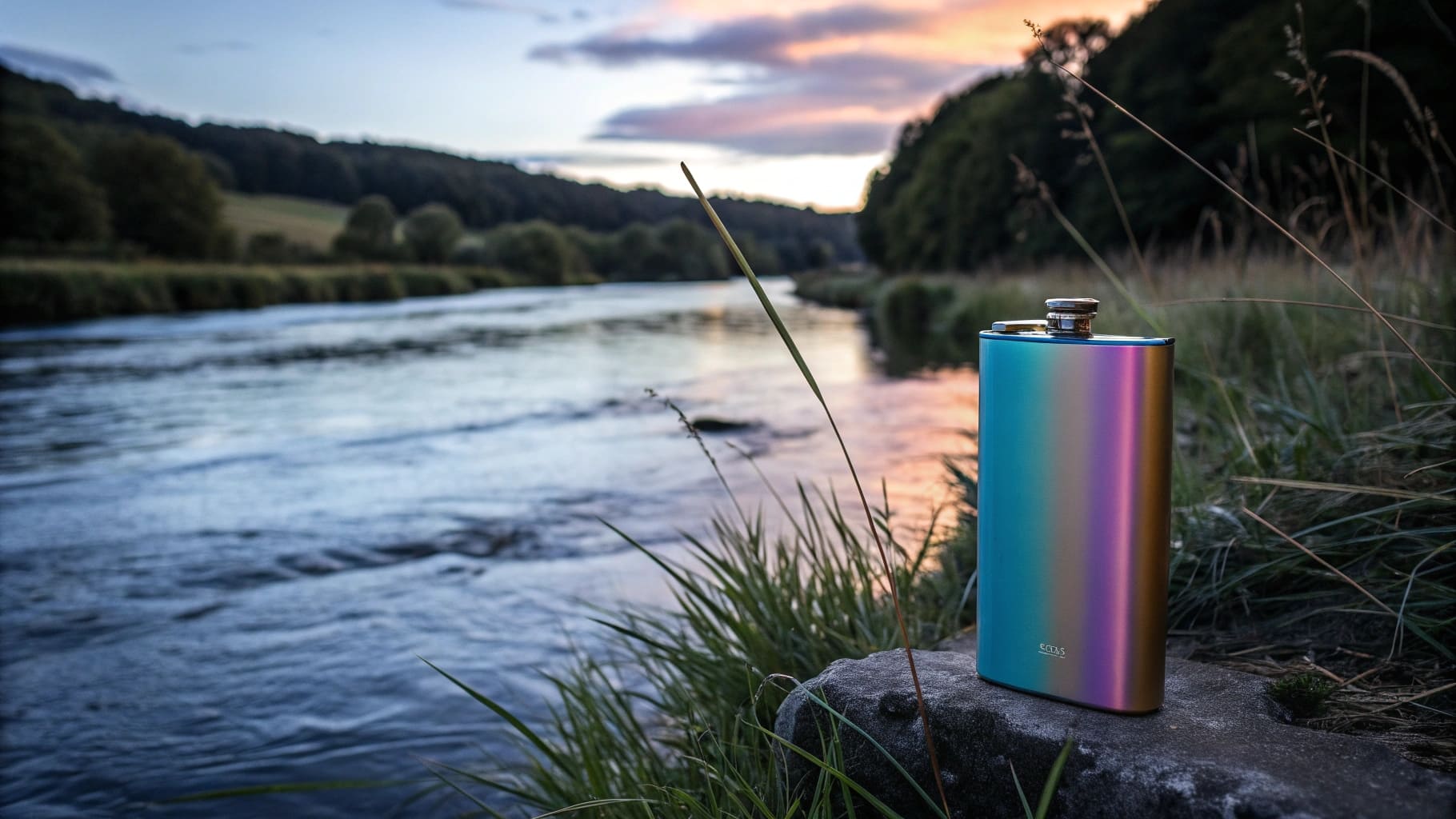
What I recommend for cleaning and coating life
| Cleaning step | My recommendation | My reason |
|---|---|---|
| After each use | I rinse with warm water. | I remove alcohol residue before odor builds. |
| Mild washing | I use a small amount of neutral detergent. | I protect the coating and the cap seal. |
| Deep odor care | I use warm water and gentle shaking. | I avoid harsh chemicals inside the flask. |
| Drying | I leave the cap open until fully dry. | I reduce trapped smell and moisture. |
| Brush choice | I use soft cleaning tools only. | I avoid scratches on the mouth and finish. |
| Dishwasher use | I allow it only when tested and approved. | I know heat can weaken many coatings. |
I treat cleaning as part of the product specification, not as an afterthought. A buyer may ask me for a dishwasher-safe claim because it sounds easy for the end user. I do not give that claim unless the flask, coating, logo, cap, gasket, and packaging instruction all support it. Many decorative coatings look strong at room temperature but become weaker under heat, detergent, and repeated wash cycles. A hip flask also has tight corners and a cap thread, so full dishwasher cleaning is not always practical.
I prefer to provide simple care instructions with the product. I tell the recipient to rinse the flask soon after use, use mild detergent only when needed, and dry it with the cap off. I also tell the buyer not to use bleach or abrasive cleaning powder. These words may look basic, but they reduce complaints. In corporate gifting, the recipient may not be a flask expert. The gift must be easy to understand.
I also connect cleaning to logo durability. A laser logo on bare stainless steel usually gives strong long-term performance5. A printed logo on a coated surface can look excellent, but I need adhesion testing6 before I approve bulk production. I rub the print, expose it to alcohol contact, and check it after hand washing. I care about the logo because the logo is often the real value of the gift. If the logo peels, the whole brand message becomes weak.
I once handled a sample review where the buyer focused only on the outside color. I asked the team to test the flask after warm washing and alcohol wiping. The color stayed stable, but the printed logo edge started to lift. That small test changed the order plan before mass production. I see this as a normal part of responsible sourcing. Good communication saves more money than a cheap unit price.
Conclusion
I choose coatings by the drink, the cleaning method, and the gifting risk. I trust tested surfaces more than shiny samples.
-
"A Simple Method for a Protective Coating on Stainless Steel ...", https://pmc.ncbi.nlm.nih.gov/articles/PMC8003667/. Industrial coating research demonstrates that powder coatings, PVD finishes, and ceramic linings exhibit high chemical resistance to alcohols when properly cured, though performance varies significantly with application parameters and substrate preparation. Evidence role: general_support; source type: research. Supports: Chemical resistance properties of powder coatings, PVD, and ceramic coatings against alcohol exposure. Scope note: Studies typically focus on industrial applications rather than beverage container contexts ↩
-
"Influence of Ethanol on Pitting Corrosion Behavior of Stainless ...", https://pmc.ncbi.nlm.nih.gov/articles/PMC7330168/. Austenitic stainless steels including 304 and 316 grades demonstrate excellent corrosion resistance to ethanol and alcoholic solutions due to their chromium oxide passive layer, with 316 offering enhanced resistance through molybdenum addition. Evidence role: mechanism; source type: research. Supports: Corrosion resistance mechanisms of austenitic stainless steels (304 and 316) in contact with ethanol and alcoholic beverages. ↩
-
"Discover Durable Powder Coating Powders for Metal", https://absolutepowdercoat.com/powders-for-powder-coating/. Food-grade powder coating formulations can incorporate a variety of FDA-approved and EU-compliant pigments, enabling diverse color options, though the palette is more restricted than non-food-contact coatings due to regulatory limitations on certain colorants. Evidence role: general_support; source type: research. Supports: Availability of food-contact-approved pigments and colorants for powder coating formulations. ↩
-
"UV-Cured Highly Crosslinked Polyurethane Acrylate to Serve as a ...", https://pmc.ncbi.nlm.nih.gov/articles/PMC11175127/. Coating technology research shows that UV-cured coatings achieve optimal properties through complete photoinitiator activation and polymer crosslinking, which depend critically on UV dose (intensity and time), with thicker layers potentially exhibiting incomplete cure in deeper regions due to UV attenuation. Evidence role: mechanism; source type: research. Supports: Effects of UV curing parameters including exposure time and coating thickness on crosslink density and coating properties. ↩
-
"The Ultimate Guide to Laser Engraving Steel – Best Machines & Tips", https://www.heatsign.com/laser-engraving-steel-guide/. Laser marking on stainless steel creates permanent marks through localized oxidation, material removal, or surface melting, producing markings that are integral to the substrate rather than surface-applied, resulting in superior resistance to wear, chemical exposure, and environmental degradation compared to applied graphics. Evidence role: mechanism; source type: research. Supports: Permanence mechanisms of laser marking on stainless steel through material modification. ↩
-
"Adhesion testing of additively printed ink on metallic structural components", https://www.osti.gov/pages/servlets/purl/2583156. Surface coating literature establishes that printed graphics on powder-coated or other finished surfaces create a coating-on-coating interface where adhesion depends on surface energy, chemical compatibility, and mechanical interlocking; standardized adhesion tests including cross-hatch and tape tests are essential quality control measures to predict field performance. Evidence role: general_support; source type: research. Supports: Adhesion testing methods and failure modes for printed graphics on coated surfaces. Scope note: Test results may not fully predict performance under all real-world exposure conditions ↩