
Do insulated coffee mugs collide with car holders? Clearance math in 2026
I see buyers lose orders over one ugly detail: a premium mug hits the console, feels cheap, and comes back.
Yes. I see insulated coffee mugs collide with car holders when the base diameter is larger than the holder’s inner diameter. I use a clearance gap of at least 0.10 inch, and I prefer a tapered base under 3.25 inches for safer fit.
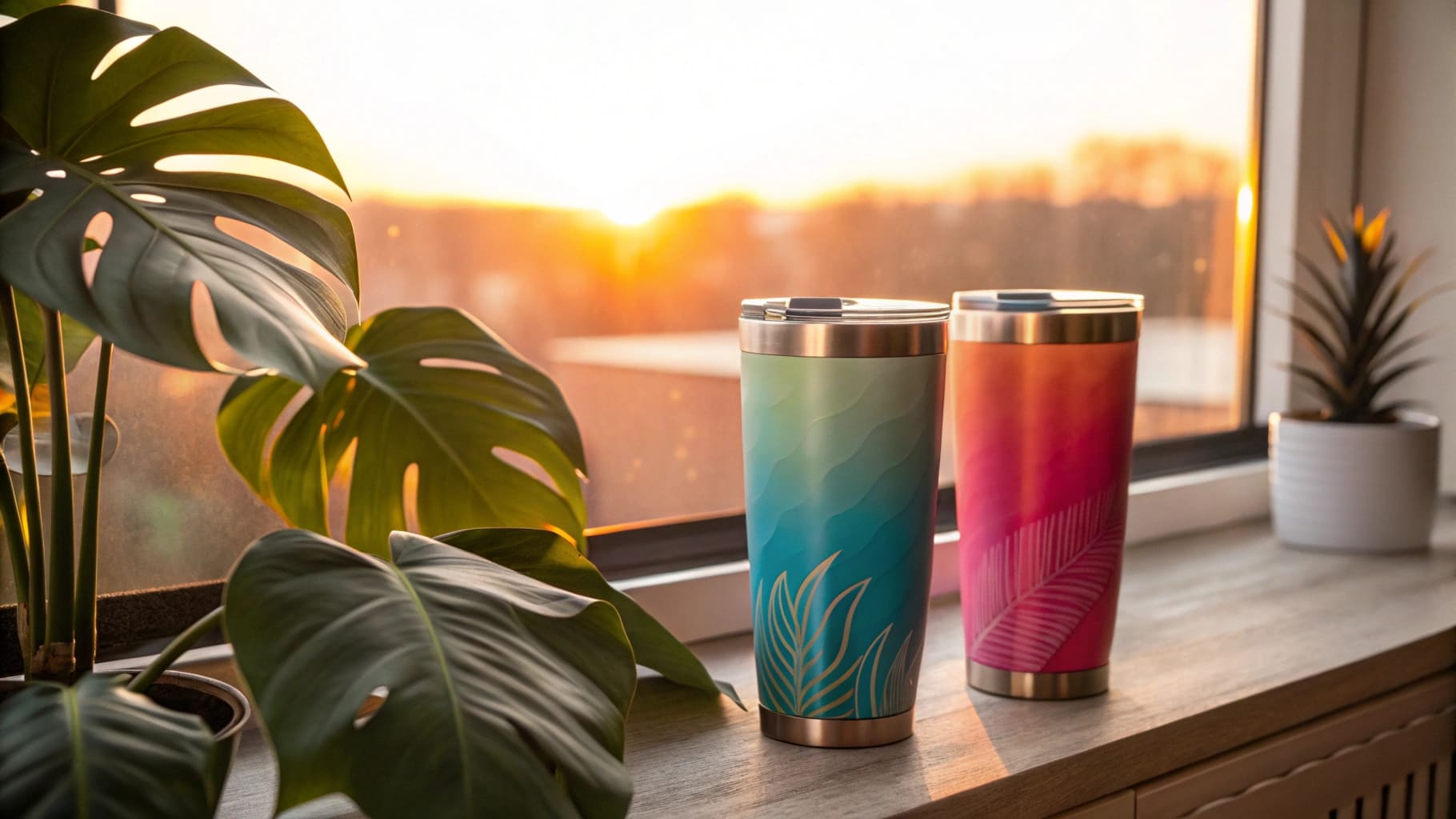
I always start with the part that most catalogs hide. I check the bottom diameter before I check the nice photo. In 2026, many insulated coffee mugs still use wide bases because vacuum walls need space. Most car holders sit around 2.75 to 3.25 inches wide.1 Many premium mugs pass 3.50 inches at the base, so the mug looks strong on a desk but fails in a car. I use this simple clearance rule: the holder inner diameter minus the mug base diameter must leave at least 0.10 inch. I prefer 0.20 inch because real drivers do not place mugs like lab workers. I also ask for the bottom 2 inches of the mug, not only the top diameter. I like tapered-base geometry because the lower body fits the holder while the upper body keeps capacity. I once worked with a buyer who only checked capacity and color. His shipment looked beautiful, but the mug base was too wide for many cars. That mistake taught me to treat fit as a sales feature, not a small detail. I will now break down heat, material, and insulation failure because all three can change the final design choice.
How long does coffee stay hot in a travel mug?
I hate vague heat claims. I buy a travel mug for hot coffee, but weak lids turn that promise into disappointment.
I expect quality stainless steel travel mugs to keep coffee hot for 4 to 6 hours. I expect premium designs with strong vacuum seals, copper-plated inner walls2, and tight lids to reach about 8 hours under fair testing.

My heat retention check
I do not judge heat performance from one sales sentence. I ask how the factory tests the mug. I want the starting temperature, room temperature, lid status, and test time. I usually see good results when the supplier tests from 200°F and records the drop after 6 hours. I also ask about the lid because the lid can lose a large share of heat. A thick steel wall cannot save a loose slider lid. I also compare heat retention with base fit. A wider vacuum gap may improve insulation, but it may also create a base that collides with car holders. This is why I prefer a tapered base instead of a fully wide base. I can keep the lower section narrow and move some volume upward. I also look at steel grade. I often use 304 stainless steel for standard orders, and I consider 316 stainless steel when the buyer wants a more premium story. I do not accept “12-hour hot” claims unless the supplier shows the test method.
| My check item | What I ask the supplier | Why I care |
|---|---|---|
| Starting temperature | I ask for a 200°F test start | I need a fair comparison |
| Test time | I ask for 6-hour data | I can judge real morning use |
| Lid design | I ask for leak and seal details | I know heat often escapes from the lid |
| Base diameter | I ask for the lowest 2-inch section | I must avoid car holder collision |
| Wall design | I ask about vacuum and copper plating | I need to match price with performance |
I also explain this to B2B buyers in simple words. I tell them that heat retention is not magic. It comes from vacuum quality, steel structure, lid seal, and the way people use the mug. I ask for sample testing before mass production. I also tie final approval to the tested sample, not only to the quotation sheet. This habit protects my order, my customer, and the selling season.
What is better, porcelain or ceramic coffee mugs?
I see buyers ask the wrong material question. The wrong answer creates fragile travel mugs, higher claims, and weak repeat orders.
I treat porcelain as a refined ceramic. For desk mugs, porcelain feels smoother and cleaner. For travel mugs, I prefer stainless steel or ceramic-coated stainless steel because both porcelain and common ceramic can break during mobile use.
My material choice for travel use
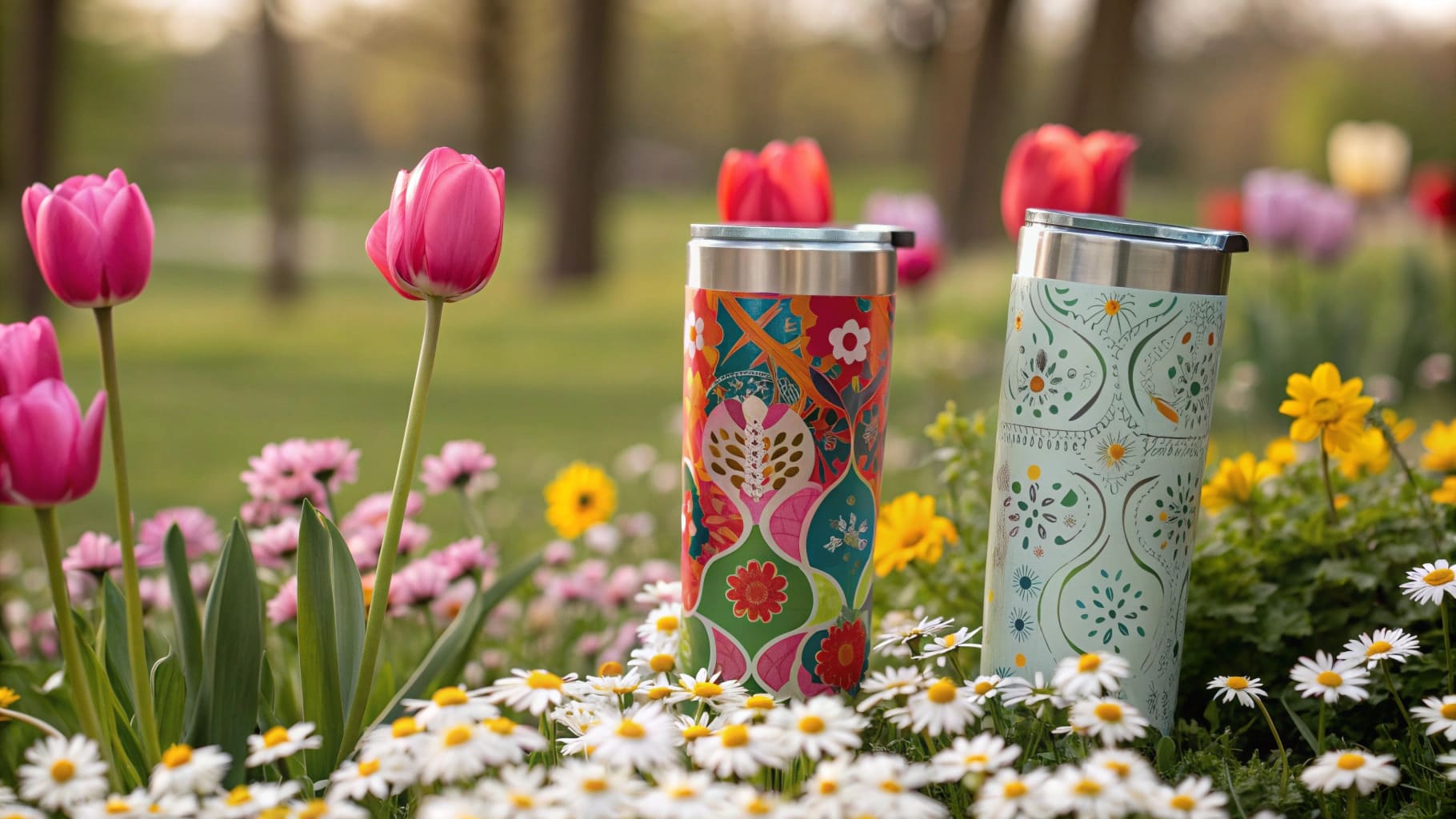
I separate office mugs from travel mugs before I compare materials. Porcelain is a type of ceramic, and it often feels more refined. It can look clean on a desk. It can also resist stains better than some rough ceramic bodies. But I do not see porcelain as the best answer for mobile coffee use. I see weight, breakage, and poor insulation as serious problems. A travel mug moves through cars, bags, warehouses, offices, and outdoor spaces. It can fall. It can hit a metal holder. It can face sudden temperature changes. Stainless steel handles that world better. I also see a growing demand for ceramic-coated stainless steel interiors. I like this hybrid choice because it gives a cleaner taste feel while keeping the strength of stainless steel. It also keeps the vacuum insulation structure. I still test the coating carefully. I ask for food contact reports, adhesion checks, and cleaning resistance. I do this because a nice interior coating becomes a problem if it peels, stains, or absorbs odor.
| My use case | My better choice | My reason |
|---|---|---|
| Desk coffee mug | Porcelain | I want a smooth hand feel and clean look |
| Low-cost office gift | Common ceramic | I want simple branding at a lower cost |
| Car travel mug | Stainless steel | I need drop resistance and insulation |
| Premium travel mug | Ceramic-coated stainless steel | I want better taste feel and strong structure |
| Wholesale rebrand order | Stainless steel with custom logo | I need stable quality and repeat supply |
I also watch how material affects logistics. Porcelain and ceramic need stronger packing, and breakage can raise the real landed cost. Stainless steel usually travels better in bulk cartons. I still check surface finish, welding, inner polishing, and logo durability. I do not let the buyer compare only the unit price. A low price can become expensive when breakage, returns, and complaints enter the order. I prefer to set the material choice around the customer’s use case. I use porcelain for calm desk use. I use stainless steel for travel. I use ceramic-coated stainless steel when the buyer wants a stronger product with a cleaner drinking feel.
Do insulated cups stop working?
I hear this complaint after returns arrive. A cold cup looks simple, but a failed seal can damage trust fast.
I do not see insulated cups wear out like batteries. I see them fail when the vacuum seal breaks, the lid gasket leaks, or the cup is damaged. Condensation outside the cup is the clearest warning sign.
My failure check before shipment
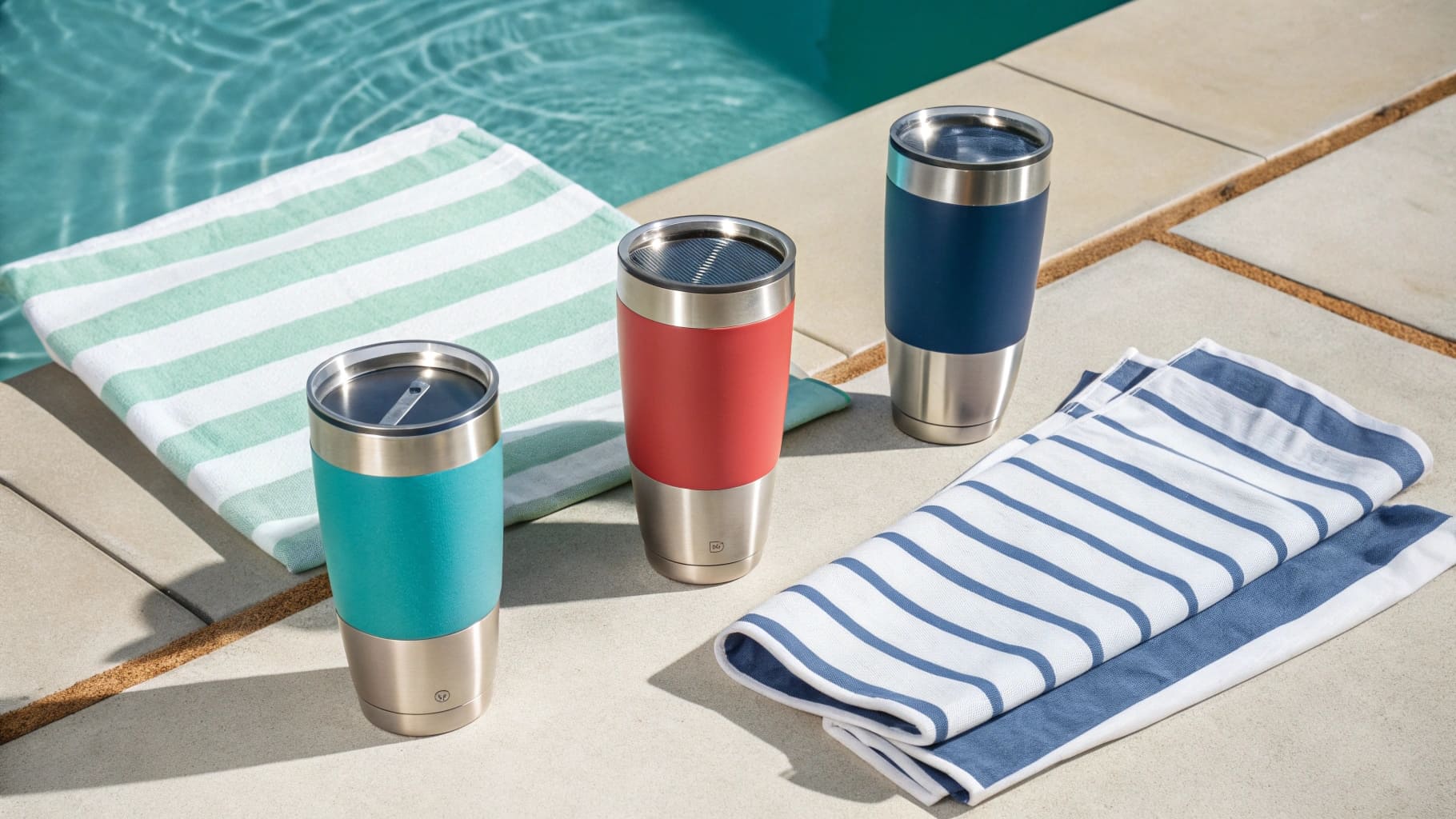
I treat insulation failure as a quality control issue, not as normal aging. A vacuum cup works because the empty space between the walls slows heat transfer.3 If air enters that space, the cup loses its main advantage. I often see three reasons. I see seal weld defects from poor production control. I see micro-fractures after hard drops. I also see thermal shock when users move the cup between extreme hot and cold conditions4. The outside symptom is simple. If the cup sweats with hot coffee inside, the vacuum may be broken. If the cup becomes hot to touch very fast, the vacuum may also be broken. I also check the lid before I blame the body. A weak gasket can make the drink cool fast, even when the steel body is still good. I ask the supplier about leak testing and vacuum testing. I prefer random batch tests and clear warranty rules. I also verify certificates because false certificates can create larger trouble than one failed cup.
| My warning sign | My likely cause | My action |
|---|---|---|
| Condensation outside | Vacuum seal failure | I separate the batch and test samples |
| Fast heat loss | Lid leak or vacuum failure | I test body and lid separately |
| Hot outer wall | Broken vacuum barrier | I reject the failed sample |
| Water leakage | Gasket or lid defect | I check lid tooling and gasket fit |
| Certificate mismatch | Risk of fake documents | I verify company name, product scope, and report details |
I also build the purchase terms around this risk. I do not rely only on friendly sales talk. I ask for pre-production samples, mass production photos, inspection records, and packing details. I also plan shipment timing early because a good mug shipped late can still miss peak sales. I prefer clear payment stages because they keep both sides serious. I also tell customers that lid gaskets need attention. I usually suggest replacement after 12 to 18 months, based on use and cleaning habits. This creates a chance for accessory sales, such as lids, gaskets, straws, cleaning brushes, and silicone boots. I like this because it supports the buyer after the main order and reduces complaints from normal wear.
Conclusion
I treat fit, heat, material, and seal as one system. I check the base first, then I protect the whole order.
-
"Standardized cupholder design dimensions", https://www.reddit.com/r/AskEngineers/comments/1ae3t9b/is_there_a_standardized_cupholder_designstandard/. Automotive cup holder dimensions typically follow industry conventions, though exact measurements may vary by vehicle class and manufacturer design choices. Evidence role: statistic; source type: institution. Supports: typical dimensional ranges for automotive cup holders. Scope note: Standards may reflect ranges rather than precise universal measurements ↩
-
"Radiant barrier", https://en.wikipedia.org/wiki/Radiant_barrier. Metallic coatings with low emissivity, including copper, reduce radiative heat transfer across vacuum gaps by reflecting thermal radiation, thereby improving overall insulation performance. Evidence role: mechanism; source type: research. Supports: the role of metallic coatings in reducing radiative heat transfer. ↩
-
"Heat transfer", https://en.wikipedia.org/wiki/Heat_transfer. Evacuated spaces minimize heat transfer by eliminating molecular conduction and convection pathways, leaving only radiative transfer, which can be further reduced through reflective coatings. Evidence role: mechanism; source type: education. Supports: the heat transfer mechanisms blocked by vacuum insulation. ↩
-
"A Study on the Reliability Evaluation of a 3D Packaging Storage Module ...", https://pmc.ncbi.nlm.nih.gov/articles/PMC11052348/. Rapid temperature changes induce differential thermal expansion in bonded materials, potentially generating stress concentrations at welds and joints that may compromise structural integrity. Evidence role: mechanism; source type: education. Supports: thermal stress effects in multi-layer metallic structures. ↩