
How should I source insulated travel mugs with handles for MOQ, lead time, and Pantone control?
I see many buyers lose time because they ask for the best mug before they define the mug they need.
For B2B sourcing, I judge insulated travel mugs with handles by vacuum structure, lid sealing, handle strength, MOQ, lead time, certifications, and Pantone control. A handle usually raises MOQ and adds production time, so I confirm tooling, samples, and color matching before I confirm any order.
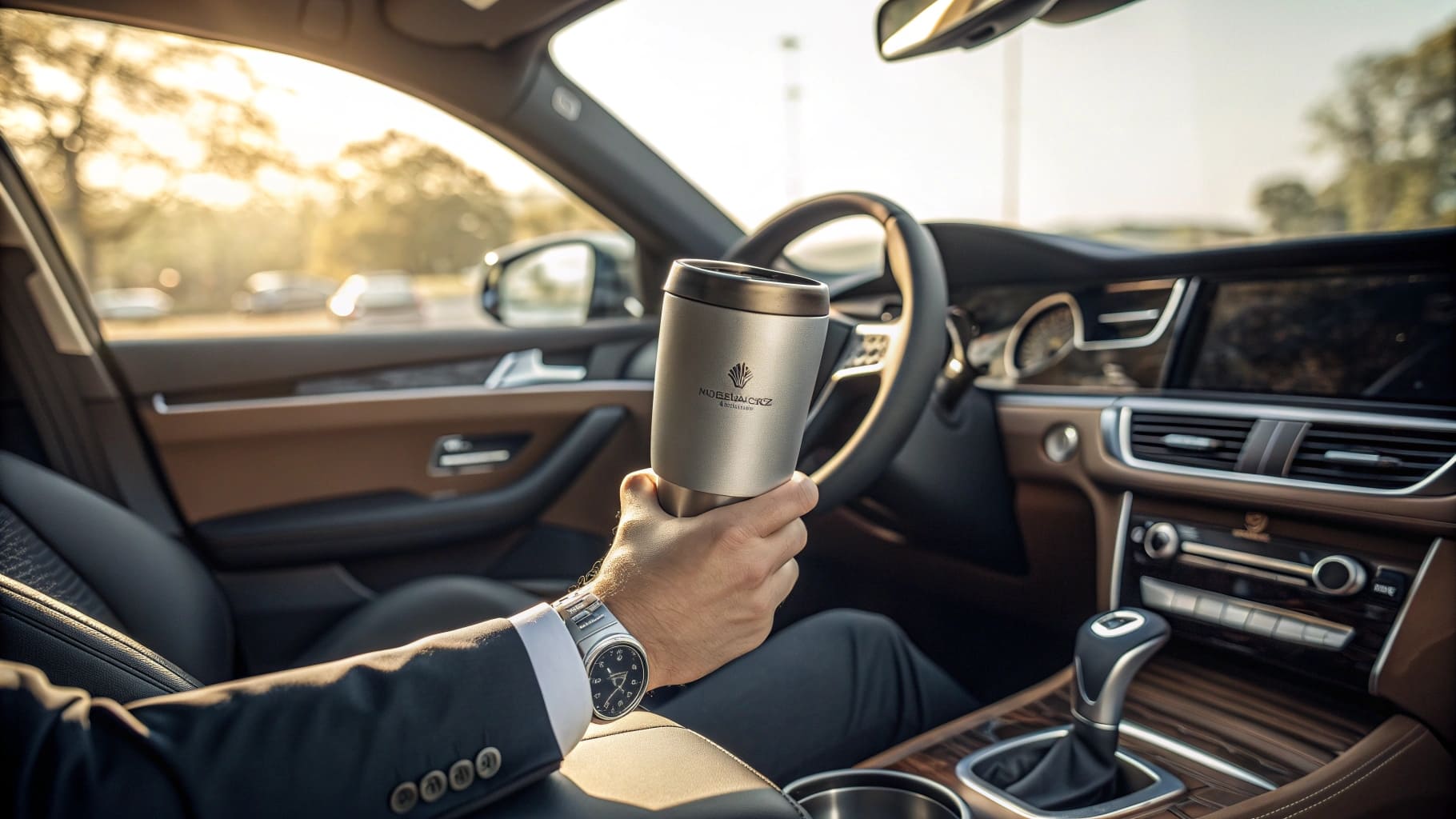
I often meet buyers who come to me with a consumer question. They ask which mug is the best, or which brand keeps coffee hot. I understand this question. I also use mugs every day, so I care about the real drinking experience. But I cannot source like a retail customer when I buy wholesale.
I need to look at the product as a system. The bottle body, the vacuum layer, the lid, the seal, the handle, the coating, and the carton all affect the final result. If one part is weak, the whole order becomes risky.
This is more important for insulated travel mugs with handles. A handle looks simple, but it changes the factory process. I need to check MOQ, lead time, mold cost, handle material, assembly strength, and color match. If I do not check these details early, I may get a nice sample and still face problems in mass production.
What's the best insulated travel mug?
I see this question create confusion because the word “best” often hides the real buying target.
For wholesale, I define the best insulated travel mug as one with stable vacuum insulation, a strong handle, a leak-resistant lid, safe materials, clear certification, and repeatable custom color control at the agreed MOQ.
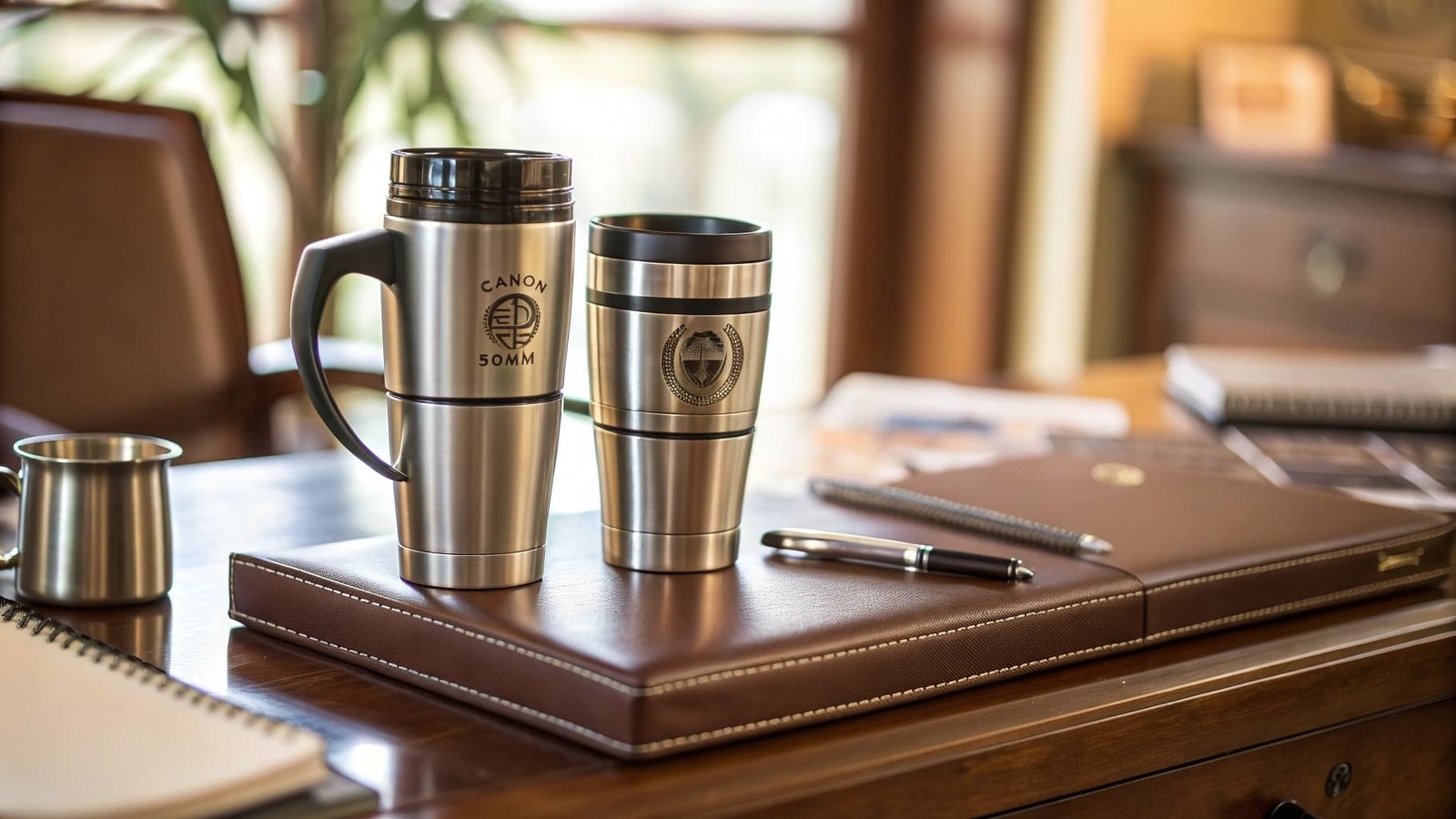
I define “best” by technical control, not by retail ranking
I do not start with a brand ranking when I source an insulated travel mug. I start with the use case. I ask where the mug will be sold, how it will be used, and what price point the customer needs. I also ask if the mug is for coffee shops, corporate gifts, outdoor retail, or supermarket shelves. Each channel needs a different balance between cost and performance.
For a travel mug with a handle, I check the handle early. I have seen buyers approve a body design and forget the handle until the last step. That mistake can change the MOQ and lead time. A plastic handle may need injection molding. A silicone handle may need separate color matching. A stainless steel handle may need welding or special assembly. Each choice affects cost and risk.
| Sourcing point | What I check | Why I care |
|---|---|---|
| Body material | I check food-grade stainless steel | I need safety and stable quality |
| Insulation | I check double-wall vacuum structure | I need real heat retention |
| Inner finish | I check polishing and cleaning | I need no smell and no rust risk |
| Handle | I check pull strength and comfort | I need safe daily use |
| Lid | I check silicone seal and fit | I need less leaking and less heat loss |
| Coating | I check powder coating and Pantone sample | I need brand color control |
| MOQ | I check body and handle MOQ together | I need no surprise before deposit |
| Certification | I check FDA or LFGB documents | I need customs and retail confidence |
I usually tell buyers that a handle can push MOQ from about 1,000 pieces to about 3,000 pieces. This happens because the handle may need a separate mold, separate material purchase, and separate color process. If the factory already has a handle mold, the MOQ can be lower. If the buyer wants a new shape, the MOQ and cost will rise.
What coffee mug keeps coffee the hottest longest?
I see buyers blame the cup body when the real heat loss often comes from the lid.
The coffee mug that keeps coffee hottest longest usually uses double-wall vacuum insulation, copper plating, a tight screw-on lid, and a high-quality silicone seal. I expect about 6 to 8 hours of strong heat retention from this construction.
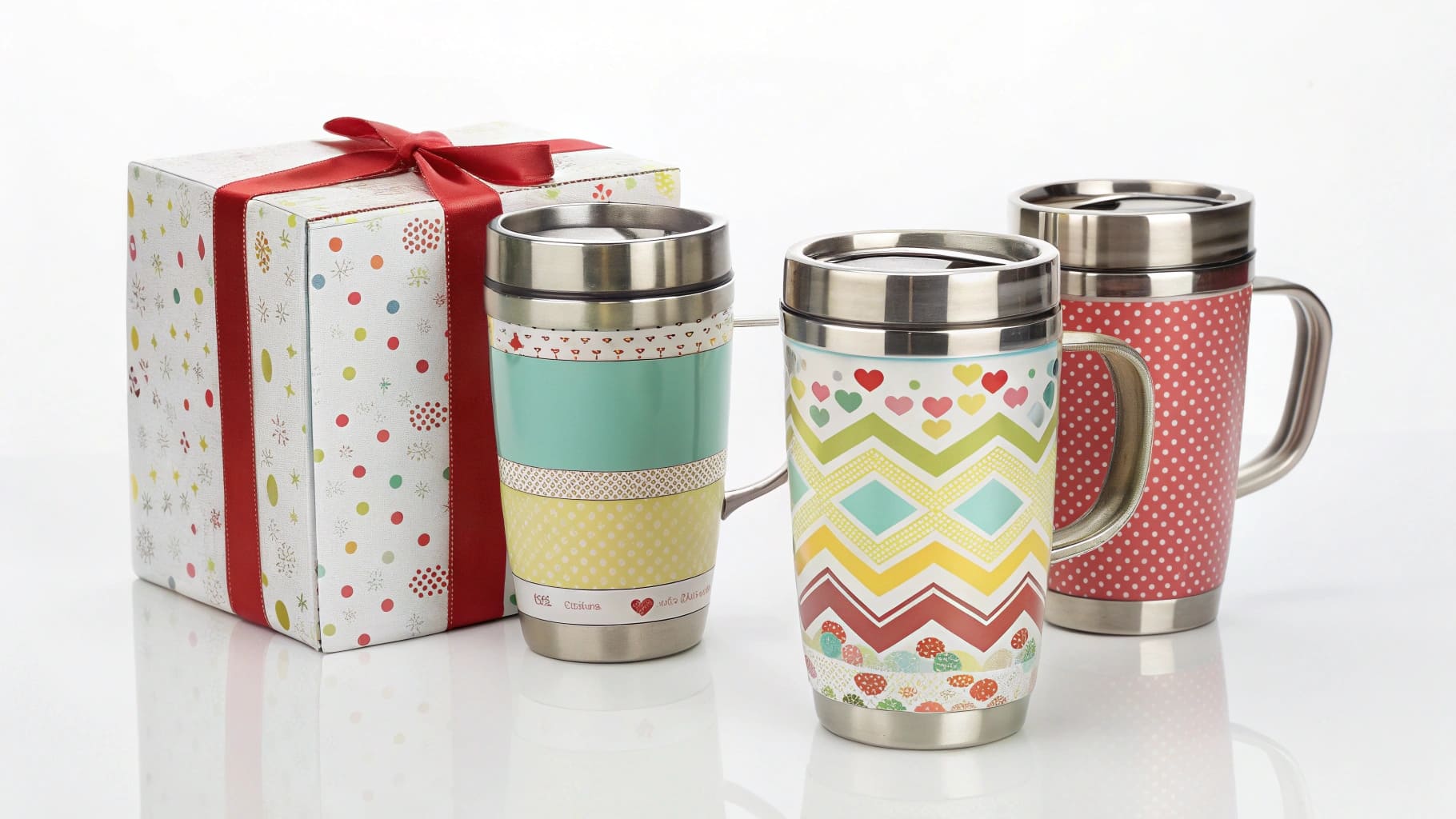
I test heat retention as a full mug system
I do not trust heat claims until I understand the test method. A factory can say a mug keeps coffee hot for many hours, but that number can change a lot. It depends on the starting water temperature, room temperature, fill level, lid type, and testing standard. I always ask for the test condition before I accept the result.
The body matters. A double-wall vacuum mug slows heat transfer1. Copper plating inside the vacuum layer can improve heat retention2. A good bottom seal also matters because a weak vacuum will lose performance fast. I also check the welding line and the inner wall shape because poor production can create hidden weak points.
The lid matters as much as the body. I have tested mugs where the body was strong, but the flip-top lid lost heat quickly. A screw-on lid with a silicone seal usually performs better3. A small drinking opening also helps because less heat escapes. If a buyer wants one-hand drinking, I explain the trade-off. Convenience may reduce heat retention.
| Design choice | Heat effect | My sourcing note |
|---|---|---|
| Double-wall vacuum | I get better heat retention | I treat it as the base requirement |
| Copper plating | I get stronger performance | I use it for higher-end orders |
| Screw-on lid | I reduce heat escape | I prefer it for long heat retention |
| Flip-top lid | I gain convenience | I test it more carefully |
| Wide mouth | I make cleaning easier | I expect faster heat loss |
| Silicone seal | I improve lid performance | I check odor and fit |
| Handle design | I improve grip | I check assembly strength |
| Powder coating | I improve touch and color | I check scratch resistance |
I also check the handle during thermal testing. A handle should not loosen after hot water testing. It should not deform. It should not create a strange smell when the mug holds hot coffee. I have seen samples that looked good in photos but felt weak in the hand. I do not approve those samples because the end user will feel the problem immediately.
For B2B orders, I ask the factory for a pre-production sample before mass production. I ask the sample to include the final body color, final handle color, final lid, final logo, and final packing. I do this because heat retention, color, and fit need to be checked together. A perfect body with a poor lid is not a good mug.
What is the best insulated cup brand?
I hear this question often, but I think it misses the real B2B advantage.
For wholesale buyers, the best insulated cup brand is usually the buyer’s own brand made by a capable factory. I focus on factory certification, stable production, quality inspection, customization skill, and honest communication instead of consumer brand fame.
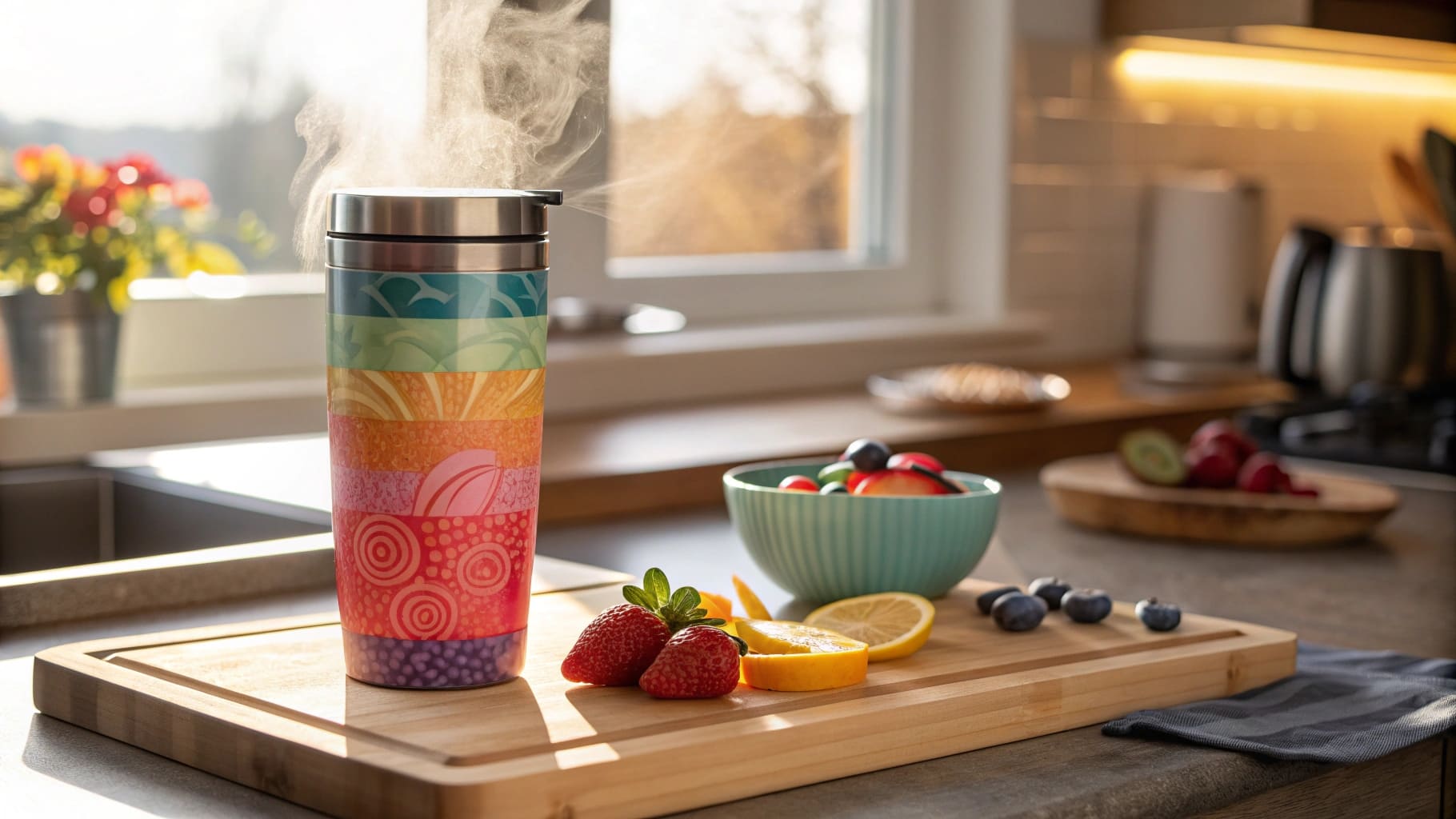
I use factory capability to build brand value
I understand why buyers ask about the best brand. A famous brand feels safe. It gives a simple answer. But in wholesale, I cannot build margin by chasing a retail brand. I need to build product value under my own design, my own logo, and my own market position.
Many consumer brands do not make every product by themselves. They often work with specialized factories4. This is why I focus on factory capability. I look at the production line, the welding quality, the vacuum testing process, the coating line, the lid assembly, the packing control, and the inspection records. These details tell me more than a brand name.
I also look at communication. I have lost time in the past when a sales person gave fast answers but did not understand production. Now I ask direct questions. I ask about MOQ for the handle. I ask about lead time after sample approval. I ask about Pantone matching for the body and handle separately. I ask how the factory controls color difference between powder coating and plastic parts.
| Brand question | My B2B version | What I ask the factory |
|---|---|---|
| Which brand is best? | Which factory can make my standard? | I ask for process proof |
| Which cup is popular? | Which shape fits my channel? | I ask for market-ready options |
| Which mug keeps heat? | Which structure passes my test? | I ask for test data |
| Which color looks premium? | Which finish matches my Pantone target? | I ask for pre-production samples |
| Which supplier is reliable? | Which team communicates clearly? | I ask for timeline control |
| Which price is lowest? | Which price protects my margin and quality? | I ask for itemized cost |
Pantone control is one area where brand thinking fails. A buyer may choose a beautiful color from a catalog, but the body and handle may not match in production. Powder coating on stainless steel can reach strong color accuracy. I often expect around 95% match if the factory has good coating control. Plastic or silicone handles can be harder. I often expect around 85% to 90% match because the base material and process are different.
This is why I request a real pre-production sample. I do not approve color by screen image. I check the body, handle, lid, and logo under normal light. I also ask the customer to confirm the color before mass production. This step can prevent a full shipment rejection. It is a small delay before production, but it protects the whole order.
Conclusion
I source handle travel mugs by specifications, not brand names. I control MOQ, lead time, heat performance, certification, and Pantone samples before production.
-
"Heat transfer", https://en.wikipedia.org/wiki/Heat_transfer. The vacuum flask operates on the principle that evacuating the space between two walls eliminates gaseous conduction and convection, the dominant heat-transfer pathways in non-vacuum containers, leaving only radiation as a residual loss pathway (see 'Vacuum flask,' Wikipedia). Evidence role: mechanism; source type: encyclopedia. Supports: That a vacuum layer between double walls suppresses conductive and convective heat transfer, dramatically reducing thermal loss. Scope note: Wikipedia provides an accessible summary of the underlying physics but does not quantify performance for specific mug geometries or materials. ↩
-
"Thermal radiation", https://en.wikipedia.org/wiki/Thermal_radiation. Within a vacuum flask, thermal radiation between inner and outer walls is the dominant residual heat-loss pathway; highly reflective coatings such as silver or copper reduce emissivity and thus limit radiative transfer, a principle documented in standard vacuum flask descriptions. Evidence role: mechanism; source type: encyclopedia. Supports: That reflective metallic coatings inside a vacuum flask reduce radiative heat transfer, the primary remaining loss pathway once conduction and convection are eliminated. Scope note: Published sources describe the reflective coating principle generally; quantitative performance differences between copper and other coatings for consumer mugs are not widely documented in neutral academic literature. ↩
-
"The 7 Best Travel Mugs of 2026, Tested & Reviewed", https://www.seriouseats.com/best-travel-mugs-5191838. Heat retention in insulated drinkware is affected by the lid's ability to form an airtight seal and the size of any drinking aperture, as these openings allow convective heat loss; designs that maximize seal contact area and minimize aperture exposure are expected to perform better under standardized thermal testing. Evidence role: general_support; source type: research. Supports: That lid seal integrity and drinking aperture size are significant variables in the heat retention performance of insulated drinkware. Scope note: Direct controlled comparisons of screw-on versus flip-top lids in peer-reviewed sources were not identified; the directional claim is supported by thermodynamic reasoning but lacks specific empirical citation. ↩
-
"The Implications of Contract Manufacturing for a Company's ...", https://pdxscholar.library.pdx.edu/cgi/viewcontent.cgi?article=1323&context=honorstheses. Original equipment manufacturing arrangements, in which branded companies contract specialized factories to produce goods sold under the brand's label, are widely documented across consumer goods industries as a strategy to reduce capital investment while accessing specialized production capabilities. Evidence role: general_support; source type: research. Supports: That outsourcing production to original equipment manufacturers (OEMs) is a common practice among consumer goods brands, including in the drinkware category. Scope note: Public documentation of specific drinkware brand-factory relationships is limited, as such arrangements are often proprietary; the claim rests on the broader, well-documented OEM practice rather than drinkware-specific published evidence. ↩