
Are 40oz insulated water bottles able to pass car-holder vibration and leak tests?
I have seen buyers trust a leak claim, then face wet cartons, angry drivers, and late season returns after one bad car trip.
Yes, a 40oz insulated water bottle can pass car-holder vibration and leak tests if it uses a strong multi-seal lid, precise threads, heat-safe parts, and a test plan that copies real driving movement.
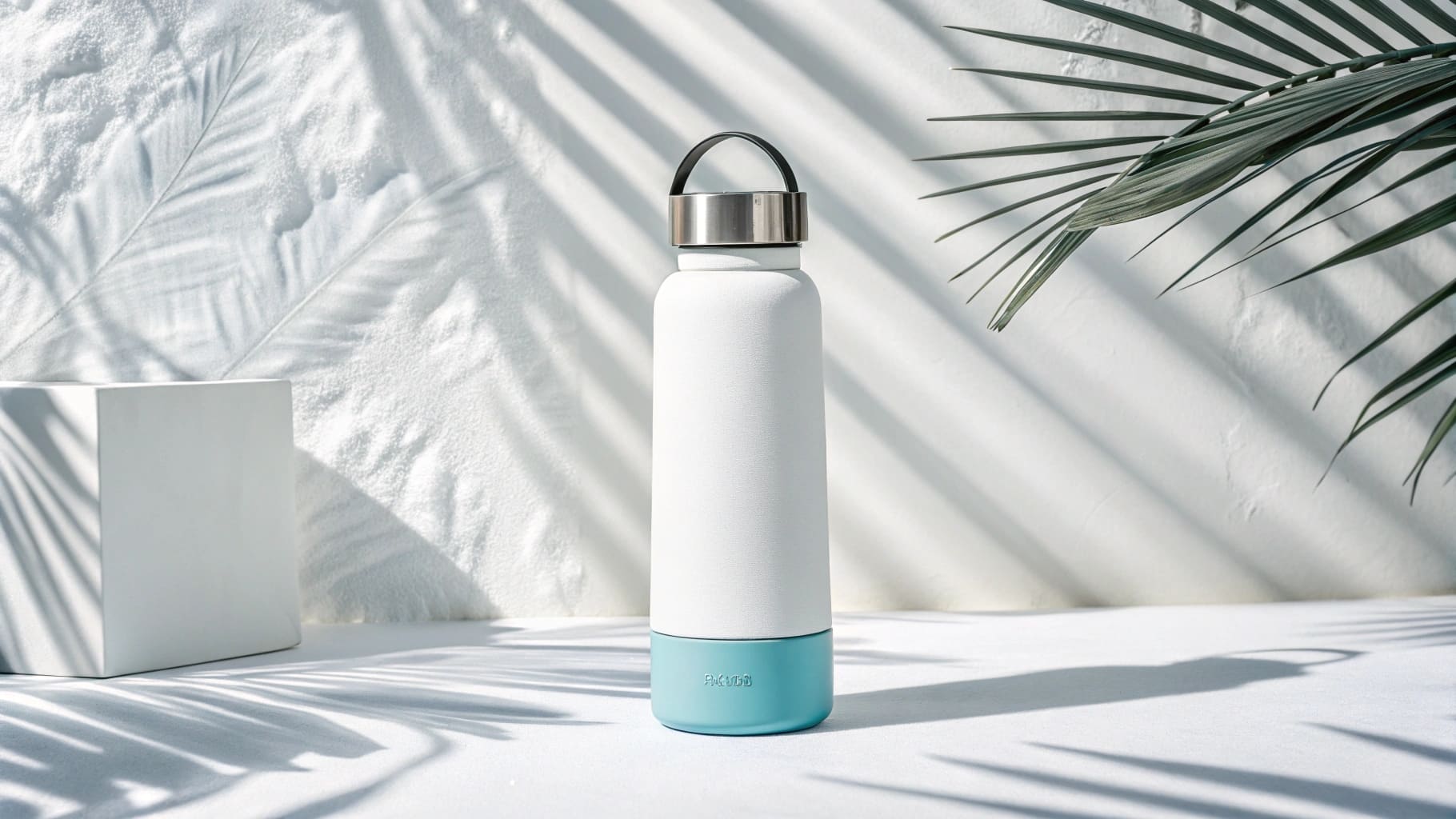
I treat a car cup holder as a moving test bench1, not as a simple storage space. I have watched large bottles shake for hours, tilt at small angles, and push pressure against the lid after the water inside gets warm. I know many suppliers only turn a bottle upside down on a table and call it leak proof. I do not think that test is enough for a commuter bottle. I also know many importers sell 40oz bottles as road-trip products, office products, and gym products. So I believe the test must match the real use. I look at the seal, the lid thread, the plastic parts, the bottle height, and the fit inside a cup holder. I also ask for batch test records, because one sample bottle can look perfect while a full order has small lid changes.
What is the most leak proof water bottle?
I see many lids look perfect on a desk, but I see weak seals fail when heat, shaking, and repeated opening meet.
The most leak proof water bottle is a stainless steel bottle with a multi-point silicone seal2, accurate lid threads, heat-resistant food-grade plastic parts, and pressure control that stops leaks during shaking or heat expansion.
I study the seal before I study the shape
I look at sealing as a full system. I do not judge a bottle by one silicone ring alone. I want the lid, seal, thread, mouth finish, and pressure path to work together. I have seen single O-rings pass a quick upside-down test, but I have also seen them leak after vibration moves the liquid against one side of the lid. A multi-point silicone seal spreads pressure more evenly. It also helps when a buyer opens and closes the bottle many times during daily use.
I also check the steel grade. I prefer 304 stainless steel3 for most wholesale water bottle orders. I may use 316 stainless steel4 when the buyer wants stronger corrosion resistance. I do not choose steel grade only for marketing. I connect it with the mouth finish and lid fit, because a poor mouth edge can still damage a good seal.
| Part I inspect | What I want to see | Why I care |
|---|---|---|
| Lid seal | I want multi-point silicone contact | I want stable sealing during shaking |
| Lid thread | I want clean and precise rotation | I want the lid to lock evenly |
| Mouth finish | I want a smooth rolled edge5 | I want the seal to sit flat |
| Plastic parts | I want BPA-free heat-safe material | I want no warping in hot cars |
| Valve design | I want pressure control when needed | I want less risk from heat expansion |
I also run repeated open-close checks. I do this because a bottle is not sold for one perfect photo. I know the user may open the lid at home, in the car, at work, and in the gym. So I care about wear. A strong leak-proof bottle should keep its seal after many cycles. I also ask my team to test samples from different cartons, not only the first sample sent for approval.
Is it safe to keep water bottles in a car?
I hear buyers worry about steel in hot cars, but I usually worry more about cheap lids and warped plastic parts.
I consider a stainless steel water bottle safe in a car when the lid uses BPA-free heat-resistant parts6, the seal stays stable under high cabin heat, and the supplier tests leakage after heating and vibration.
I separate steel safety from lid safety
I do not see stainless steel as the main risk in a parked car. I see the lid as the key risk. A good insulated bottle body can handle heat better than many plastic bottles. But a poor lid can soften, warp, or lose pressure on the silicone seal. When that happens, water can move through small gaps during driving. I have seen this problem more often in low-cost lids than in the bottle body itself.
I also think about the liquid inside. I do not recommend that buyers market a standard water bottle for carbonated drinks unless the lid is made for pressure. I also do not suggest leaving milk, juice, or sweet drinks in a hot car. The bottle may be made well, but the liquid can still create odor, pressure, or cleaning problems. For normal water use, I focus on the heat stability of every contact part.
| Car condition I copy | Risk I check | Test result I want |
|---|---|---|
| Hot cabin | I check lid warping | I want the lid to close the same way after heat |
| Cup holder shaking | I check side pressure on the seal | I want no drops near the thread |
| Long parking time | I check silicone recovery | I want the seal to return to shape |
| Daily commuting | I check repeat use | I want the user to close the lid without extra force |
| Shipment storage | I check packed product heat stress | I want no lid change before delivery |
I once handled a buyer question from North America about bottles left in delivery vans. The buyer did not ask only about material safety. He asked if the bottle would still be dry after a hot day and a rough road. I liked that question because it matched the real market. I told him that I would not accept a simple material certificate as proof. I would ask for heat exposure, vibration, and post-heat leak testing. I also check whether the lid supplier can keep the same material in mass production. This matters because a certificate can be real for one part but useless if the supplier changes material later.
Is there a bottle that doesn't leak?
I do not trust the words no leak until I see a bottle shake, fall, heat, cool, and still stay dry.
Yes, I can source a bottle that does not leak, but I only trust designs that pass static inversion, side storage, car-holder vibration, heat aging, and repeated open-close cycle tests.
I test the claim in the way the customer uses the bottle
I do not believe any bottle should be called leak proof only because it stayed dry on a table. I want the bottle to pass several use scenes. I start with static inversion because it is simple and useful. Then I move to side storage because many users throw a bottle into a bag or car seat. After that, I test car-holder vibration because a tall 40oz bottle can shake at the upper body while the base sits inside the holder. That movement pushes force toward the lid. If the lid design is weak, the leak often starts at the thread or drinking spout.
I also care about structure. A tall bottle needs a stable base, a lid that does not loosen under vibration, and a seal that can recover after pressure. I do not want impact force to focus only on the closure point.
| Test I request | What I learn | Why it helps my buyer |
|---|---|---|
| Static inversion | I learn if the basic seal works | I reduce obvious leakage claims |
| Side storage | I learn if the lid leaks in a bag | I protect retail customers from daily trouble |
| Car-holder vibration | I learn if the bottle handles driving | I support commuter and road-trip sales |
| Heat aging | I learn if parts deform | I reduce hot car complaints |
| Open-close cycle | I learn if the thread and seal wear out | I protect repeat-use performance |
| Batch sampling | I learn if production stays stable | I reduce returns after shipment |
I also ask for real reports, not only pretty words on a catalog page. I prefer batch testing reports with photos, sample numbers, production dates, and test conditions. I also like short test videos because they make communication faster. I know some buyers have faced false certificates before. So I do not rely on a PDF alone. I match the certificate with the product, the material name, the batch, and the factory record. This is a simple habit, but it can save a buyer from delayed shipments, customer returns, and missed peak seasons.
Conclusion
I trust a 40oz bottle when its lid, seal, heat parts, and car-holder tests prove the claim before the shipment leaves my factory.
-
"Vibration Testing Standards for Automotive PCBAs - ALLPCB", https://www.allpcb.com/blog/pcb-assembly/vibration-testing-standards-for-automotive-pcbas.html. Studies of in-vehicle environments show that objects in cup holders experience multi-axis vibration, lateral acceleration during turns, and intermittent impacts from road irregularities, creating dynamic stress conditions beyond static storage. Evidence role: general_support; source type: research. Supports: vibration and motion characteristics experienced by objects in vehicle cup holders. Scope note: Research typically addresses vehicle dynamics and component testing rather than consumer product performance specifically. ↩
-
"The Selection and Design of Dual Pressurized Liquid ...", https://oaktrust.library.tamu.edu/bitstreams/9e4f23b3-7c0e-4515-9cd6-ef0864f073fd/download. Engineering references describe redundant sealing systems as providing multiple contact surfaces that can distribute sealing pressure across a broader area and maintain seal integrity if one contact point experiences localized failure or displacement. Evidence role: mechanism; source type: education. Supports: pressure distribution principles in multi-point sealing systems. Scope note: The principle is general to seal engineering and not specific to water bottle lid designs or silicone materials. ↩
-
"SAE 304 stainless steel", https://en.wikipedia.org/wiki/SAE_304_stainless_steel. 304 stainless steel is an austenitic chromium-nickel alloy (18% chromium, 8% nickel) widely used in food-contact applications due to its general corrosion resistance and ease of fabrication. Evidence role: definition; source type: encyclopedia. Supports: composition and corrosion-resistance properties of 304 stainless steel. Scope note: The source describes material properties but does not address market preferences in water bottle manufacturing specifically. ↩
-
"SAE 316L stainless steel", https://en.wikipedia.org/wiki/SAE_316L_stainless_steel. 316 stainless steel contains 2-3% molybdenum, which enhances resistance to pitting and crevice corrosion in chloride environments, making it more corrosion-resistant than 304 grade in specific applications. Evidence role: mechanism; source type: encyclopedia. Supports: superior corrosion resistance of 316 stainless steel compared to 304. ↩
-
"Sealing Materials Require a Careful Choice", https://www.normandale.edu/academics/degrees-certificates/vacuum-and-thin-film-technology/articles/sealing-materials-require-careful-choice.html. Research on gasket sealing indicates that surface roughness and edge geometry affect contact pressure distribution; smoother, more uniform sealing surfaces reduce stress concentrations and improve seal reliability. Evidence role: mechanism; source type: research. Supports: effect of surface finish quality on gasket seal performance. Scope note: The research addresses general sealing principles rather than water bottle manufacturing specifically. ↩
-
"Bisphenol A leaching from polycarbonate baby bottles into ...", https://pmc.ncbi.nlm.nih.gov/articles/PMC9441614/. Studies reviewed by regulatory agencies indicate that elevated temperatures can increase the migration of bisphenol A (BPA) from polycarbonate plastics into food and beverages, leading to regulatory restrictions on BPA in food-contact applications. Evidence role: mechanism; source type: government. Supports: relationship between heat and BPA migration from plastic materials. ↩