
How should I control coating AQL, color Delta E, and oven cure profiles for a tumbler for sublimation?
I see buyers lose orders when good artwork meets weak coating. Small surface mistakes become visible defects, and peak season returns hurt fast.
I control sublimation tumbler quality by checking coating AQL, coating thickness, color Delta E, and cure profile before bulk production. I also test press time, temperature, and pressure on real samples before I approve mass orders.
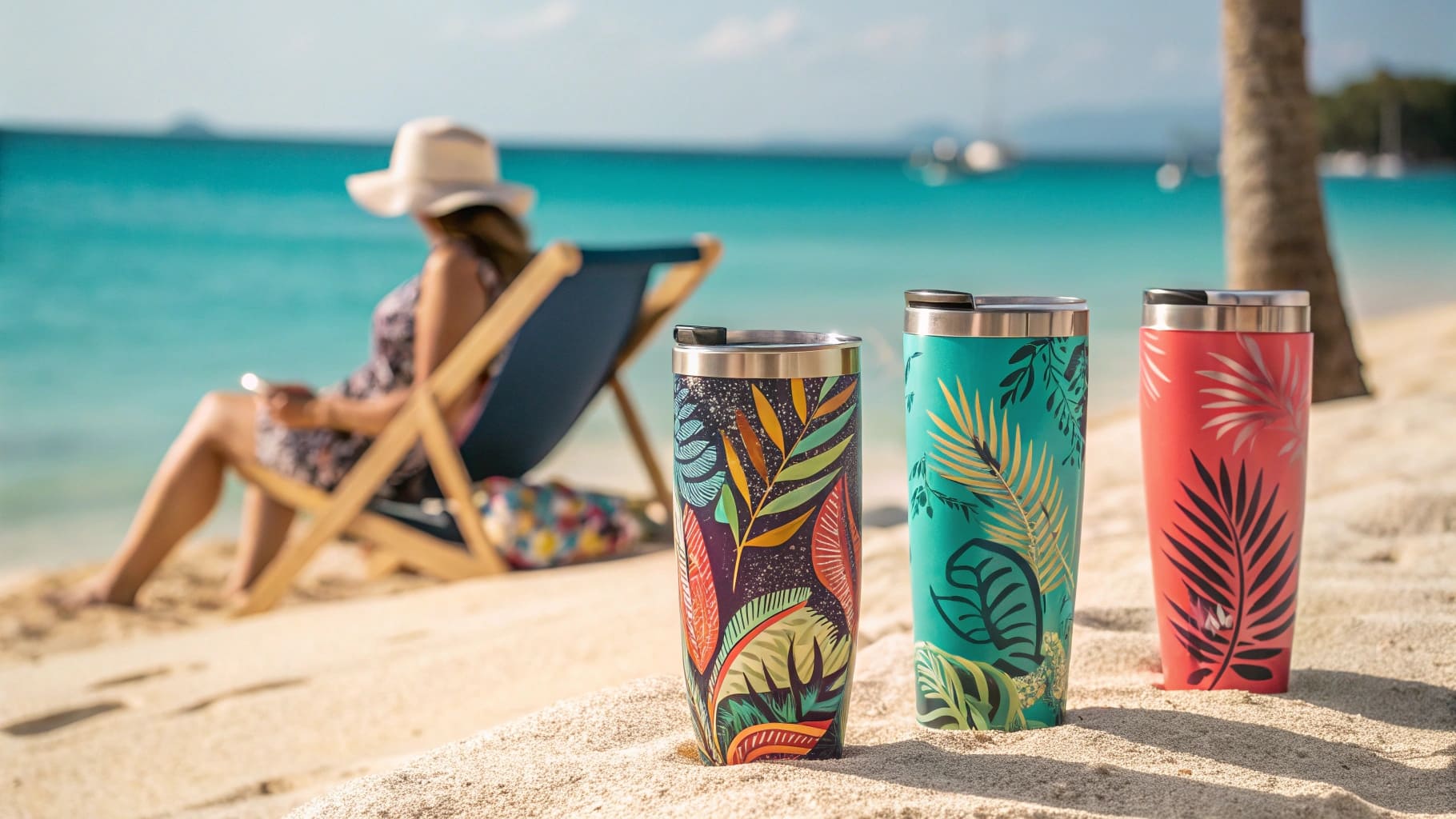
I treat a sublimation tumbler as a system, not as a blank cup with a white surface. I have seen samples look clean under office light, then fail under heat because the coating had pinholes, orange peel texture, or uneven thickness. I have also seen color drift when the coating was not cured in a stable way. For wholesale buyers, these small points become large business risks. A weak coating can turn into returns. A wrong color can damage a brand launch. A late correction can miss the selling season. So I always look at coating AQL, Delta E, and cure profile together before I talk about price.
What is the best time and temperature for a 20 oz sublimation tumbler in a tumbler press?
I have seen perfect artwork fail after one rushed press setting. The tumbler looked simple, but the coating and heat path were not simple.
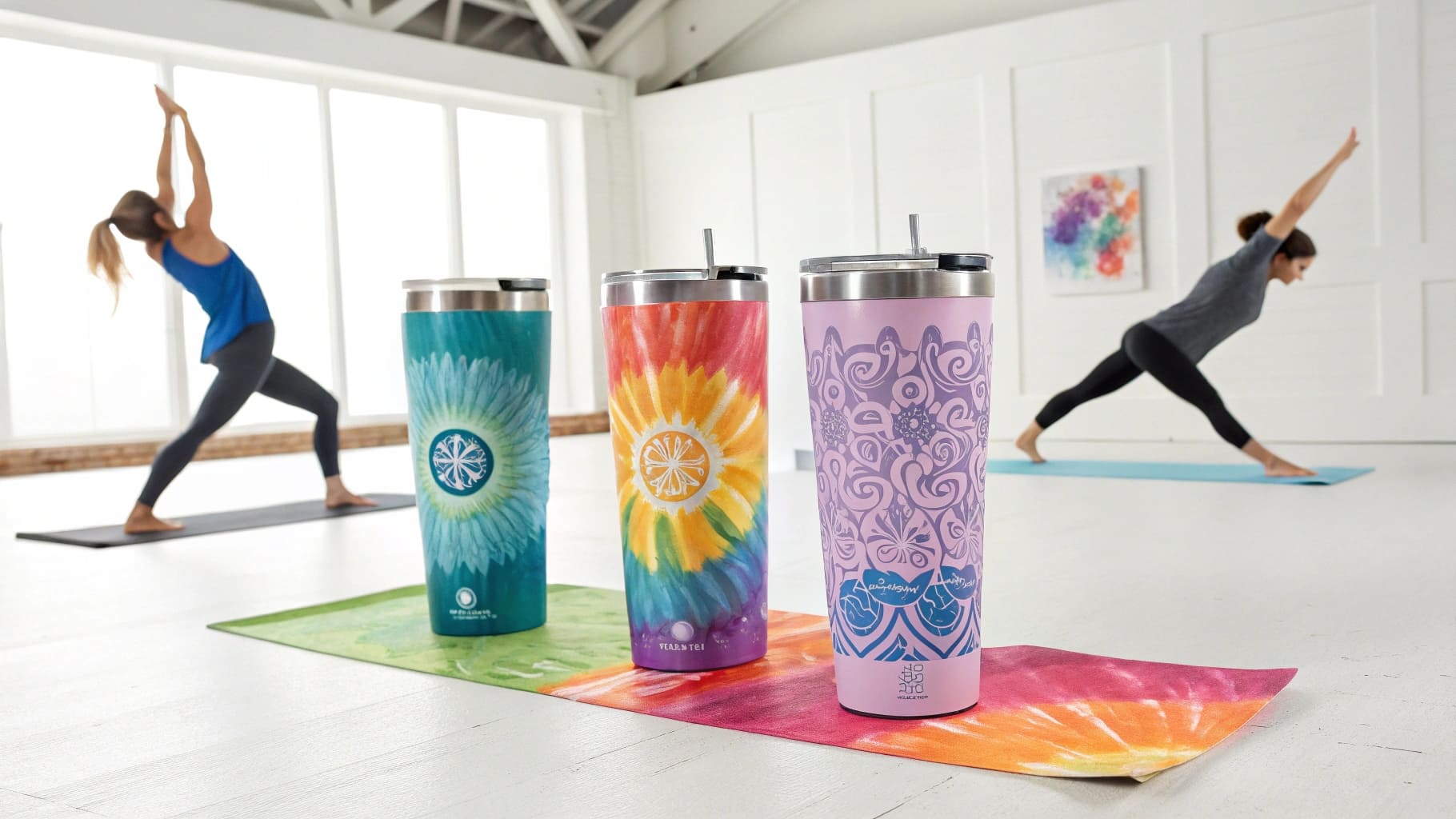
For a standard 20 oz sublimation tumbler, I start with 400°F for 60 seconds at medium pressure. I adjust by wall thickness, coating type, and press model. I test one blank first, then I change time in small steps.
My starting press profile
I use 400°F, or about 204°C, for 60 seconds as my first test point for a 20 oz straight sublimation tumbler. I use medium pressure because too little pressure gives weak transfer, and too much pressure can blur edges or leave marks. I do not treat this setting as a fixed law. I treat it as a starting point. If the tumbler wall is thicker, I may add 10 to 15 seconds. If the shape is tapered, I pay more attention to edge contact and rotation. If the press has uneven heating, I test the top, center, and bottom areas.
Why the coating changes the setting
The coating decides how well the dye enters the surface. I normally want a coating thickness near 15 to 25 microns for stable sublimation1. If the coating is too thin, the color can look weak. If the coating is too thick or over-cured, the surface can become too glossy and reject part of the ink. I also ask the factory to control coating defects under an AQL of 1.5 or lower for serious visible issues. This matters because one tiny pinhole can become a white spot after heat transfer.
| Item I check | My normal target | Why I care |
|---|---|---|
| Press temperature | 400°F or 204°C | I need enough heat for dye transfer |
| Press time | 60 seconds | I need full transfer without over-baking |
| Pressure | Medium | I need contact without crushed edges |
| Coating thickness | 15 to 25 microns | I need stable ink absorption |
| Coating defect AQL | 1.5 or lower | I need fewer blank spots and surface defects |
| Color Delta E | Below 2.0 when possible | I need color close to the approved artwork |
How I test before I approve bulk production
I never approve a large order only from a catalog photo. I ask for physical samples from the same coating batch when possible. I print a test design with solid colors, gradients, fine lines, and a dark block. I check whether the black looks deep, whether the red shifts, and whether the fine text stays clear. I also inspect the tumbler after it cools, because some defects look worse after the coating relaxes. When I work with buyers who sell in America or Europe, I prefer to record the test condition in writing. This helps both sides later if a production batch has a different result.
Can I sublimate a tumbler twice?
I know the feeling when one logo sits wrong. I want to save the blank, but heat has already changed the coating.
I can sublimate a tumbler twice only for small add-on graphics or light correction. I do not recommend a full second wrap. The first heat cycle weakens dye reception and can cause faded color, soft edges, and yellowing.
What happens after the first heat cycle
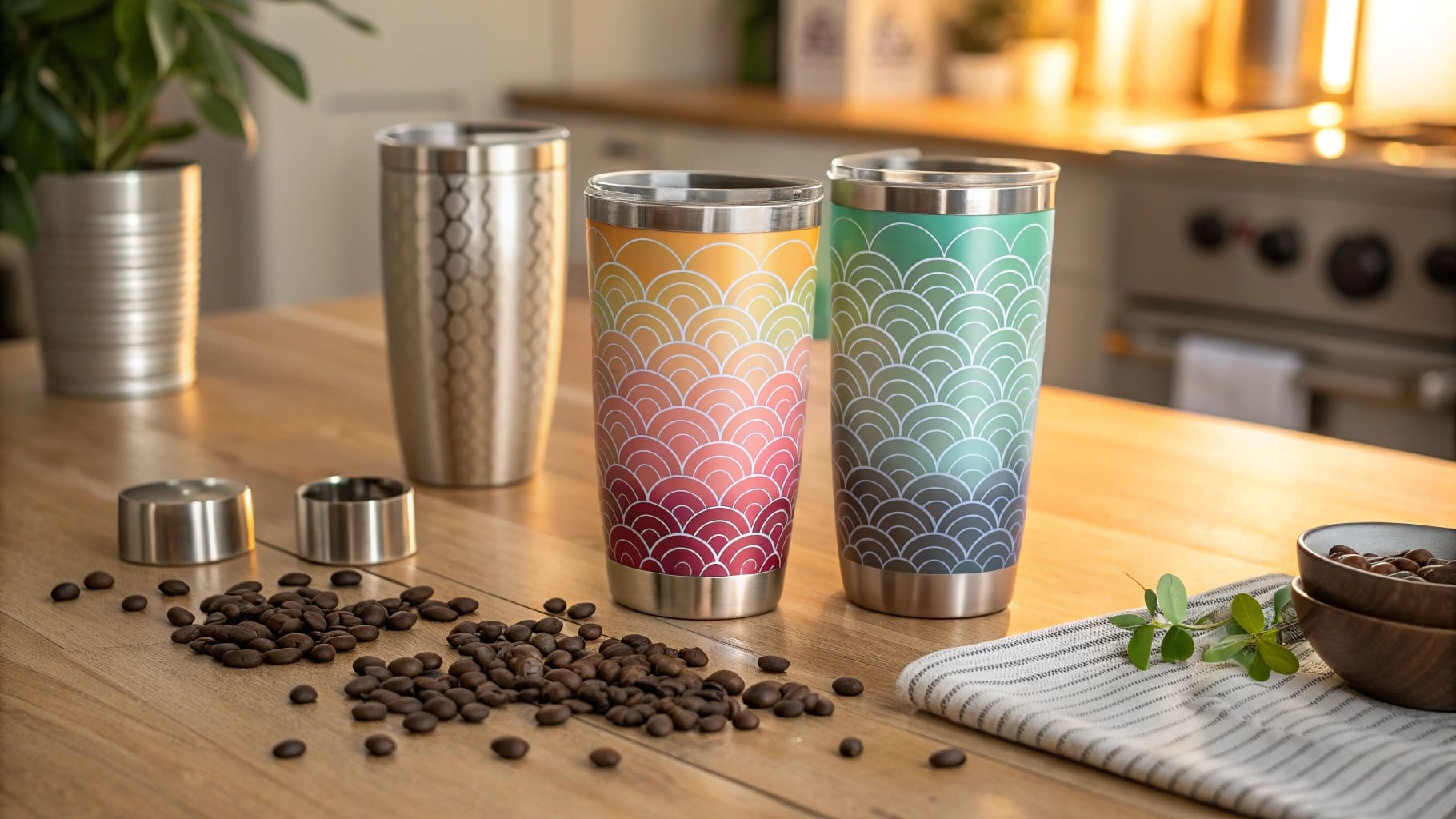
I see double sublimation as a repair method, not as a normal production plan. A sublimation coating is a polymer layer that opens under heat and accepts dye gas2. After the first press cycle, part of that layer has already taken dye and has already changed under heat3. When I press it again, the coating does not behave like a fresh blank. The second image may not bond evenly. The color may look less bright. The edge of the first image may soften. The white coating may also turn slightly yellow if the second heat cycle is too strong4.
When I may accept a second press
I may accept a second press if I only add a small name, small logo, barcode, or date mark. I avoid a full second wrap because the second design must compete with the first design and with the changed coating. I also avoid double sublimation on premium orders because the risk is not worth the small saving. If my buyer sells rebranded tumblers at a premium price, I prefer to scrap a bad blank rather than ship an unstable product.
| Situation | My decision | Main risk |
|---|---|---|
| Small name added later | I may test it | Slight color difference |
| Small logo correction | I may test it | Edge blur |
| Full second wrap | I avoid it | Faded color and ghost image |
| Dark design over light design | I treat it as risky | Old color may show through |
| Premium retail order | I do not recommend it | Return and brand damage |
How I reduce mistakes before they happen
I reduce double sublimation risk by controlling artwork approval and sample approval. I ask for final design files before coating or printing schedules become tight. I also suggest a pre-production sample when the design has strong brand colors. For color control, I care about Delta E because it gives a clear way to discuss color difference. A Delta E below 2.0 is usually hard for the human eye to notice. If a supplier cannot show recent color records, I become careful. I have met buyers who blamed the press, but the real problem was an under-cured coating. I have also seen suppliers use a different coating batch without telling the buyer. That small change can make the second press even more unstable.
What are the downsides of sublimation?
I like sublimation because it makes rich custom designs. I also see buyers get complaints when they sell it like magic.
The main downsides of sublimation are coating dependence, limited base materials, possible fading from harsh washing or UV light, higher coating quality control needs, and more risk from poor supplier documentation.
Sublimation depends on the coating
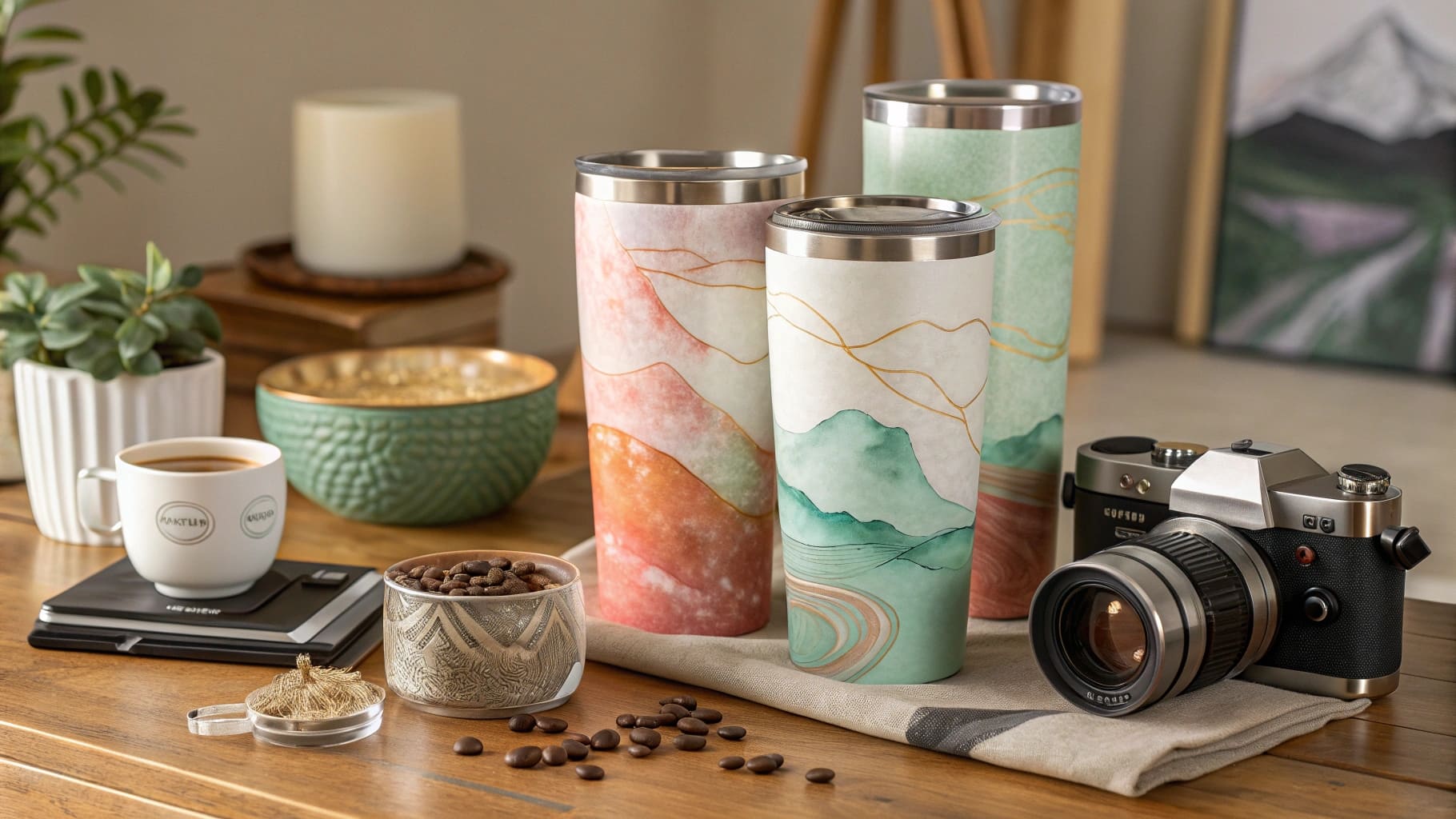
I always tell buyers that sublimation does not print directly into bare stainless steel5. It needs a polyester-based coating. This is the biggest strength and the biggest weakness at the same time. The coating allows full-color transfer, but it also creates another quality control point. If the coating has pinholes, orange peel texture, dust marks, or uneven thickness, the final print will show it. If the coating is under-cured, the ink may not hold well. If the coating is over-cured, the surface may reject dye and look pale6.
Sublimation has care limits
I do not present sublimation as indestructible. It can fade faster than screen printing or laser engraving when the user puts it through harsh dishwashing, strong detergent, or long UV exposure7. This matters for B2B buyers because end-user care becomes part of the product value. I prefer to give clear care instructions with every order. I also prefer hand wash guidance for premium sublimation tumblers. This reduces complaints and protects the buyer’s brand.
| Downside I watch | What can go wrong | How I control it |
|---|---|---|
| Coating defects | White spots and rough print | I check AQL and sample batches |
| Color drift | Brand color looks wrong | I ask for Delta E records |
| Weak cure profile | Poor ink adhesion | I ask for cure time and temperature |
| Over-cured coating | Low ink transfer | I test real press results |
| Harsh washing | Faster fading | I give clear care instructions |
| Supplier paperwork risk | Fake or weak claims | I request QC records and certificates |
Supplier control is a real business issue
I know many buyers search for suppliers through Google or trade shows. They often compare price first because price is easy to see. I still ask them to compare documentation. A serious supplier should be able to explain coating thickness, coating inspection, Delta E checks, and cure profile. The supplier should not hide behind general words like “premium quality” or “best coating.” I prefer clear records. I want to see recent production data, not only a perfect sample from an old batch.
I also care about logistics because sublimation tumblers often sell into seasonal markets. A delayed shipment can miss summer events, holiday gifts, or corporate launch dates. When a factory has poor coating control, rework takes time. When the supplier gives fake certificates, customs or customer audits can create more delays. So I see sublimation quality as more than printing quality. I see it as coating science, factory discipline, and supply chain honesty working together.
Conclusion
I win better sublimation orders when I control coating, color, cure, and press settings before bulk production, not after customer complaints start.
-
"Investigation on the effects of the application of a sublimating matte ...", https://pmc.ncbi.nlm.nih.gov/articles/PMC12484282/. Industry research on dye-sublimation coatings indicates that polymer layer thickness typically falls within similar ranges to support adequate dye diffusion while maintaining surface integrity. Evidence role: general_support; source type: research. Supports: typical coating thickness ranges for dye-sublimation polymer coatings. Scope note: Source may discuss coating thickness in general terms or for related applications rather than specifically for tumbler substrates. ↩
-
"Dye-sublimation printing", https://en.wikipedia.org/wiki/Dye-sublimation_printing. Research on dye-sublimation chemistry describes how elevated temperatures increase polymer chain mobility, allowing gaseous dye molecules to diffuse into the polymer matrix and become trapped upon cooling. Evidence role: mechanism; source type: research. Supports: the mechanism by which dye molecules diffuse into polymer coatings during sublimation. ↩
-
"Why Your Sublimation Colors Look Dull and How to Fix It", https://atlantavinylstore.com/blogs/news/why-your-sublimation-colors-look-dull-and-how-to-fix-it?srsltid=AfmBOor78q6G3NZSkUWFUMV8YbS0Q_zyBfDci2sqBV8PRmZFRf7qNeIU. Studies on polymer-dye interactions suggest that initial dye loading occupies available diffusion sites and that repeated thermal cycling can promote additional crosslinking, both of which may reduce subsequent dye uptake. Evidence role: mechanism; source type: research. Supports: how prior dye saturation and thermal history affect polymer coating receptivity. Scope note: Research may not specifically address multiple sublimation cycles on the same substrate. ↩
-
"Thermal degradation and flame spread characteristics of epoxy ...", https://pmc.ncbi.nlm.nih.gov/articles/PMC10587079/. Research on polymer thermal stability indicates that excessive or repeated heat exposure can cause oxidative degradation and chain scission, often manifesting as yellowing or browning in light-colored polymer materials. Evidence role: mechanism; source type: research. Supports: thermal degradation mechanisms that cause discoloration in polymer coatings. ↩
-
"Guide to Sublimation Blanks", https://heatpressnation.com/blogs/blog/guide-to-sublimation-blanks?srsltid=AfmBOopmsx4D25BWDeo8567eX5WWpvK58VBXqx_cCqANsewd_hNjiEfz. Dye-sublimation processes rely on dye molecules bonding with polymer structures, which necessitates either a polymer substrate or a polymer-based coating on non-polymer materials such as metals. Evidence role: mechanism; source type: research. Supports: material compatibility requirements for dye-sublimation transfer. ↩
-
"Dye-sublimation printing", https://en.wikipedia.org/wiki/Dye-sublimation_printing. Research on polymer coatings indicates that incomplete curing leaves insufficient crosslinking for dye retention, while excessive curing reduces polymer chain mobility necessary for dye diffusion during heat transfer. Evidence role: mechanism; source type: research. Supports: the effect of polymer cure state on dye diffusion and retention. Scope note: Cited research may address polymer curing broadly rather than specifically in the context of sublimation applications. ↩
-
"Sublimation vs. Screen Printing: Which One's Better?", https://www.printful.com/blog/sublimation-vs-screen-printing. Studies on decoration permanence indicate that mechanical methods like engraving generally exhibit superior resistance to chemical and UV degradation compared to dye-based methods, though specific performance depends on coating formulation and environmental exposure. Evidence role: general_support; source type: research. Supports: comparative durability characteristics of different decoration technologies. Scope note: Direct comparative data may be limited, and durability varies significantly with coating quality and care practices. ↩