
Can Personalized Tumbler Programs Scale Data Merge, Fonts, and QA at Volume?
You want to run a large personalized tumbler program. But you have seen data errors, font mismatches, and inconsistent quality ruin orders before. These problems cost money and time.
Yes, personalized tumbler programs can scale data merge, fonts, and QA at volume — but only when your supplier has the right technical systems in place. Programs from 500 to 50,000 units are manageable when automated verification, standardized font libraries, and layered QA checkpoints are all working together1.
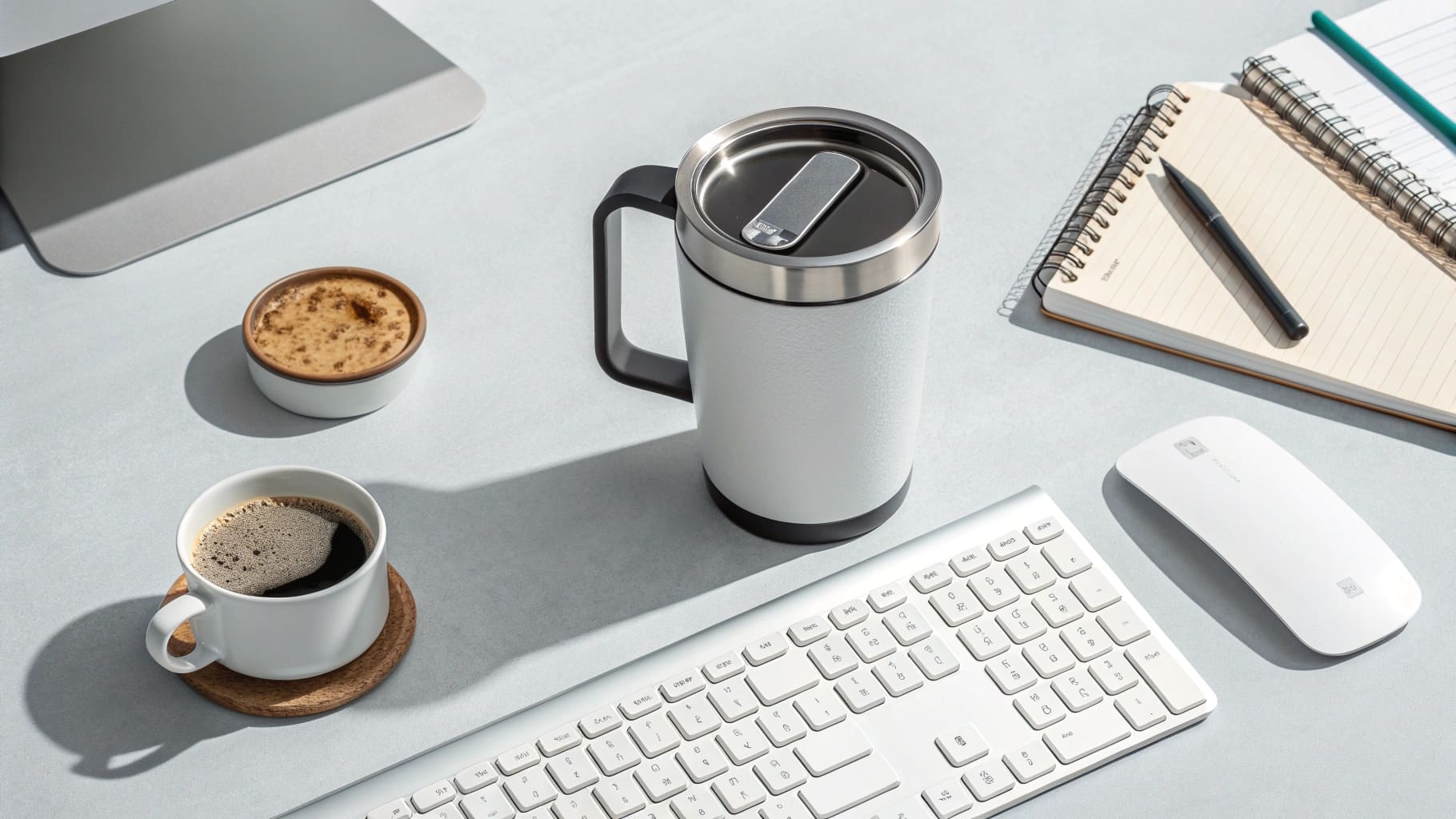
Most buyers assume personalization at volume is just a printing issue. It is not. It is a data issue, a process issue, and a supplier capability issue all at once. If you want a program that runs smoothly from first file to final shipment, you need to understand what you are buying before you place the order. Let me break this down for you.
What Is a Tumbler Mostly Used For?
You might think a tumbler is just another cup. But when you are sourcing at scale, not knowing exactly what a tumbler is built for can lead to wrong product choices and unhappy end users.
A tumbler is an insulated drinking vessel designed to keep beverages hot or cold for extended periods. It is most commonly used at desks, during commutes, and at outdoor events. Most tumblers are made from 304 or 316 grade stainless steel and feature a wide-mouth opening.

Tumblers sit at the center of corporate gifting and promotional programs for a good reason. They are used every single day. That kind of daily visibility makes them one of the most effective branded products a company can give away or sell2.
Where Tumblers Get Used Most
When I talk to procurement officers sourcing tumblers for the first time, they often ask me why tumblers are so popular compared to other drinkware. The answer comes down to how often and where people actually use them.
| Use Setting | Frequency | Typical User |
|---|---|---|
| Office desk | Daily | Corporate employees |
| Daily commute | Daily | Professionals, students |
| Gym or outdoor activity | Several times a week | Active consumers |
| Events and conferences | Occasional | Event attendees |
| Home kitchen | Regular | General consumers |
The wide-mouth design of a tumbler also makes it easier to clean, add ice, and use with different lid types. This matters for B2B buyers because end users notice functional details. A product that is easy to use daily will stay in circulation longer, which means more brand exposure per unit. For corporate gifting programs, this is a strong argument for choosing a tumbler over a narrow-mouth bottle. The 316 grade stainless steel option is worth considering for buyers whose end users will use the tumbler for hot beverages daily, since it offers better corrosion resistance at higher temperatures3. For cold-drink-only programs, 304 grade is sufficient and more cost-effective at volume.
Can I Use a Tumbler as a Water Bottle?
Some buyers ask whether a tumbler really works as a water bottle. This question matters because it affects how you position the product to your own customers and how you justify the price point.
Yes, a tumbler can absolutely be used as a water bottle. Modern tumblers hold water just as well as dedicated water bottles. The main difference is the opening size and the shape. Tumblers typically have a wider mouth and a shorter, wider body compared to traditional water bottles.
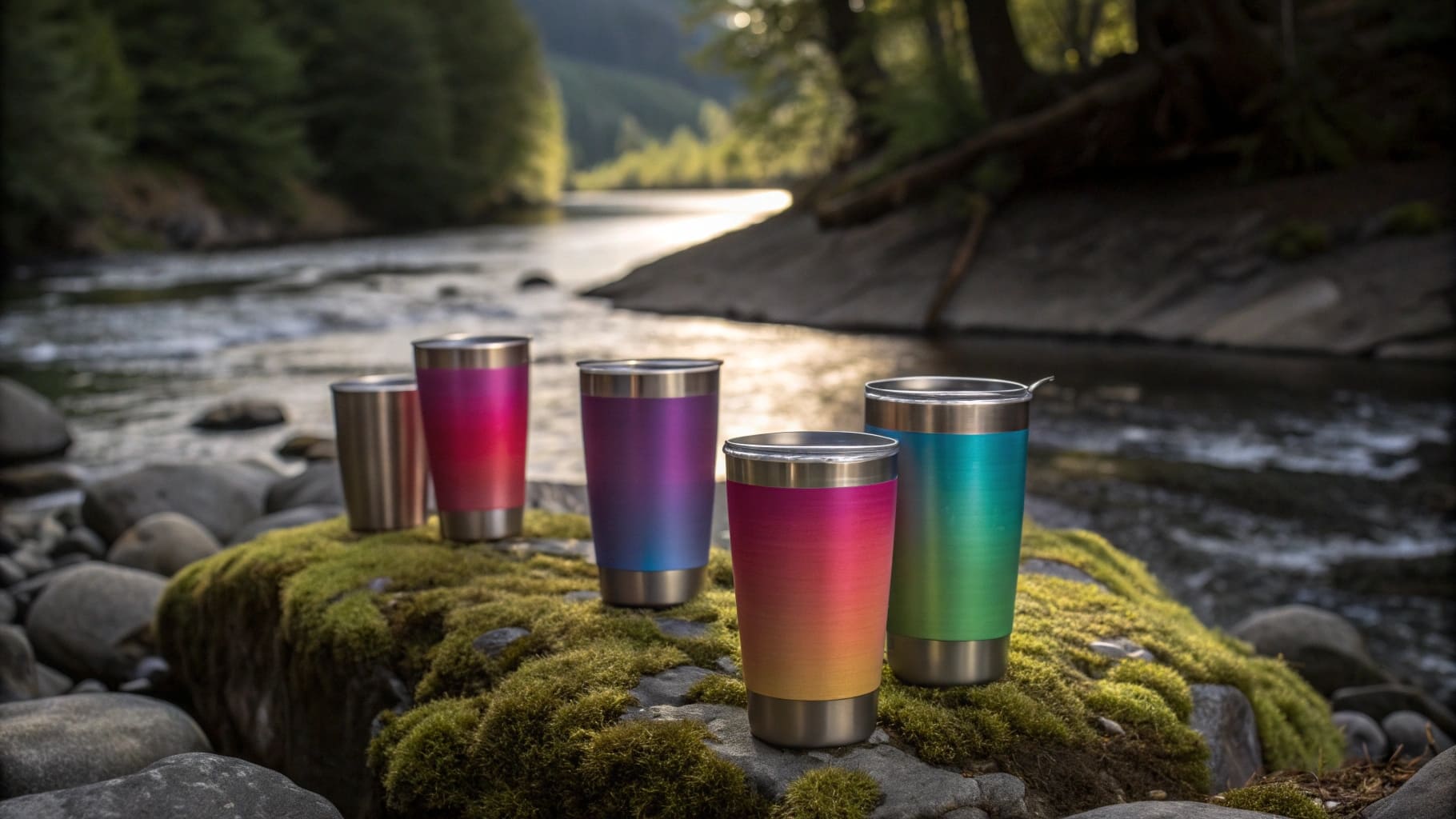
This overlap in function is actually one of the reasons tumblers have become so dominant in corporate gifting. One product can serve multiple purposes for the end user. That versatility increases perceived value without increasing your unit cost.
Tumbler vs. Water Bottle: Key Differences at a Glance
I have sourced both tumblers and water bottles for different clients over the years. The confusion between the two usually comes from the fact that modern designs have pushed the categories closer together. Here is how I compare them side by side when helping buyers decide.
| Feature | Tumbler | Water Bottle |
|---|---|---|
| Mouth opening | Wide | Narrow to medium |
| Body shape | Short and wide | Tall and narrow |
| Primary use | Hot and cold beverages | Primarily cold beverages |
| Portability | Better for desk and car | Better for bag and backpack |
| Lid style | Sliding or straw lid | Screw cap or flip top |
| Brand visibility | Large flat surface for logo | Cylindrical surface |
For B2B buyers running personalized programs, tumblers offer a larger and flatter decoration surface. This means your logo, name, or message is more visible and easier to reproduce cleanly at scale. If your program involves laser engraving or screen printing with small text or detailed artwork, this surface advantage is significant. A water bottle's curved and narrow body creates more distortion risk during high-volume decoration runs4. Tumblers reduce that risk and give decorators more room to work with precision.
What Qualifies as a Tumbler?
Before you finalize a product spec for a large order, you need to know exactly what a tumbler is. Buying the wrong product type wastes samples, delays timelines, and creates disputes with suppliers.
A tumbler is an insulated, lidded drinking vessel that does not have a permanent base handle. It is typically made from double-wall stainless steel, uses vacuum insulation, and holds between 12 oz and 40 oz of liquid. It must have a removable lid to qualify as a tumbler in most commercial and retail classifications.
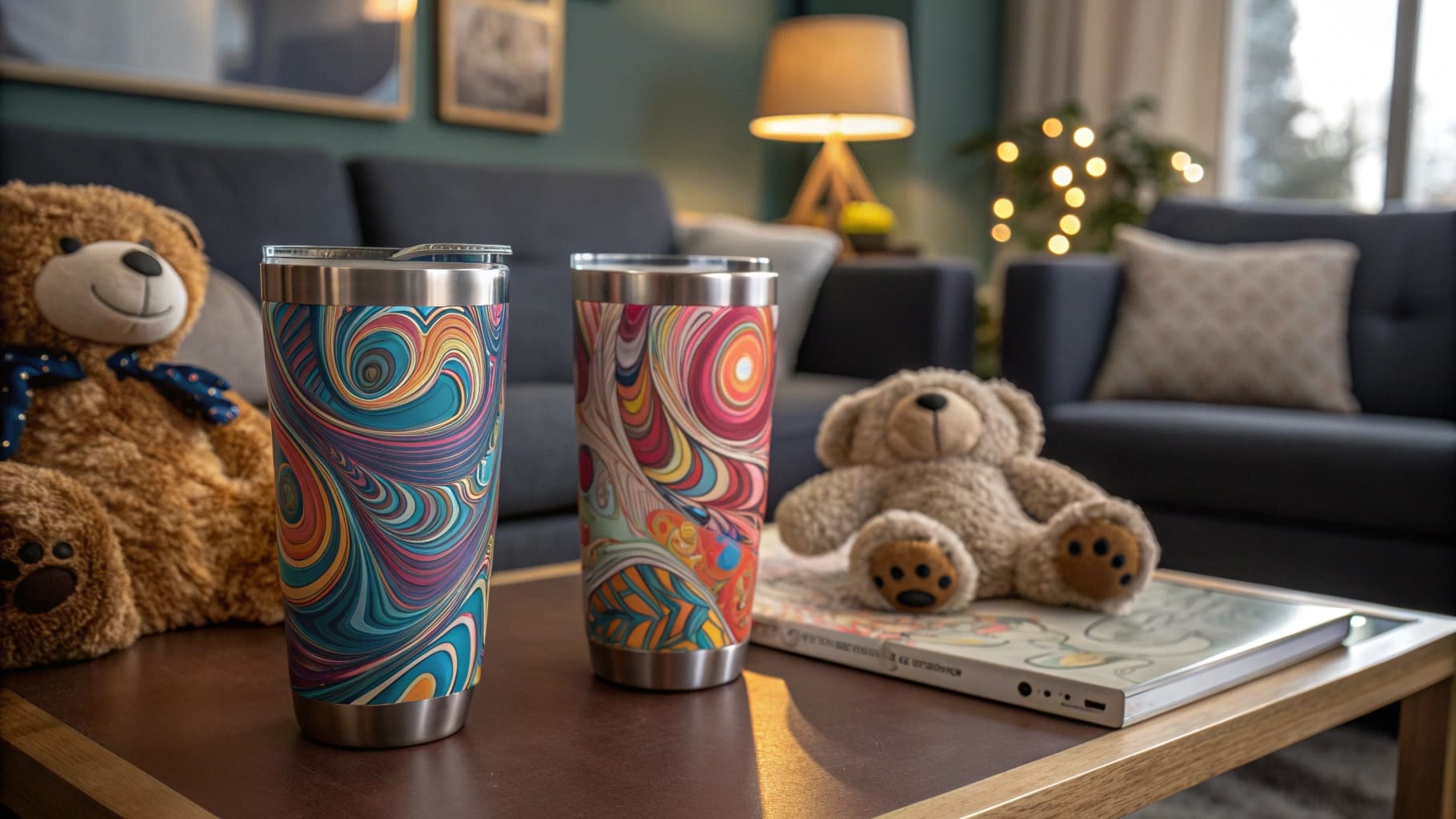
Understanding this definition helps you write better purchase orders, ask better questions during supplier audits, and set clearer expectations for personalization programs. The definition also matters for compliance purposes in some markets, where labeling requirements differ between tumblers and cups5.
Breaking Down What Makes a Tumbler a Tumbler
When I review supplier catalogs with buyers, we often find products listed as tumblers that do not fully meet the standard definition. This creates confusion downstream, especially when buyers need to file customs declarations or meet retail product category requirements. Here is how I break down the qualifying features.
| Feature | Qualifying Standard | Why It Matters |
|---|---|---|
| Wall construction | Double-wall vacuum insulated | Determines temperature retention performance |
| Material | 304 or 316 stainless steel | Affects food safety certification requirements |
| Lid type | Removable, not fixed | Distinguishes tumbler from sealed travel mug |
| Handle | None (or side handle, not top) | Separates tumbler from mug classification |
| Capacity range | 12 oz to 40 oz | Standard range for commercial programs |
| Base | Flat, no suction cup | Affects stackability and packaging design |
For personalized programs at volume, the construction standard is the most important qualifying factor. A double-wall vacuum-insulated tumbler will hold its temperature performance claim across thousands of units only if the vacuum seal is consistent. Suppliers with proper QA systems test vacuum integrity by batch, not just on samples6. When I evaluate a new supplier for a high-volume program, I always ask for their batch testing protocol for vacuum insulation. If they cannot produce one, that is a red flag. A tumbler that fails its temperature retention promise after two weeks of use will damage your brand7 regardless of how good the personalization looks on the outside.
Conclusion
Personalized tumbler programs can scale cleanly when your supplier has solid data systems, tested font libraries, and layered QA processes in place. Know your product, know your supplier.
-
"The Limits of Mass Customization - MIT Sloan Management Review", https://sloanreview.mit.edu/article/the-limits-of-mass-customization/. Operations management and mass customization research, including foundational work by Pine (1993) and subsequent empirical studies, establishes that automated data integration and process standardization are enabling conditions for scaling individualized production runs without proportional increases in error rates or unit costs. Evidence role: general_support; source type: paper. Supports: That mass customization and variable data production programs become operationally viable at scale when supported by automated data processing and quality verification systems. Scope note: Academic mass customization literature addresses scalability principles broadly; the specific volume range of 500–50,000 units cited in the article reflects a practitioner benchmark rather than a threshold derived from or validated by the cited research. ↩
-
"[PDF] Recall Effectiveness Research: Consumer Motivation and Behavior", https://www.cpsc.gov/s3fs-public/RecallEffectiveness.pdf. The Advertising Specialty Institute's recurring consumer studies report that promotional products such as drinkware generate thousands of impressions over their useful life, with cost-per-impression figures that compare favorably to traditional media advertising formats. Evidence role: statistic; source type: institution. Supports: That frequently used promotional products generate high numbers of brand impressions and are considered cost-effective advertising vehicles. Scope note: ASI impression estimates are based on self-reported consumer surveys and assume continued product use; actual brand recall lift attributable to promotional drinkware specifically has not been independently replicated in peer-reviewed advertising research. ↩
-
"Temperature Range Comparison: 304 vs 316 vs 330 Stainless Steel", https://www.marlinwire.com/blog/what-is-the-temperature-range-for-304-stainless-steel-vs-316-vs-330. Materials science literature establishes that AISI 316 stainless steel contains 2–3% molybdenum not present in 304, which improves resistance to pitting and crevice corrosion, particularly in chloride-containing or elevated-temperature environments. Evidence role: mechanism; source type: education. Supports: That the molybdenum content in 316 stainless steel provides superior corrosion resistance compared to 304, particularly in more demanding chemical or thermal environments. Scope note: General metallurgical sources address corrosion resistance broadly; direct empirical studies comparing 304 and 316 performance specifically in hot-beverage tumbler use cases are limited in the public literature. ↩
-
"Drinkware Decoration Dilemma: Laser Engraving or Digital UV", https://www.inkcups.com/blog/drinkware-decoration-dilemma-laser-engraving-or-digital-uv/. Technical literature on pad printing, screen printing, and laser engraving documents that substrate curvature radius and surface area directly influence ink deposit uniformity and beam focus consistency; narrower cylindrical substrates present greater geometric constraints that increase the risk of image distortion or registration error at production speeds. Evidence role: mechanism; source type: research. Supports: That surface curvature and geometry affect the accuracy and distortion characteristics of decoration processes such as screen printing and laser engraving on cylindrical substrates. Scope note: Published technical sources address decoration physics generally; controlled comparative studies specifically measuring distortion rates on tumbler versus water bottle geometries in high-volume production settings are not widely available in the public literature. ↩
-
"[PDF] Food Labeling Guide - FDA", https://www.fda.gov/files/food/published/Food-Labeling-Guide-%28PDF%29.pdf. Regulatory frameworks such as FDA 21 CFR (United States) and EU Regulation No 10/2011 on plastic food contact materials establish compliance requirements for food contact articles; customs classification systems such as the Harmonized System (HS) further distinguish product categories in ways that affect import documentation and labeling obligations. Evidence role: general_support; source type: government. Supports: That food contact articles including drinkware are subject to regulatory labeling and material compliance requirements that vary by jurisdiction and product classification. Scope note: These frameworks address food contact materials broadly; specific labeling distinctions between 'tumblers' and 'cups' as named subcategories are not explicitly codified in the cited regulations, and the article's claim may reflect practical customs classification practice rather than formal statutory distinction. ↩
-
"[PDF] NASA TECHNICAL STANDARD LEAK TEST REQUIREMENTS", https://standards.nasa.gov/sites/default/files/standards/NASA/A/0/2023-02-22-NASA-STD-7012A-Approved.pdf. ISO 2859 (Sampling procedures for inspection by attributes) and related acceptance quality limit frameworks establish that batch-level sampling inspection is the standard approach for detecting production variation in manufactured goods; reliance on pre-production samples alone is widely recognized as insufficient for detecting process drift in high-volume runs. Evidence role: expert_consensus; source type: institution. Supports: That statistically valid batch sampling for quality testing, rather than reliance on pre-production samples alone, is a recognized principle in manufacturing quality assurance. Scope note: General QA sampling standards do not address vacuum insulation testing specifically; the application of batch sampling principles to vacuum integrity in drinkware is an industry practice inference rather than a directly codified requirement in the cited standards. ↩
-
"Consumers blame both manufacturer and retailer when products fail ...", https://mendoza.nd.edu/news/consumers-blame-when-products-fail/. Consumer behavior research consistently demonstrates that product performance failures generate negative affect transfer to associated brands; in the context of promotional merchandise, studies indicate that recipients attribute product quality to the sponsoring organization, making functional failures a reputational liability. Evidence role: expert_consensus; source type: paper. Supports: That consumer experience of product failure negatively affects brand perception and recall associated with the gifting organization. Scope note: Direct peer-reviewed studies on brand damage specifically from promotional drinkware failure are scarce; the cited principle is extrapolated from broader brand association and product failure literature, which may not fully account for the gifting context. ↩