
Are Kids' Stainless Steel 8oz Cups Compliant with CPSIA and Prop 65?
You sourced what looked like a perfect kids' cup. Then a shipment gets rejected or your brand takes a hit. Compliance failures cost more than money.
Kids' stainless steel 8oz cups can be fully compliant with CPSIA and Prop 65, but only when the right steel grade is used and every component — not just the body — is tested by an accredited third-party lab for lead, cadmium, and phthalates.

Most buyers focus on the steel body and stop there. That is the first mistake. Compliance covers the lid, the gasket, the coating, and the decoration too. If any single part fails, the whole product fails. The sections below walk through each piece of the picture so you can buy with confidence and protect your brand at the same time.
Do All Stainless Steel Cups Have Lead?
You hear the word "stainless steel" and assume it is automatically safe. That assumption has burned a lot of buyers before.
No, not all stainless steel cups contain lead. Food-grade grades like 304 and 316 stainless steel contain no lead in their base composition. The real risk comes from secondary parts — coatings, painted decorations, soldered seams, and low-quality accessories.
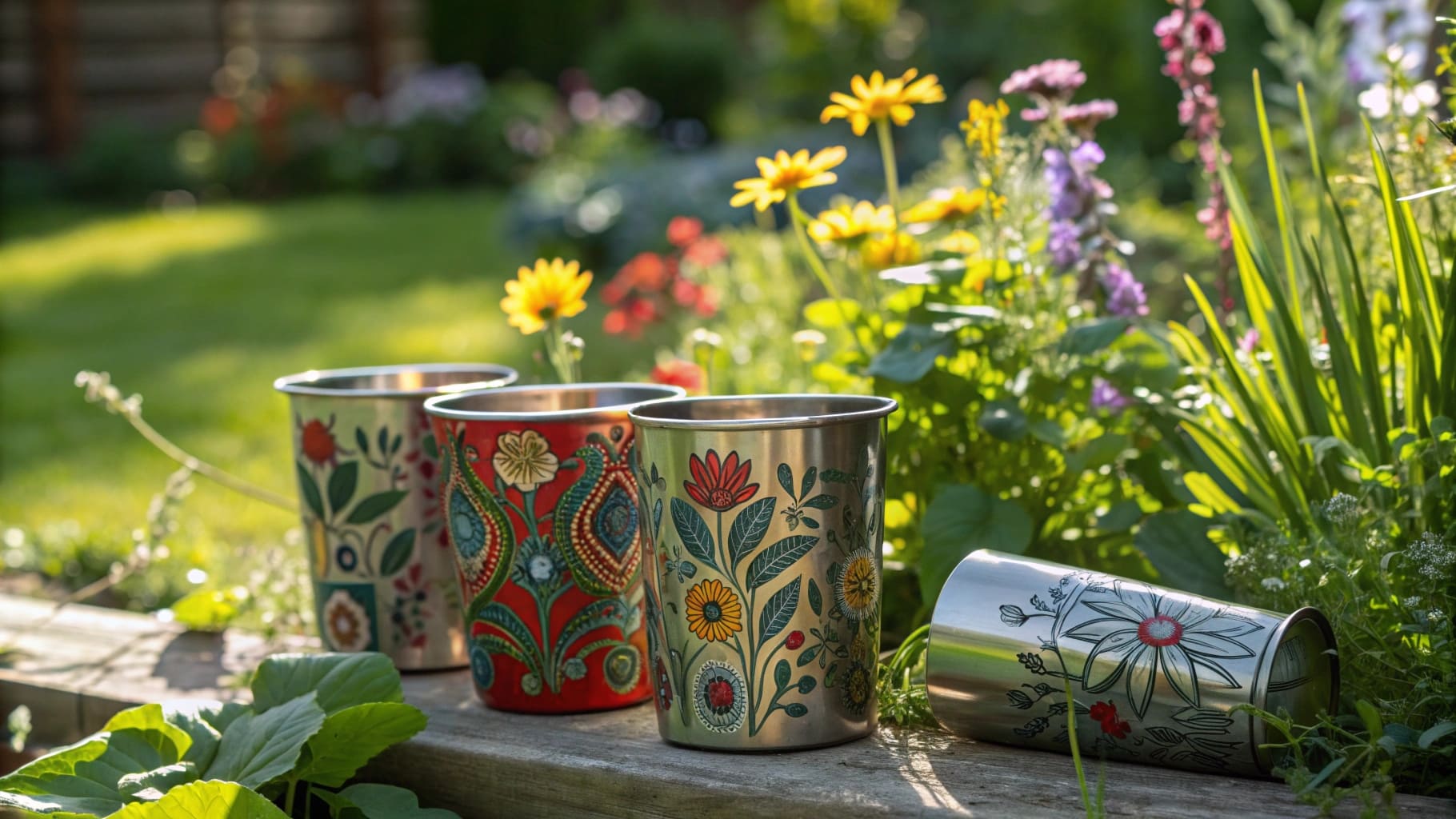
This is a point I always stress when talking to buyers at trade shows. The steel itself is not usually the problem. The problem hides in the parts you do not think about.
Here is a clear breakdown of where lead risk actually shows up in a kids' cup:
| Component | Lead Risk Level | Common Cause |
|---|---|---|
| 304 or 316 steel body | Very Low | Not present in base alloy |
| Paint or decorative coating | High | Low-quality pigments |
| Soldered seams | High | Traditional solder contains lead |
| Plastic lid or gasket | Medium | Low-grade plastic compounds |
| Screen printing ink | Medium | Unregulated ink suppliers |
The base steel is not the enemy. A clean supply chain controls every component on that list. When I work with suppliers at Icobottle, I ask for material certifications on every single part — not just the bottle body. A supplier who pushes back on that request is a supplier worth avoiding. Responsible factories run third-party tests for heavy metals including lead, cadmium, and phthalates across all components. That is not optional when the end user is a child.
Are Stainless Steel Cups Safe to Drink From?
Safe for adults is not the same as safe for children. Regulations draw a hard line between the two1, and buyers who miss that line pay for it.
Yes, stainless steel cups made from food-grade 304 or 316 steel are safe to drink from. These grades are corrosion-resistant and do not leach harmful metals under normal use. For children's products, safety is confirmed only through third-party lab testing against CPSIA and Prop 65 standards.
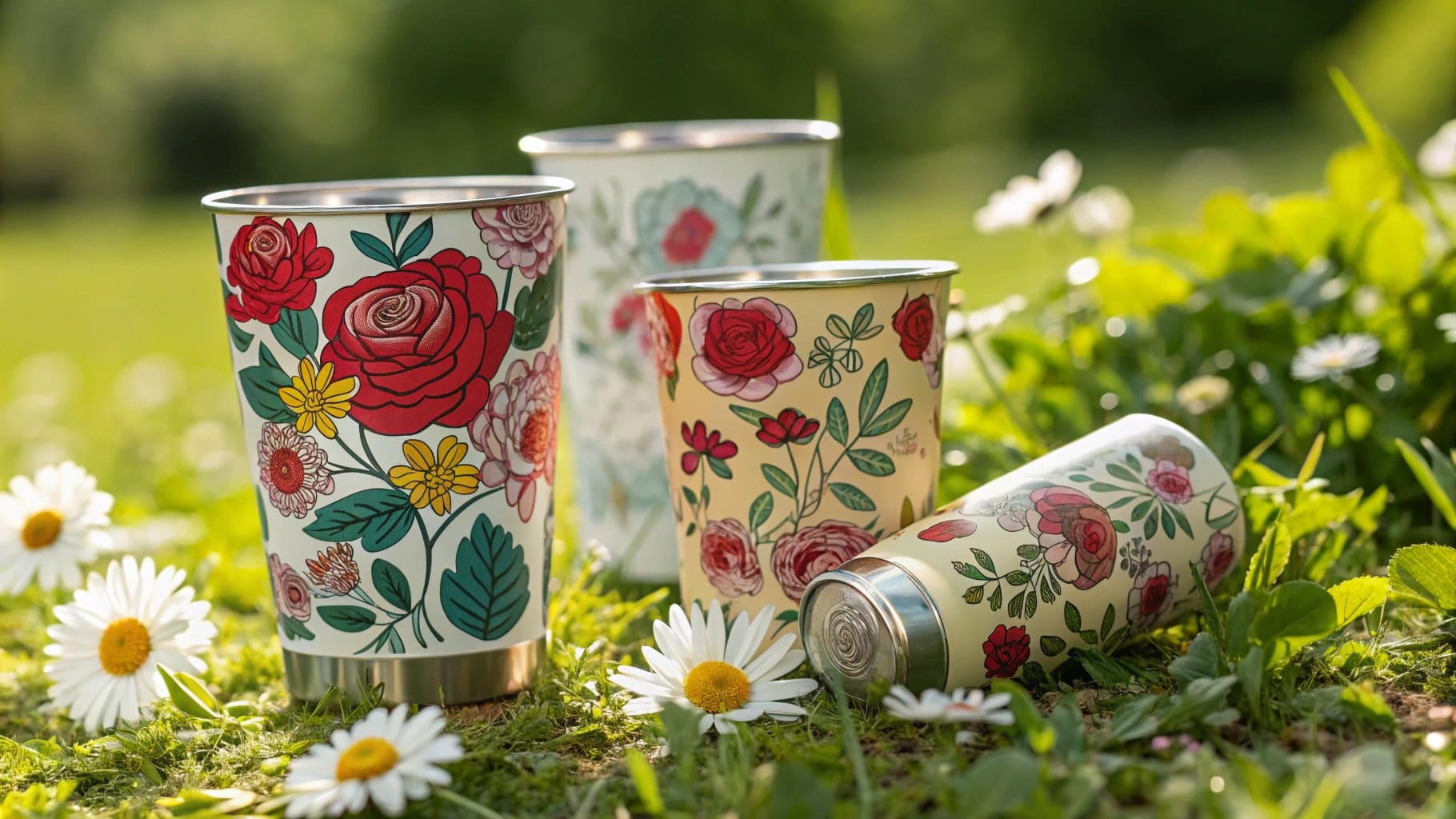
I want to go deeper here because "safe" is a word that gets thrown around loosely in this industry. Safe means documented. Safe means tested. Safe means a lab report you can hold in your hand.
CPSIA sets the standard for children's products sold in the US. It caps lead content at 100 ppm in surface coatings and 100 ppm in the substrate material2. Prop 65 covers California specifically and requires warnings or zero-threshold compliance for chemicals known to cause cancer or reproductive harm3.
Here is what the two standards actually require from a product like an 8oz kids' cup:
| Standard | Scope | Key Requirement | Testing Body |
|---|---|---|---|
| CPSIA | All US children's products | Lead below 100 ppm in all materials | CPSC-accepted accredited lab |
| Prop 65 | California market | Warning or compliance for 900+ listed chemicals | Any accredited third-party lab |
| FDA | Food contact surfaces | No harmful leaching into food or drink | Internal or third-party |
| LFGB | EU/voluntary US use | Migration limits for metals and organics | Accredited lab |
When I receive documentation from a supplier, I do not accept a single generic certificate. I ask for test reports that name the specific product, the specific batch, and the specific lab. Any report older than 12 months on a product line that has changed components is not good enough. Regulations also evolve, so a supplier who tested once three years ago is not a supplier who is staying current4.
What Is the Safest Stainless Steel to Drink From?
Not every grade of stainless steel performs the same way. Choosing the wrong grade is not just a safety risk — it is a quality risk that shows up in returns and complaints.
The safest stainless steel grades for drinking vessels are 304 (also called 18/8) and 316. Both contain no lead5. 316 adds molybdenum, which gives it stronger resistance to acidic drinks6. For most children's water bottles, 304 is the industry standard and offers excellent safety at a better price point.

I want to explain the difference between 304 and 316 in a way that is useful for a buyer who is not a metallurgist — because most buyers are not, and that is completely fine.
Both grades are food-safe. Both are lead-free. The difference comes down to what the cup will hold and how often it will be used with acidic liquids like juice or sports drinks.
| Grade | Also Called | Nickel % | Chromium % | Molybdenum | Best For |
|---|---|---|---|---|---|
| 304 | 18/8 | 8% | 18% | None | Water, mild beverages |
| 316 | 18/10/3 | 10% | 18% | 2-3% | Acidic drinks, salt exposure |
For a kids' 8oz cup used primarily for water, 304 is the right call. It meets all CPSIA and Prop 65 requirements when properly tested, and it keeps your unit cost competitive. If your product line includes cups marketed for juice or smoothies, 316 is worth the small price premium because the molybdenum layer resists breakdown from acid over time.
There is one more thing I always check: the interior finish. An electro-polished interior is smoother at the microscopic level. That means fewer places for residue or bacteria to sit7, and it also means the surface is less likely to interact with the liquid inside. For a children's product, I consider electro-polished interiors a baseline requirement, not an upgrade. Pair that with a food-grade silicone seal on the lid and you have a cup that holds up to real-world use and real-world scrutiny.
A final note on documentation. When you place an order for kids' cups, ask your supplier for all of the following before production closes:
- FDA compliance letter for food contact materials
- LFGB test report for the steel body
- CPSIA lab report from a CPSC-accepted facility
- Prop 65 compliance statement
- Component-level test reports for lid, gasket, and any coatings
If a supplier cannot produce all of these, that is your answer about whether they are the right partner.
Conclusion
Kids' cups need more than good steel. Full CPSIA and Prop 65 compliance requires clean components, third-party testing, and a supplier who backs every claim with documentation.
-
"Children's Products | CPSC.gov", https://www.cpsc.gov/Business--Manufacturing/Business-Education/Childrens-Products. The CPSIA defines 'children's products' as consumer products designed or intended primarily for children 12 years of age or younger, and subjects them to more stringent safety requirements—including mandatory third-party testing and Children's Product Certificates—than those applicable to general-use products. Evidence role: expert_consensus; source type: government. Supports: That U.S. consumer product safety law establishes a distinct and more stringent regulatory category for children's products compared to general-use products. ↩
-
"CPSC Announces New, Lower Limit for Lead Content in Children's ...", https://www.cpsc.gov/Newsroom/News-Releases/2011/CPSC-Announces-New-Lower-Limit-for-Lead-Content-in-Childrens-Products1. The Consumer Product Safety Improvement Act (CPSIA) established a lead content limit of 100 ppm for children's products, applicable to substrate materials and surface coatings, as codified and enforced by the U.S. Consumer Product Safety Commission. Evidence role: statistic; source type: government. Supports: The 100 ppm lead limit applicable to children's products under CPSIA, covering both substrate and surface coating materials. ↩
-
"Proposition 65 - OEHHA - CA.gov", https://oehha.ca.gov/proposition-65. California's Safe Drinking Water and Toxic Enforcement Act of 1986 (Proposition 65), administered by the Office of Environmental Health Hazard Assessment (OEHHA), requires businesses to provide clear and reasonable warnings before knowingly exposing any individual to chemicals listed as known carcinogens or reproductive toxicants. Evidence role: definition; source type: government. Supports: Proposition 65's requirement that businesses provide warnings before knowingly exposing individuals to listed chemicals that cause cancer or reproductive toxicity. ↩
-
"General Use Products: Certification and Testing | CPSC.gov", https://www.cpsc.gov/Business--Manufacturing/Testing-Certification/General-Use-Products-Certification-and-Testing. CPSC guidance on third-party testing under CPSIA indicates that a new Children's Product Certificate and supporting test report are required when there is a material change in the product's design, manufacturing process, or component sourcing, or when applicable safety rules are revised. Evidence role: general_support; source type: government. Supports: That CPSIA compliance obligations require retesting when product materials, components, or applicable regulations change, and that test reports do not provide indefinite coverage. Scope note: CPSC rules do not specify a universal fixed retesting interval; the obligation to retest is triggered by defined changes rather than calendar time alone, though industry practice often treats periodic retesting as a risk management measure. ↩
-
"SAE 304 stainless steel - Wikipedia", https://en.wikipedia.org/wiki/SAE_304_stainless_steel. Per ASTM International and industry compositional standards, AISI 304 (18/8) and 316 stainless steel are iron-chromium-nickel alloys whose specified compositions do not include lead as an intentional constituent element. Evidence role: definition; source type: institution. Supports: The nominal chemical composition of AISI 304 and 316 stainless steel grades, confirming the absence of lead as an intentional alloying element. Scope note: Trace contaminants from raw material sourcing are not governed by alloy composition standards alone and may require independent testing to confirm absence. ↩
-
"Combined role of molybdenum and nitrogen in Limiting corrosion ...", https://pmc.ncbi.nlm.nih.gov/articles/PMC10875432/. Materials science literature establishes that the 2–3% molybdenum content in AISI 316 stainless steel enhances resistance to pitting and crevice corrosion in acidic and chloride-rich environments relative to the molybdenum-free 304 grade. Evidence role: mechanism; source type: education. Supports: The role of molybdenum in 316 stainless steel in enhancing resistance to pitting and crevice corrosion, particularly in acidic or chloride-containing environments. ↩
-
"Role of the Surface Nanoscale Roughness of Stainless Steel on ...", https://pmc.ncbi.nlm.nih.gov/articles/PMC6045408/. Research on stainless steel surface finishing indicates that electropolishing reduces surface roughness (Ra) at the microscopic level, which has been associated with decreased bacterial adhesion and improved cleanability in food-contact applications. Evidence role: mechanism; source type: research. Supports: That electropolishing reduces surface roughness in stainless steel, thereby decreasing surface area available for microbial adhesion and residue retention. Scope note: The degree of bacterial adhesion reduction depends on surface roughness thresholds and specific microbial species; electropolishing alone does not constitute a sterilization process. ↩