
How Long Can Liquor Stay in a Flask? Liners, weld polish, and seal tests
Nobody wants to take a sip from their flask and taste something wrong. But most buyers never ask the right questions before placing a bulk order. The answer starts with what the flask is made of.
A well-made stainless steel flask can hold liquor safely for several days to a few weeks. The exact window depends on three things: the liner material inside the flask, the quality of the welds, and how well the cap seals. A flask that scores well on all three can keep spirits tasting clean for 3–7 days at peak quality.1
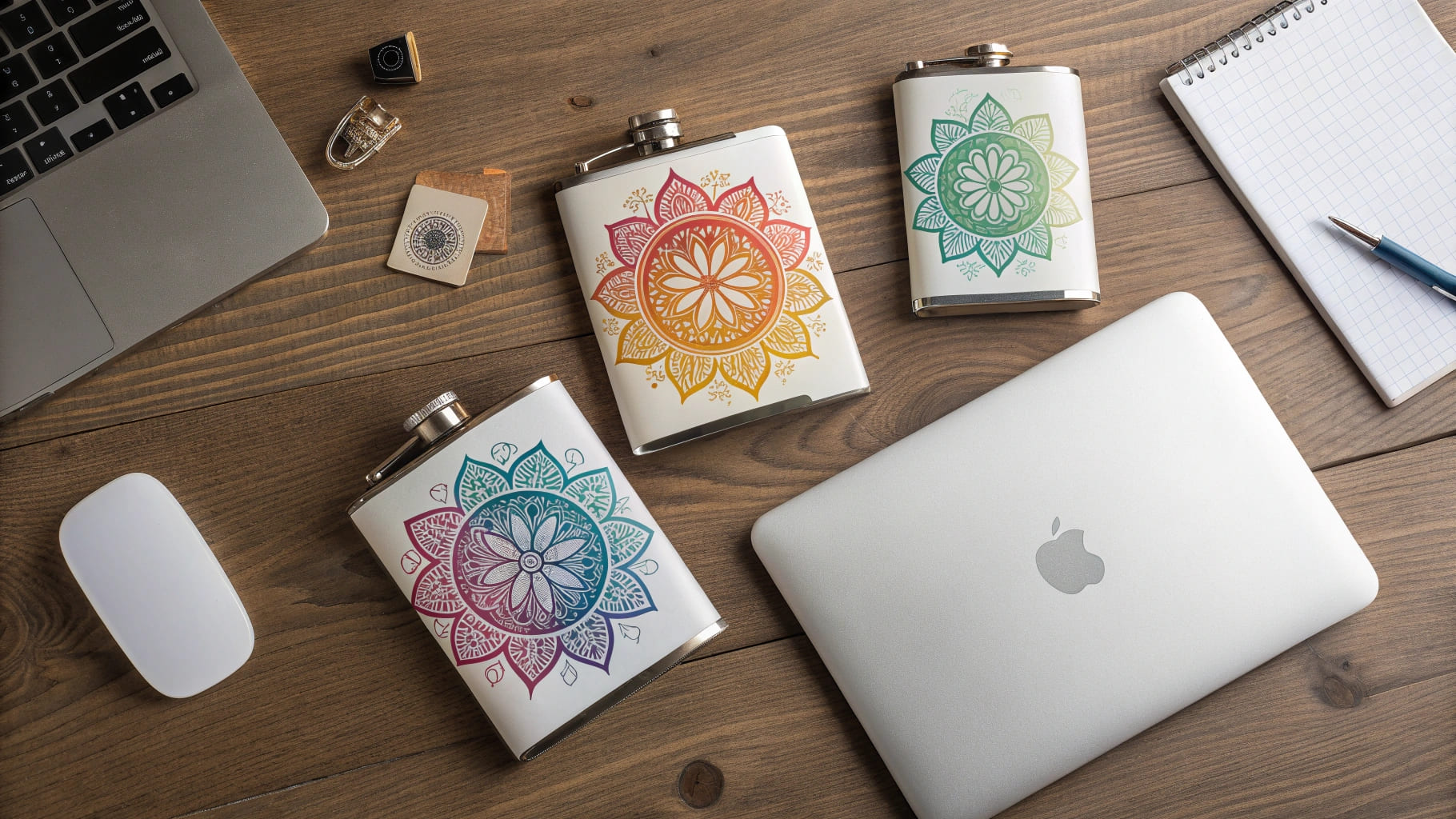
I have spent years sourcing stainless steel flasks, and I keep coming back to the same truth. Most product failures are not about the steel itself. They are about what happens during production — the finishing steps that most factories rush or skip. If you are buying flasks to rebrand and resell, these details will determine whether your customers come back or complain.
Can Liquor Be Stored in Stainless Steel?
Some buyers worry that metal will ruin the taste of their spirits. That fear is real — but it only applies to the wrong type of metal.
Food-grade stainless steel, specifically 304 or 316 grade, does not react with alcohol. It does not leach chemicals.2 It does not rust when exposed to spirits between 40% and 50% ABV. This makes it one of the safest materials for storing whiskey, vodka, rum, or gin for short to medium periods.
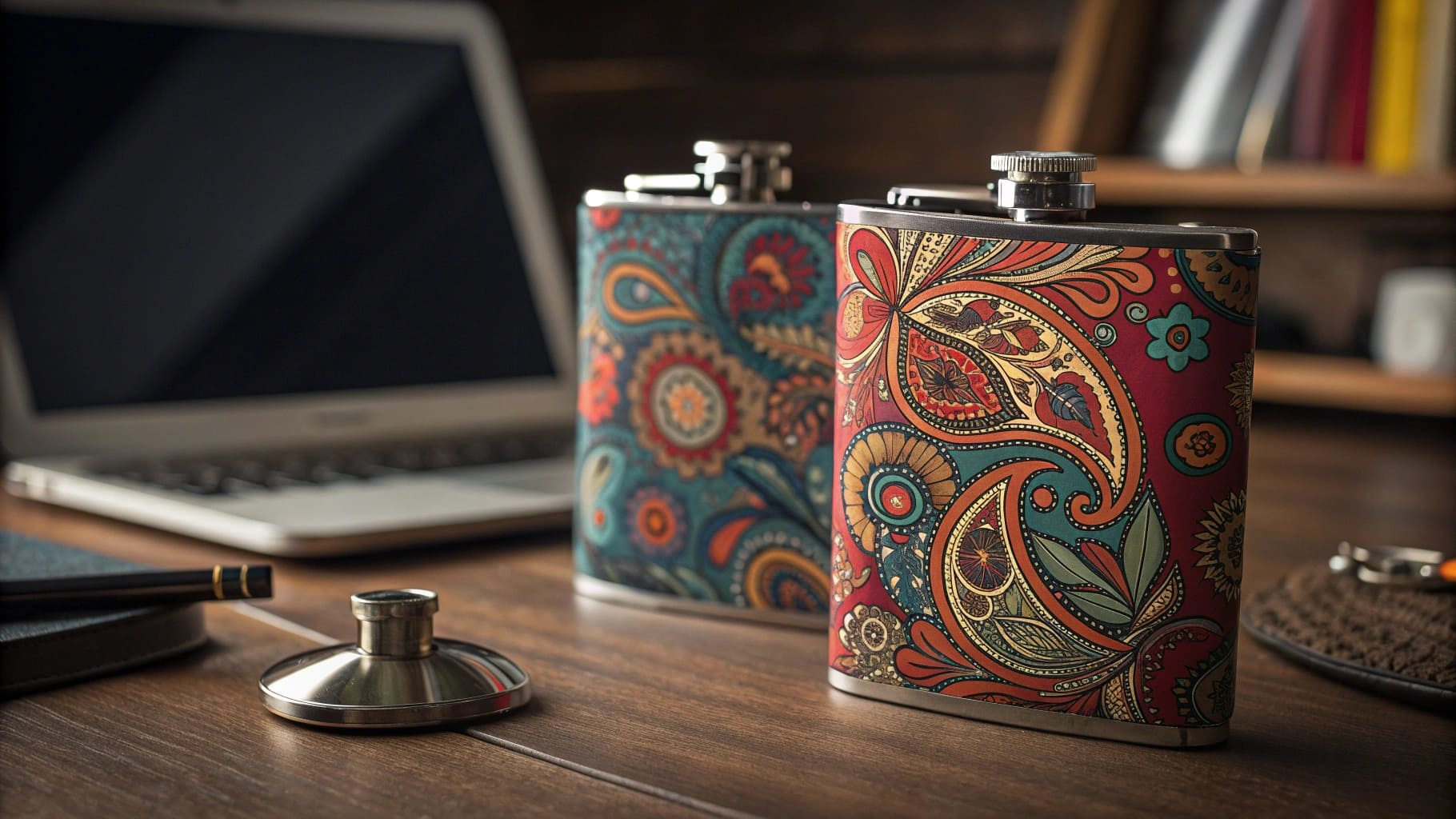
The difference between 304 and 316 grade matters more than most buyers realize. Here is a simple breakdown:
| Grade | Nickel Content | Molybdenum | Best For |
|---|---|---|---|
| 304 | ~8% | None | General spirits storage |
| 316 | ~10% | Yes | High-acid or salty environments |
For most flask applications, 304 is enough. But if you are sourcing flasks for markets where buyers will use them in coastal or outdoor environments, 316 gives extra protection against surface corrosion.
The liner inside the flask adds another layer. Many premium flasks use a food-grade epoxy or ceramic-based coating on the interior. This coating does two things. It prevents any trace metallic taste from reaching the liquid, and it seals the seam areas where micro-gaps can form during welding. I always ask suppliers to provide liner certification documents before approving a bulk order. If they cannot produce those documents quickly, that tells me something about how seriously they treat quality control.
One thing I want to flag clearly: not all liners are equal. A cheap liner may look fine at first. But pour high-proof alcohol into it repeatedly, and the coating starts to crack or peel. That is a contamination risk. When I evaluate new suppliers, I run a simple acid resistance test on sample units. It takes a few days but saves a lot of problems later.
What Happens If You Leave Whiskey in a Flask?
Whiskey left in a flask too long will taste flat, harsh, or metallic. The question is how long "too long" actually is — and what causes the change.
The two main factors are air exposure through the seal and the quality of the interior finish. A flask with a poor seal allows vapor to escape and oxygen to enter. Oxidation changes the flavor of whiskey faster than anything else3.

This is where weld polishing becomes a real quality signal. Here is why it matters so much.
When two pieces of steel are welded together, the joint creates a seam. In mass production, that seam often has tiny gaps or rough patches along the surface. Liquid collects in those gaps. Over time, even food-grade steel can develop localized oxidation in those spots. That changes the taste of whatever is stored inside.
Electropolishing is the finishing process that removes this risk. It smooths the weld surface down to a near-mirror finish.4 It closes micro-gaps and removes surface irregularities. A flask that has been properly electropolished has a continuous, smooth interior with no hidden spots where liquid can sit and react.
I always ask suppliers for photos of the interior finish under magnification. A rough or discolored seam line is a red flag. It means the factory is skipping a step that directly affects product lifespan and user experience.
Here is a practical guide to whiskey storage duration based on flask quality:
| Flask Quality Level | Weld Finish | Seal Type | Safe Flavor Window |
|---|---|---|---|
| Entry-level | Rough seam | Basic rubber | 1–2 days |
| Mid-range | Polished seam | Food-grade silicone | 3–5 days |
| Premium | Electropolished | Tested silicone seal | 5–7 days |
For buyers positioning flasks as premium branded merchandise or corporate gifts, this table matters. Your end users will judge the product by how the whiskey tastes on day four or five. If the flask cannot hold flavor past day two, no amount of branding will save the review.
The seal itself deserves its own attention. Silicone is the standard material for quality flask caps. But silicone quality varies. Alcohol is a solvent. A low-grade silicone seal will degrade after repeated alcohol exposure. The seal softens, loses its shape, and stops forming a proper closure.5 When I source flasks, I ask suppliers directly: do you conduct batch seal testing with alcohol exposure? The ones who do can answer that question in detail. The ones who do not usually give a vague answer.
What Is a Good Liquor for a Stainless Steel Flask?
Not every spirit behaves the same way in a flask. Some hold up better than others, and the reason comes down to chemical complexity.
Clear spirits like vodka and gin have simpler flavor profiles. They are more stable in a sealed container.6 High-proof whiskey and bourbon carry complex compounds that are more sensitive to air and temperature changes.7

Here is a practical guide based on spirit type:
| Spirit Type | Flavor Complexity | Recommended Flask Storage Time |
|---|---|---|
| Vodka | Low | Up to 2–3 weeks |
| Gin | Low–Medium | Up to 1–2 weeks |
| Rum | Medium | Up to 1 week |
| Whiskey / Bourbon | High | 3–7 days |
| Scotch | High | 3–7 days |
For B2B buyers, this has a direct implication. If you are selling flasks into a market where whiskey is the primary use case — and in North America, it usually is — your product has to perform at the higher end of the quality scale. A flask that works fine for vodka will disappoint a whiskey drinker.
There is also a regulatory angle that I take seriously. In markets like the US, Canada, and the EU, flasks sold for alcohol contact must meet food safety standards. In the US, that means FDA compliance. In Europe, that means LFGB or equivalent certification.8 I always request these documents from suppliers before we proceed. Some suppliers provide certificates that look official but are not verifiable. I have seen this happen. The safest approach is to check the certification body directly and confirm the document is current.
Beyond compliance, these certifications serve a commercial purpose. When your end customers or retail partners ask about safety, you want to answer that question quickly and with confidence. A complete documentation package — liner certification, seal material specs, and food contact compliance — turns a quality story into something you can actually show people.
The craft spirits movement has also raised consumer expectations. Buyers today know more about what goes into their drinks.9 They are asking more questions about the vessels too. A flask with clear technical credentials — documented liner materials, verified weld finishing, tested seals — is easier to price at a premium and easier to sell.
Conclusion
Liquor stays safe in a quality stainless steel flask for up to a week. Liner material, weld polish, and seal testing are what separate a product worth buying from one that causes complaints.
-
"Impact of Dilution on Whisky Aroma: A Sensory and Volatile ... - PMC", https://pmc.ncbi.nlm.nih.gov/articles/PMC10048241/. Sensory evaluation studies of distilled spirits document that perceptible flavor changes can occur within days of opening or transferring spirits to secondary containers, with oxidation and surface interaction identified as primary mechanisms; however, specific quantitative benchmarks for flask storage duration are not uniformly established in the peer-reviewed literature. Evidence role: general_support; source type: paper. Supports: That spirits stored in sealed metal containers experience measurable flavor change over a period of days, with the rate depending on seal integrity and surface finish. Scope note: The 3–7 day figure cited in the article appears to reflect practitioner experience rather than controlled experimental data; published sensory studies on this specific storage scenario are limited. ↩
-
"Influence of Ethanol on Pitting Corrosion Behavior of Stainless Steel ...", https://pmc.ncbi.nlm.nih.gov/articles/PMC7330168/. Regulatory frameworks such as FDA 21 CFR and EU Regulation No 10/2011 on plastic materials in food contact establish standards for inert materials; stainless steel alloys 304 and 316 are widely recognized in food-safety literature as non-reactive with ethanol solutions at typical beverage concentrations. Evidence role: expert_consensus; source type: government. Supports: That 304 and 316 stainless steel are approved for food and beverage contact and do not leach harmful chemicals under normal use conditions. Scope note: Regulatory documents address food contact broadly; direct testing data specific to repeated alcohol exposure in enclosed flask conditions may require peer-reviewed metallurgical sources for full corroboration. ↩
-
"The Science of Aging: Understanding Phenolic and Flavor ... - PMC", https://pmc.ncbi.nlm.nih.gov/articles/PMC12346643/. Food chemistry research on distilled spirits documents that oxygen ingress promotes oxidative reactions involving aldehydes, esters, and phenolic compounds, which alter the sensory profile of whiskey over time. Evidence role: mechanism; source type: paper. Supports: That oxygen exposure accelerates chemical reactions in whiskey that alter flavor compounds, including the formation of acetaldehyde and other oxidation byproducts. Scope note: Most published research addresses long-term bottle storage or barrel aging; direct experimental data on short-term flask storage conditions is limited in the peer-reviewed literature. ↩
-
"What is Electropolishing? How Does Electropolishing Work?", https://www.besttechnologyinc.com/electropolishing-equipment/how-does-electropolishing-work/. Electropolishing is an electrochemical process documented in surface engineering literature as selectively dissolving surface asperities on stainless steel, resulting in reduced surface roughness, improved passivation layer uniformity, and decreased susceptibility to crevice corrosion. Evidence role: mechanism; source type: research. Supports: That electropolishing removes surface irregularities and micro-roughness from stainless steel, improving corrosion resistance and reducing sites for liquid retention. ↩
-
"[PDF] Structural Degradation Causing Silicone Sealant Failure", https://commons.und.edu/cgi/viewcontent.cgi?article=7486&context=theses. Polymer science literature on elastomer chemical resistance indicates that silicone rubbers exhibit variable tolerance to alcohol exposure depending on crosslink density and filler composition, with some formulations showing measurable swelling or hardness reduction after prolonged contact with ethanol solutions. Evidence role: mechanism; source type: paper. Supports: That silicone elastomers vary in their resistance to alcohol exposure, and lower-grade formulations can experience swelling, softening, or dimensional change with repeated contact. Scope note: Published studies typically assess industrial or medical-grade silicones; data specific to consumer flask seal grades under repeated beverage-alcohol cycling is not widely available in peer-reviewed sources. ↩
-
"Characterization of Flavor Compounds in Distilled Spirits - PMC", https://pmc.ncbi.nlm.nih.gov/articles/PMC9656916/. Analytical chemistry studies of distilled beverages document that aged spirits such as whiskey and bourbon contain significantly higher concentrations of congeners — including aldehydes, esters, tannins, and lactones derived from barrel aging — compared to neutral spirits like vodka, which are associated with greater flavor sensitivity to oxidative and thermal conditions. Evidence role: mechanism; source type: paper. Supports: That unaged or lightly flavored spirits such as vodka contain fewer congeners and complex organic compounds than barrel-aged spirits, making them less susceptible to perceptible flavor change during short-term storage. Scope note: The direct relationship between congener concentration and perceptible flavor change in short-term flask storage has not been extensively studied under controlled conditions in the published literature. ↩
-
"Quantification of whisky congeners by 1H NMR spectroscopy - PMC", https://pmc.ncbi.nlm.nih.gov/articles/PMC10989066/. Research on whiskey chemistry identifies a range of thermally and oxidatively labile compounds — including furfural, guaiacol, and various esters — whose concentrations and ratios contribute to flavor profile and can shift measurably under conditions of air exposure or temperature variation. Evidence role: mechanism; source type: paper. Supports: That volatile and phenolic compounds in aged whiskey are susceptible to degradation or transformation upon exposure to oxygen and temperature fluctuation. Scope note: Most published studies examine long-term storage or production conditions; extrapolation to short-term flask storage scenarios involves inference rather than direct experimental evidence. ↩
-
"Regulatory Status of Components of a Food Contact Material - FDA", https://www.fda.gov/food/packaging-food-contact-substances-fcs/determining-regulatory-status-components-food-contact-material. In the United States, food contact materials including metal vessels are subject to FDA regulations under 21 CFR Parts 170–199; in the European Union, Regulation (EC) No 1935/2004 establishes the framework for food contact materials, with Germany's LFGB providing a national testing standard commonly referenced for market access. Evidence role: definition; source type: government. Supports: That the FDA regulates food contact materials in the US under 21 CFR, and that Germany's LFGB (Lebensmittel- und Futtermittelgesetzbuch) establishes food contact safety standards applicable in European markets. Scope note: Regulatory requirements vary by product category and jurisdiction; this citation provides framework-level context and should not substitute for jurisdiction-specific legal compliance review. ↩
-
"Wellness Trends Influence Craft Beverage Market", https://extension.psu.edu/wellness-trends-influence-craft-beverage-market/. Industry reports from organizations such as the Distilled Spirits Council of the United States (DISCUS) and the American Craft Spirits Association document sustained growth in craft distillery numbers and sales, a trend associated in market research with heightened consumer interest in provenance, ingredients, and production methods. Evidence role: historical_context; source type: institution. Supports: That the growth of the craft spirits sector has been accompanied by increased consumer engagement with production methods and ingredient transparency. Scope note: The specific claim that this awareness extends to storage vessel materials is inferential; direct consumer survey data on flask material preferences in relation to craft spirits consumption is not cited. ↩
