
Are stainless steel straws compliant in 2026 under LFGB, FDA, and Prop 65 checks?
I see buyers lose orders because one missing test report turns a simple straw order into a customs delay, a retailer complaint, or a brand risk.
I consider stainless steel straws compliant in 2026 when the material is food grade 304 or 316 stainless steel1, the factory supports FDA and LFGB food contact tests, and I check nickel risk for Prop 65 before shipping to California.
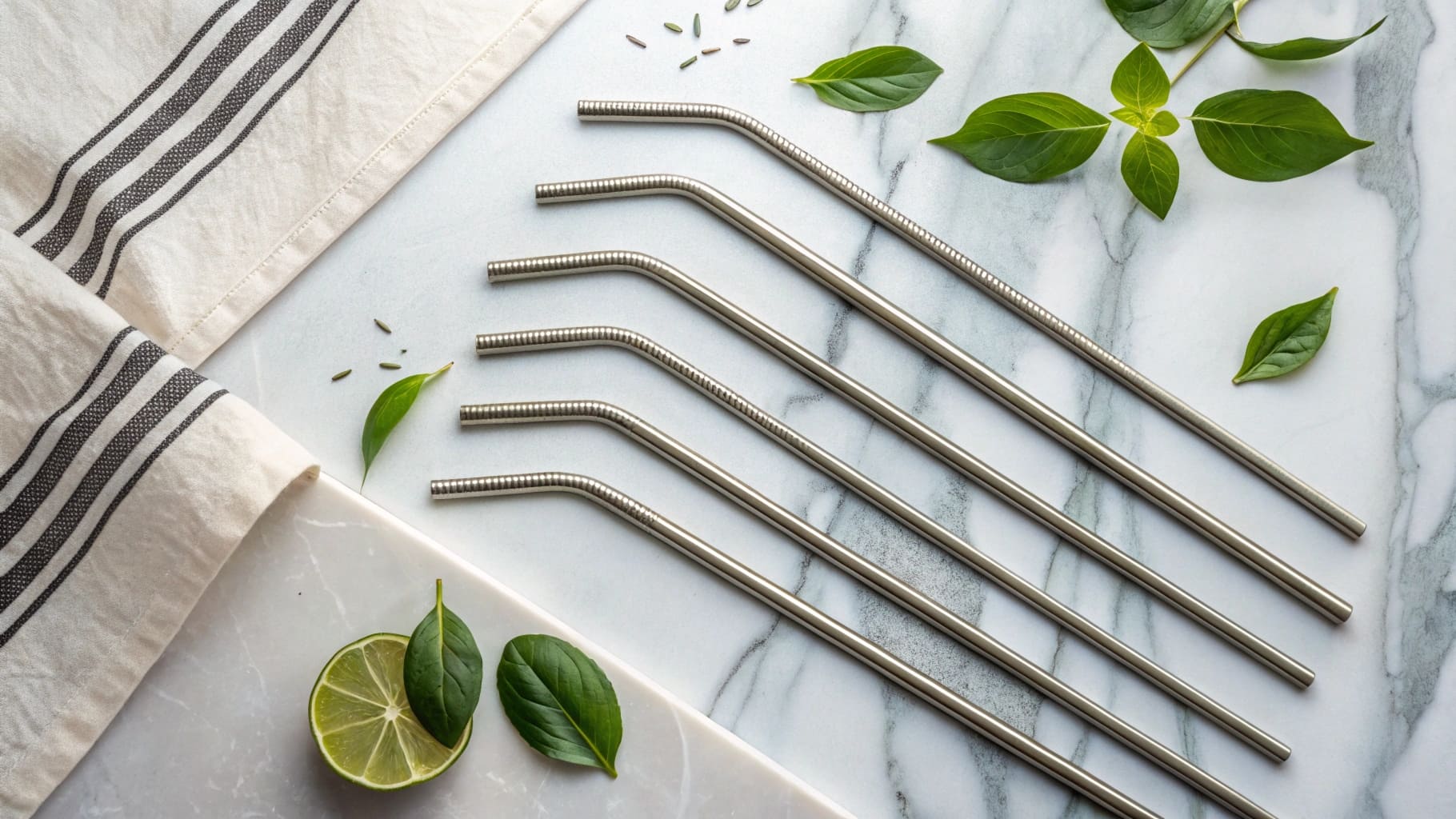
I handle these checks before I quote a straw project. I know many suppliers say “food grade stainless steel” very fast. I still ask for the base material, the surface process, the ink or coating, and the full accessory list. A straw looks simple, but a B2B order is not simple. I need the straw to pass inspection, meet market rules, arrive before the sales season, and protect the buyer’s brand after the product reaches the shelf.
What products need Prop 65 warning?
I have seen a safe product become a legal headache when the warning label was discussed after production, not before the purchase order.
I add a Prop 65 warning when a product may expose California users to listed chemicals at a level that cannot be proven safe. For stainless steel straws, I focus on nickel release2, coatings, printing inks, packaging parts, and accessories that touch the mouth or skin.
How I screen stainless steel straw orders for Prop 65 risk
I do not decide Prop 65 by product name only. I decide it by exposure risk. A stainless steel straw can be made from good 304 or 316 stainless steel and still need a closer review if it uses color coating, laser marking filler, paint, or a silicone tip. I also check the cleaning brush, carry pouch, paper card, and any printed packaging because a buyer may sell the straw as a full kit. I prefer to solve this at sampling stage. I ask the factory to provide material certificates, food contact test reports, and a Prop 65 statement. I also ask if the report matches the exact product, not only a similar item. This point matters because certificate fraud still happens in the supply chain3.
| Item I check | Why I check it | What I ask for |
|---|---|---|
| Stainless steel grade | I need to confirm 304 or 316 material | I ask for material composition and food contact testing |
| Nickel release | I need to control California exposure risk | I ask for nickel release testing or risk review |
| Surface coating | I need to avoid hidden lead, cadmium, or other listed substances | I ask for coating and heavy metal test reports |
| Silicone tip or boot | I need to check mouth contact material | I ask for FDA or LFGB food contact results |
| Cleaning brush and pouch | I need to check the full retail kit | I ask for accessory material details |
| Printed packaging | I need to avoid risk from inks and coatings | I ask for ink safety confirmation when needed |
I treat Prop 65 as a market access issue, not only a label issue. If the buyer sells in Canada only, I still discuss the risk when the same goods may later enter the United States. Many brand owners expand through online channels. A product can cross into California even when the first plan did not include California. I would rather prepare the paperwork early than explain a warning dispute after shipment. This is also why I tell buyers to keep test reports, supplier declarations, production photos, and packing records in one file.
What are the healthiest straws to use?
I see brands lose trust when a reusable straw smells strange, rusts early, scratches the mouth, or feels hard to clean after normal use.
I rank well-made stainless steel straws among the healthiest reusable straws4 because they are non-porous, durable, easy to sterilize, and resistant to odor. I choose smooth 304 or 316 stainless steel, rounded edges, clean polishing, and verified food contact tests.
How I compare straw materials for health and daily use
I look at health from daily use, not from marketing words. A straw touches the mouth. It also touches acidic drinks, hot drinks, smoothies, and cleaning chemicals. I want a material that does not absorb odor, does not break easily, and does not hide dirt inside the surface. Stainless steel performs well because it has a hard and non-porous surface. It can handle high-temperature washing. It does not normally change the taste of water, coffee, juice, or soda. I still care about the edge finish. A healthy straw must feel safe on the lips. A sharp cut edge is a quality failure, even if the material is good.
| Straw material | My health view | My B2B concern |
|---|---|---|
| Stainless steel | I see it as strong, cleanable, and stable | I must control grade, polishing, and nickel risk |
| Silicone | I see it as soft and child-friendly | I worry about odor, staining, and deep cleaning |
| Glass | I see it as chemically stable | I worry about breakage and injury claims |
| Bamboo | I see it as natural looking | I worry about mold, cracking, and uneven quality |
| Plastic reusable straw | I see it as low cost | I worry about heat, scratches, and chemical concerns |
I usually recommend 304 stainless steel for normal water bottle and tumbler accessories. I consider 316 stainless steel when the buyer wants a stronger premium story or the product will face more salt, acid, or harsh cleaning5. I also ask for an inner wall check because some straws look bright outside but rough inside. The inside surface matters because residue can stay there. I also include a cleaning brush when the straw is sold as a kit. I prefer brushes with safe wire ends and firm bristles. A good straw is not only the tube. It is the full user experience. I need the end consumer to feel that the product is safe from the first sip to the last wash.
Why are people not using glass straws?
I like the clean look of glass straws, but I see commercial buyers step back when they think about breakage, returns, and injury risk.
I see people avoid glass straws because they can chip, crack, or break during use, washing, shipping, or restaurant service. Glass is chemically clean, but stainless steel is safer for bulk handling, rebranding, and high-volume commercial use6.
How I explain glass straw risk to commercial buyers
I do not attack glass as a material. Glass has good points. It looks premium. It is easy to see if the inside is clean. It does not absorb smell. It also has strong appeal for some lifestyle brands. The problem starts when I move from a product photo to a real supply chain. A glass straw can break during inland transport, sea freight, warehouse handling, retail display, restaurant washing, or home use. A small chip on the drinking end can create a serious complaint. A broken straw in a restaurant can create liability risk. A broken straw in a children’s product can damage the brand very fast.
| Buyer situation | Why glass becomes difficult | Why stainless steel is easier |
|---|---|---|
| Restaurant service | Staff may drop or chip the straw during rush hours | Stainless steel survives repeated handling |
| Retail gift set | Breakage can happen in shipping or on shelves | Stainless steel lowers replacement risk |
| Children’s products | Broken glass creates safety concern | Stainless steel avoids shattering |
| Online sales | Parcel damage can cause returns and bad reviews | Stainless steel handles rough delivery better |
| Promotional orders | Large volumes need stable quality | Stainless steel gives fewer surprises |
I often speak with buyers who understand sales very well but do not want to manage technical risk. For them, stainless steel is a practical choice. It fits rebranding. It accepts laser logos, printed logos, and color finishes. It is light enough for shipping and strong enough for repeated use. It also matches the sustainability story that many retailers want. I still need to manage compliance, but the physical risk is lower than glass. I also find that stainless steel straws work well with water bottles, tumblers, coffee mugs, and accessory kits. This gives a brand more room to build a full product line with one material language.
Conclusion
I treat stainless steel straw compliance as material proof, food contact testing, Prop 65 review, and real-use safety working together before production starts.
-
"21 CFR 177.2600 -- Rubber articles intended for repeated ...", https://www.ecfr.gov/current/title-21/chapter-I/subchapter-B/part-177/subpart-C/section-177.2600. Under 21 CFR 177.2600, the FDA recognizes austenitic stainless steels including 304 and 316 alloys as safe for food contact when meeting compositional requirements. Evidence role: definition; source type: government. Supports: that 304 and 316 stainless steel grades are recognized as food-contact-safe materials under FDA regulations. Scope note: The regulation does not specify surface finish or fabrication quality standards, which remain manufacturer responsibilities. ↩
-
"Dermal and oral exposure risks to heavy metals from 3D printing metal ...", https://pmc.ncbi.nlm.nih.gov/articles/PMC10653099/. Studies on stainless steel food contact surfaces show that nickel migration increases in acidic food simulants and depends on alloy grade, surface passivation, and contact time, with 316L generally releasing less nickel than 304 due to molybdenum content enhancing corrosion resistance. Evidence role: mechanism; source type: research. Supports: that nickel can migrate from stainless steel under acidic conditions, particularly from lower-grade or poorly passivated surfaces. Scope note: Migration rates vary widely by manufacturing quality and actual use conditions; laboratory simulant tests may not reflect real beverage contact scenarios. ↩
-
"FDA Takes Action to Address Data Integrity Concerns with ...", https://www.fda.gov/news-events/press-announcements/fda-takes-action-address-data-integrity-concerns-two-chinese-third-party-testing-firms. FDA and customs authorities have identified cases of falsified certificates of analysis and test reports for imported consumer goods, prompting recommendations that importers verify laboratory accreditation and request original test data rather than relying solely on supplier-provided certificates. Evidence role: case_reference; source type: government. Supports: that regulatory agencies have documented instances of fraudulent or falsified compliance certificates in international supply chains. Scope note: Documented cases focus on high-risk categories like supplements and cosmetics; the prevalence specifically in the drinkware sector is not quantified in public enforcement records. ↩
-
"Environmental and Economic Impacts of Substituting Single-Use Plastic ...", https://pmc.ncbi.nlm.nih.gov/articles/PMC12074124/. Research on food-contact surface microbiology indicates that smooth, non-porous materials such as stainless steel are easier to sanitize and less likely to harbor bacteria in surface defects compared to materials that can develop cracks, scratches, or absorb moisture. Evidence role: general_support; source type: research. Supports: that non-porous materials like stainless steel may reduce microbial retention compared to porous or scratched surfaces. Scope note: This general material property does not prove superior safety in real-world straw use, which depends on user cleaning habits, frequency, and method; no head-to-head reusable straw studies establish definitive health rankings. ↩
-
"Studies on the Cooperative Influence of Cr and Mo on the Pitting ...", https://pmc.ncbi.nlm.nih.gov/articles/PMC10707140/. Type 316 stainless steel contains 2-3% molybdenum, which significantly enhances resistance to chloride-induced pitting and crevice corrosion compared to Type 304, making it preferable for applications involving salt water, acidic foods, or aggressive cleaning agents. Evidence role: mechanism; source type: education. Supports: that 316 stainless steel contains molybdenum, which improves resistance to pitting and crevice corrosion in chloride and acidic environments. ↩
-
"Food Packaging and Chemical Migration: A Food Safety Perspective", https://pmc.ncbi.nlm.nih.gov/articles/PMC12096275/. The FDA recognizes glass as Generally Recognized As Safe (GRAS) for food contact under 21 CFR 184.1484, with borosilicate and soda-lime glass exhibiting minimal migration of substances into food under typical use and cleaning conditions. Evidence role: general_support; source type: government. Supports: that glass is recognized as chemically inert for food contact under normal conditions. Scope note: This applies to intact glass; surface defects, decorative coatings, or colored glass may introduce additional migration concerns not addressed by the general GRAS status. ↩