
Are stainless steel straws compliant in twenty twenty-six? LFGB, FDA, and Prop Sixty-Five checks?
I see buyers worry about compliance too late. The shipment is ready, the label is printed, and one missing test can stop the sale. I check documents first.
Yes. I treat stainless steel straws as compliant for twenty twenty-six only when the material is food-grade three hundred four or three hundred sixteen, LFGB testing supports Europe1, FDA food-contact conformity supports the United States2, and Prop Sixty-Five risk is checked before shipment.
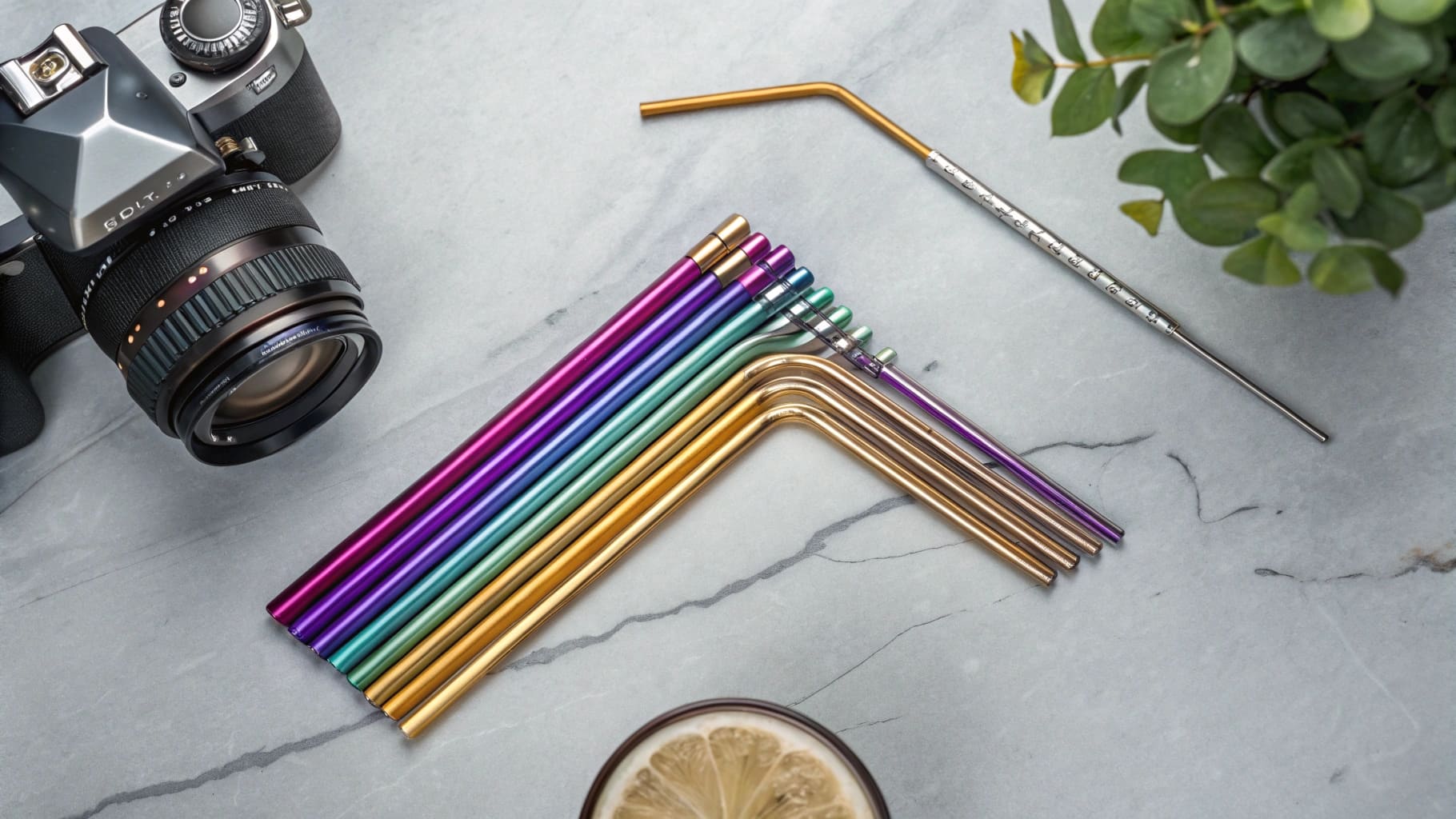
I have learned that compliance is not only a lab paper. It is a buying system. I need the right steel grade, the right factory control, the right surface finish, and the right test report before I accept a straw order. I also need clear answers from the supplier, because unclear talk often hides weak control. When I work with buyers from America, Canada, and Europe, I do not ask them to trust a promise. I build the order around proof, and I check that proof before production moves too far.
What is the safest straw to drink out of?
I have seen cheap straws look safe at first. Then a buyer finds coating smell, weak edges, or missing papers. I start with material.
I consider food-grade stainless steel, mainly three hundred four or three hundred sixteen, the safest reusable straw choice when it is polished, tested, and traceable. It avoids microplastic shedding from plastic and avoids the wet-strength chemical concerns that can appear with some paper straws.
My material choice
| Material I review | My safety view | My buyer check |
|---|---|---|
| Food-grade stainless steel | I prefer it for reusable drink contact | I ask for steel grade proof and migration tests |
| Plastic straw | I avoid it for premium reusable programs | I check plasticizer and microplastic risk |
| Paper straw | I treat it as a short-use item | I check coating, odor, and PFAS risk |
| Bamboo straw | I see it as natural but unstable | I check mold risk and cleaning limits |
| Glass straw | I see it as clean but fragile | I check breakage risk in transport and retail use |
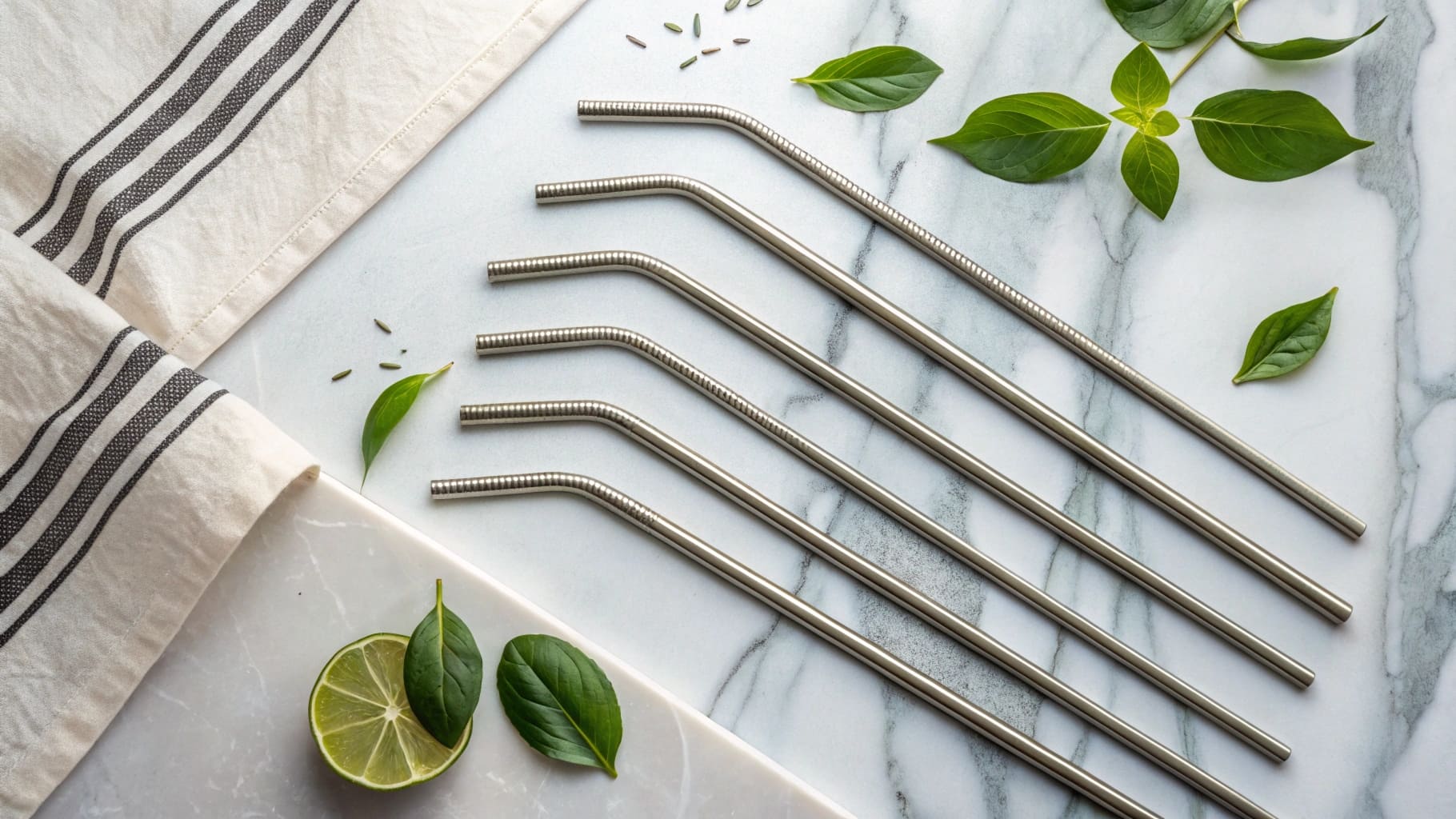
I do not choose a drinking straw only by how it looks. I first ask what touches the beverage. Stainless steel works well because the drinking surface is hard, stable, and easy to clean. I prefer food-grade three hundred four for most water bottle and straw projects. I consider three hundred sixteen when the customer wants a more corrosion-resistant option, such as for salty drinks or higher-end positioning. I also check the edge of the straw. A safe material can still become a problem if the rim is sharp or the inner wall is rough. I ask the factory to polish the mouth area and the inner tube. I also ask for a mill test certificate, a food-contact test report, and a clear batch link between the steel and the finished straw. For Europe, I treat LFGB as a strong standard because it covers both safety and sensory concerns. For the United States, I treat FDA conformity as a supplier declaration backed by proper records, not as a simple sticker. For California Prop Sixty-Five, I look for lead and cadmium risk before I approve the packaging.
Does stainless steel leach heavy metals?
I understand this fear. A metal straw touches acidic drinks, and a hidden risk can hurt a brand fast. I answer it with test data.
Quality stainless steel straws do not leach unsafe heavy metals when food-grade steel is used and the surface is properly finished. I still request migration tests for lead, cadmium, chromium, and nickel because bad steel or poor polishing can change the result.
My heavy metal check
| Risk point I check | Why I check it | What I request |
|---|---|---|
| Steel grade | I need to confirm the base material | I request a mill test certificate |
| Lead and cadmium | I need to control market and label risk | I request third-party migration reports |
| Nickel release | I need to support sensitive buyer questions | I request food-contact migration data |
| Surface finish | I need to avoid weak passive protection | I review polishing and passivation control |
| Supplier claim | I need proof behind the sales words | I compare documents with production batches |
I do not see heavy metal leaching as a normal problem for good stainless steel straws. I see it as a sourcing problem when the supplier uses unknown steel, poor welding, weak polishing, or mixed scrap material. Food-grade stainless steel contains chromium, and this chromium helps form a passive protective layer on the surface. That layer is the reason the straw can resist rust and reduce metal migration. Nickel may also be present in common food-grade stainless steel3. I do not treat nickel as a hidden danger by itself, because the key point is migration level under food-contact testing4. I ask for tests that simulate contact with drinks, including acidic conditions when needed. I also check the inside of the straw, because a straw has more inner surface risk than a flat cup wall. If the tube is not cleaned after polishing, residue can stay inside and create odor or contamination concerns. I also watch for fake or reused certificates. I compare the supplier name, product name, material grade, test date, and sample description. If the paper looks too general, I ask for a new test on the actual straw design.
How to sterilize stainless steel straws?
I see many returns start with cleaning mistakes. A safe straw can still smell bad if residue stays inside. I teach simple cleaning.
I sterilize stainless steel straws by brushing the inside, then using a hot dishwasher cycle, boiling water, or steam. For daily use, I rinse immediately and dry fully. For deeper hygiene, I boil the straw for ten to fifteen minutes.
My cleaning method
| Cleaning step I suggest | When I use it | Why I use it |
|---|---|---|
| Rinse after drinking | I use it after every drink | I stop sugar and milk residue from drying |
| Brush the inner wall | I use it after thick drinks | I remove hidden residue inside the tube |
| Hot dishwasher cycle | I use it for normal home cleaning | I combine heat, water pressure, and detergent |
| Boiling water | I use it for deeper cleaning | I kill common bacteria and remove odor |
| Full drying | I use it after every wash | I reduce moisture that can support buildup |
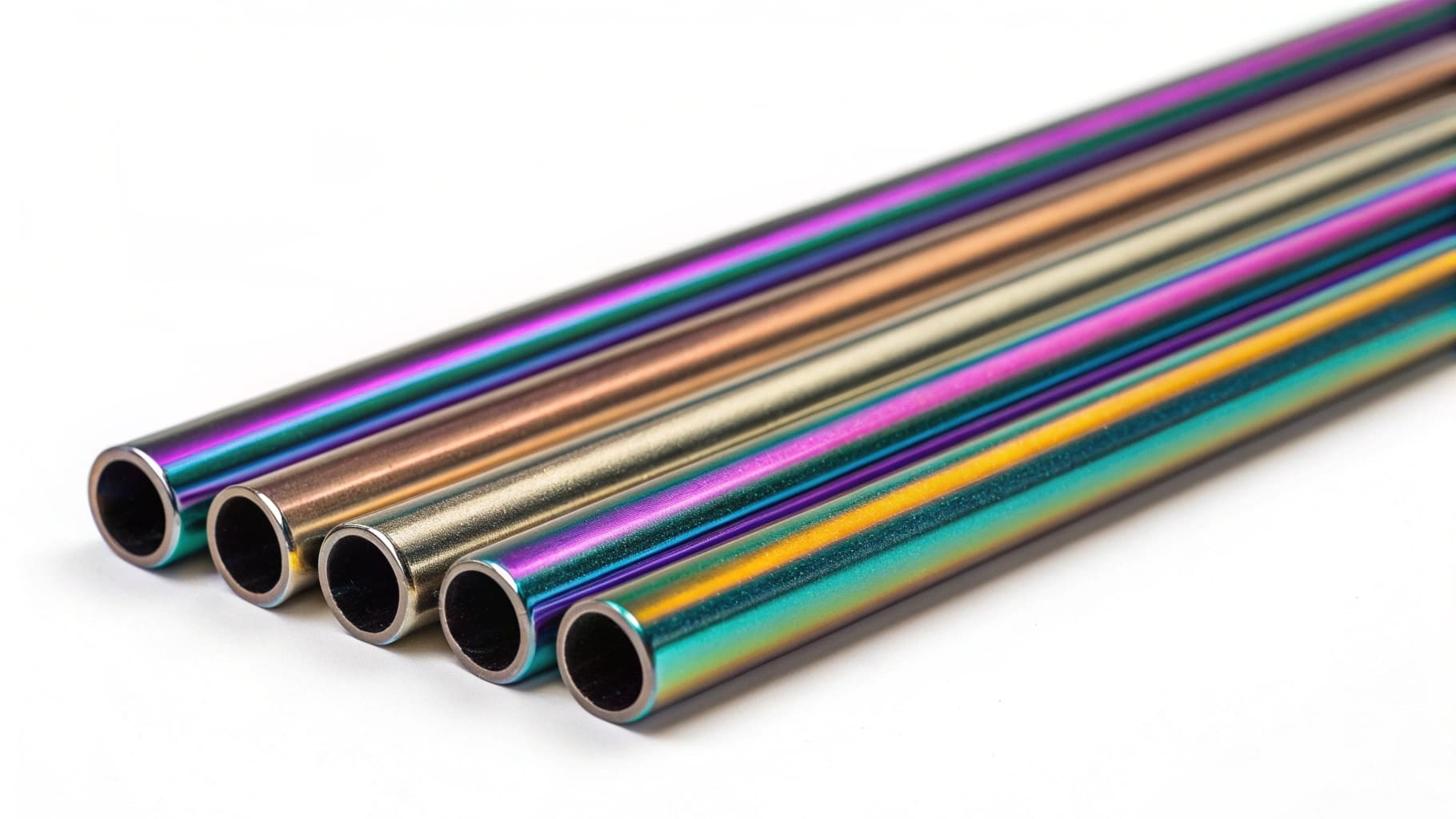
I do not sell a stainless steel straw as safe only because it passed a test once. I also want the end user to keep it clean. The straw is a narrow tube, so liquid can stay inside when the user only rinses the outside. I include a cleaning brush when the project needs a complete retail set. I prefer a brush with firm bristles and a handle long enough to pass through the full straw. I tell buyers to explain cleaning in simple words on the insert card. The user should rinse the straw soon after drinking coffee, juice, smoothies, or milk tea. The user should brush the inside, wash it with warm water and mild detergent, and dry it in an open position. For deeper cleaning, boiling works well because stainless steel can handle high heat without losing shape5. Steam is also useful for cafes, hotels, and gift programs that need a stronger hygiene routine. I do not recommend harsh bleach as a normal habit, because it can affect surface appearance if used badly. I also check that colored straws use safe surface treatment, because the coating must handle repeated washing.
Conclusion
I see compliance as proof, not a slogan. I choose tested steel, clear documents, and simple cleaning guidance before I ship stainless steel straws.
-
"LFGB Certification | Food Contact Materials | LFGB Test Standard", https://aqiservice.com/product-testing/lfgb-certification-testings/. LFGB is the German Food and Feed Code that sets requirements for materials intended to come into contact with food, including migration limits and sensory testing. Evidence role: definition; source type: government. Supports: that LFGB (Lebensmittel- und Futtermittelgesetzbuch) is a German food and feed code governing food-contact materials. Scope note: LFGB is a German national law; EU-wide requirements are also governed by EU Regulation 1935/2004 and related frameworks. ↩
-
"Regulatory Status of Components of a Food Contact Material", https://www.fda.gov/food/packaging-food-contact-substances-fcs/determining-regulatory-status-components-food-contact-material. The FDA regulates food-contact substances under 21 CFR; stainless steel is generally recognized as safe when it meets compositional standards and does not introduce harmful substances into food. Evidence role: mechanism; source type: government. Supports: that FDA conformity for stainless steel typically involves manufacturer declarations based on 21 CFR regulations. Scope note: FDA does not pre-approve materials; compliance is based on manufacturer responsibility and adherence to applicable CFR sections. ↩
-
"Nickel release from stainless steels", https://pubmed.ncbi.nlm.nih.gov/9330816/. Grade 304 stainless steel typically contains 8–10.5% nickel, while grade 316 contains 10–14% nickel, both contributing to austenitic structure and corrosion resistance. Evidence role: statistic; source type: encyclopedia. Supports: that austenitic stainless steel grades 304 and 316 contain nickel as an alloying element. ↩
-
"Use of overall migration methodology to test for food ...", https://pubmed.ncbi.nlm.nih.gov/19680932/. Migration testing involves exposing food-contact materials to food simulants under controlled temperature and time conditions to quantify substance transfer, following standards such as EN 1186 or equivalent methods. Evidence role: mechanism; source type: government. Supports: that migration testing measures the transfer of substances from materials into food simulants under defined conditions. ↩
-
"High-Temperature Deformation Behaviour of UNS S32750 Super ...", https://pmc.ncbi.nlm.nih.gov/articles/PMC11546399/. Austenitic stainless steels such as 304 and 316 have melting points above 1,400°C and maintain structural stability at typical household heating temperatures, including boiling water at 100°C. Evidence role: general_support; source type: education. Supports: that austenitic stainless steels maintain structural integrity at boiling water temperatures well below their melting or deformation range. ↩