
What leak, vibration, and thermal tests matter for insulated water bottles?
A bottle can look perfect, then leak in a customer’s bag. I lose trust fast when testing is weak or unclear.
I focus on three tests: leak tests under normal and positive pressure, vibration tests for transport stress, and thermal tests for heat and cold retention. These tests show whether the seal, vacuum structure, and insulation will survive real customer use.
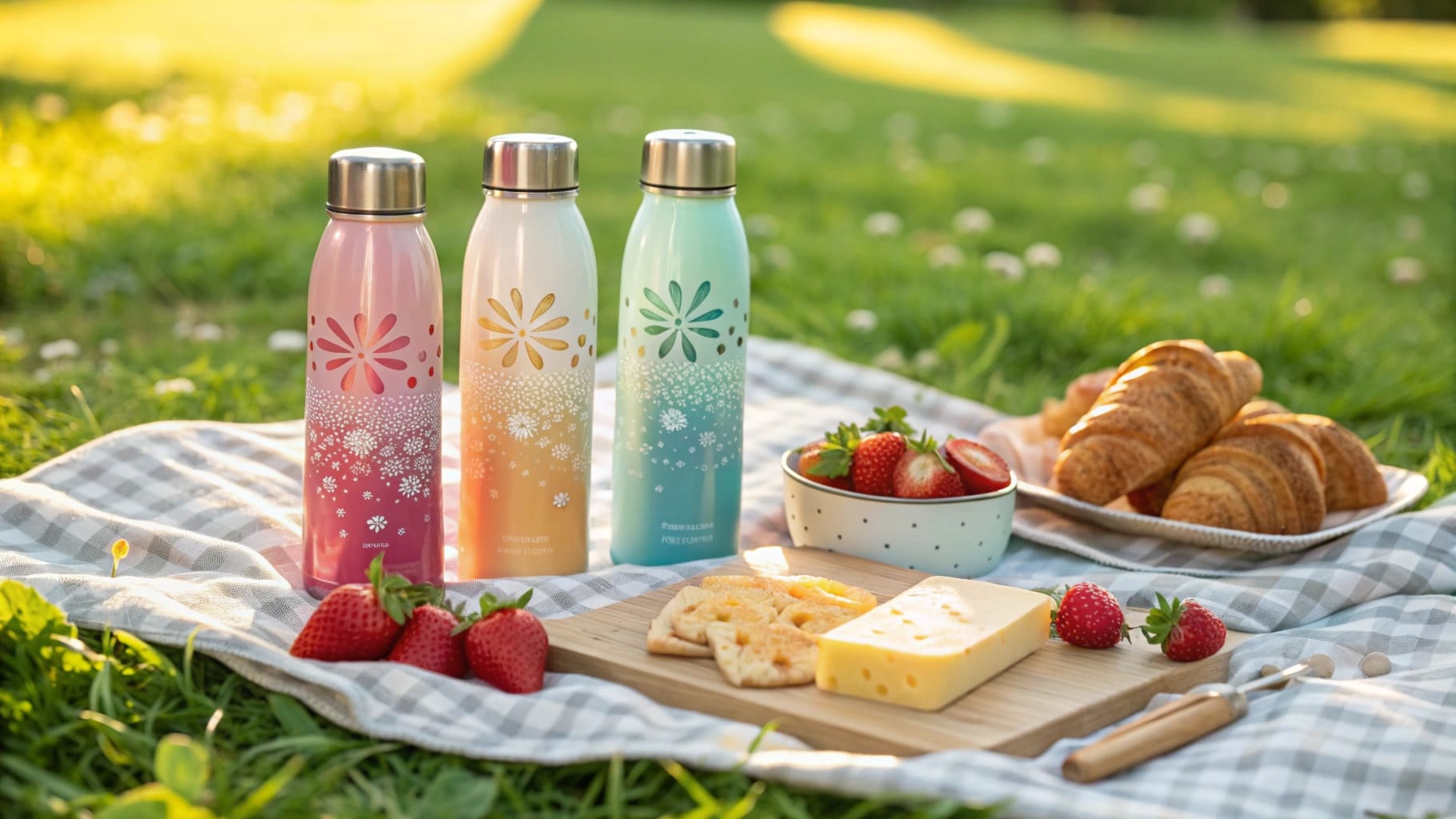
I see many buyers check color, logo, price, and carton size first. I understand that. I also know these points do not show the real risk. When I work on wholesale insulated water bottle orders, I always go back to the same question. Will this bottle stay sealed, stay strong, and keep temperature after shipping and daily use? If I cannot answer this with test data, I do not feel safe moving forward.
How to tell if a water bottle is insulated?
Many suppliers say “double wall vacuum,” but I know labels can hide weak welding. I need proof before I approve any order.
I tell if a bottle is insulated by checking its vacuum structure, outer wall temperature, heat retention, cold retention, and condensation behavior. I also ask for thermal test reports, because a real insulated bottle must prove performance over time, not only on the sample table.
What I check before I trust the insulation
| Check point | What I look for | Why I care |
|---|---|---|
| Vacuum structure | I confirm double wall stainless steel construction | I need a real vacuum layer, not only a thick wall |
| Heat retention | I check if hot water stays above sixty degrees Celsius for six to eight hours | I want the bottle to match buyer claims |
| Cold retention | I check if cold liquid stays below ten degrees Celsius for twelve to twenty four hours1 | I want the product to work in summer sales |
| Outer wall feel | I touch the outside after hot water filling | I expect the outside to stay comfortable |
| Condensation | I watch for water drops on the outside after cold filling | I do not want sweating on desks or bags |
I do not trust insulation by weight alone. A heavy bottle may feel strong, but it may still have poor vacuum work. I also do not trust a quick hand test only. I use it as a first screen, then I ask for a real thermal test. In my daily work, I ask the factory to record the starting water temperature, room temperature, test time, and final temperature. I also ask them to test random pieces from the batch, not only one perfect sample. This matters for business buyers because one failed batch can hurt a whole season. I once handled a case where the sample kept heat well, but bulk goods performed worse. The reason was uneven vacuum control during mass production. Since then, I always connect insulation checks with production control. I want the test to show the bottle, the process, and the factory discipline at the same time.
Is rubber or PVC better for a hot water bottle?
Hot liquid makes weak materials show their real face. I do not want a soft gasket to become a hidden complaint.
I prefer food grade silicone or high quality rubber for hot contact areas. I avoid PVC for hot water bottle parts because heat can raise odor, softness, and chemical concerns2. For insulated bottles, I usually choose silicone gaskets.
How I compare gasket and soft part materials
| Material | My view for hot contact | Main concern |
|---|---|---|
| Food grade silicone | I prefer it for insulated bottle lids and seals | I need proof that it is food safe |
| High quality rubber | I may accept it in some hot water uses | I watch for smell, aging, and taste transfer |
| PVC | I avoid it for hot contact in premium drinkware | I worry about odor, heat stability, and buyer trust |
| Unknown soft plastic | I reject it until I see test proof | I do not want hidden chemical risk |
I separate this question into two parts. I first ask what the soft material touches. I then ask what temperature it faces. If the gasket touches drinking water, coffee, or tea, I want food grade silicone in most insulated stainless steel bottles. Silicone has good heat resistance. It also has low odor when the supplier uses the right grade. Rubber can work in some products, but I ask more questions about smell, aging, and extractable substances. PVC is not my first choice for hot water contact. It may be cheaper, but price is not the only cost. If a buyer in Canada sells a rebranded bottle at a premium, one chemical smell complaint can damage the brand. I also check whether the supplier can provide material safety reports for the exact gasket color. Black, white, and custom color seals may use different additives. I do not accept a report for one material when the production uses another material.
What is the least toxic water bottle brand?
A safe bottle can still fail if the proof is fake. I have seen clean words hide poor material control.
I do not judge the least toxic water bottle brand by name alone. I look for food grade stainless steel, BPA free plastic parts, silicone seals, heavy metal safety, and real FDA or LFGB food contact test reports.
What I require before I call a bottle safer
| Safety item | What I ask for | What I reject |
|---|---|---|
| Stainless steel body | I ask for food grade stainless steel such as SUS three zero four or SUS three one six3 | I reject unknown steel grades |
| Lid plastic | I ask for BPA free food contact material4 | I reject recycled or unclear plastic in drinking areas |
| Seal material | I ask for food grade silicone | I reject strong odor and unknown soft parts |
| Surface coating | I ask for paint adhesion and heavy metal test proof | I reject coating with unclear pigment source |
| Certificates | I check lab name, product photo, date, and test scope | I reject copied or mismatched reports |
I do not like the phrase “least toxic brand” when it is used as a shortcut. A brand name can be good, but the batch still needs proof. I look at the full product system. The bottle body, inner wall, lid, straw, handle, powder coating, printing ink, and gasket all matter. I also care about certificate honesty. Some suppliers show old reports. Some reports cover a different model. Some reports cover raw material, but not the finished product. I always compare the report photo, model name, material description, and buyer order details. If anything does not match, I ask again. For my own Icobottle work, I prefer to guide buyers toward clear test reports and clear material choices instead of vague claims. I know many company owners understand sales more than technical details. So I try to make the decision simple. I ask whether the bottle touches food safely, whether it survives heat, and whether the paperwork matches the real goods. This method protects the buyer, the end user, and the brand owner.
What leak, vibration, and thermal tests should I request from a supplier?
A late shipment is painful, but a leaking shipment is worse. I cannot fix damaged trust with a discount after the season.
I request atmospheric leak testing, positive pressure leak testing5, transport vibration testing, drop testing6, and thermal retention testing. I also ask for batch records, inspection photos, and clear pass standards before production starts.
How I connect tests with real business risk
| Test | What I expect | What it protects |
|---|---|---|
| Atmospheric leak test | I expect no water escape after filling and closing | It protects bags, desks, and retail returns |
| Positive pressure leak test | I expect the lid and seal to hold under added internal pressure | It finds weak gasket and thread issues |
| Vibration test | I expect cartons and bottles to survive shipping movement | It protects long distance export orders |
| Drop test | I expect no serious lid failure or body separation | It protects daily use and warehouse handling |
| Thermal test | I expect stable heat and cold retention results | It protects product claims and repeat orders |
I treat leak testing as the first gate. If a bottle leaks, nothing else matters. I ask the factory to test the bottle upright, upside down, and sideways. I also ask them to test after opening and closing the lid many times, because a perfect first seal can become weak after use. Vibration testing is my second gate. A bottle may pass a desk test and still fail after ocean shipping, truck movement, and warehouse stacking. I want cartons, dividers, lids, and bottle bodies tested together. Thermal testing is my third gate. It proves the vacuum and insulation. I do not want only a marketing promise. I want a written method and a clear pass level. When I talk with a buyer who is sensitive to price, I explain that testing is not decoration. Testing reduces returns, chargebacks, and urgent replacements. A slightly cheaper bottle can become more expensive when it misses the peak sales season or creates complaints after launch.
Conclusion
I trust insulated bottles when leak, vibration, thermal, material, and certificate checks all point to the same thing: safe use and stable repeat orders.
-
"Vacuum flask", https://en.wikipedia.org/wiki/Vacuum_flask. Standards for vacuum flasks, such as those published by ISO or equivalent national bodies, specify cold-retention test conditions including initial liquid temperature, ambient temperature, and minimum retention duration that inform the 10 °C/24-hour benchmarks commonly used in trade specifications. Evidence role: expert_consensus; source type: institution. Supports: Recognized cold-retention performance thresholds for vacuum-insulated containers as defined by standards bodies. Scope note: Cold-retention thresholds differ across product categories and standards versions; buyers should confirm the applicable standard for their target market. ↩
-
"Food Packaging and Chemical Migration: A Food Safety Perspective", https://pmc.ncbi.nlm.nih.gov/articles/PMC12096275/. Research on PVC food-contact materials demonstrates that elevated temperatures accelerate the migration of plasticizers, particularly phthalates, and residual monomers such as vinyl chloride into food and beverages, which underpins regulatory restrictions on PVC in hot-food-contact applications. Evidence role: mechanism; source type: research. Supports: Increased chemical migration from PVC materials at elevated temperatures relevant to hot-beverage contact. Scope note: Migration rates depend on formulation, temperature, contact duration, and liquid type; general findings may not apply directly to all PVC compounds used in bottle gaskets. ↩
-
"Regulatory Status of Components of a Food Contact Material", https://www.fda.gov/food/packaging-food-contact-substances-fcs/determining-regulatory-status-components-food-contact-material. Regulatory frameworks such as FDA 21 CFR and EU Regulation (EC) No 1935/2004 on materials intended to contact food establish criteria for metallic food-contact materials; grades such as AISI 304 and 316 are widely accepted under these frameworks owing to their corrosion resistance and low migration characteristics. Evidence role: definition; source type: government. Supports: Regulatory acceptance of AISI 304 and 316 stainless steel grades as food-contact materials. Scope note: Acceptance is subject to specific alloy composition, surface finish, and migration testing; grade designation alone does not guarantee compliance without additional testing. ↩
-
"Bisphenol A (BPA): Use in Food Contact Application", https://www.fda.gov/food/food-packaging-other-substances-come-contact-food-information-consumers/bisphenol-bpa-use-food-contact-application. Regulatory agencies including the European Food Safety Authority (EFSA) and the U.S. Food and Drug Administration (FDA) have assessed bisphenol A (BPA) migration from food-contact materials; EFSA's 2023 re-evaluation substantially lowered the tolerable daily intake, resulting in tighter restrictions on BPA in food-contact plastics across multiple jurisdictions. Evidence role: mechanism; source type: government. Supports: Regulatory and scientific basis for restricting BPA in food-contact materials. Scope note: Regulatory status varies by jurisdiction and product category; BPA-free claims should be verified through migration testing under applicable regional standards. ↩
-
"Bottled Water Testing | AK Dept. of Environmental Conservation", https://dec.alaska.gov/eh/fss/resources/bottled-water-testing/. Industry test methods such as those referenced in ASTM standards for containers and closures specify internal pressure levels, hold times, and acceptance criteria for positive-pressure leak testing, enabling systematic detection of seal and thread defects in bottle assemblies. Evidence role: definition; source type: institution. Supports: Standardized methodology and pressure parameters for positive-pressure leak testing of liquid containers. Scope note: Consumer drinkware-specific pressure standards vary by market and product type; the article does not state a pressure value, so buyers should align test parameters with their applicable retail or regulatory requirements. ↩
-
"49 CFR 178.603 -- Drop test.", https://www.ecfr.gov/current/title-49/subtitle-B/chapter-I/subchapter-C/part-178/subpart-M/section-178.603. ASTM D5276 (Standard Test Method for Drop Test of Loaded Containers by Free Fall) and ISTA procedures define drop heights, orientations, and surface conditions for impact testing of packaged consumer goods, providing the methodological framework for evaluating lid retention and structural integrity of insulated bottles. Evidence role: definition; source type: institution. Supports: Established drop test standards applicable to consumer drinkware and their packaging. Scope note: Product-level drop tests for the bottle itself differ from packaging drop tests; buyers should specify whether testing addresses the packaged unit, the bare bottle, or both. ↩