
Which handled water bottle diameters actually fit US and EU cup holders?
I have seen good bottles returned because they could not sit in a car cup holder. That small fit problem becomes a big margin problem.
Handled water bottles fit most US and EU cup holders when the base diameter stays around 70mm, or about 2.75 inches. US cup holders often accept 65–82mm1. EU cup holders are often tighter at 60–75mm2. I treat 70mm as the safest shared standard.
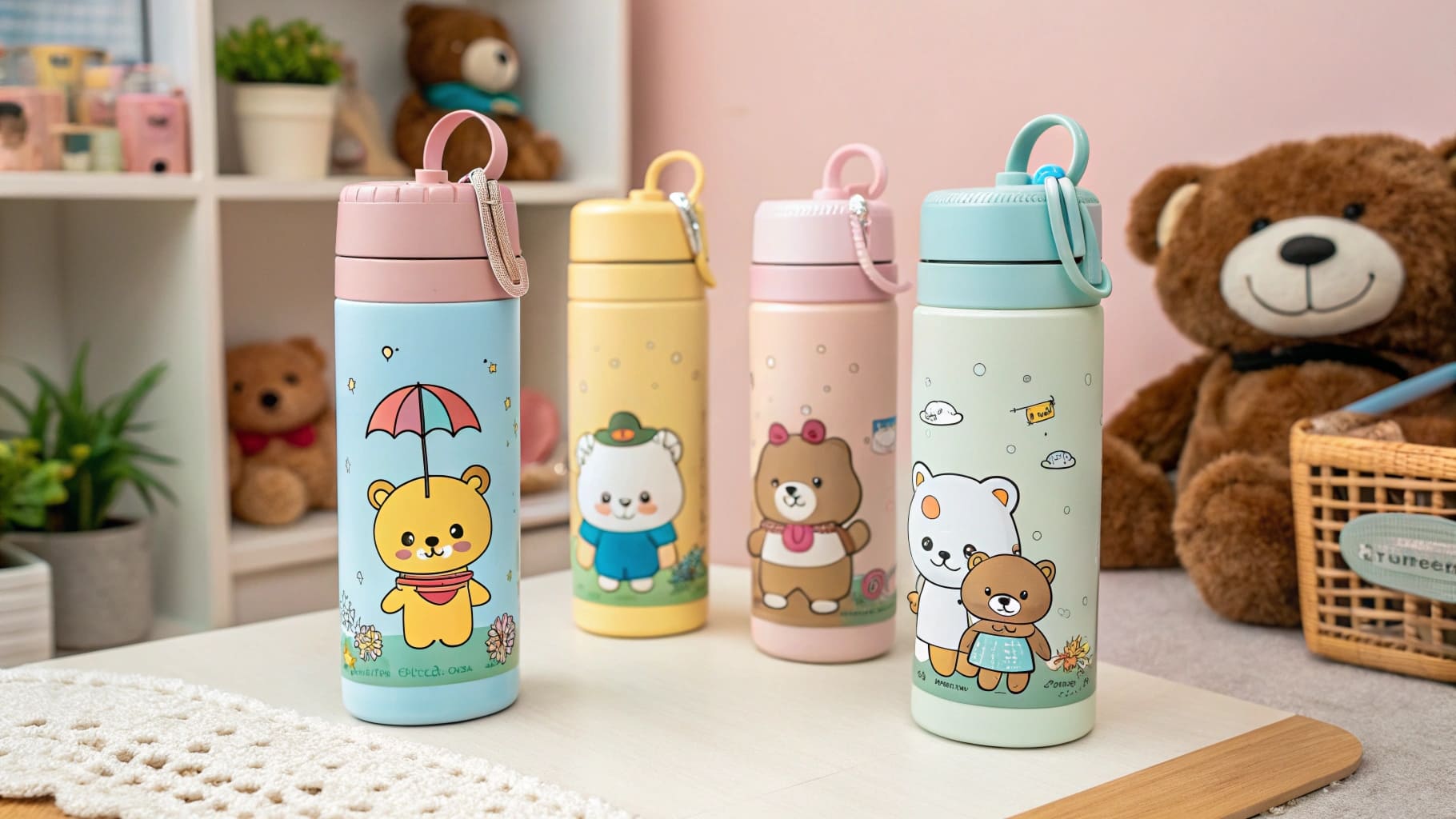
I learned this lesson through B2B orders that looked perfect on paper. The steel was good. The logo was clean. The carton passed inspection. But the bottle did not fit enough cup holders in the target market. That problem is easy to miss because buyers often check capacity first. I now check the base diameter before I talk about color, coating, or packing. I also check the handle position, because a side handle can hit the cup holder rim even when the base is correct. The detail looks small, but it changes the whole purchase order.
What is the best handheld water bottle?
I see buyers choose handheld bottles too fast when they only look at appearance. A nice handle means little if the bottle leaks or misses the holder.
The best handheld water bottle has a 70–75mm base diameter, a handle that does not block insertion, 304 or 316 stainless steel3, double-wall vacuum insulation4, and a leak-proof lid. I also prefer a capacity near 22oz because it works for daily use, fitness, and retail display.
I define “best” by use, not only by style
I do not judge a handheld water bottle only by how it looks in a catalog. I judge it by how it behaves after the buyer sells it. A good bottle must sit well in a car, carry well by hand, and survive repeat washing. I also want the handle to feel natural. If the handle is too large or too low, it can catch the cup holder edge. If it is too thin, the user feels the full bottle weight in the fingers.
For wholesale buyers, I treat the best design as a balance. The bottle should fit the widest group of users without creating too many SKUs. A 70mm base often gives that balance. It fits most US cup holders and many EU cup holders. A slightly tapered lower body can also help. The bottle can still have a wider shoulder, but the lower part must stay cup-holder friendly.
My practical sourcing checklist
| Feature | My preferred spec | Why I check it |
|---|---|---|
| Base diameter | 70–75mm | It fits more US and EU cup holders |
| Capacity | Around 22oz | It works for office, gym, and travel |
| Steel grade | 304 or 316 stainless steel | It supports quality and safety claims |
| Insulation | Double-wall vacuum | It gives real user value |
| Lid | Leak-proof design | It lowers return risk |
| Handle position | Above cup holder rim | It avoids insertion problems |
| Surface finish | Powder coating or polished steel | It supports branding and shelf appeal |
I also ask for real samples before mass production. I place the sample in several car cup holders and I test it with a silicone boot if the order includes one. A boot can add several millimeters. That small change can turn a safe fit into a tight fit. I also check if the handle hits the rim when the bottle is inserted. I have seen a bottle with a correct base fail because the handle was placed too low. That is why I treat cup holder fit as a full lower-body design issue, not just one diameter number.
What size are Nathan handheld water bottles?
I use Nathan as a useful market reference, because many buyers know the running category. But I still check each model before copying the size.
Nathan handheld water bottles often sit around 18–22oz in capacity, with approximate diameters near 2.5–2.75 inches, or about 64–70mm. Many models use straps or ergonomic grips for running, so the bottle body is usually kept slim enough for secure hand carry.
I use known brands as benchmarks, not as final specs
I often hear buyers say that they want a bottle “like Nathan.” I understand what they mean. They usually want a running-friendly size, a secure hand feel, and a bottle that does not feel bulky. But I still avoid copying a brand blindly. Each model can change by year, strap style, capacity, and material. I use the market idea as a starting point, then I build a B2B spec that can be tested and produced with stable quality.
For handheld bottles, the size is not only the volume. The shape matters. A tall and slim bottle can hold similar liquid as a shorter and wider bottle. But the slim one often fits the hand and cup holder better. A diameter around 64–70mm is usually easier for runners to grip. It also stays closer to the cup holder safe zone for both North America and Europe.
My size comparison for handheld sourcing
| Buyer question | My practical answer | My sourcing note |
|---|---|---|
| Common capacity | 18–22oz | This range works well for running and daily carry |
| Slim diameter range | 64–70mm | This range helps grip and holder fit |
| Broad fit target | Around 70mm | This is my main shared US and EU target |
| Risk zone | Above 75mm | This can become tight in many EU holders |
| Handle or strap | Must sit clear of base | It should not block cup holder insertion |
| Best use case | Running, gym, car, office | It supports wider retail demand |
I also separate handheld running bottles from handled travel bottles. A running bottle may use a soft strap or hand sleeve. A travel bottle may use a rigid loop handle on the lid. The cup holder issue changes with each design. A lid handle usually does not affect fit because it sits above the holder. A side handle can affect fit if it reaches too low. I have seen buyers approve a side-handle sample after looking at photos only. I prefer to ask for a side view with exact measurements from the base to the lowest point of the handle. That one measurement can prevent a shipment from becoming hard to sell.
For Canadian or US distribution, I would keep the base near 70mm if the same bottle will be sold online and in stores. For Europe, I become more careful. I try not to exceed 75mm at the lower body. If the bottle needs a larger capacity, I would rather increase height than widen the base too much. Height may create shelf and carton issues, but width creates cup holder complaints faster.
What is the highest rated water bottle?
I do not think the highest rated bottle is only the one with the best online score. Reviews often hide the sourcing details that create quality.
The highest rated water bottle for wholesale buyers is usually a stainless steel bottle with 304 or 316 steel, double-wall vacuum insulation, a leak-proof lid, a 70mm cup-holder-friendly base, strong coating, clean branding, and real certificates that match the factory and product.
I rate a bottle by what protects the buyer after delivery
When I talk with procurement officers, I hear the same concerns again and again. They want quality, but they also want competitive pricing. They want certificates, but they worry about fake papers. They want fast shipment, but they have been hurt by delays. A high rating does not solve these problems by itself. A strong product spec and a clear inspection plan solve more of them.
For me, a top-rated water bottle must pass three layers. It must satisfy the end user. It must protect the distributor’s brand. It must be easy for the supplier to produce again with the same result. I look at material, structure, lid sealing, coating, carton strength, and cup holder fit. I also ask if the certificate belongs to the actual product and factory. Some suppliers show documents that look good, but the details do not match the item. I have learned to check names, models, dates, and test scope.
My rating system for wholesale water bottles
| Rating area | What I want to see | Why it matters |
|---|---|---|
| Cup holder fit | 70mm base, low body under 75mm | It lowers return risk |
| Material | 304 or 316 stainless steel | It supports safety and durability |
| Insulation | Stable vacuum performance | It creates real product value |
| Lid sealing | No leaking after shake and tilt tests | It protects the customer experience |
| Coating | Even color and strong adhesion | It protects brand image |
| Certification | Product-specific and factory-matched papers | It reduces compliance risk |
| Logistics | Clear lead time and packing plan | It protects peak season sales |
| Payment | Clear terms and order milestones | It lowers trust friction |
I also believe the highest rated bottle should be easy to rebrand. A distributor in Canada may buy from China or Vietnam, then sell under a local brand at a higher price. That model needs a product that feels premium after logo printing. The logo area should be flat enough. The coating should accept laser engraving or printing5. The color should be stable across production batches. If the bottle looks slightly different between orders, the brand owner has a hard conversation with retailers.
I also pay attention to communication. A technically strong bottle can still become a bad purchase if the sales representative cannot explain details. I prefer simple and direct answers. I want to know the wall thickness, steel grade, lid material, coating process, sample timing, and inspection method. I do not need vague promises. I need clear facts. When communication is slow or unclear before payment, I expect more trouble after payment. That is why I see the best bottle as a product plus a supply process. The physical bottle matters, but the process behind it matters just as much.
Conclusion
I choose handled water bottles around a 70mm base because this size protects cup holder fit, user comfort, and B2B resale success.
-
"Car Seat & Booster Seat Safety, Ratings, Guidelines", https://www.nhtsa.gov/equipment/car-seats-and-booster-seats. Automotive interior design standards and SAE specifications provide reference dimensions for cup holder diameter ranges in North American vehicles, though manufacturer implementations vary. Evidence role: statistic; source type: research. Supports: typical diameter ranges for automotive cup holders in US vehicles. Scope note: Standards establish reference dimensions but individual manufacturers may deviate from common ranges ↩
-
"How Big Is a Car Cup Holder, Plus How to Make Your Cup Fit", https://www.carparts.com/blog/how-big-is-a-car-cup-holder-plus-how-to-make-your-cup-fit-quickref/?srsltid=AfmBOoqsUpKisUy09g1TzjJ28gZHYNYrfCRWXdytI-0WesVJvr847yRc. European automotive interior standards reflect regional preferences for smaller beverage containers, resulting in cup holder dimensions that typically accommodate narrower diameter ranges than North American specifications. Evidence role: statistic; source type: research. Supports: dimensional specifications for cup holders in European-market vehicles. Scope note: Ranges reflect common practice rather than mandatory standards, with variation across manufacturers and vehicle classes ↩
-
"Stainless Steel (SS) Safety Profile", https://www.fda.gov/media/165146/download. Food safety authorities including the FDA recognize 300-series austenitic stainless steels as acceptable for direct food contact due to their corrosion resistance and low metal migration properties. Evidence role: general_support; source type: government. Supports: the approval of 304 and 316 stainless steel grades for food contact applications. ↩
-
"Performance Comparison of Thermal Insulated Packaging Boxes, Bags ...", https://digitalcommons.calpoly.edu/cgi/viewcontent.cgi?article=1043&context=it_fac. Vacuum insulation significantly reduces heat transfer by eliminating conduction and convection between double walls, with thermal performance dependent on vacuum quality and wall emissivity. Evidence role: mechanism; source type: research. Supports: the physical principles by which vacuum insulation reduces heat transfer in beverage containers. ↩
-
"Powder Coating With Lasers..Kinda | A New Way To Fill Your Engraving ...", https://www.youtube.com/watch?v=xOuWrblwhRQ. Laser engraving on coated metal surfaces relies on ablation or color change mechanisms, with effectiveness varying by coating composition, with powder coatings and certain ceramic coatings providing good contrast when properly formulated. Evidence role: mechanism; source type: research. Supports: the compatibility of different coating types with laser marking and other decoration methods. Scope note: Marking quality depends on specific coating formulation, laser parameters, and desired visual result ↩