
Do Stainless Drinking Cups Alter Taste Through Finish Grades And Interior Passivation?
I have seen one strange sip damage a buyer’s trust. The cup looks perfect, but the customer tastes metal and blames your brand.
A properly made food-grade stainless steel cup should not alter taste.1 Metallic flavor usually comes from poor interior passivation, rough finishing, leftover polishing compounds, welding residue, or non-compliant coatings.
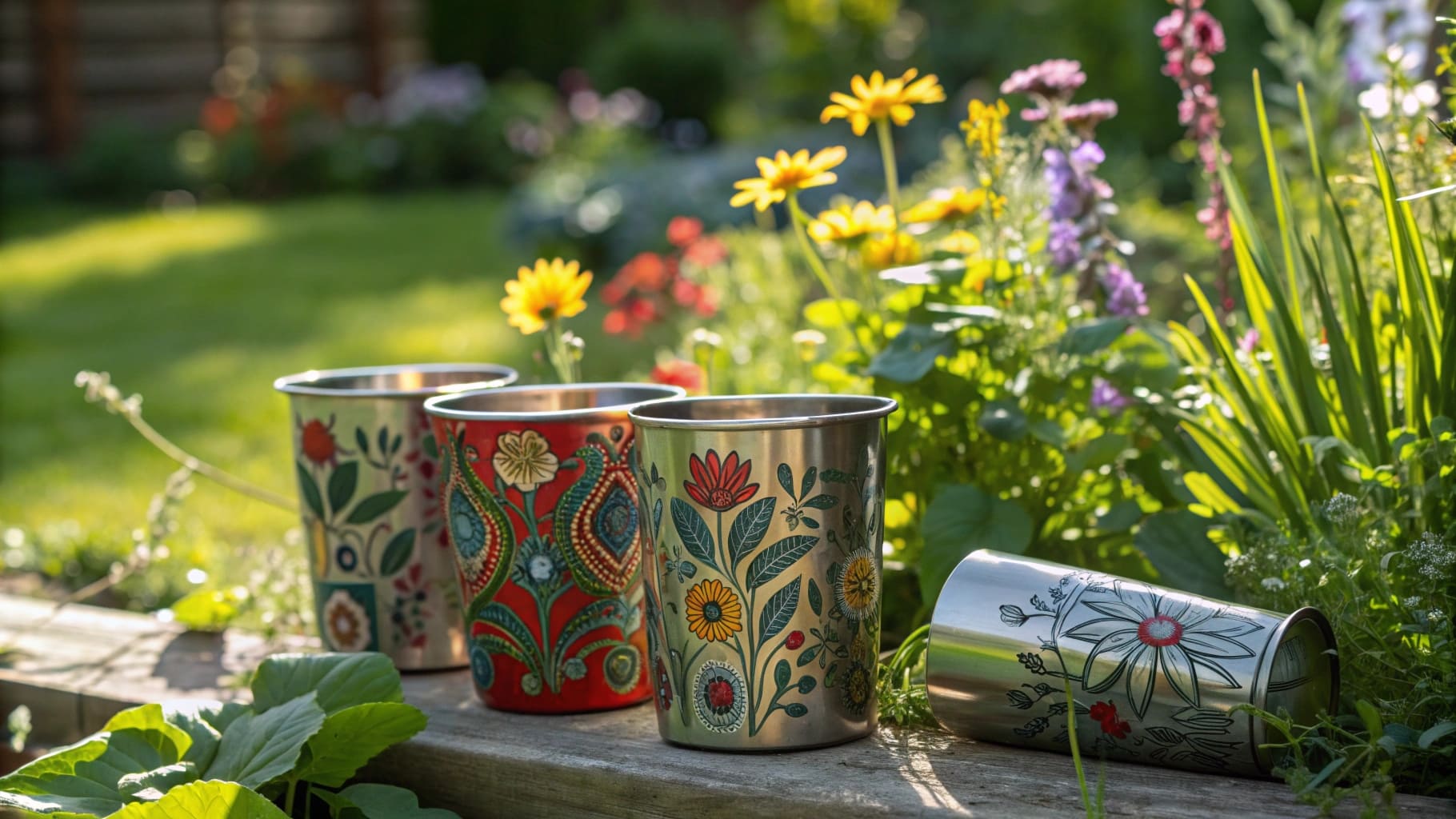
I have handled this question many times with buyers who sell into Canada, America, and Europe. I know the issue feels simple at first. A customer drinks water or coffee, then says the cup tastes weird. The buyer then asks if stainless steel is the problem. I do not see it that way. I see taste complaints as a process control issue. The base material matters, but the inner surface matters more. A cup can use good stainless steel and still taste wrong if the factory skips cleaning, rushes passivation, or uses a rough interior finish. This is why I always look beyond the catalog photo. I look at the inside wall, the welding area, the test report, and the way the supplier explains the process.
Why Does My Stainless Steel Cup Taste Weird?
That first metallic sip creates a fast complaint. I see buyers panic because the defect is invisible, and the end user still expects an answer.
A stainless steel cup tastes weird when residues, weak passivation, rough polishing, or welding contamination remain inside. The taste is usually not from stainless steel itself. It is from poor production control after forming and polishing.
I First Look For What The Mouth Can Detect
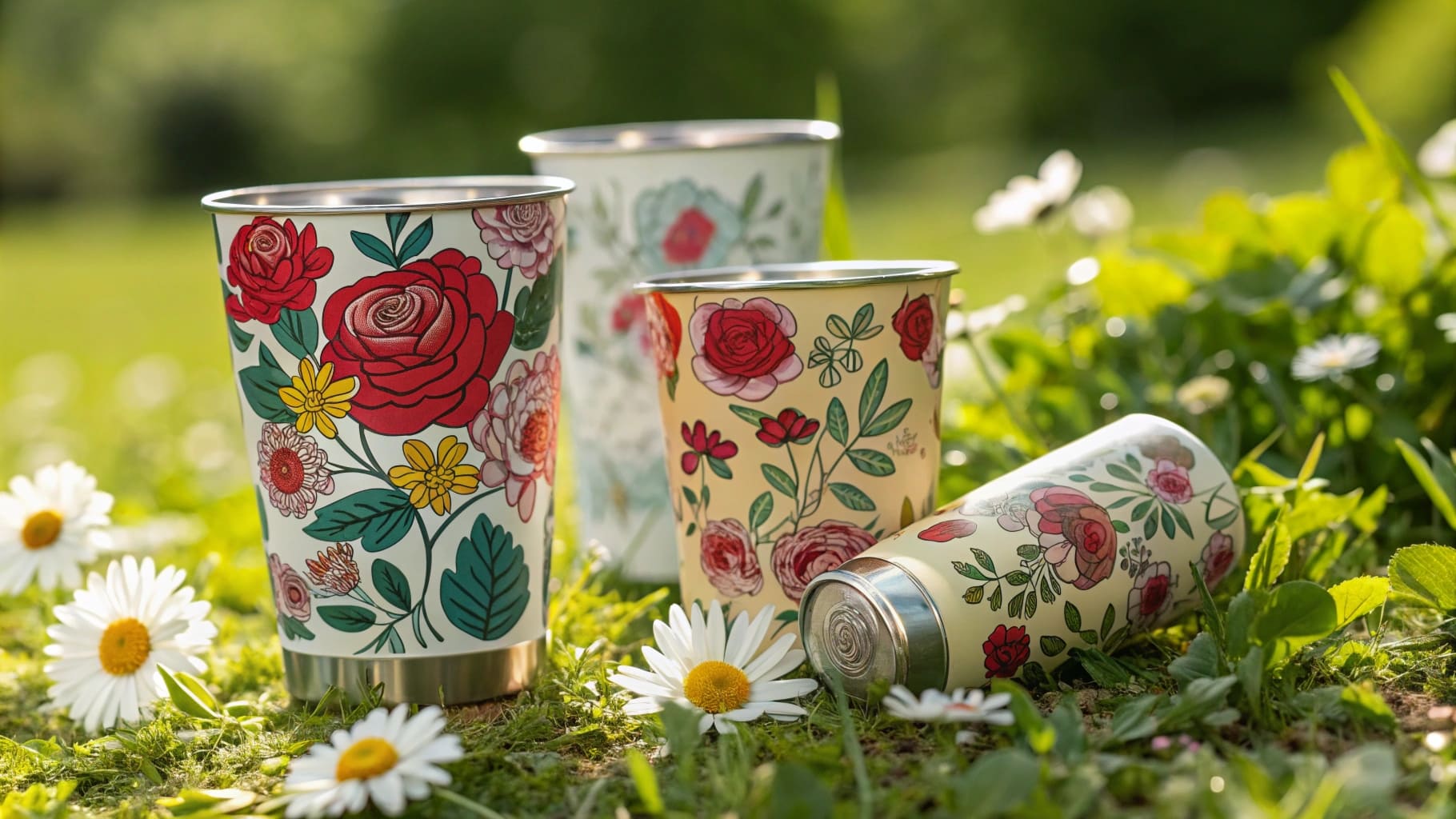
I treat a weird taste complaint as a surface problem. The human mouth is very sensitive. It can detect oil, polishing wax, cleaning acid, and loose metal ions even when the cup looks clean. A buyer may see a shiny product. I may see an interior that did not receive enough final treatment.
Food-grade stainless steel contains chromium. When the surface is treated in the right way, chromium forms a thin protective oxide layer.2 I call this the quiet layer. It keeps the drink away from reactive metal sites. If passivation is weak, that quiet layer is not stable.3 The cup may still pass a basic visual check, but water, tea, coffee, or citrus drinks can pick up an odd taste.
I Check The Production Trail
| What I check | What I often find | What I ask the supplier to prove |
|---|---|---|
| Interior cleaning | I find polishing paste or oil smell | I ask for a cleaning process record |
| Passivation | I find short treatment time or skipped steps | I ask for a passivation report |
| Welding area | I find heat tint or rough marks | I ask for inner weld photos |
| Interior finish | I find brushed lines that hold residue | I ask for finish grade details |
I Care About Smoothness More Than Shine
I do not judge the cup only by outside shine. I care about the inside surface. A mirror-polished interior has fewer tiny valleys.4 These valleys can hold drink compounds and factory residue. A lower-grade brushed interior can work for some products, but I treat it with more caution for coffee, tea, and flavored drinks. I usually push for a smoother interior when the buyer plans to sell a premium bottle or cup. I also ask the factory to rinse and test samples after normal washing, not after special showroom cleaning.
Does Stainless Steel Change The Taste Of Food?
A buyer can lose repeat orders when food or drinks taste different. I see this problem grow fast when acidic drinks meet poor inner surfaces.
Proper food-grade stainless steel does not normally change the taste of food or drinks. Taste change appears when the material is wrong, the passivation is weak, the interior is rough, or the coating is not food-contact safe.

I Separate Material From Surface Condition
I do not say “stainless steel changes taste” as a general rule. That statement is too simple. I separate the raw material from the finished surface. Common food-grade stainless steel, such as grade three oh four and grade three one six5, is widely used because it is stable and clean for normal food contact. But a finished cup is not only a sheet of steel. It is cut, pressed, welded, polished, washed, and packed. Every step can leave a trace.
Coffee, lemon water, juice, and sports drinks are stronger tests than plain water. These drinks can expose weak spots on the interior wall. If the steel is not fully protected by a good passive layer, acidic drinks can make the metallic note more obvious. This does not mean the drink is always unsafe. It means the buyer should inspect the process before approving mass production.
I Match Drink Type With Interior Finish
| Drink or food use | What I expect from the cup | My buyer concern |
|---|---|---|
| Plain water | I expect a neutral taste | I check cleaning and passivation |
| Coffee | I expect no metal note after washing | I check polish residue and inner smoothness |
| Citrus water | I expect stable taste after contact | I check passivation strength |
| Tea | I expect no smell from the lid or cup | I check both steel and accessories |
| Soup or warm food | I expect no coating odor | I check food-contact compliance |
I Ask Better Questions Before I Accept Samples
I ask direct questions because vague answers waste time. I do not only ask, “Is this food grade?” I ask what grade of steel is used. I ask whether the inside is electropolished, mirror polished, or brushed. I ask whether passivation is done after welding and polishing. I ask whether the supplier can share a real test report from a known lab.
A Canadian buyer once told me that he could sell quality, but he could not explain metal chemistry to every retail customer. I understood his point. His brand needed a simple promise. The cup should taste clean. To protect that promise, I do the technical checking before the goods leave China. This saves the buyer from explaining a problem that should have been prevented at the factory.
Is Drinking From A Stainless Steel Cup Bad For You?
Health questions can hurt a product faster than price questions. I see one fake certificate create more damage than one delayed shipment.
Drinking from a properly made stainless steel cup is not bad for you.6 It is generally safe when the cup uses food-grade steel, proper passivation, safe coatings, and valid food-contact testing.

I Treat Safety As A Supply Chain Issue
I do not treat stainless steel cups as risky by default. I treat careless sourcing as risky. A well-made stainless steel cup is a safe and long-lasting product. It can be a better choice than many coated or disposable options.7 The risk comes from wrong material, poor surface treatment, unsafe paint, low-quality plastic parts, or false documents.
Some suppliers know that buyers focus on price. They may offer a cheap cup with unclear steel grade. They may show a certificate that belongs to another product. They may use decorative coating that looks good in photos but has no food-contact test. This is the real danger for a wholesale buyer. The end user does not blame the factory. The end user blames the brand on the cup.
I Check More Than The Cup Body
| Part of product | My safety concern | What I request |
|---|---|---|
| Stainless steel body | I worry about wrong material or weak passivation | I request material test and passivation proof |
| Interior surface | I worry about residue and rough finish | I request finish details and sample inspection |
| Paint or powder coating | I worry about unsafe contact or peeling | I request coating test reports |
| Lid and gasket | I worry about odor, leakage, and unsafe plastic | I request food-contact reports |
| Packaging | I worry about mixed batches or wrong labels | I request clear batch control |
I Do Not Accept Certificates At Face Value
I have learned to read certificates with care. A real report should match the product name, material, color, lid type, and date range. I also check whether the test item is the same as the sample in my hand. If a supplier sends a report for a water bottle but sells a tumbler with a painted rim, I ask again. If the supplier cannot explain the report clearly, I slow down the order.
I also like simple physical checks. I smell the cup after warm water contact. I check the inner wall under bright light. I look at the weld line. I ask for random samples from bulk production, not only golden samples from the showroom. For larger orders, I prefer outside inspection before shipment. This protects timing, quality, and trust. It also helps the buyer avoid missed sales seasons caused by late rework or rejected goods.
I Balance Quality And Competitive Pricing
I know many procurement officers want both good quality and fair price. I respect that. I also know where cost cutting becomes dangerous. If a supplier saves money by reducing passivation time, using a rougher inner finish, or skipping proper testing, the buyer may pay more later through complaints, returns, and lost trust. I would rather reduce cost through smarter packaging, better order planning, or stable repeat production. I do not like reducing cost by weakening the parts that touch the drink.
Conclusion
I choose food-grade steel, smooth interiors, real passivation, and verified reports because taste problems are usually process problems, not stainless steel problems.
-
"Effect of chemical passivation on corrosion behavior and ion release ...", https://pmc.ncbi.nlm.nih.gov/articles/PMC7770396/. Food regulatory agencies recognize properly passivated stainless steel as a chemically stable, taste-neutral material for food contact applications when manufacturing standards are met. Evidence role: general_support; source type: government. Supports: that properly processed food-grade stainless steel is chemically inert and does not impart taste to foods or beverages. Scope note: This refers to regulatory recognition of the material class, not specific manufacturing quality control practices ↩
-
"Stainless Steel Leaches Nickel and Chromium into Foods During Cooking", https://pmc.ncbi.nlm.nih.gov/articles/PMC4284091/. The corrosion resistance of stainless steel derives from a self-forming chromium oxide film, typically 1-3 nanometers thick, that prevents direct contact between the base metal and the environment. Evidence role: mechanism; source type: research. Supports: that chromium in stainless steel spontaneously forms a chromium-oxide passive layer when exposed to oxygen, which protects the underlying metal from corrosion. ↩
-
"Time-Domain Impedance Analysis on Passivation Quality of 316L ... - PMC", https://pmc.ncbi.nlm.nih.gov/articles/PMC12298384/. The protective performance of the passive layer depends on its thickness, uniformity, and chromium enrichment; incomplete passivation treatments can leave surfaces with heterogeneous oxide layers more susceptible to localized corrosion and ion release. Evidence role: mechanism; source type: research. Supports: that inadequate passivation can result in a thinner or non-uniform chromium oxide layer that is more vulnerable to breakdown. ↩
-
"Electropolishing", https://en.wikipedia.org/wiki/Electropolishing. Mirror polishing and electropolishing reduce the surface roughness (Ra value) of stainless steel to below 0.5 micrometers, creating a smoother topography with fewer sites for bacterial adhesion or residue retention compared to mechanically brushed finishes. Evidence role: general_support; source type: research. Supports: that polishing reduces surface roughness and the number of microscopic valleys that can harbor contaminants. ↩
-
"Stainless Steel (SS) Safety Profile", https://www.fda.gov/media/165146/download. Types 304 and 316 austenitic stainless steels are among the most commonly specified materials for food processing equipment and food contact surfaces, recognized in international food safety standards. Evidence role: definition; source type: institution. Supports: that 304 and 316 stainless steel grades are widely recognized and approved for food contact applications. ↩
-
"Daily Use Water Bottles as a Hub for Microbial Population - PMC", https://pmc.ncbi.nlm.nih.gov/articles/PMC11174293/. Health and food safety authorities have evaluated stainless steel for food contact use and recognize it as safe when it meets compositional requirements and proper manufacturing practices are followed. Evidence role: general_support; source type: government. Supports: that food-grade stainless steel is safe for food and beverage contact when properly manufactured. ↩
-
"Steel, Glass, and/or Plastic Bottles: What is the best choice?", https://www.canr.msu.edu/news/steel_glass_and_or_plastic_bottles_what_is_the_best_choice. Life-cycle assessments indicate that reusable stainless steel beverage containers have lower environmental impacts than single-use options when used repeatedly, and they avoid potential chemical migration concerns associated with some plastic materials and interior coatings. Evidence role: general_support; source type: research. Supports: that reusable stainless steel containers offer environmental and durability advantages over single-use alternatives. Scope note: This comparison assumes proper manufacturing and sufficient reuse cycles to offset higher initial production impacts ↩