
Do 40oz insulated tumblers meet US and EU holder diameters and base grip tests?
A 40oz tumbler can look perfect on paper, but it can fail fast when it does not fit a buyer’s real cup holder.
Most 40oz insulated tumblers do not fit all US and EU cup holders by default1. I usually check the base diameter, taper, grip material, and filled weight. A practical B2B design often needs a narrow lower base, stable silicone grip, and market-specific testing.
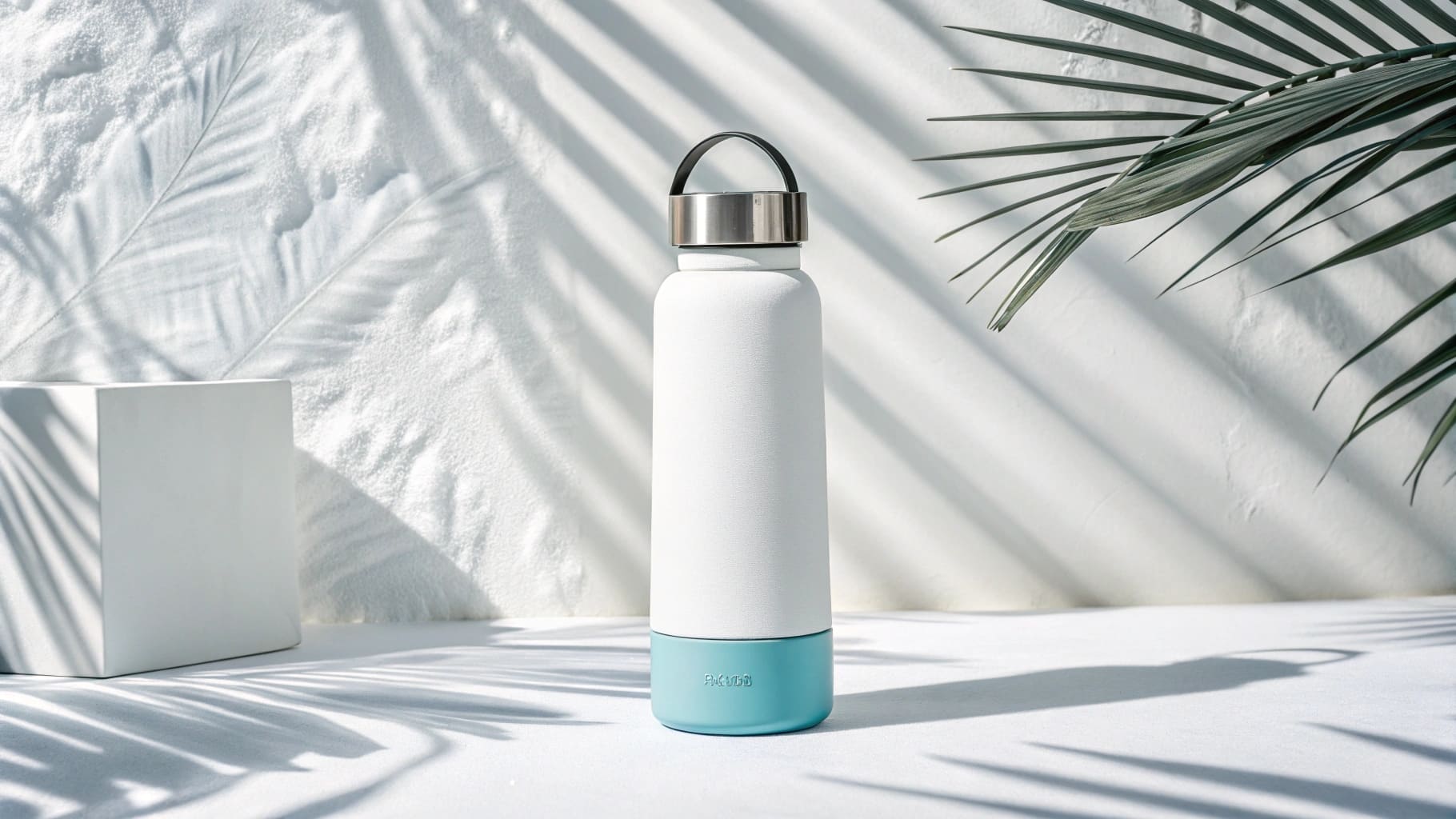
I have seen buyers focus only on volume, color, and logo area, then discover the real problem during daily use. A tumbler that cannot sit well in a car holder creates complaints, returns, and weak repeat orders. For US and EU buyers, I treat holder fit and base grip as core product checks, not small details.
How to find the circumference of a tumbler?
A wrong measurement can make a good tumbler fail in sourcing, and the mistake often starts with measuring the wrong part.
I find tumbler circumference by measuring the diameter and using the formula C = π × d. For sourcing, I check both the widest body diameter and the base diameter, because cup holder fit depends mostly on the lower base, not the widest body.
I separate body circumference from base circumference
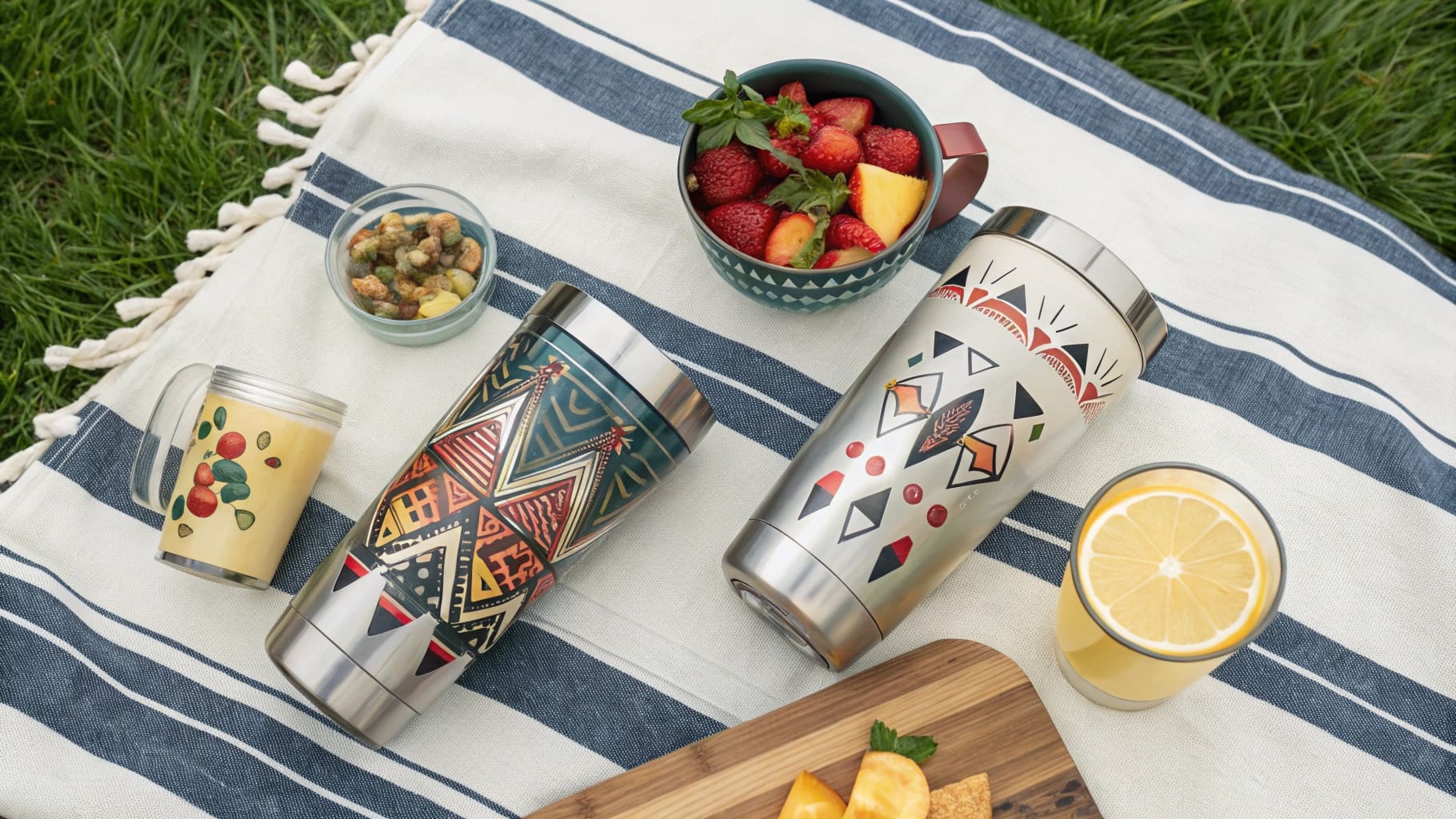
I do not treat a tumbler as one simple cylinder. Most 40oz insulated tumblers have a large upper body and a narrower lower base. The upper body gives capacity. The lower base decides whether the tumbler can enter a cup holder. This difference matters a lot when I work with buyers from Canada, America, and Europe. A 40oz tumbler may have a body diameter near 3.8 inches, but the lower base may reduce to about 2.95 inches. That design can work better for many US holders, but it may still be tight for some EU vehicles.
I usually measure three points. I measure the rim area, the widest body point, and the bottom contact area. I also check the silicone boot if the tumbler uses one, because the boot adds thickness. A buyer may approve a sample without the boot, then fail the final product after the boot is added.
| Measurement point | Why I check it | Common risk |
|---|---|---|
| Rim diameter | It affects lid fit and drinking comfort | Lid mismatch |
| Widest body diameter | It affects carton space and hand feel | Oversized packing |
| Base diameter | It affects holder compatibility | Poor vehicle fit |
| Bottom grip area | It affects slip resistance | Tipping or sliding |
I use simple tools before I trust a drawing
A technical drawing helps, but I do not rely on it alone. I use a caliper for diameter. I use a soft tape when I need circumference. I also use test rings that simulate holder openings. For B2B orders, I prefer to test real samples instead of only checking CAD files. A tumbler can meet the drawing and still feel unstable after powder coating, silicone wrapping, or logo placement.
I also test the filled product. An empty 40oz tumbler feels easy to handle. A filled one can exceed 2.5 pounds. That weight changes the real grip feeling. It also increases side pressure inside a vehicle holder. I ask my team to check whether the base enters smoothly, whether it rubs too much, and whether it shakes during movement.
I use measurement as a buying control point
For wholesale buyers, circumference is not only a math result. It is a quality control point. I suggest placing base diameter tolerance in the purchase file. I also suggest adding a test method for holder fit. This keeps both sides aligned before mass production starts.
What design features do insulated cups have in common?
Many insulated cups look similar, but small design gaps can cause heat loss, weak grip, and buyer complaints.
Most high-quality insulated cups use double-wall vacuum insulation2, food-grade stainless steel3, powder coating, sealed lids, and shaped bases. I check material grade, wall structure, coating quality, lid sealing, and bottom grip before I recommend a model for wholesale orders.
I look at the insulation structure first
Most strong insulated cups share a similar base structure. They use inner and outer stainless steel walls, and the air between them is removed during production. This vacuum gap slows heat transfer. Many good models use 304 stainless steel4 for the inner wall. Some premium models may use 316 stainless steel for stronger corrosion resistance5. I usually ask about the steel grade because the inner wall touches drinks directly.
The vacuum structure alone is not enough. The welding line, bottom sealing, and lid design all affect the final result. If the vacuum is weak, the cup may sweat or lose ice fast. If the lid is loose, heat enters from the top. I have seen products with good steel but poor lid fit, and the buyer blamed the whole tumbler.
| Shared feature | What I check | Why it matters |
|---|---|---|
| Double-wall vacuum | Vacuum stability and sweat test | Ice retention |
| Stainless steel body | Inner grade and thickness | Safety and strength |
| Powder coating | Adhesion and color match | Grip and branding |
| Sealed lid | Gasket fit and leak points | Thermal performance |
| Tapered base | Holder fit and balance | Daily use |
I treat grip as both a safety issue and a sales issue
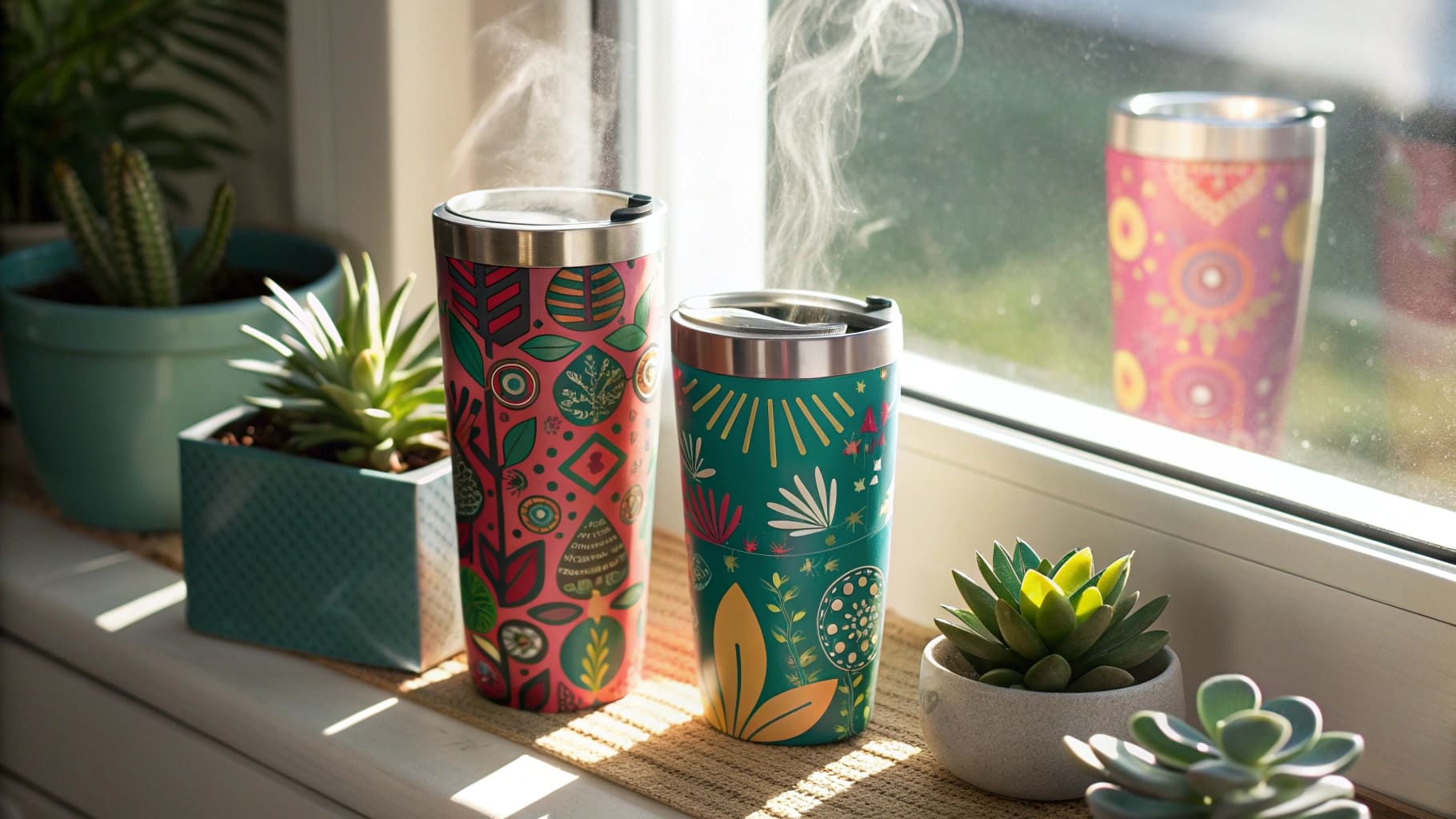
A 40oz tumbler needs more than a smooth metal body. When it is filled, it becomes heavy. A poor surface finish can make it hard to hold with one hand. Powder coating helps because it gives a matte grip and supports custom colors. Silicone boots also help because they protect the base and reduce sliding. Rubberized rings can improve holder grip, but they must not make the base too wide.
For B2B buyers, grip design also affects brand feeling. A tumbler that feels steady in the hand feels more premium. A tumbler that slips on a desk or rattles in a car feels cheap, even if the steel is good. I pay attention to the sound and movement during testing. These small signals often shape customer reviews.
I check branding space without hurting function
Many buyers want large logos and strong colors. I understand that because rebranding is part of the profit model. But I do not like designs where the logo area forces the body to become too wide. A 40oz tumbler must balance capacity, hand feel, holder fit, and brand space. I prefer a design with a wide upper body, a clear logo panel, and a reduced lower base. This gives a better chance to serve both US and EU buyers.
I also check whether the coating supports laser engraving, screen printing, heat transfer, or full-color printing. Each method changes cost, lead time, and final look. A buyer who wants a premium retail finish should confirm the logo method during sampling, not after bulk production starts.
What is the best insulated cup to keep ice from melting?
A tumbler can claim long ice retention, but a weak lid or bad vacuum can make that claim fail in real use.
The best insulated cup for ice retention uses double-wall vacuum insulation, a reflective inner barrier such as copper lining, a tight lid seal, and fewer heat-transfer points. I also test it with ice and water under normal room conditions before I trust the claim.
I do not judge ice retention by the body alone
Many people think the stainless steel body decides everything. I do not. The body is important, but the lid can be just as important. A poor lid seal can lose a large share of the insulation effect. Heat enters from the lid, straw hole, drink opening, and gasket gaps. A tumbler with a strong vacuum body can still perform poorly if the top design is weak.
For strong ice retention, I check the vacuum level, wall gap, lid seal, straw opening, and contact points. I also check whether the tumbler uses copper lining. Copper lining can help reflect heat and improve performance. It usually appears in higher-grade models, so it also affects cost. I tell buyers to match the performance target with the selling price. A budget tumbler and a premium tumbler should not use the same ice-retention promise.
| Ice retention factor | Better design choice | Buyer note |
|---|---|---|
| Vacuum insulation | Stable double-wall vacuum | Check sweat test |
| Inner barrier | Copper lining in premium models | Higher cost |
| Lid seal | Tight gasket and accurate fit | Test after washing |
| Straw opening | Smaller heat entry path | Balance comfort and performance |
| Bottom contact | Reduced heat bridge | Check base structure |
I test ice retention in a way buyers can repeat
I prefer simple tests that buyers can understand. I fill the tumbler with a fixed amount of ice and water. I keep it at normal room temperature. I check the remaining ice after set time points. I do not place the sample in extreme conditions unless the buyer’s market needs that. For many daily-use tumblers, a strong model can keep ice for about 24 to 36 hours under normal conditions. The exact result depends on room temperature, lid use, ice size, and how often the cup is opened.
I also ask buyers to test the lid after repeated opening and closing. A lid may seal well on the first day. It may become loose after cleaning or after the gasket shifts. This is why I care about gasket material and lid tolerance. A stable lid protects the ice-retention claim and reduces after-sale problems.
I connect ice retention with logistics and certificates
For wholesale orders, the best insulated cup is not only the one that keeps ice longest. It must also pass inspection, support branding, ship on time, and have true documents. I know buyers worry about certificate fraud and delayed shipments. I also know some buyers understand sales better than technical details. So I like to make the product check simple and clear.
I prepare material details, coating information, inspection points, and sample test results before production. I also suggest checking certificates against product scope and factory name. This step is important because a certificate that does not match the actual product can create customs risk and retail risk.
A good 40oz insulated tumbler should keep ice well, fit the target holder range as much as possible, and feel stable when full. If one model cannot serve both US and EU holders, I would rather discuss market-specific bases, removable sleeves, or adjusted silicone rings than pretend one size fits all.
Conclusion
I treat 40oz tumbler sourcing as a balance of holder fit, grip safety, insulation performance, branding needs, and honest production control.
-
"What is the normal car cup holder height?", https://www.quora.com/What-is-the-normal-car-cup-holder-height. Automotive industry standards show that US cup holders typically range from 2.75 to 3.15 inches in diameter, while European vehicles often use narrower holders around 2.5 to 2.75 inches, creating compatibility challenges for larger tumblers. Evidence role: statistic; source type: research. Supports: Standard cup holder diameter ranges for US and EU vehicles. Scope note: Standards vary by manufacturer and vehicle model year ↩
-
"Heat transfer", https://en.wikipedia.org/wiki/Heat_transfer. Vacuum insulation minimizes heat transfer by eliminating conduction and convection between walls; heat can only transfer via radiation and through minimal contact points, reducing thermal conductivity to near zero in the evacuated gap. Evidence role: mechanism; source type: research. Supports: How vacuum insulation reduces heat transfer. ↩
-
"Stainless Steel (SS) Safety Profile", https://www.fda.gov/media/165146/download. The FDA recognizes austenitic stainless steel grades (including 304 and 316) as safe for food contact under 21 CFR 177.2450, provided they meet composition requirements and surface finish standards that prevent metal migration into food and beverages. Evidence role: definition; source type: government. Supports: Regulatory standards defining food-grade stainless steel. ↩
-
"SAE 304 stainless steel", https://en.wikipedia.org/wiki/SAE_304_stainless_steel. 304 stainless steel contains 18% chromium and 8% nickel, providing corrosion resistance and meeting FDA food-contact safety standards, making it suitable for beverage container applications. Evidence role: definition; source type: research. Supports: The composition and food-safety properties of 304 stainless steel. ↩
-
"Combined role of molybdenum and nitrogen in Limiting corrosion ... - PMC", https://pmc.ncbi.nlm.nih.gov/articles/PMC10875432/. 316 stainless steel contains 2-3% molybdenum in addition to chromium and nickel, which significantly enhances resistance to chloride corrosion and acidic environments compared to 304 grade. Evidence role: mechanism; source type: research. Supports: The superior corrosion resistance of 316 stainless steel. ↩