
Are Straw Tumblers Office-Friendly When I Check Spill Metrics, Stability, and Base Rings?
I have seen one weak straw lid ruin a calm office desk. The buyer pays, the staff complain, and the brand takes the blame.
I consider straw tumblers office-friendly only when they pass spill checks, tip-over checks, and base ring checks. I look for a tight lid, a stable bottom, safe straw material, and full food contact documents before I suggest them for office use.
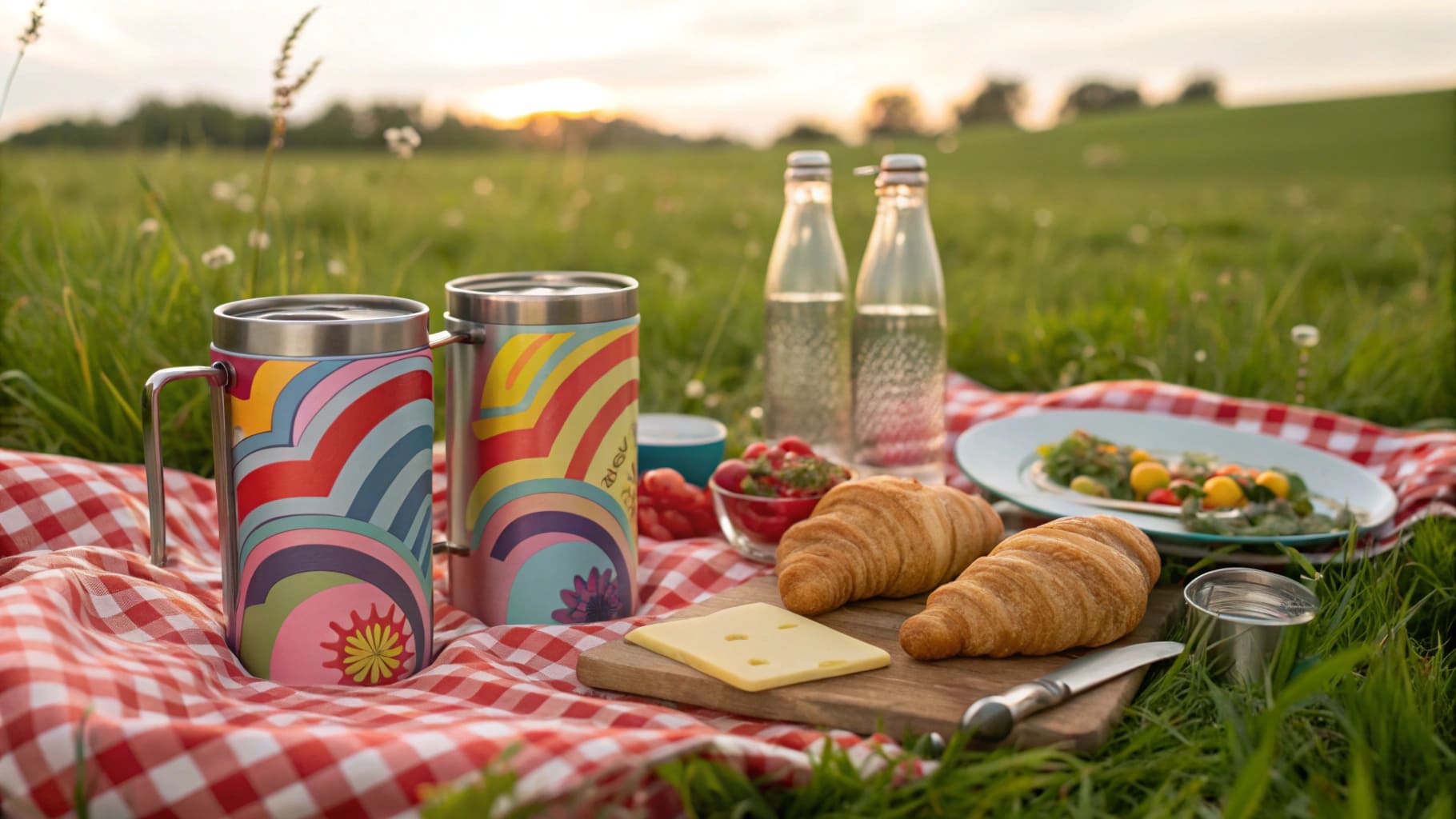
I do not treat an office tumbler like a simple cup. I treat it like a small workplace tool. It sits beside laptops, papers, samples, phones, and sometimes expensive test devices. I have handled wholesale projects where one small leaking lid created more tension than a small price increase1. I also track complaint patterns from office drinkware orders, and I often see spill issues take a large share of the feedback. In my own work at Icobottle, I now ask three questions before I quote a straw tumbler for corporate buyers. I ask if the straw path can resist splash. I ask if the tumbler can stand well on an uneven desk. I ask if the base ring gives real support or only looks nice. These questions look simple, but they decide if a tumbler becomes a daily office product or a return problem.
What Is the Best Tumbler for Hot Drinks?
I have seen buyers choose a nice straw cup for hot coffee, then discover the straw and lid were not made for heat. That mistake becomes expensive fast.
I choose double-wall vacuum insulated stainless steel2 for hot drinks. I prefer a drink-through lid for very hot liquid, or a high-temperature silicone straw when the project needs a straw design. I also check heat retention, lid sealing, and material safety together.
How I judge heat performance and straw use
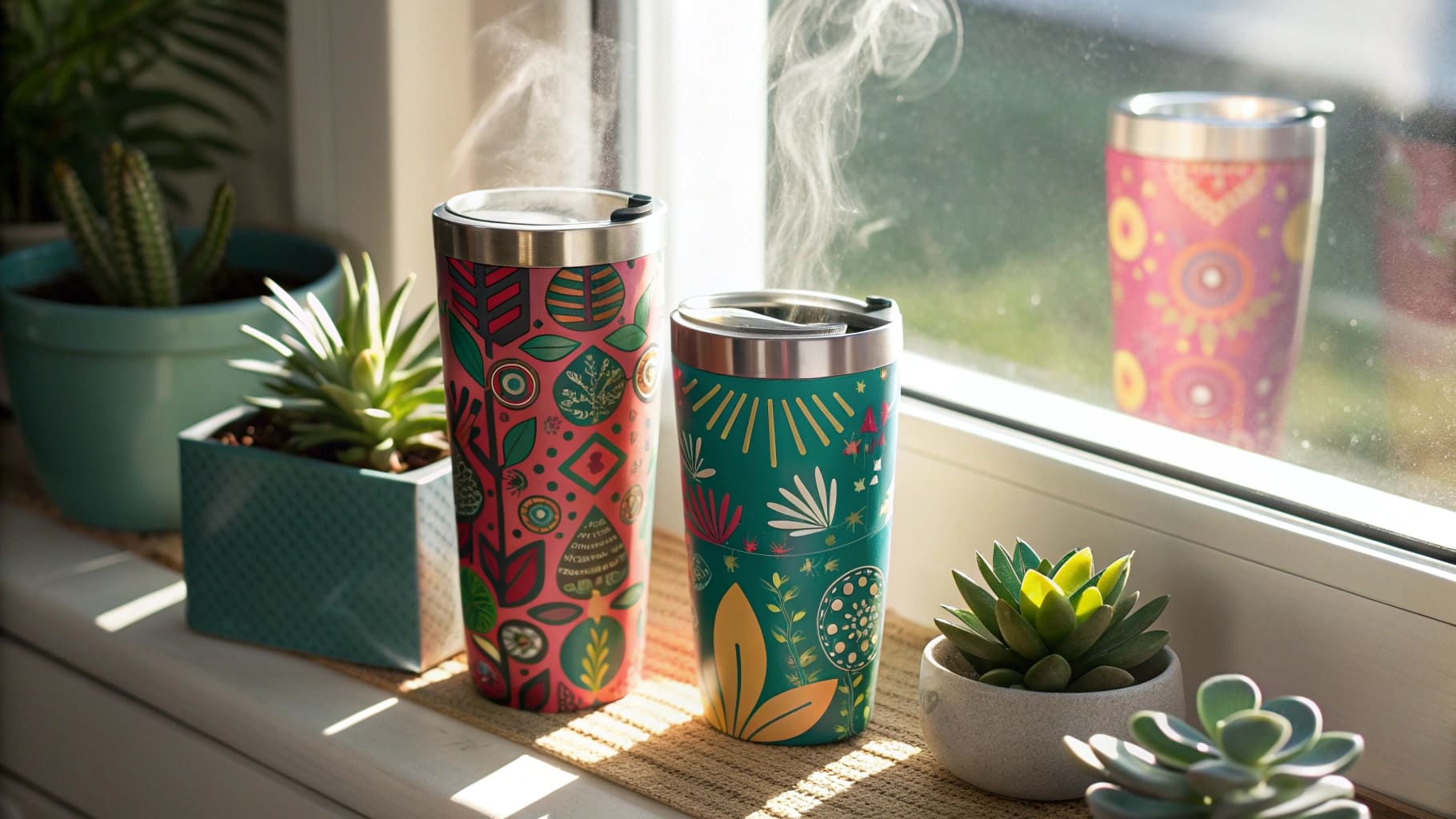
I do not judge a hot drink tumbler by the outside shape first. I start with the inside structure. A double-wall vacuum body keeps heat better3 because the two steel walls slow heat loss. I usually expect good stainless steel tumblers to keep hot drinks above sixty five degrees Celsius for four to six hours, based on the size, lid type, and room conditions. I also know that the lid changes the result. A lid with a wide straw hole can lose heat faster than a closed sip lid.
I treat straw use with hot drinks very carefully. I do not like standard plastic straws for hot coffee or tea. I prefer silicone straws that can handle high heat, often up to two hundred degrees Celsius4. I also check if the straw is too narrow, because very hot liquid can move fast through a straw and burn the user. For office wellness programs, I often suggest a dual lid option. I use one lid for cold straw use and one lid for hot sipping.
| My check point | What I look for | Why I care |
|---|---|---|
| Body insulation | I look for double-wall vacuum stainless steel | I need stable hot drink performance |
| Lid design | I check straw hole size and gasket fit | I want less heat loss and less splash |
| Straw material | I choose food-grade silicone for hot use | I want safe contact with hot liquid |
| Outer wall | I test if the outside stays comfortable | I want safe desk and hand use |
| Cleaning access | I check if the straw and lid can be washed easily | I want fewer odor and mold complaints |
I also think about office behavior. I have seen staff carry a tumbler with one hand while holding a laptop bag in the other hand. A good hot drink tumbler must handle that real use. It must not depend on perfect behavior from the user. It must support normal office habits.
What Is the Best Tumbler Brand?
I have seen buyers chase a famous name, then wait too long for stock, pay too much, or receive weak support after delivery.
I believe the best tumbler brand for a business buyer is the one that proves quality, not the one that only looks popular. I check testing reports, factory process control, logo options, delivery planning, and clear communication before I trust a supplier.
How I compare brand value with supplier proof
I see brand choice in two ways. Retail buyers often ask what name looks strong on a shelf. Business buyers ask a harder question. They ask which supplier can protect their resale plan. I work with wholesale customers, so I do not think only about the logo printed on the tumbler. I think about the full buying path. I ask if the sample matches the bulk order. I ask if the powder coating5 can pass adhesion tests. I ask if the carton can survive sea shipment. I ask if the sales team can answer technical questions without wasting days.
A good tumbler brand must reduce risk for the buyer. I have spoken with company owners who sell rebranded stainless steel water bottles in Canada, America, and Europe. They understand sales well. They also want competitive pricing. But they may not know every technical detail. I see my role as the person who gives proof before they ask twice.
| My buying concern | What a weak brand may do | What a strong supplier should do |
|---|---|---|
| Quality control | I may receive nice samples and weaker bulk goods | I should receive clear inspection photos and batch checks |
| Certification | I may see papers that are old or not related | I should see valid food contact documents for real materials |
| Delivery | I may hear excuses after the peak season is missed | I should receive a clear production and shipping timeline |
| Custom logo | I may get uneven printing or color shift | I should receive pre-production confirmation |
| Communication | I may wait too long for basic answers | I should get direct and useful replies |
I also think brand positioning has changed. I see many buyers move away from heavy logo talk. They now ask for function. They ask for spill control, base stability, safe coating, and real reports. I like this change because it rewards serious factories and serious importers. It also helps office buyers choose a tumbler that staff will use every day.
Which Tumbler Material Is the Safest?
I have seen a beautiful tumbler fail because the steel was fine, but the gasket, straw, or coating was not safe enough.
I choose food-grade stainless steel, usually grade three zero four or grade three one six, with safe lids, gaskets, coatings, and straws. I also ask for FDA, LFGB, or related food contact documents6 for every material that touches the drink.
How I check the full material system
I do not stop at the stainless steel body. I call the full product a material system. The steel body is important, but the lid, straw, gasket, inner thread, coating, and accessories also matter. I have seen buyers ask only for a steel report. I think that is not enough. If a straw tumbler has a plastic lid, a silicone seal, and a colored powder coat, each part needs attention. A safe steel body cannot fix an unsafe lid.
I usually prefer grade three zero four stainless steel for most office tumblers. It works well for water, coffee, tea, and common cold drinks. I consider grade three one six when the buyer wants higher corrosion resistance, or when the product may face more salt, acid, or outdoor use. For office drinkware, grade three zero four is often the balanced choice because it gives good safety and stable cost.
| My material area | What I check | My risk if I ignore it |
|---|---|---|
| Inner steel | I check food-grade stainless steel and clean polishing | I may face rust, odor, or metal taste complaints |
| Lid plastic | I ask for food contact grade material | I may face heat deformation or safety doubts |
| Silicone gasket | I check odor, fit, and food contact status | I may face leaking or smell issues |
| Straw | I choose safe silicone or suitable stainless steel | I may face heat risk or chemical concern |
| Coating | I check adhesion and safety of powder coating | I may face peeling, color loss, or buyer claims |
| Accessories | I check boots, brushes, bags, and handles | I may face hidden material problems after delivery |
I also care about certificate fraud because I know it hurts buyers. I do not like vague reports that do not match the actual item. I prefer reports with clear material names, clear test standards, and real product photos or descriptions. When I prepare a wholesale project, I want the buyer to know exactly what is being tested. This matters more for office orders because one company may give the same tumbler to many staff members. A small material mistake can become a wide complaint.
Conclusion
I call a straw tumbler office-friendly only when I can prove spill control, base stability, heat safety, and full material compliance before shipment.
-
"Decomposing Brand Loyalty - PMC", https://pmc.ncbi.nlm.nih.gov/articles/PMC11851547/. Consumer research consistently finds that product defects and quality failures have a disproportionately negative impact on satisfaction and repurchase intent compared to moderate price differences. Evidence role: general_support; source type: research. Supports: the relative importance of product quality versus price in determining buyer satisfaction. Scope note: Studies typically focus on consumer markets rather than B2B corporate procurement contexts, where purchasing dynamics may differ. ↩
-
"Vacuum insulation panel core materials and modelling the ...", https://dr.lib.iastate.edu/bitstreams/f77c7126-f49f-4b7f-b58d-7f1c941b1f20/download. Vacuum insulation reduces heat transfer by eliminating conductive and convective pathways between inner and outer walls, leaving only radiative heat transfer and minimal conduction through structural supports. Evidence role: mechanism; source type: research. Supports: the physical mechanism by which vacuum gaps between steel walls reduce thermal conductivity. Scope note: The cited principle applies to vacuum insulation generally; actual performance varies with manufacturing quality and vacuum pressure maintenance. ↩
-
"Performance Comparison of Thermal Insulated Packaging Boxes, Bags ...", https://digitalcommons.calpoly.edu/cgi/viewcontent.cgi?article=1043&context=it_fac. Vacuum insulation demonstrates substantially lower thermal conductivity than air-gap or foam insulation because it eliminates gaseous conduction and convection, leaving only radiative transfer and minimal solid conduction. Evidence role: general_support; source type: research. Supports: the comparative thermal performance of vacuum insulation relative to other insulation approaches. Scope note: Real-world performance depends on vacuum quality maintenance; even small vacuum degradation significantly reduces insulation effectiveness. ↩
-
"Guidance for Industry Q1A(R2) Stability Testing of New Drug ...", https://www.fda.gov/media/71707/download. Food-grade silicone elastomers typically maintain structural integrity and safety across a temperature range from -40°C to 200-230°C, though specific formulations vary by manufacturer. Evidence role: general_support; source type: research. Supports: the heat resistance range of food-grade silicone materials. Scope note: Maximum safe temperature depends on specific silicone formulation, duration of exposure, and whether the material contacts food versus acts as structural support. ↩
-
"Generic Testing and Quality Assurance", https://archive.epa.gov/nrmrl/archive-etv/web/pdf/06_vp_powder.pdf. Powder coating involves electrostatically applying dry polymer powder to metal surfaces followed by heat curing, creating a durable finish that resists chipping and fading when properly applied. Evidence role: general_support; source type: research. Supports: the application method and material characteristics of powder coating on metal substrates. Scope note: Performance depends heavily on surface preparation, application parameters, and curing conditions, which vary among manufacturers. ↩
-
"Food Packaging & Other Substances that Come in Contact with Food", https://www.fda.gov/food/food-ingredients-packaging/food-packaging-other-substances-come-contact-food-information-consumers. The U.S. FDA regulates food contact substances under 21 CFR, while Germany's LFGB (Lebensmittel- und Futtermittelgesetzbuch) establishes requirements for materials intended to contact food in the European market. Evidence role: definition; source type: government. Supports: the regulatory frameworks governing food contact materials in major markets. ↩