
Is there a spill-proof sippy cup? Leak test methods and labeling for OEMs
I see buyers lose money when a cup leaks. The complaint feels small at first. Then returns, reviews, and missed seasons damage the brand.
A true spill-proof sippy cup can exist for normal toddler use, but I define it with clear limits. It needs a fast silicone valve, stable gasket compression, correct vent design, and testing that proves the cup resists drops, inversion, pressure, and heat.

I usually look past the front label and start with the failure point. A cup may look strong on a trade show table. It may also pass a quick upside-down shake. But I do not call it ready for OEM production until I see how the valve, lid, thread, gasket, and body work together under stress. This is where many programs win or lose margin before the first container leaves the factory.
What sippy cups don't leak when dropped?
I see many cups pass a desk test and fail a floor test. A drop changes pressure fast, and weak valves open at the wrong time.
Sippy cups that resist leaks when dropped usually have a soft silicone valve, a tight lid thread, a well-compressed gasket, and a strong body. I prefer cups tested from common toddler drop heights onto hard surfaces, not only tested by hand shaking.
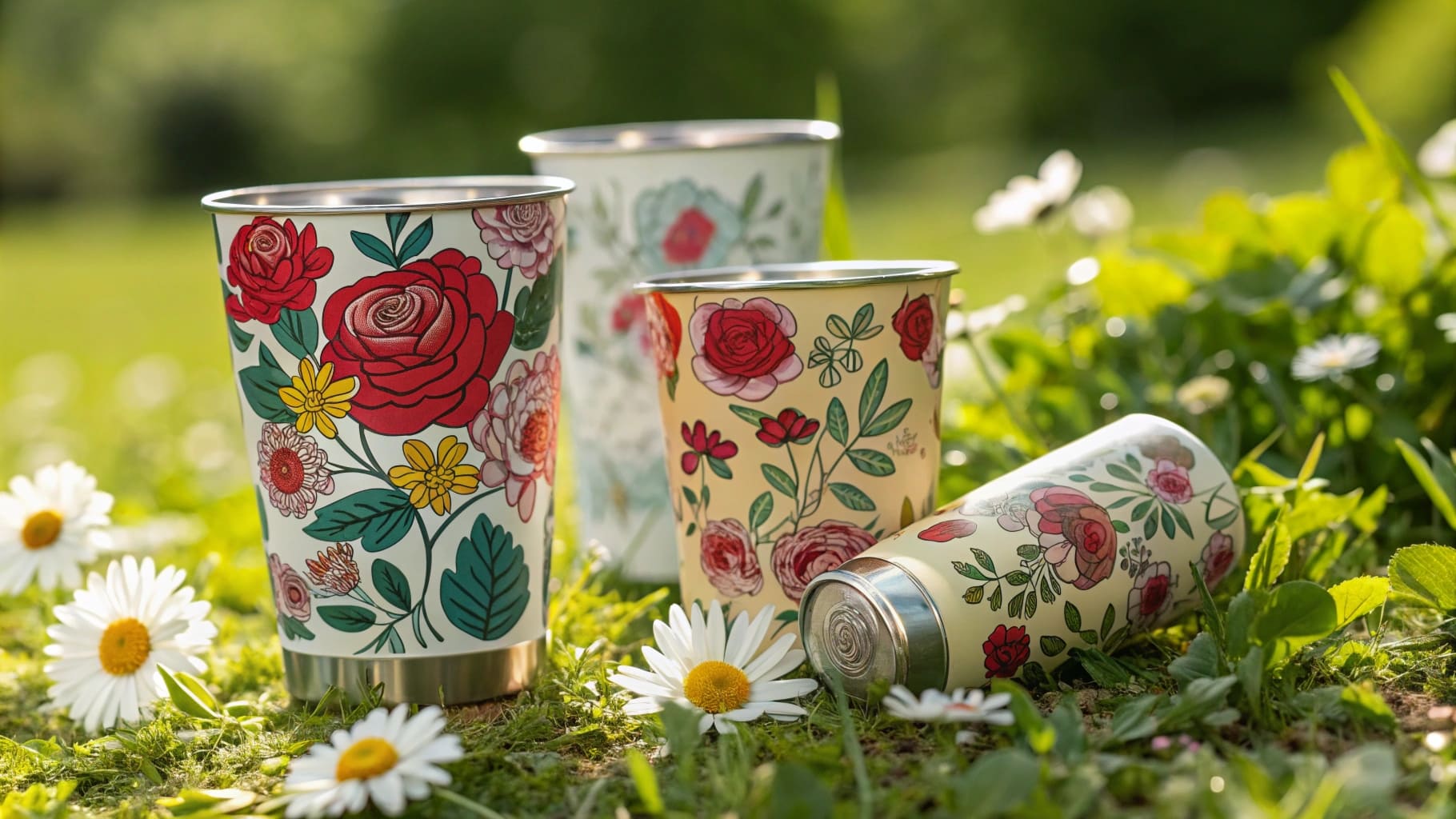
My drop-test view for OEM sourcing
| Drop factor | What I check | Why I care |
|---|---|---|
| Fill level | I test full and half-full cups | Liquid movement changes impact pressure |
| Drop angle | I test side, lid, base, and spout drops | Each angle stresses a different part |
| Surface | I use hard floor or concrete | Soft lab mats hide weak designs |
| Temperature | I test room and warm liquid conditions | Heat can soften seals and change fit |
| After-drop seal | I check for delayed drips | Slow leaks create real customer complaints |
I do not judge a dropped cup only by the first second after impact. I leave the cup on its side and watch the spout, vent, and lid line. I also open and close the lid again because impact can shift a gasket without showing damage. In my own sample checks, I have seen a cup survive the first drop and then leak after the child uses it again. That failure often comes from poor gasket seating or a valve that does not recover fast enough. I ask my team to mark each sample before testing, so I can trace the failure back to a cavity, lid batch, or valve batch. I also care about the sound of the lid after impact. If the thread feels rough or loose, I treat that as a warning sign. A good drop-resistant cup needs material strength, but it also needs repeatable assembly. If a factory relies on workers to “feel” the lid tightness, I ask for a torque standard. If the body is stainless steel, I check if the rim keeps its shape after impact because a small rim change can break the lid seal.
How do no spill sippy cups work?
I see many buyers think the lid does all the work. The real system is smaller, smarter, and easier to ruin during production.
No spill sippy cups work by controlling liquid flow with a pressure-sensitive valve, sealing the lid with gasket compression, and balancing air through a vent. The valve should open during suction and close again when suction stops, even after movement or impact.

The parts that make the seal work
| Part | My quality question | Common failure |
|---|---|---|
| Silicone valve | Does it open only under suction? | Valve slit stays open after molding stress |
| Lid thread | Does it compress the gasket evenly? | Loose thread leaves micro gaps |
| Gasket | Does it recover after washing and heat? | Gasket flattens and loses spring1 |
| Vent hole | Does it equalize pressure without leaking? | Poor vent position lets liquid escape |
| Cup rim | Is the rim round and smooth? | Rim dents break the lid seal |
I explain the mechanism to buyers in a simple way. The valve is like a small door. The child creates suction, so the door opens. When suction stops, the door closes. That sounds simple, but the factory needs tight control. If the silicone is too hard, the child struggles to drink. If it is too soft, the slit may stay open after a drop2. The thread also matters because it creates the force that presses the gasket against the cup rim. In stainless steel cups, I watch the rim tolerance closely. A tiny change in roundness can make one side seal well and the other side leak slowly. I also check the vent. A cup needs air to replace the liquid that leaves. If the vent is blocked, the drink flow feels bad3. If the vent is placed badly, it becomes a leak path. This is why I do not accept a sample only because it looks clean. I ask for section drawings, material hardness, valve dimensions, and assembly instructions. I also like to test after dishwasher cycles or hot water exposure because some materials change after real use4. A no spill design is not one part. It is a balance of suction, pressure, fit, and recovery.
What is the best spill proof cup for toddlers?
I see parents blame the brand when the wrong claim meets real toddler behavior. For OEM buyers, one overpromise can become a return problem.
The best spill proof cup for toddlers is a cup that matches the child’s use stage, passes drop and inversion tests, uses safe certified materials, and carries honest labeling such as “spill-proof when closed” or “leak-resistant with proper use.”
How I choose a toddler cup for private label programs
| Buyer decision | My preferred choice | Reason |
|---|---|---|
| Material | Food-grade stainless steel and tested silicone | I want safety and strong body performance |
| Lid style | Simple parts that can be cleaned | Dirty valves cause flow and odor problems |
| Label claim | Clear use conditions | Honest claims lower complaint risk |
| Certification file | Complete and traceable documents | I need to reduce certificate fraud risk |
| Test report | Third-party and factory internal tests | I want proof from more than one source |
| Packaging note | Clear care and assembly instructions | Correct use reduces leaks and returns |
I do not think the “best” toddler cup is always the most complex design. A toddler product must be easy to use, easy to clean, and hard to assemble wrong. I have seen nice samples fail because the valve can be installed backward. I have also seen cups leak after washing because the gasket was easy to lose. For B2B buyers, I suggest a clear product brief before asking for prices. I ask the buyer to define the age range, liquid type, lid type, target retail price, carton drop requirement, and market certification needs. I then match the design to the claim. If the product will be sold as a travel cup, I ask for stronger inversion and bag-leak testing. If it will be sold as a meal-time cup, I focus more on drop impact and cleaning. I also avoid absolute language when the product has normal user limits. I prefer “spill-proof when closed” for designs with a lockable lid. I prefer “leak-resistant with proper use” when the valve depends on correct assembly. I also ask for real batch records. A certificate alone is not enough because I have seen buyers receive documents that do not match the actual material. I want material reports, production dates, batch numbers, and sample retention. This protects the importer, the brand, and the end user.
Conclusion
I treat spill control as an engineering promise, not a slogan. I verify the valve, seal, tests, documents, and label before production.
-
"Compression Set in Elastomers", https://www.canyoncomponents.com/post/compression-set-in-elastomers-how-it-happens-and-how-to-prevent-it. ASTM D395 and equivalent ISO 815 test methods quantify compression set in rubber and elastomeric materials; elevated compression set values indicate reduced elastic recovery, which directly diminishes the contact stress at a gasket-to-rim interface and is a recognised precursor to seal leakage. Evidence role: mechanism; source type: research. Supports: That elastomeric gaskets lose compressive recovery after repeated compression cycles and thermal exposure, reducing sealing force. Scope note: Compression set performance is highly dependent on the specific elastomer compound, cure system, and exposure conditions; published standards describe measurement methodology rather than prescribing acceptable limits for consumer drinkware. ↩
-
"Study on mechanical properties of silicone rubber ...", https://docs.lib.purdue.edu/cgi/viewcontent.cgi?filename=2&article=1137&context=icpns&type=additional. Materials research on elastomeric slit valves indicates that Shore A hardness governs both the cracking pressure required to initiate flow and the elastic recovery force that closes the slit after load removal, establishing a direct trade-off between flow ease and post-deformation sealing. Evidence role: mechanism; source type: research. Supports: That silicone durometer affects both the actuation threshold of slit valves and their ability to return to a closed state after deformation. Scope note: Published studies focus primarily on medical or industrial slit valves; direct experimental data specific to toddler sippy cup valves at defined hardness ranges is not widely available in open literature. ↩
-
"Modeling of a controlled flow cup for improved transitional ...", https://pmc.ncbi.nlm.nih.gov/articles/PMC8108080/. Fluid dynamics principles establish that liquid flow from a sealed container creates a partial vacuum unless an air inlet path is provided; without venting, increasing negative headspace pressure progressively resists flow until equilibrium halts discharge entirely. Evidence role: mechanism; source type: research. Supports: That atmospheric pressure equilibration through a vent is necessary for consistent liquid flow from a sealed container. Scope note: This is a well-established fluid mechanics principle; citation would contextualise the mechanism rather than prove a novel finding specific to sippy cups. ↩
-
"Synergistic Effects of Multiple Environmental Factors on ... - PMC", https://pmc.ncbi.nlm.nih.gov/articles/PMC10647683/. Polymer aging studies document that repeated exposure to elevated temperatures induces compression set in elastomeric gaskets and dimensional creep in thermoplastic components, both of which reduce contact force at sealing interfaces and increase leak risk over the product lifecycle. Evidence role: mechanism; source type: research. Supports: That repeated thermal cycling from dishwashing or hot-liquid exposure causes measurable changes in elastomeric and polymeric materials used in food container seals. Scope note: Quantitative thresholds vary by specific material formulation and dishwasher temperature; generalised findings may not directly predict performance for any particular production compound. ↩