
How should I quote 40oz tumblers for 2026 with tiered MOQ, FOB, and margin guard?
I see buyers lose margin when 40oz tumbler quotes look simple. Steel moves, freight shifts, and a weak MOQ ladder turns profit into stress.
I quote 40oz tumblers for 2026 by building MOQ tiers, FOB cost lines, and a 10-12% margin guard. I price around 500, 1000, and 3000 units, then I adjust for steel grade, lid type, coating, packaging, certificates, and shipment schedule.
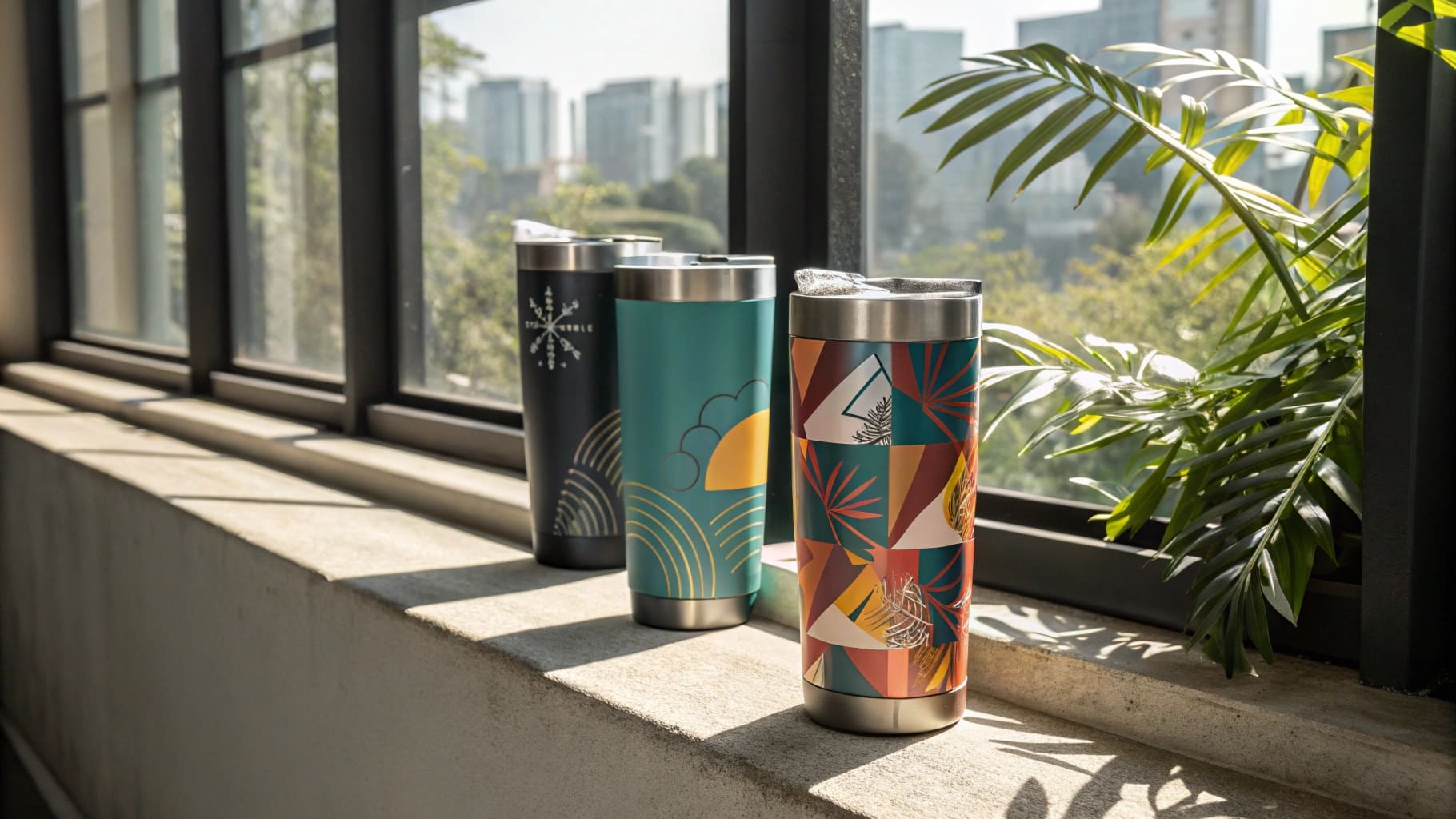
I treat a 40oz tumbler quote as a controlled cost system, not as a single unit price. I start with the MOQ tier because production efficiency changes fast when the order moves from sample level to stable batch volume1. I use FOB pricing because it gives my buyer a clear factory-side cost before ocean freight, duty, and local distribution. I also keep a margin guard because 304 stainless steel cost can move when nickel prices and supply chains change2. I have seen buyers push hard for a lower price, then ask for better coating, stronger lids, custom boxes, and urgent delivery in the same order. I do not want that quote to become a hidden loss. I prefer to show the cost logic early, so the buyer can choose the right tier, the right specification, and the right delivery window before the selling season becomes tight.
How do I measure a 40oz tumbler for sublimation?
I see sublimation jobs fail when the template is guessed. The print looks stretched, the logo bends, and the buyer blames the tumbler.
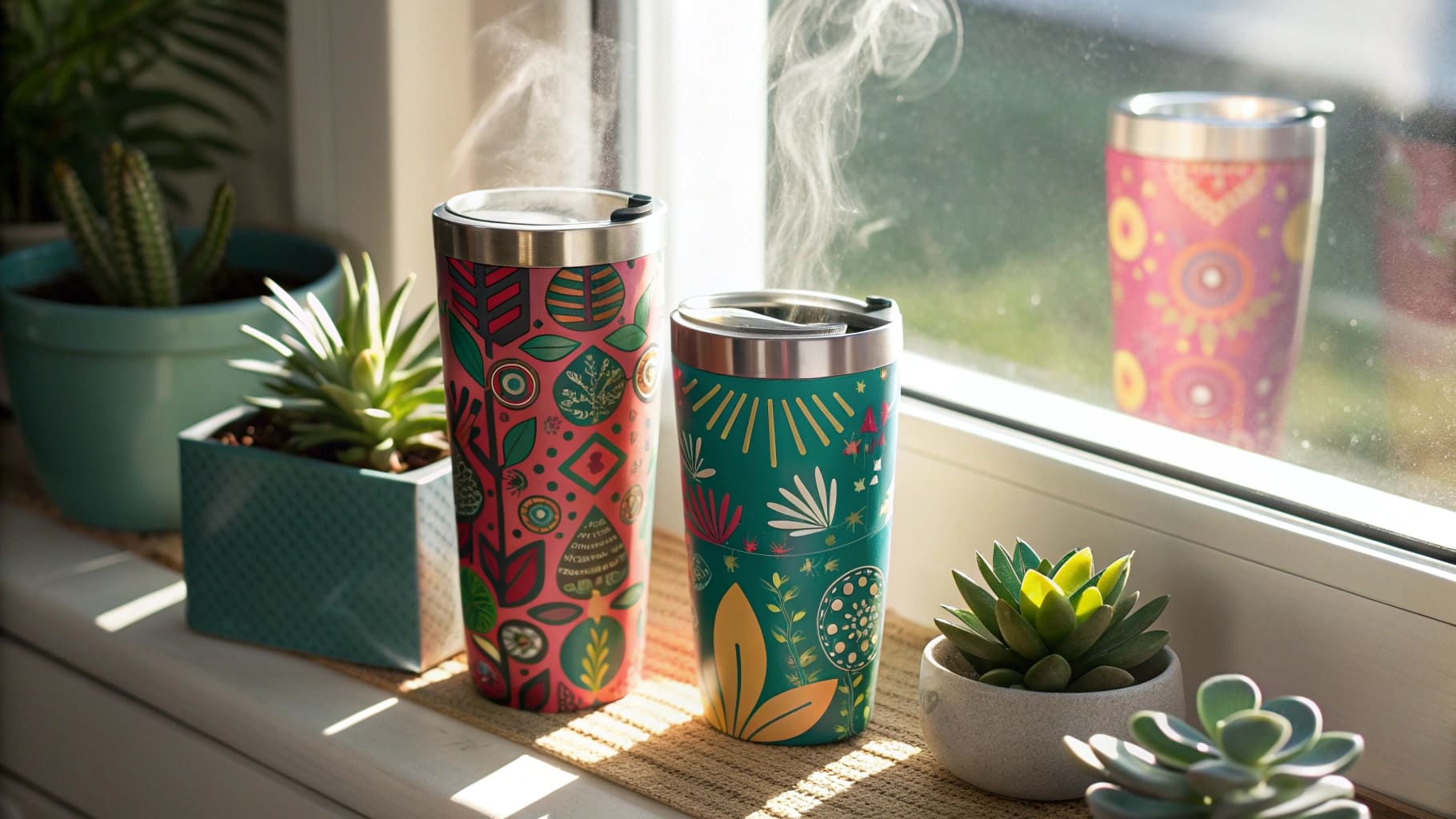
I measure a 40oz tumbler for sublimation by checking full height, top diameter, bottom diameter, handle gap, and safe print area. I use the real sample, not only the catalog size, because tapered walls change the wrap template.
Why do I measure the real sample first?
I never build a sublimation quote only from a general product photo. I ask my team to measure the real sample because many 40oz tumblers look similar, but their wall shape is not the same. A common 40oz tumbler is about 10.5 inches high and has a base diameter near 3.5 inches3. I still check the top diameter, lower diameter, and handle position because the body often tapers. This taper changes the print curve. If I ignore it, the customer may get a crooked logo or a seam that does not meet cleanly.
What measurement points do I record?
| What I check | Why I check it | How I use it in the quote |
|---|---|---|
| I check full height | I need the outside body size | I define the largest possible wrap area |
| I check top diameter | I need the upper curve | I control image stretch near the rim |
| I check bottom diameter | I need the lower curve | I adjust the template shape |
| I check handle gap | I need the printable side space | I avoid printing into the handle zone |
| I check safe print area | I need a clean decoration zone | I reduce artwork risk and remake cost |
I also ask the buyer whether the design needs full-wrap sublimation, one-side logo printing, or mixed logo and pattern work. I do this because each decoration style changes the risk. Full-wrap sublimation needs better template control. A one-side logo needs accurate center position. When I quote, I connect these details to labor, reject rate, and sample approval time. This makes the buyer feel that I understand decoration, not only unit price.
How many cups are in a 40oz tumbler?
I hear capacity questions often. A wrong cup answer looks small, but it can confuse packaging claims, retail copy, and buyer expectations.
I convert a 40oz tumbler into 5 standard cups when one cup equals 8 fluid ounces. I also explain that ice, lid clearance, and measurement standards can reduce the practical drink volume in daily use.
Why do I explain capacity in buyer language?
I answer this question in a very simple way because many buyers use the cup number for product pages, cartons, and sales scripts. A 40oz tumbler equals 5 cups if I use the standard 8oz cup measurement. This makes the product easy to position as an all-day hydration item. It holds enough water for office work, driving, gym use, and outdoor travel. I still tell buyers that usable volume can feel lower when the customer adds ice or leaves space under the lid. I do this because I want the buyer to avoid over-promising in Canada, America, or Europe.
How does capacity affect B2B quoting?
| What I explain | Why it matters to my buyer | How it affects my quote |
|---|---|---|
| I explain 40oz equals 5 cups | I help the buyer write clear retail copy | I reduce back-and-forth communication |
| I explain ice reduces drink space | I help the buyer manage user expectations | I avoid complaint risk |
| I explain larger capacity adds weight | I help the buyer plan freight | I review carton size and carton weight |
| I explain lid clearance | I help the buyer avoid spill claims | I check lid fit and straw position |
| I explain volume testing | I help the buyer confirm specification | I support inspection before shipment |
I also connect capacity to packaging and logistics. A 40oz tumbler is not only bigger in volume. It also takes more carton space, more stainless steel, and usually a stronger handle design. When I quote 500 units, the unit cost is often higher because setup, coating, and carton work spread across fewer pieces. When I quote 1000 or 3000 units, the production line becomes more stable, and the cost can drop. I have seen many buyers focus only on the cup count, but the real B2B decision sits between capacity, freight efficiency, and retail price. I try to make that clear before the buyer compares my quote with a cheaper but thinner product.
What is the best 40ounce tumbler?
I see many buyers ask for the best model, but they often mean the safest resale choice. A cheap tumbler can damage their brand.
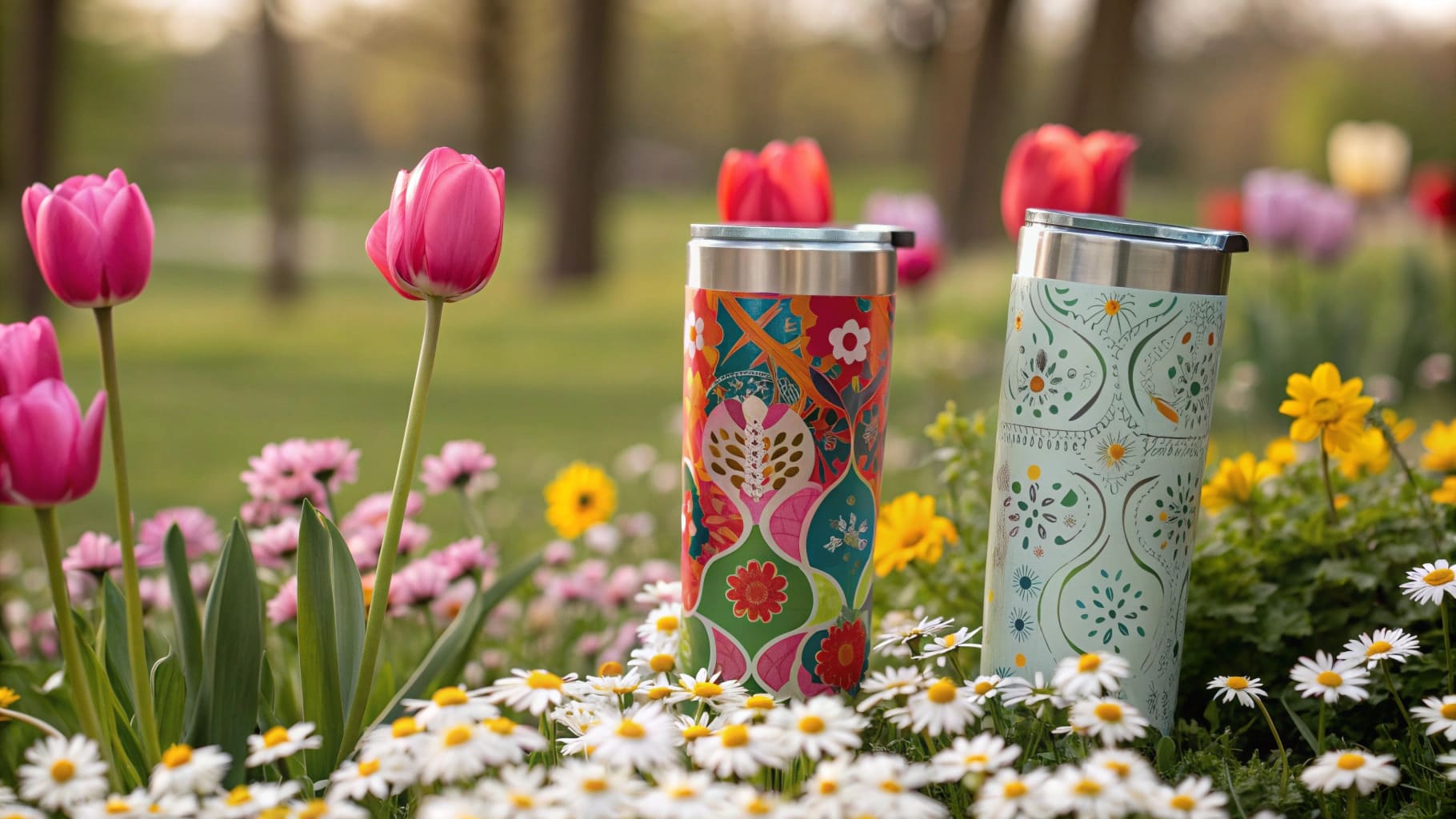
I define the best 40ounce tumbler as the model that balances stainless steel grade, vacuum insulation, leak-resistant lid design, handle comfort, coating durability, compliance documents, and stable FOB pricing. I do not judge it by low price alone.
How do I define “best” for wholesale buyers?
I define the best 40ounce tumbler by resale safety, not by factory price alone. My buyer needs a product that looks good, keeps drinks hot or cold, passes inspection, and supports a strong retail margin. I usually recommend 304 stainless steel for most wholesale projects because it gives a good balance between food safety, cost, and production stability. Some premium buyers may ask for 316 stainless steel4, but I explain the cost impact clearly. I also check whether the product uses true double-wall vacuum insulation, a strong handle, a lid with a stable seal, and a coating that can pass daily scratch and adhesion tests.
What technical points do I compare?
| What I compare | What I prefer | Why I care |
|---|---|---|
| I compare steel grade | I prefer 304 or 316 stainless steel | I avoid weak material and food safety risk |
| I compare wall thickness | I prefer stable gauge control | I improve durability and hand feel |
| I compare insulation | I prefer true vacuum insulation | I support hot and cold performance claims |
| I compare lid design | I prefer a tighter seal and smooth straw fit | I reduce leakage complaints |
| I compare coating | I prefer tested powder coating | I protect the buyer’s logo and brand image |
| I compare documents | I prefer clear compliance records | I reduce certificate fraud risk |
I also look at certification and inspection before I call a tumbler “best.” I have met buyers who lost time because a supplier showed weak documents or unclear test reports. I do not want my buyer to miss a peak season because of a late correction. I prefer to confirm food contact requirements, coating test needs, carton drop test needs, and pre-shipment inspection points early. I also build the FOB quote with a margin guard because a premium tumbler usually needs better material, better lid tooling, and more stable coating control. If I cut the price too much, the factory may have to remove quality somewhere. I would rather explain the cost before production than explain a failure after delivery.
Conclusion
I quote better when I protect cost, measure decoration, explain capacity, and prove quality before price becomes the only discussion.
-
"ESTIMATING MANUFACTURING COSTS FOR PRE-COMMERCIAL ...", https://www.energy.gov/sites/default/files/2023-01/2022-11-29%20-%20Mfg%20Costs%20PDF%20%281%29_0.pdf. Manufacturing economics demonstrate that per-unit costs decline with larger batch sizes because fixed setup costs, tooling preparation, and quality control procedures are amortized across more units, while labor efficiency improves through repetition and reduced changeover time. Evidence role: mechanism; source type: education. Supports: why per-unit costs decrease as production batch sizes increase. ↩
-
"SAE 304 stainless steel", https://en.wikipedia.org/wiki/SAE_304_stainless_steel. 304 stainless steel typically contains 8-10.5% nickel by weight, making its production cost sensitive to nickel commodity price fluctuations in global markets. Evidence role: mechanism; source type: encyclopedia. Supports: the nickel content in 304 stainless steel and its effect on material costs. ↩
-
"The Quencher H2.0 Flowstate™ Tumbler | 40 OZ", https://www.stanley1913.com/products/adventure-quencher-travel-tumbler-40-oz. Large-capacity insulated tumblers in the 40oz range commonly measure between 10-11 inches in height with base diameters of 3-4 inches to accommodate vehicle cup holders. Evidence role: general_support; source type: other. Supports: typical dimensional ranges for large-capacity insulated tumblers. Scope note: These are common market dimensions rather than regulated standards, and individual products vary by manufacturer design. ↩
-
"SAE 316L stainless steel", https://en.wikipedia.org/wiki/SAE_316L_stainless_steel. 316 stainless steel contains 2-3% molybdenum, which provides superior corrosion resistance compared to 304 grade, particularly against chlorides and acidic environments, justifying its higher cost in marine and chemical applications. Evidence role: mechanism; source type: encyclopedia. Supports: the compositional and performance differences between 304 and 316 stainless steel. ↩