
Screw-cap hip flasks: torque specs, gasket durometer, and leak AQL targets?
A leaking flask looks like a small issue. It can become a return claim, a bad review, and a lost season for a buyer.
For screw-cap hip flasks, I usually connect cap torque, gasket hardness, and leak AQL in one control plan. A practical target is stable cap torque, food-grade silicone gaskets, and strict leak testing before shipment. This gives buyers better quality control and fewer after-sale problems.
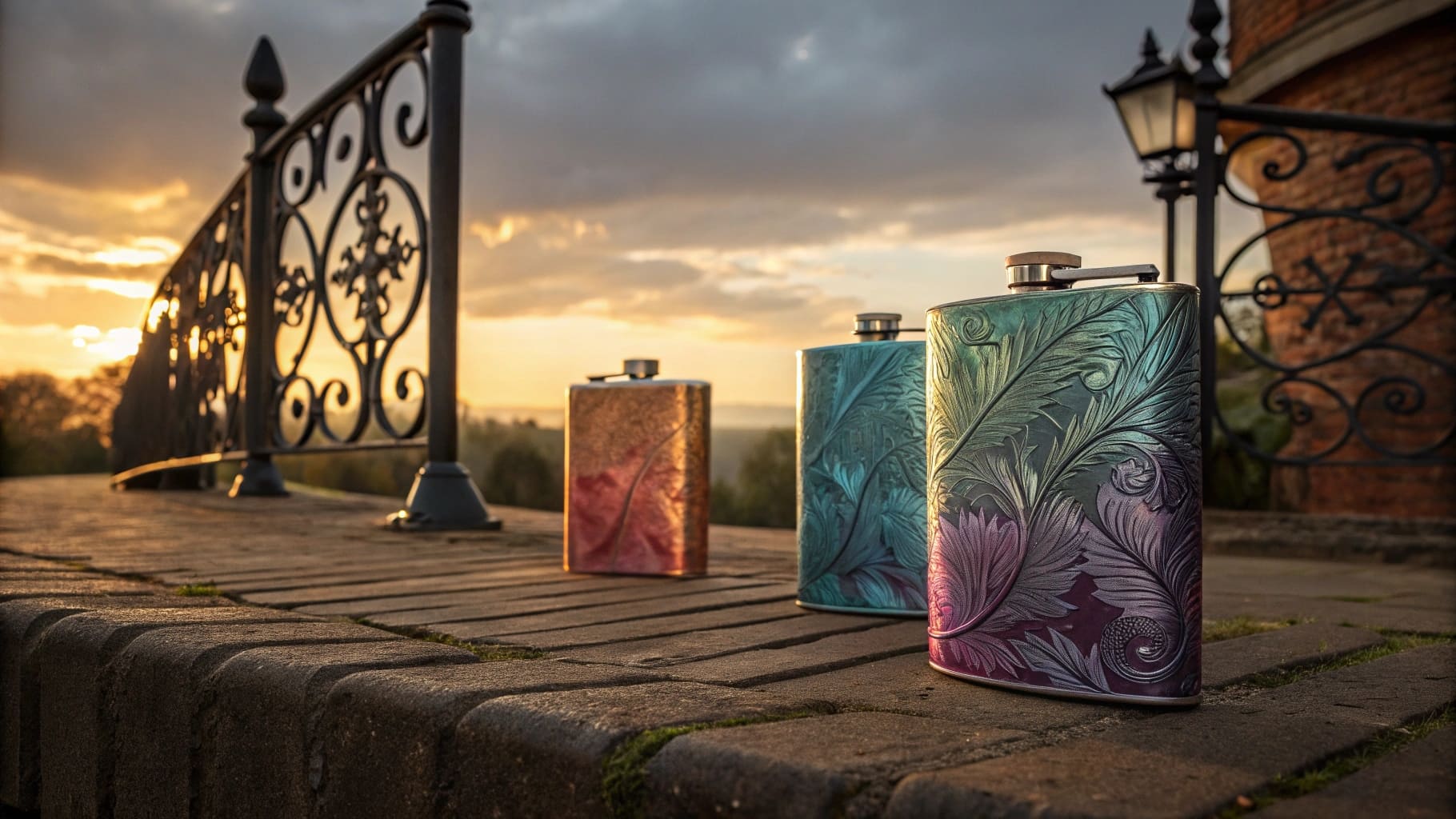
I do not see a hip flask as only a small stainless steel item. I see it as a product where a small technical mistake can create a very visible customer complaint.
When I talk with B2B buyers, I often find the same problem. They understand sales channels, packaging, and price. They may not know why a cap feels loose, why one gasket seals better, or why a leak test report matters. That gap can hurt their brand.
I build hip flask projects from the user side and the factory side at the same time. The user wants a flask that feels solid, opens smoothly, and does not leak inside a pocket or bag. The buyer wants stable production, real inspection, correct certificates, and on-time shipment.
A screw-cap flask depends on three things. The cap must close with the right torque. The gasket must be soft enough to seal and hard enough to last. The leak AQL target must match the market risk. If one part fails, the full product feels cheap.
What is a hip flask used for?
Many buyers treat hip flasks as simple gifts. That is risky because the real use is personal, close to clothing, and very sensitive to leakage.
A hip flask is used to carry a small amount of spirits for short-term personal use. It is also used as a gift, outdoor accessory, wedding item, or branded promotional product. The main quality need is safe storage without leakage or flavor damage.
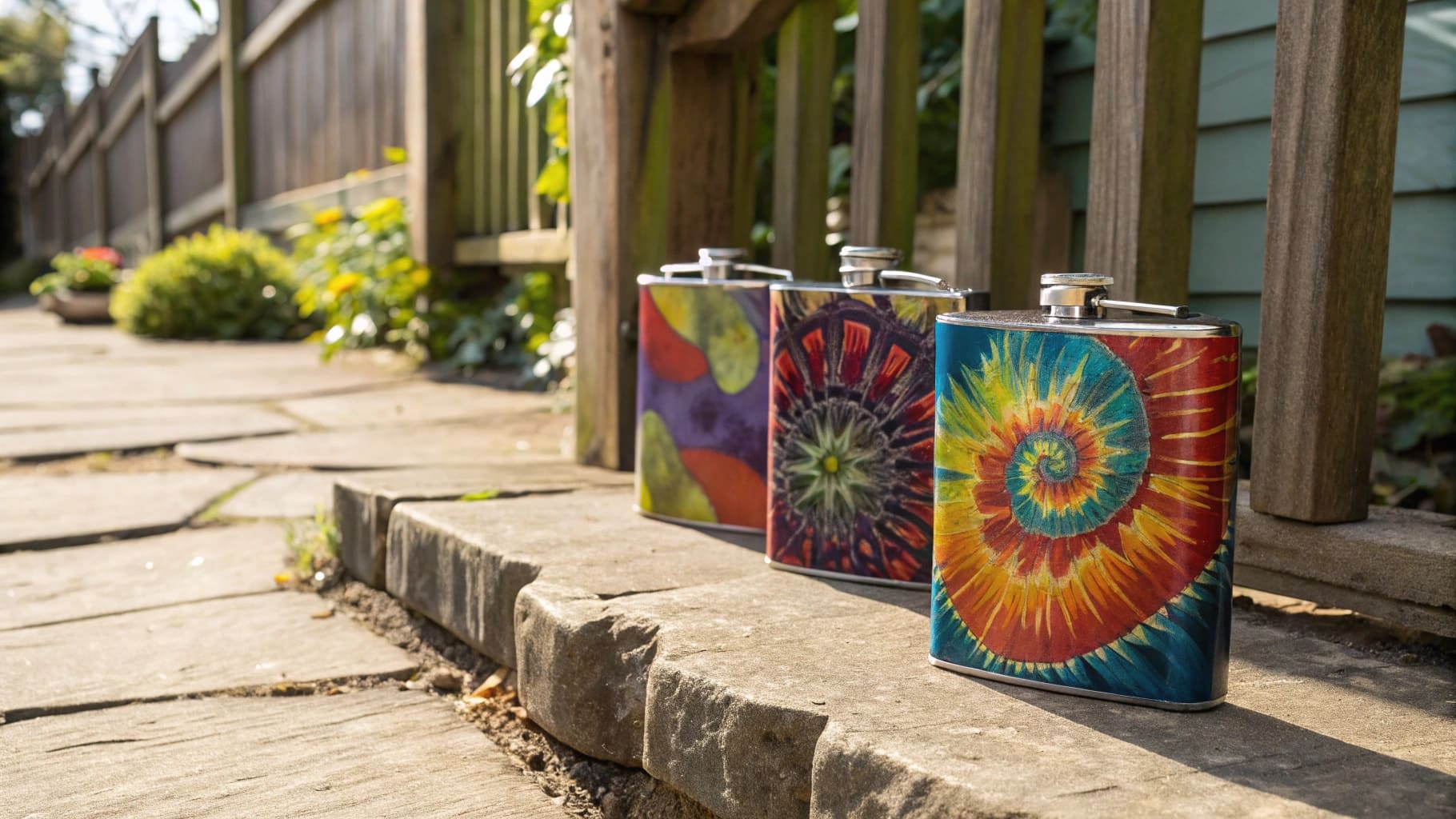
The use case decides the technical target
I always ask one basic question before I quote a hip flask. I ask where the end user will carry it. A flask used at a wedding has different pressure than a flask used on a hike. A flask sold as a premium gift has a different standard than a low-cost giveaway.
The answer changes the screw-cap design. For standard stainless steel hip flasks, I usually see cap torque around 0.8 to 1.2 N·m. This range helps the cap seal well and also protects the thread. If the torque is too low, the cap may loosen. If the torque is too high, the thread can wear faster, and the user may feel the cap is hard to open.
The gasket also follows the use case. Food-grade silicone with Shore A 40 to 60 is common. I often suggest Shore A 50 to 60 for buyers who want a more premium feel and longer sealing life.
| Use case | Main user concern | Spec choice I focus on |
|---|---|---|
| Corporate gift | Clean look and no return claims | Stable cap torque and visual inspection |
| Outdoor use | Leak risk during movement | Strong gasket compression and stricter leak test |
| Premium retail | Smooth cap feel and longer life | Better thread finish and Shore A 50 to 60 gasket |
| Low-cost promotion | Price and basic function | Simple structure with clear AQL control |
Why I do not separate design from inspection
I once handled a sample review where the flask looked good at first sight. The body polish was clean. The logo was sharp. The box was acceptable. The problem only appeared after water was filled and the flask was placed sideways. A small seepage came from the cap area.
That issue was not a packaging problem. It was a system problem. The cap thread, gasket size, gasket hardness, and closing torque did not work together. I learned that a hip flask must be checked as a sealed product, not only as a metal product.
For B2B buyers, this matters because the end user does not care which part failed. The user only sees a wet pocket, a stained bag, or a bad smell in the package. That is why I prefer to confirm torque, gasket material, and leak AQL before mass production starts.
How long can you keep drink in a hip flask?
A buyer can lose trust when a customer complains about taste change. The issue may not be the drink. It may be the material and gasket.
In a good 304 stainless steel hip flask with a food-grade silicone gasket, spirits can usually be kept for 3 to 5 days. Acidic drinks should be stored for a much shorter time, and 316 stainless steel is better when corrosion risk is higher1.
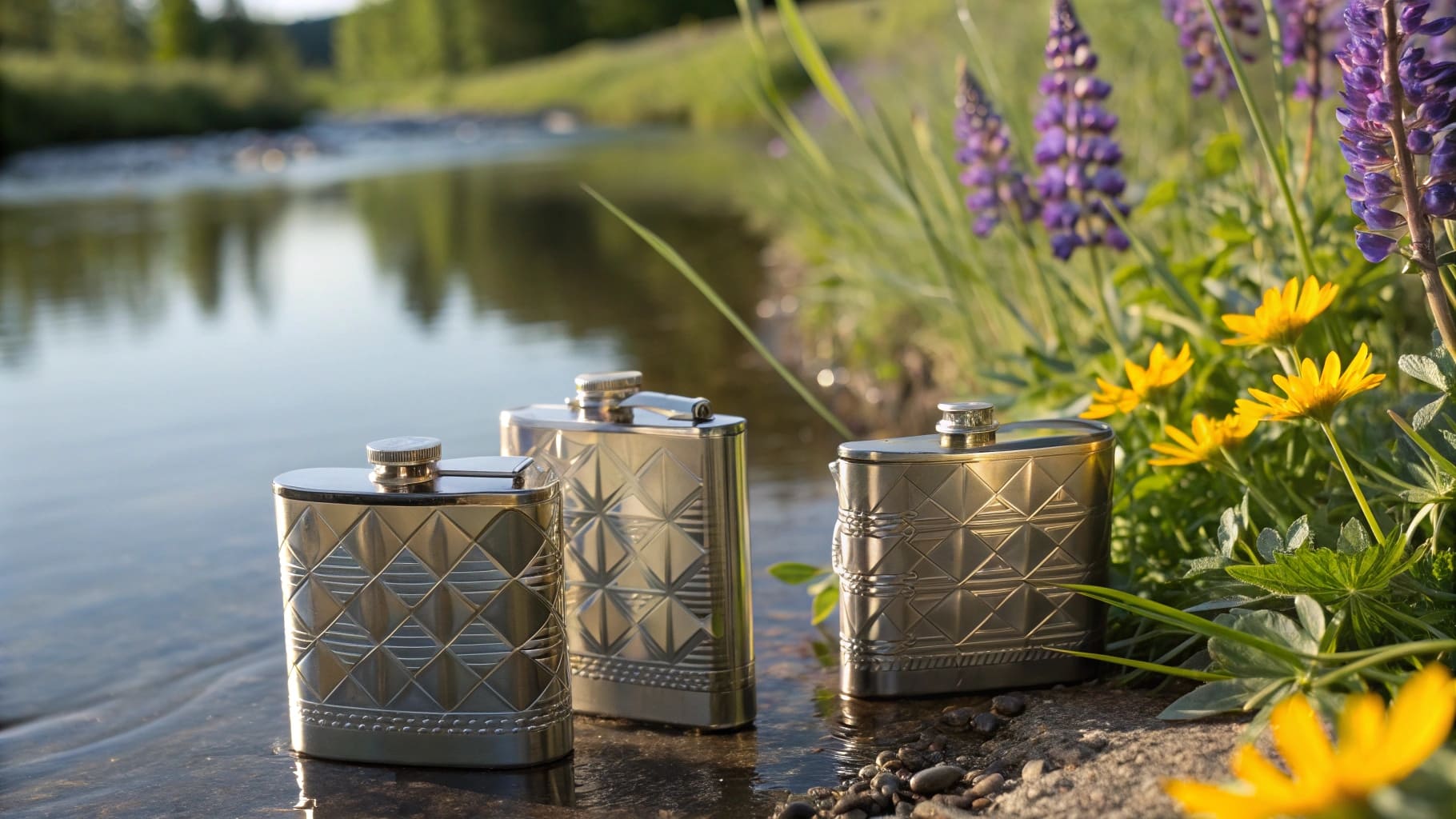
Storage time depends on material, liquid, and seal
I do not present a hip flask as long-term drink storage. I present it as a short-term carrying product. That message is safer and more honest for B2B sales. A stainless steel hip flask is not the same as a sealed bottle made for aging or long storage.
For normal spirits, 304 stainless steel is a practical choice. It has good corrosion resistance2 and works well for many mainstream markets. If the buyer targets outdoor, marine, or premium customers, 316 stainless steel can make sense. It costs more, but it gives stronger resistance in harsh conditions.
The gasket also affects storage. A weak gasket can allow air movement or leakage. A poor-quality gasket can also create odor. I prefer food-grade silicone because it has stable performance and clean contact with the drink3.
| Beverage type | Material I prefer | Suggested storage message | Key risk |
|---|---|---|---|
| Whisky or brandy | 304 stainless steel | Short-term use for 3 to 5 days | Flavor change after long storage |
| Vodka or similar spirits | 304 stainless steel | Short-term use for 3 to 5 days | Cap leakage if gasket is weak |
| Citrus cocktail | 316 stainless steel | Use within 24 hours | Acid attack and taste change |
| Wine or acidic drink | 316 stainless steel | Use within 24 hours | Corrosion risk and odor |
Why gasket durometer affects real storage quality
Gasket durometer sounds like a small factory detail. I see it as a direct part of the user experience. If the gasket is too soft, it may deform too much. The cap may feel tight at first, but the gasket can lose shape after repeated use. If the gasket is too hard, it may not compress enough. The flask can leak even when the cap looks closed.
Shore A 40 to 60 is a common working range for silicone gaskets4. I often use the middle or upper part of this range when a buyer wants fewer complaints. A gasket around Shore A 50 to 60 can keep better shape after many open-close cycles5. It can also support a more stable seal when the user carries the flask in a pocket or bag.
I also ask buyers to avoid overpromising storage time. A clear product insert can reduce disputes. The insert can say that the flask is for short-term carrying of spirits, not for long-term storage. That simple sentence can protect the brand.
Can I carry a flask in public?
A customer may think a leak-proof flask is enough. That is not always true because public carrying rules can change by city, event, and country.
You may carry a flask in public in some places, but public alcohol use is often restricted. Local rules matter. For B2B buyers, the safer product focus is discreet design, strong leak prevention, and clear user guidance on lawful use.
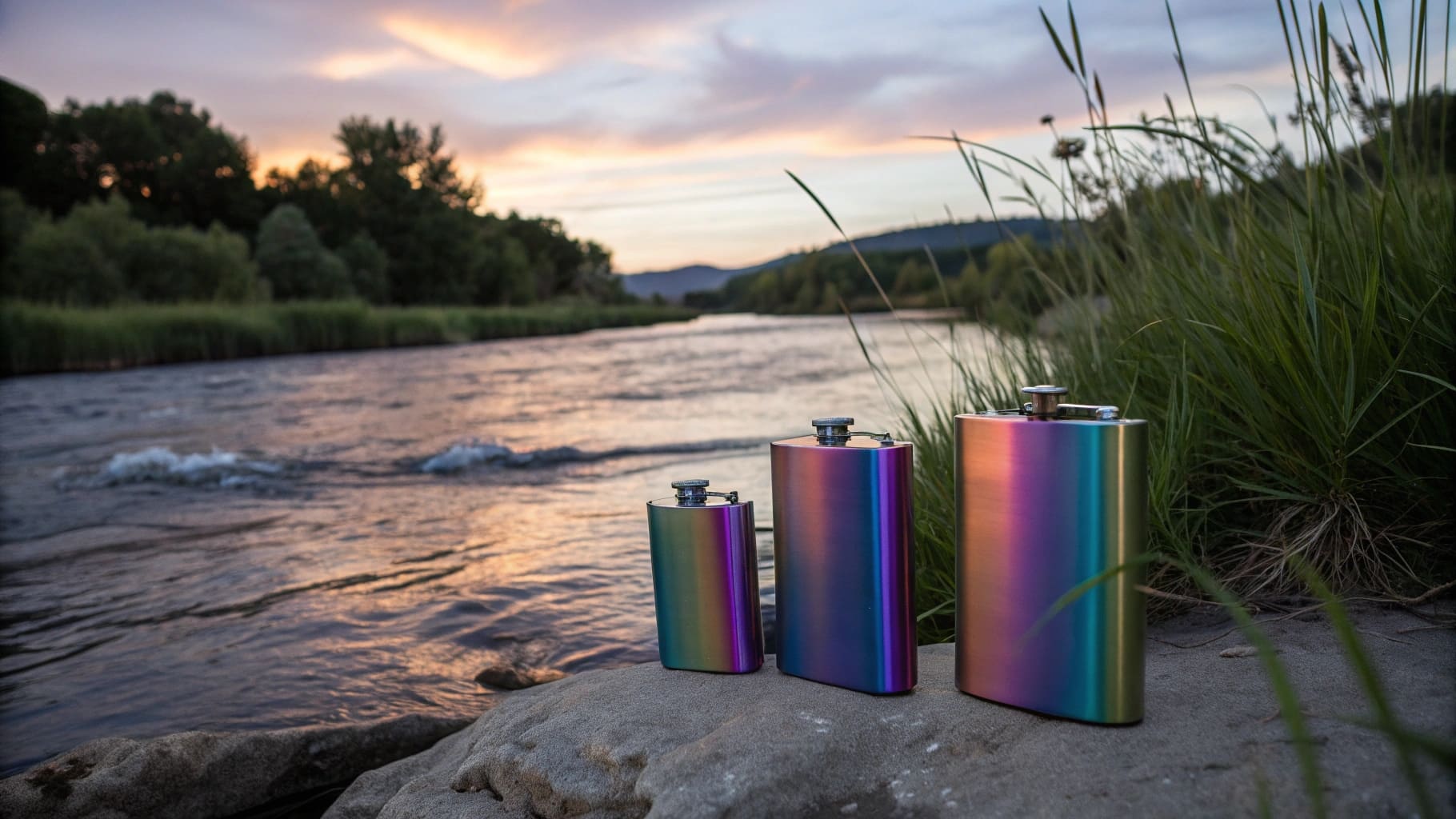
Public use changes the risk level
I am not a lawyer, and I do not give legal advice to buyers. I still care about public use because it changes product expectations. A person who carries a flask outside may put it in a coat pocket, handbag, backpack, or car storage area. This creates movement, pressure, and temperature change.
That is why I connect public use with leak AQL. For Europe and North America, I prefer AQL 0.65 or stricter for leak testing when the buyer positions the product as premium. A small leak can damage clothing or personal items. It can also create a brand problem on social media or in product reviews.
A discreet flask also needs good finishing. Sharp edges, rough caps, and poor welding can make the product feel unsafe. The user may not know the technical reason, but the user can feel the difference in the hand.
| Public carrying concern | Product decision I suggest | Buyer benefit |
|---|---|---|
| Pocket leakage | Stricter leak AQL and cap torque control | Fewer returns and fewer complaints |
| Bag damage | Better gasket compression test | Stronger user confidence |
| Public attention | Clean shape and simple logo placement | Better fit for regulated markets |
| Safety feel | Smooth edge and clean weld inspection | Higher perceived quality |
Why certificates and inspection must be real
I have seen buyers worry about certificate fraud, and I understand that concern. A document alone does not stop leakage. A real control process must support the document. For stainless steel hip flasks, I prefer to check material grade, food-contact compliance, gasket material, and production inspection together.
A buyer may ask for 304 stainless steel, but the factory still needs to control the parts that touch the liquid. The cap liner, gasket, inner surface, and welding area all matter. If one supplier uses a low-grade gasket, the flask can fail even when the body is correct.
I also care about logistics timing. Hip flasks often sell well before holidays, weddings, and outdoor seasons. A delayed shipment can make a good product useless because the sales window is gone. I prefer to confirm inspection points before production and not after the goods are packed. This helps the buyer avoid slow communication, late corrections, and last-minute air freight.
For payment, I also like clear milestones. A sample approval, pre-production confirmation, mid-production check, and final random inspection can reduce risk. This process may feel slower at the start, but it saves time when the order becomes larger.
How I set a practical screw-cap flask quality plan
I use a simple plan when I discuss screw-cap hip flasks with wholesale buyers. I do not only ask for target price. I ask for the market, the brand level, the packaging method, the inspection standard, and the shipment deadline.
The cap torque target should be written in the product specification. The gasket durometer should also be written there. The leak test method and AQL target should be confirmed before mass production. These points should not stay only in chat messages. They should appear in the order file and inspection checklist.
| Control item | Practical target | Why I include it |
|---|---|---|
| Cap torque | Around 0.8 to 1.2 N·m for standard models | It balances seal strength and thread life |
| Gasket hardness | Shore A 40 to 60 silicone | It balances softness and durability |
| Leak AQL | AQL 0.65 or stricter for premium markets | It lowers return risk |
| Material grade | 304 or 316 stainless steel | It matches market use and corrosion needs |
| Final inspection | Filled, closed, tilted, and checked | It tests the real user condition |
I also remind buyers that a cheaper flask is not always cheaper in the full business. If leakage creates returns, the buyer pays again through customer service, replacement shipping, lost reviews, and lower reorder rates. A stable flask protects margin after the sale.
Conclusion
I treat screw-cap hip flasks as sealed systems. Torque, gasket hardness, and leak AQL decide quality, user trust, and long-term B2B success.
-
"Study of the Corrosion Behavior of Stainless Steel in Food Industry", https://pmc.ncbi.nlm.nih.gov/articles/PMC11012613/. The addition of 2–3% molybdenum in AISI 316 stainless steel is documented by materials institutes such as the British Stainless Steel Association (BSSA) and ASM International as the primary factor conferring improved pitting and crevice corrosion resistance relative to AISI 304, particularly in acidic or chloride-rich media. Evidence role: mechanism; source type: institution. Supports: Superior corrosion resistance of 316 stainless steel over 304 in acidic or chloride-containing environments. ↩
-
"SAE 304 stainless steel", https://en.wikipedia.org/wiki/SAE_304_stainless_steel. AISI 304 (EN 1.4301) stainless steel, containing approximately 18% chromium and 8% nickel, is classified by ASM International and the Euro Inox association as a general-purpose austenitic grade with a passive chromium-oxide layer that provides corrosion resistance in most food and beverage environments under normal use conditions. Evidence role: general_support; source type: institution. Supports: Corrosion resistance characteristics of 304 stainless steel in food and beverage contact applications. ↩
-
"Inventory of Food Contact Substances Listed in 21 CFR", https://hfpappexternal.fda.gov/scripts/fdcc/index.cfm?search=silicone&set=IndirectAdditives. The U.S. FDA lists silicone polymers as generally recognised as safe (GRAS) for food-contact use under 21 CFR Part 177.2600; EU Regulation 10/2011 on plastic materials and articles intended to contact food similarly addresses silicone-based materials, including their use in contact with alcohol-containing foods. Evidence role: general_support; source type: government. Supports: Regulatory approval of food-grade silicone for contact with alcoholic beverages. Scope note: Regulatory compliance depends on the specific silicone compound and additives used; the general approval of silicone does not automatically extend to all commercial gasket formulations without supplier-level compliance documentation. ↩
-
"Shore durometer", https://en.wikipedia.org/wiki/Shore_durometer. ASTM D2240 defines the Shore A durometer scale for measuring indentation hardness of rubber and elastomers; a Shore A value of 40–60 falls within the medium-soft segment of the scale, which materials references describe as typical for sealing and gasketing applications requiring a balance of compressibility and shape retention. Evidence role: definition; source type: research. Supports: Definition of the Shore A durometer scale and the placement of the 40–60 range within it. Scope note: ASTM D2240 defines measurement methodology rather than prescribing hardness targets for specific sealing applications; the 40–60 range for hip-flask gaskets reflects industry convention rather than a mandated specification in the standard. ↩
-
"Compression Set - an overview", https://www.sciencedirect.com/topics/engineering/compression-set. ASTM D395 and ISO 815 define compression-set testing for elastomers; materials science literature documents that higher-durometer silicone formulations generally exhibit lower compression set percentages after cyclic loading, meaning they recover more of their original thickness and maintain sealing force over time. Evidence role: mechanism; source type: research. Supports: Relationship between Shore A hardness and compression-set performance in silicone elastomers. Scope note: Compression-set behaviour depends significantly on formulation, temperature, and compression percentage, not solely on Shore A hardness; generalised claims must be qualified by specific compound testing data. ↩