
Are Insulated Coffee Mugs With Handles Dishwasher-Safe Under Retail Tests?
You source a batch of insulated mugs. The supplier says "dishwasher-safe." Your retail partner runs a test. The results are not what you expected.
Most insulated coffee mugs with handles are not fully dishwasher-safe under real retail test conditions. The vacuum seal that keeps drinks hot is the same part that gets damaged by dishwasher heat and pressure cycles1. Hand-washing almost always gives a longer product lifespan.
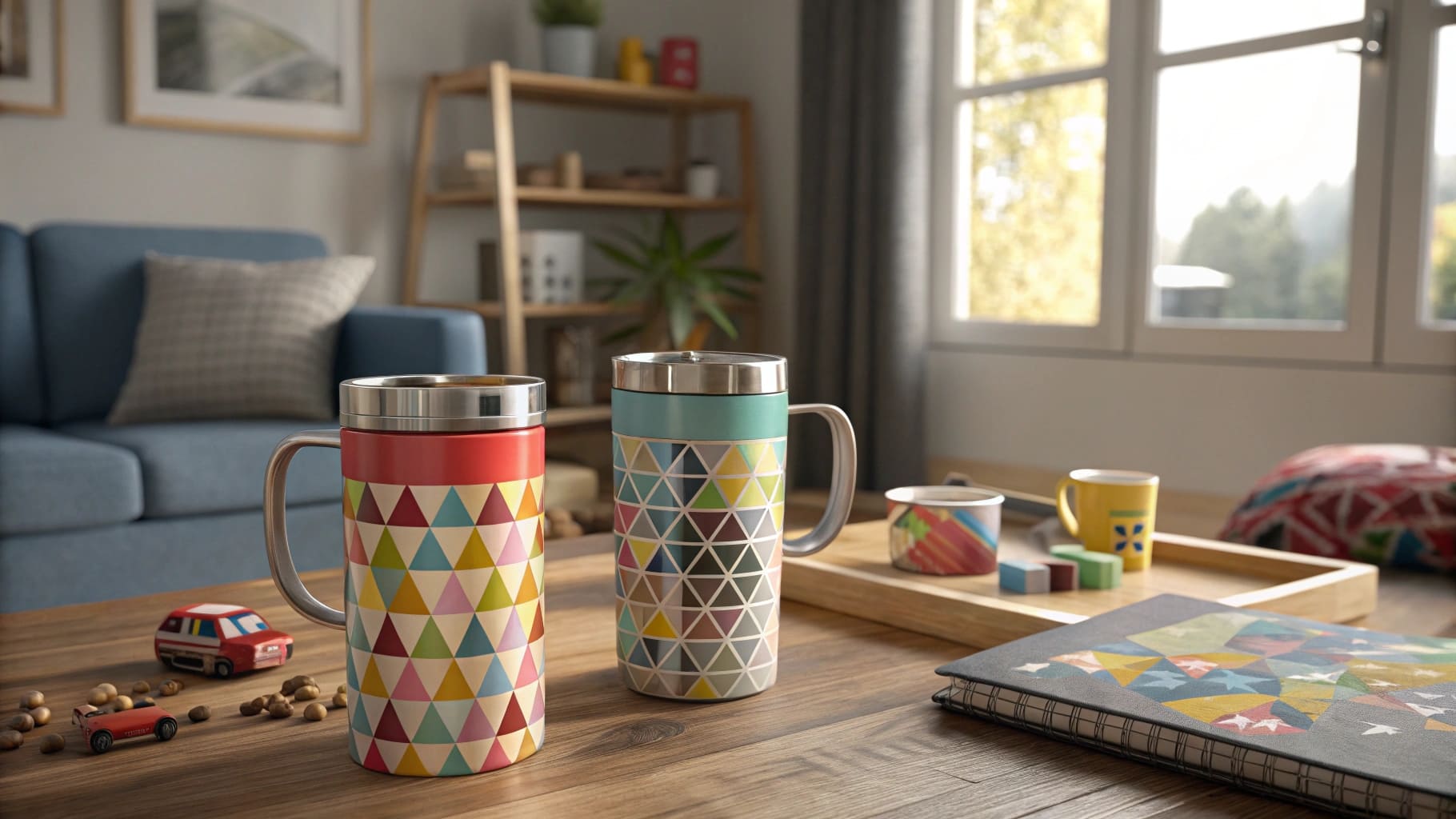
I have seen this situation many times. A buyer places a large order, the product launches well, and then the return requests start coming in. Customers say the mug stopped keeping drinks warm after a few months. The culprit is almost always the dishwasher. This issue matters more than most buyers realize, and it starts long before the product reaches the shelf.
Are Stainless Steel Coffee Mugs Non-Toxic?
You want to sell a product that is safe. But you also need proof. Without proof, your retail partner will not take the risk.
High-grade stainless steel coffee mugs made with 304 or 316 stainless steel are non-toxic and food-safe. These materials do not rust easily and do not release harmful chemicals into drinks. This makes stainless steel one of the safest choices for coffee mugs on the market today.

The grade of stainless steel used in a mug makes a real difference. Not all steel is the same, and this is where many buyers get into trouble.
What Do the Steel Grades Actually Mean?
Here is a simple breakdown of the two most common grades used in coffee mugs:
| Steel Grade | Nickel Content | Best Use Case | Corrosion Resistance |
|---|---|---|---|
| 304 (18/8) | 8% | Standard food and drink use | High |
| 316 (18/10) | 10–14% | High-acid drinks, saltwater exposure | Very High |
304 steel is the most widely used grade in coffee mugs. It handles most daily drinks without any problem. 316 steel offers even stronger protection against acid and salt2, which makes it a better fit for buyers who want to position their product at a premium level.
Beyond the grade, you also need to look at the inner coating. Some low-cost mugs use a painted or coated interior that looks like steel but is not. These coatings can chip over time and may not meet food-safety standards3 in markets like the US, Canada, or the EU.
When I source mugs for buyers in North America, I always ask for the material certification first. A supplier who cannot show you a clear material test report is a supplier you should treat with caution. The certification is not just a formality. It is the basic evidence that the steel is what the supplier says it is.
For retail markets in Canada and the US, food-contact certifications such as FDA compliance and LFGB testing are the standard4. If your supplier cannot provide these, the product should not go on a retail shelf.
What Is the Safest Cup to Drink Coffee From?
There are many cup types on the market. Ceramic, glass, plastic, and stainless steel all have supporters. But which one is actually the safest?
Stainless steel cups made from 304 or 316 grade steel are among the safest options for drinking coffee. They do not release chemicals into hot drinks, they do not crack or chip, and they are easy to clean. This is why stainless steel dominates the premium mug market.
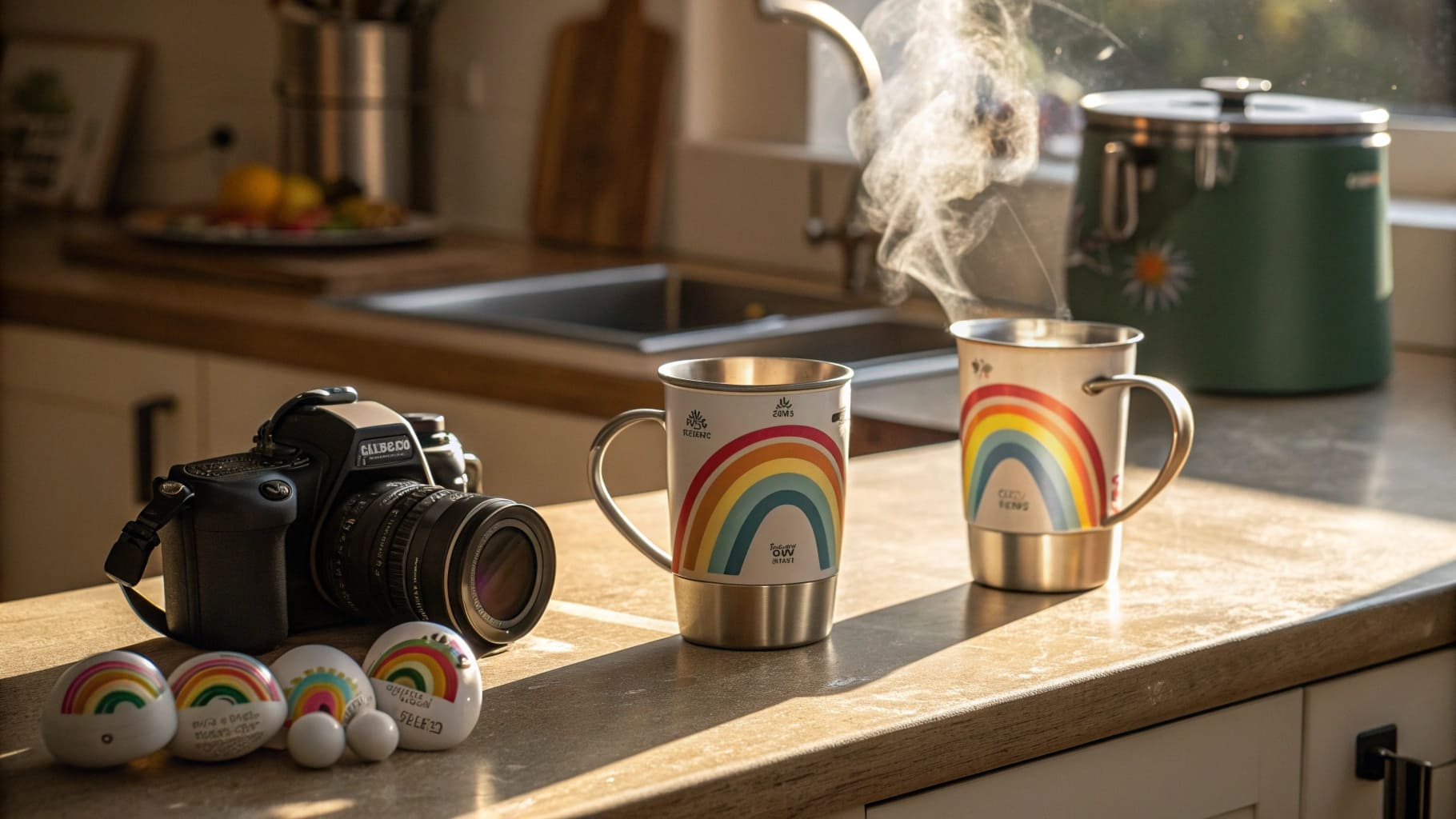
Safety is not just about the material inside the cup. It is also about what happens to the cup over time under normal use conditions.
How Do Common Cup Materials Compare?
| Cup Material | Chemical Leaching Risk | Durability | Heat Safety | Best For |
|---|---|---|---|---|
| 304 Stainless Steel | Very Low | Very High | Yes | Daily hot drinks |
| 316 Stainless Steel | Extremely Low | Very High | Yes | Premium retail, acidic drinks |
| Ceramic | Low (uncoated) | Medium | Yes | Home use |
| Borosilicate Glass | Very Low | Low | Yes | Visual appeal |
| BPA-Free Plastic | Low to Medium | Medium | No | Cold drinks only |
Plastic cups, even BPA-free ones, can release small amounts of chemicals when exposed to hot liquids5. This risk goes up with repeated heat and dishwasher cycles. Glass is safe but breaks easily. Ceramic is a good option at home, but it is heavy and not well-suited for travel or bulk retail.
Stainless steel holds up the best across all conditions. It handles heat, it resists corrosion, and it does not change the taste of the drink. For a buyer who needs a product that works well in a wide range of retail settings, stainless steel is the most practical and the most defensible choice.
One thing I always tell buyers is this: the safest cup is also the cup your end customer will actually use every day. Stainless steel wins on that front too. It is light enough to carry, tough enough to survive a bag or a car holder, and it looks clean and professional on any shelf.
Why Shouldn't You Put Insulated Mugs in the Dishwasher?
You have seen the label. It says "top-rack dishwasher-safe." Your retail partner ran a cycle test. After ten washes, the mug no longer keeps coffee hot. Now you have a problem.
Insulated mugs should not go in the dishwasher because the high heat and water pressure can break the vacuum seal between the double walls. Once that seal is gone, the mug loses its insulation. The product stops doing the one thing it is supposed to do.

This is the most common complaint I hear from buyers after a product launch. The mug looked fine. The first few uses were great. Then the dishwasher got to it.
What Actually Happens Inside the Mug During a Dishwasher Cycle?
A double-wall vacuum mug works because there is no air between the two steel walls. That empty space stops heat from moving in or out.6 This is the vacuum. It is what keeps your coffee hot for hours.
A dishwasher cycle uses very hot water, high-pressure spray, and heated drying. These three things attack the mug in different ways.
| Dishwasher Element | Effect on the Mug | Result |
|---|---|---|
| High water temperature | Expands metal walls unevenly | Stresses the vacuum seal |
| High-pressure water jets | Forces water into small gaps | Water enters the wall cavity |
| Heated drying cycle | Creates rapid temperature change | Weakens solder and weld joints |
| Detergent chemicals | Degrades surface coatings | Handle adhesives and coatings wear down |
Once water gets into the space between the walls, the vacuum is broken. No vacuum means no insulation. The mug becomes a regular single-wall steel cup. It still holds liquid, but it will not keep anything hot or cold.
Handles are another weak point. Welded handles can usually survive a few dishwasher cycles, but handles attached with adhesive or sealed with silicone rings will loosen over time. This creates a safety risk and a return-rate problem for your retail partner.
The best approach is clear and honest care labeling. Hand-wash only is the safest instruction for any double-wall vacuum mug. If a supplier tells you their mug is fully dishwasher-safe with no limitations, ask for the test data. Ask how many cycles were tested. Ask what temperature and pressure settings were used. A supplier who has actually done the work will be able to answer those questions clearly and quickly.
Conclusion
Stainless steel mugs are non-toxic and durable, but dishwashers damage their vacuum seals. Know the material grade, get the certifications, and always recommend hand-washing to protect your product.
-
"Why do all of my insulated cups say 'hand wash only' or 'not ... - Quora", https://www.quora.com/Why-do-all-of-my-insulated-cups-say-hand-wash-only-or-not-dishwasher-safe-What-will-happen-if-I-run-them-thru-the-dishwasher. Research on thermal cycling fatigue in welded stainless steel assemblies supports the claim that repeated exposure to high-temperature water and rapid drying cycles induces stress at sealed joints, potentially compromising vacuum integrity in double-wall containers. Evidence role: mechanism; source type: paper. Supports: That repeated dishwasher cycles compromise the vacuum integrity of double-wall insulated containers through thermal expansion and pressure stress. Scope note: Direct peer-reviewed studies specifically on consumer mug vacuum seal failure from dishwashers are limited; supporting evidence is typically drawn from broader materials science literature on thermal fatigue in welded steel. ↩
-
"Deciding on the Best Material – 304 vs. 316 Stainless Steel - Polycase", https://www.polycase.com/techtalk/steel-enclosures/304-vs-316-stainless-steel.html. Materials science references, including ASTM and ASM International documentation, attribute the enhanced corrosion resistance of AISI 316 over 304 to the addition of 2–3% molybdenum, which improves resistance to pitting in chloride and acidic environments. Evidence role: mechanism; source type: institution. Supports: That 316 stainless steel offers greater resistance to pitting and crevice corrosion in acidic and chloride-containing environments compared to 304, due to its molybdenum content. ↩
-
"Regulatory Status of Components of a Food Contact Material - FDA", https://www.fda.gov/food/packaging-food-contact-substances-fcs/determining-regulatory-status-components-food-contact-material. EU Regulation (EC) No 1935/2004 on materials and articles intended to contact food requires that coatings used on food-contact surfaces do not transfer constituents to food in quantities that could endanger human health; similar requirements exist under FDA 21 CFR for coatings used in food-contact applications in the United States. Evidence role: general_support; source type: government. Supports: That food-contact coatings and paints applied to the interior of drinkware must comply with specific migration and safety standards in the US and EU, and that non-compliant coatings may release substances into food or beverages. Scope note: The article's claim that low-cost coatings 'may not meet' these standards is plausible but is a general risk statement; documented enforcement cases or specific test data would provide stronger direct support. ↩
-
"Regulatory Status of Components of a Food Contact Material - FDA", https://www.fda.gov/food/packaging-food-contact-substances-fcs/determining-regulatory-status-components-food-contact-material. The U.S. Food and Drug Administration regulates food-contact substances under 21 CFR Parts 170–199, while the German LFGB (Lebensmittel- und Futtermittelgesetzbuch) provides a widely referenced framework for food-contact material safety testing used in EU and export contexts. Evidence role: definition; source type: government. Supports: That FDA regulations under 21 CFR govern food-contact materials in the US, and that LFGB (German Food and Feed Code) testing is a recognized standard for food-contact safety in European and export markets. Scope note: LFGB is a German national law often used as a proxy for EU food-contact safety; it is not itself an EU-wide certification, and its applicability to Canadian retail markets is indirect. ↩
-
"Bisphenol A release from food and beverage containers – A review", https://pmc.ncbi.nlm.nih.gov/articles/PMC10345686/. Peer-reviewed studies, including research published in Environmental Health Perspectives, have identified chemical migration from BPA-free plastics into food and beverages, particularly under elevated temperature conditions, suggesting that BPA-free labeling does not guarantee the absence of all potentially bioactive leachates. Evidence role: expert_consensus; source type: paper. Supports: That plastics marketed as BPA-free may still leach endocrine-active or other chemicals into hot liquids, as BPA substitutes such as BPS and BPF have been detected in migration studies. Scope note: The health significance of detected leachate concentrations from BPA-free plastics under normal use conditions remains an active area of research, and regulatory bodies have not uniformly classified these substitutes as hazardous. ↩
-
"Vacuum Flask - HyperPhysics", http://hyperphysics.phy-astr.gsu.edu/hbase/thermo/vacfla.html. The thermodynamic principle underlying double-wall vacuum insulation—as described in physics references including the Encyclopedia Britannica entry on the Dewar flask—holds that removing gas from the inter-wall space suppresses both conductive and convective heat transfer, substantially reducing thermal exchange between the container interior and exterior. Evidence role: mechanism; source type: encyclopedia. Supports: That a vacuum between two walls reduces heat transfer by eliminating the medium through which conduction and convection occur, a principle underlying the Dewar flask and modern vacuum-insulated containers. ↩