
Which Markets Favor 304 vs 316 Hip Flasks in 2026, and Why for Wholesalers?
If you source hip flasks and ship them to the wrong market with the wrong steel grade, you lose deals. Margins drop. Buyers stop calling back.
304 and 316 stainless steel hip flasks serve different markets for specific reasons. 304 fits budget-driven markets like Southeast Asia and Latin America1, where price matters most. 316 fits premium markets like North America and Europe2, where buyers want better corrosion resistance for storing acidic spirits over long periods.
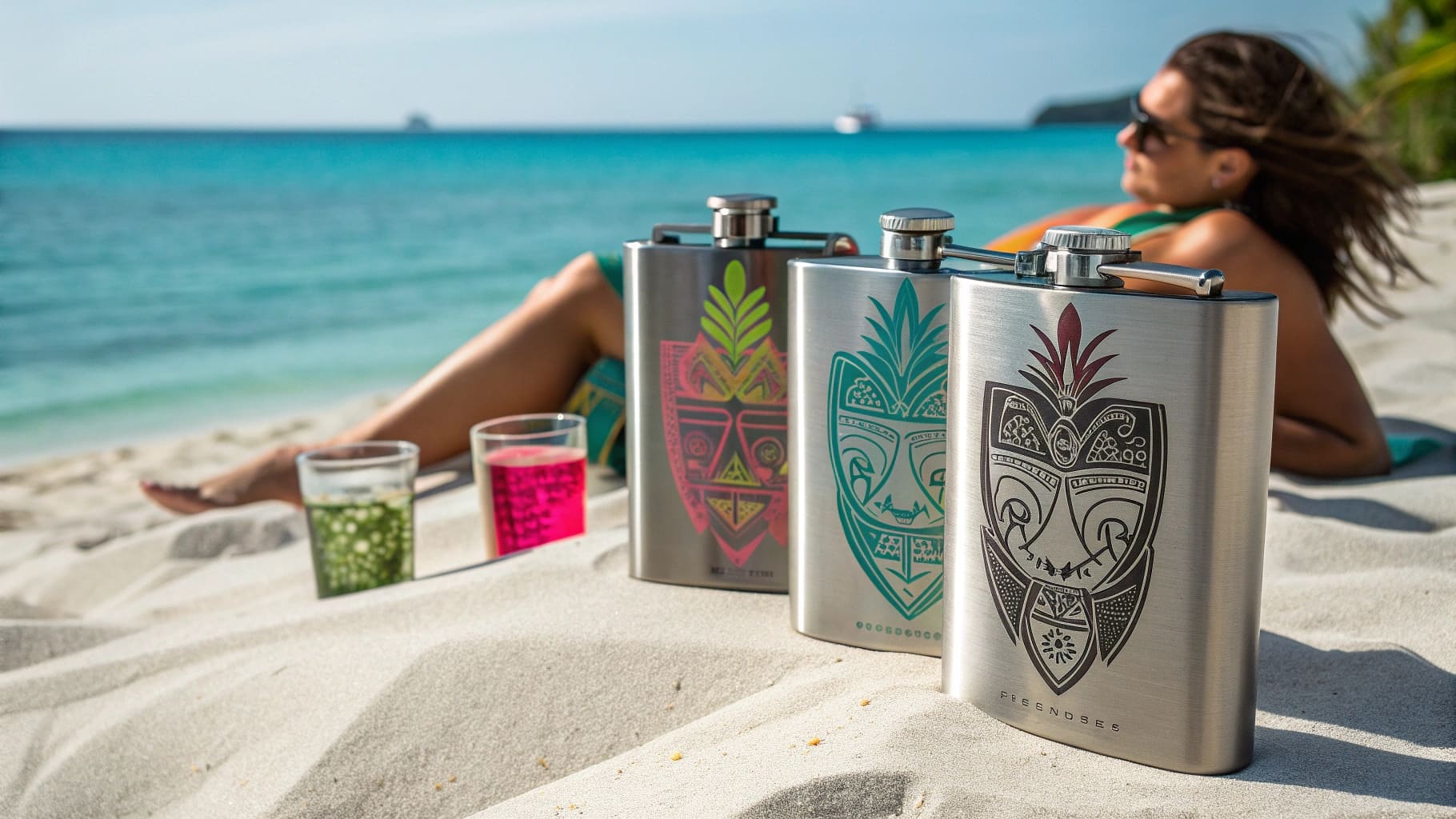
I have worked with wholesale buyers from North America and Europe for years. One thing I keep seeing is this: buyers who understand material grades close deals faster. Buyers who do not understand them lose time and money arguing over specs they never bothered to learn. This post is for wholesalers who want to stop guessing and start making smarter sourcing decisions based on where their products actually sell.
Which Stainless Steel Is Used the Most in the Sheet Metal Industry?
Most wholesalers assume that whatever steel dominates the sheet metal industry is also the best choice for hip flasks. That assumption costs them money.
304 stainless steel is the most used grade in the sheet metal industry.3 It offers strong formability, good weld performance, and a lower price point than 316. It works well for structural parts, kitchen equipment, and industrial enclosures where liquid contact is limited or short-term.

304 is the default choice in sheet metal fabrication because it handles most general-purpose needs without adding material cost. But hip flasks are not general-purpose products. They hold alcohol, sometimes for days or weeks at a time. That changes everything.
Here is why the sheet metal standard does not apply cleanly to hip flask sourcing:
| Factor | Sheet Metal Industry | Hip Flask Application |
|---|---|---|
| Primary concern | Formability and weld strength | Corrosion resistance in liquid contact |
| Liquid exposure | Rare or short-term | Regular, often long-term |
| Chemical contact | Low | High (acids from spirits, flavored liquors) |
| Grade preference | 304 dominates | Depends on target market |
| Price sensitivity | Very high | Moderate to low in premium segments |
The sheet metal industry uses 304 because it solves a different problem. When you source hip flasks, you need to ask a different question: where is this flask going, and what will it hold?
In markets like Canada and Western Europe, consumers store whiskey, bourbon, or flavored spirits in their flasks for extended periods. The acidity level of those liquids is high enough that 304 can show wear over time. 316 stainless steel contains molybdenum, which adds resistance to chlorides and acids.4 For a product that sits in a coat pocket filled with single malt scotch, that difference matters to a premium buyer.
For promotional markets, gifting programs, or low-cost retail, 304 still wins on price. A procurement officer buying 5,000 units for a corporate event is not thinking about long-term corrosion resistance. He is thinking about unit cost and delivery date. In that context, 304 is the correct sourcing decision.
The sheet metal data point is useful background. But do not let it drive your material selection. Let your target market and product positioning drive that decision instead.
Is Stainless Steel or Pewter Better for Hip Flasks?
Pewter flasks look classic. They have a long history. But if you are sourcing hip flasks for wholesale distribution today, pewter is a risk you do not need to take.
Stainless steel is the better choice for hip flasks in modern wholesale markets. It does not contain lead, it is dishwasher-safe, and it meets food-contact regulations in the US and EU. Stainless steel now holds over 80% of the hip flask market5, replacing pewter as the dominant material.

The shift from pewter to stainless steel did not happen by accident. It happened because of health concerns, regulatory pressure, and a shift in what consumers expect from a product they put to their lips.
Traditional pewter alloys contained lead. Lead is toxic. Even modern lead-free pewter blends often include antimony or bismuth, which raise questions in markets with strict food-contact material standards. The EU's food safety framework and the US FDA both place tight controls on materials that come into contact with beverages6. Pewter is harder to certify and easier to fail during customs inspection.
Here is a direct comparison:
| Feature | Pewter | Stainless Steel (304/316) |
|---|---|---|
| Lead content | Risk in older alloys | None |
| Food-contact certification | Difficult to obtain | Straightforward (FDA, EU compliant) |
| Dishwasher safe | No | Yes |
| Corrosion resistance | Low | High |
| Consumer perception | Traditional, niche | Modern, hygienic |
| Wholesale market share | Under 20% | Over 80% |
| Price per unit | Higher craft cost | Scalable at lower cost |
From a wholesale perspective, pewter makes sense only for a very specific niche: heritage gift markets or artisan retail where the buyer wants an antique aesthetic and is willing to accept limited regulatory reach. That is a small niche. It is not a growth market.
Stainless steel, on the other hand, scales. You can customize it with logos, colors, and surface finishes. You can produce thousands of units with consistent quality. Your buyers in Canada, the US, and Germany can put your product on a shelf without worrying about import restrictions or safety recalls.
I once had a buyer ask me about pewter flasks for a Canadian retail client. After I walked him through the certification challenges and the shrinking consumer demand for pewter, he moved the entire order to 304 stainless. It was a cleaner deal for everyone.
What Industry Uses Stainless Steel the Most?
Knowing who consumes the most stainless steel tells you something important about pricing cycles and material availability. For a hip flask wholesaler, that context is useful.
The automotive and construction industries are the largest consumers of stainless steel globally.7 Together, they drive demand, influence raw material prices, and shape production schedules at major steel mills. The drinkware segment is smaller by volume but shows faster growth than either of those sectors.

Here is how stainless steel consumption breaks down across major industries:
| Industry | Primary Steel Grade | Main Use Case | Relevance to Hip Flasks |
|---|---|---|---|
| Automotive | 304, 430 | Exhaust systems, trim | Indirect — affects 304 pricing |
| Construction | 316, 2205 | Structural, coastal applications | Indirect — affects 316 pricing |
| Food processing | 316 | Tanks, pipework, surfaces | Direct — same food-contact standards |
| Medical devices | 316L | Surgical tools, implants | Indirect — validates 316 safety profile |
| Consumer drinkware | 304, 316 | Bottles, flasks, mugs | Direct — your market |
For hip flask wholesalers, the key takeaway from this breakdown is twofold.
First, 316 stainless steel has a proven safety record in food processing and medical device manufacturing. That track record matters when you are selling to buyers in regulated markets. If a procurement officer asks why you use 316 instead of 304 for your premium flask line, you can point to the same grade being used in hospital equipment and food production lines. That is a credible answer.
Second, automotive and construction industries create price pressure on raw steel. When those sectors slow down, stainless steel prices often soften. When they boom, your input costs rise. Watching those sectors gives you an early signal on when to lock in pricing with your supplier.
The drinkware segment, including hip flasks, is growing faster than the headline industries. Consumers are paying more attention to what their products are made from. A buyer who ten years ago accepted any flask now asks specifically about steel grade, wall thickness, and finish quality. That shift creates a real opportunity for wholesalers who understand their materials and can speak to them confidently.
Hip flasks are a high-margin niche inside a growing segment. Material choice is one of the clearest ways to move up the value chain, charge more per unit, and build a product line that buyers come back for.
Conclusion
Know your market, pick the right grade, and understand the material. That is the shortest path to better margins and fewer sourcing mistakes in 2026.
-
"[PDF] Latin America & the Caribbean Economic Update", https://openknowledge.worldbank.org/server/api/core/bitstreams/c9f0b7a8-197c-428d-b903-e1bfd61fca68/content. A trade or development-economics source should document relative price sensitivity, purchasing-power constraints, or import-market positioning in Southeast Asian and Latin American consumer-goods markets; this would support the market-positioning rationale but would not prove hip-flask-grade preferences directly. Evidence role: general_support; source type: institution. Supports: 304 stainless steel hip flasks are better suited to budget-driven markets such as Southeast Asia and Latin America.. Scope note: Contextual support only unless the source specifically covers hip flask or drinkware procurement by steel grade. ↩
-
"Drinkware Market Size, Industry Share, Forecast, 2034", https://www.fortunebusinessinsights.com/drinkware-market-104973. A market-research or institutional source should show that North American and European drinkware or giftware buyers place higher value on premium materials, durability, or regulatory assurance; this supports the premium-positioning context but does not by itself demonstrate that buyers specifically prefer 316 hip flasks. Evidence role: general_support; source type: institution. Supports: 316 stainless steel hip flasks are better suited to premium North American and European markets.. Scope note: Contextual support only unless the source reports stainless-steel grade preferences for flasks or comparable drinkware. ↩
-
"SAE 304 stainless steel - Wikipedia", https://en.wikipedia.org/wiki/SAE_304_stainless_steel. An industry or encyclopedia source should identify Type 304 as the most widely used austenitic stainless steel grade and a common grade for sheet and plate fabrication; this supports the article’s claim, although it may describe stainless steel use broadly rather than the sheet-metal industry alone. Evidence role: statistic; source type: institution. Supports: 304 stainless steel is the most commonly used stainless grade in sheet-metal applications.. Scope note: Some sources may state that 304 is the most widely used stainless steel generally, not specifically within sheet-metal fabrication. ↩
-
"SAE 316L stainless steel - Wikipedia", https://en.wikipedia.org/wiki/SAE_316L_stainless_steel. A materials-science reference should state that Type 316 stainless steel contains molybdenum and that molybdenum improves resistance to pitting and corrosion, especially in chloride-containing and some acidic environments; this directly supports the metallurgical mechanism. Evidence role: mechanism; source type: education. Supports: Molybdenum in 316 stainless steel improves corrosion resistance against chlorides and acids.. ↩
-
"Hip Flask Market share Revenue Forecast 2027", https://www.transparencymarketresearch.com/hip-flask-market.html. A market-research source should provide material-segmentation data showing stainless steel as the dominant hip-flask material and estimating its share at or above 80%; this would support the statistic, but estimates may vary by region, sales channel, and methodology. Evidence role: statistic; source type: other. Supports: Stainless steel accounts for more than 80% of the hip flask market.. Scope note: Market-share figures are likely to be estimates and may not be independently reproducible unless methodology is disclosed. ↩
-
"Food Packaging & Other Substances that Come in Contact with Food", https://www.fda.gov/food/food-ingredients-packaging/food-packaging-other-substances-come-contact-food-information-consumers. FDA food-contact-material guidance or regulations should show that materials intended to contact food or beverages are regulated as food-contact substances and must meet applicable safety requirements; this supports the claim about US regulatory control but does not assess any individual flask model. Evidence role: definition; source type: government. Supports: The US FDA regulates materials that come into contact with beverages.. Scope note: The source explains the regulatory framework rather than certifying a specific stainless steel or pewter product. ↩
-
"Automotive applications - worldstainless", https://worldstainless.org/applications/transport-applications/automotive-applications/. An international stainless-steel industry source should report end-use consumption shares showing construction and automotive/transport among the largest stainless steel consuming sectors globally; this supports the demand-context claim, though sector rankings may differ depending on whether transport, metal products, and industrial machinery are grouped separately. Evidence role: statistic; source type: institution. Supports: Automotive and construction are among the largest global end-use sectors for stainless steel.. Scope note: The ranking may vary by classification system and year. ↩