
Are Insulated Coffee Mugs With Handles LFGB/FDA Safe for Retail Buyers?
You source mugs to sell. One safety recall wipes out your margin and your reputation. That risk is real, and most buyers don't see it coming.
Yes, insulated coffee mugs with handles can meet LFGB and FDA standards. But the certification must cover every part of the mug, not just the main body1. Handles, lids, gaskets, and seals all carry risk. A mug is only truly safe when every single component passes the required tests.
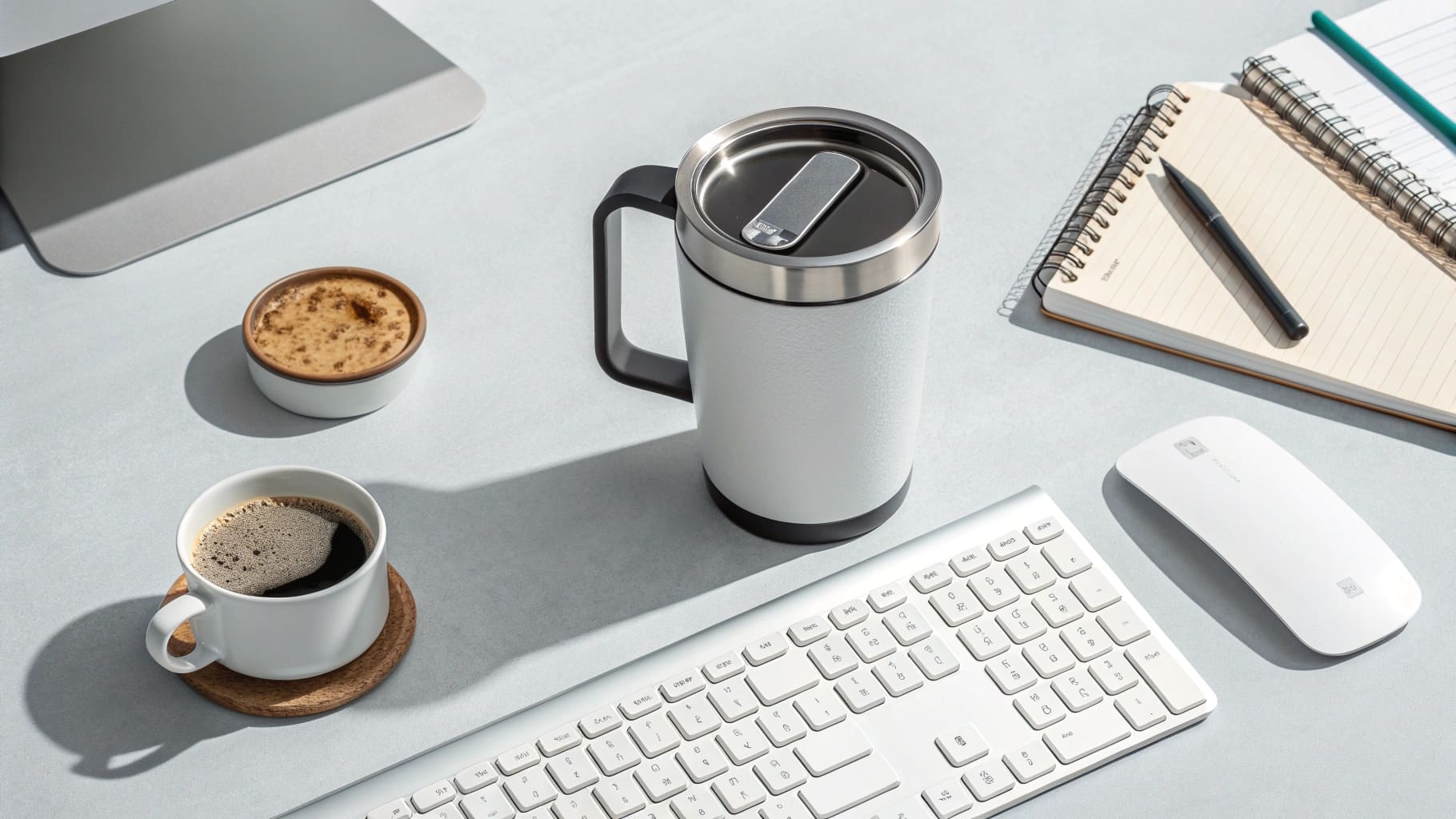
I have worked with buyers who checked the stainless steel grade and stopped there. They assumed the rest of the mug was fine. It was not. The handle material failed a migration test six months later. That experience changed how I look at certification entirely. A certificate on the outer wall means nothing if the lid is made from recycled plastic with unknown additives. This guide walks through every part of the question so you can buy with confidence.
What Is the Least Toxic Travel Mug?
Most buyers ask about steel grade. Very few ask about the lid, the seal, or the handle sleeve. That gap is where the real contamination risk hides.
The least toxic travel mug uses 304 or 316 stainless steel for the inner wall, virgin food-grade silicone for all seals and sleeves2, and PP (polypropylene) for lid components. Every material in direct or indirect contact with the beverage must be individually verified. No recycled plastics. No unknown polymer blends.
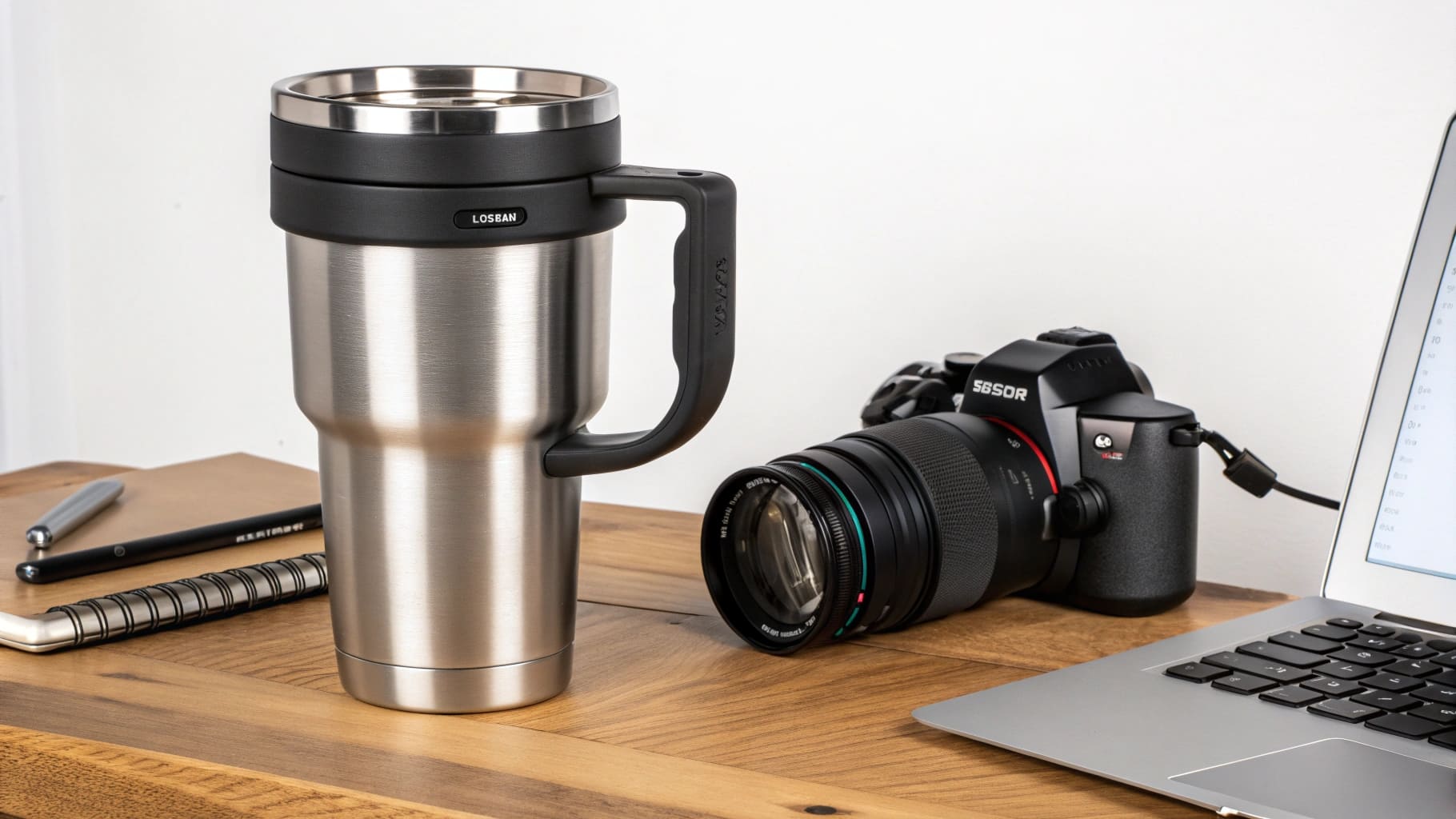
I ask every supplier I work with for a full material disclosure sheet. This document lists every component in the mug, the material used, and the test it passed. Most suppliers can provide this for the body. Far fewer can provide it for the handle attachment, the lid thread, or the gasket ring. That gap in documentation is a red flag.
Cheaper mugs often use recycled or mixed plastics in non-primary parts. These materials may pass a basic test at room temperature. The problem appears when a buyer fills the mug with liquid above 80°C. Heat accelerates migration. Substances that stay locked inside a plastic at 25°C start to move at 85°C. Hot coffee sits in that range every single morning.
The table below shows the key components and the material standards each one should meet.
| Component | Recommended Material | Key Standard |
|---|---|---|
| Inner wall | 304 or 316 stainless steel | FDA CFR / EU Reg 1935/2004 |
| Outer wall | 304 stainless steel | FDA CFR / EU Reg 1935/2004 |
| Lid body | Virgin PP or Tritan | FDA CFR 177.1520 |
| Seal / gasket | Virgin food-grade silicone | EU Reg 10/2011 |
| Handle sleeve | Virgin food-grade silicone | LFGB §31 / FDA CFR |
| Straw (if included) | Food-grade stainless steel | FDA CFR / EU Reg 1935/2004 |
316 stainless steel contains molybdenum. This makes it more resistant to corrosion from acidic drinks like coffee and juice3. For buyers selling into health-conscious markets, 316 is worth the small cost difference. For standard retail, 304 is acceptable as long as the full material sheet confirms food-grade compliance across all parts.
Why Do Some Coffee Mug Handles Get Hot?
A handle that burns the user's hand is a product failure. It also signals a deeper design flaw that affects how the whole mug performs.
Handle heat comes from direct metal contact. When a stainless steel handle connects straight to the stainless steel body, heat moves through that joint fast4. There is no barrier to slow it down. After ten minutes of hot liquid inside the mug, the handle becomes uncomfortable or even painful to hold.
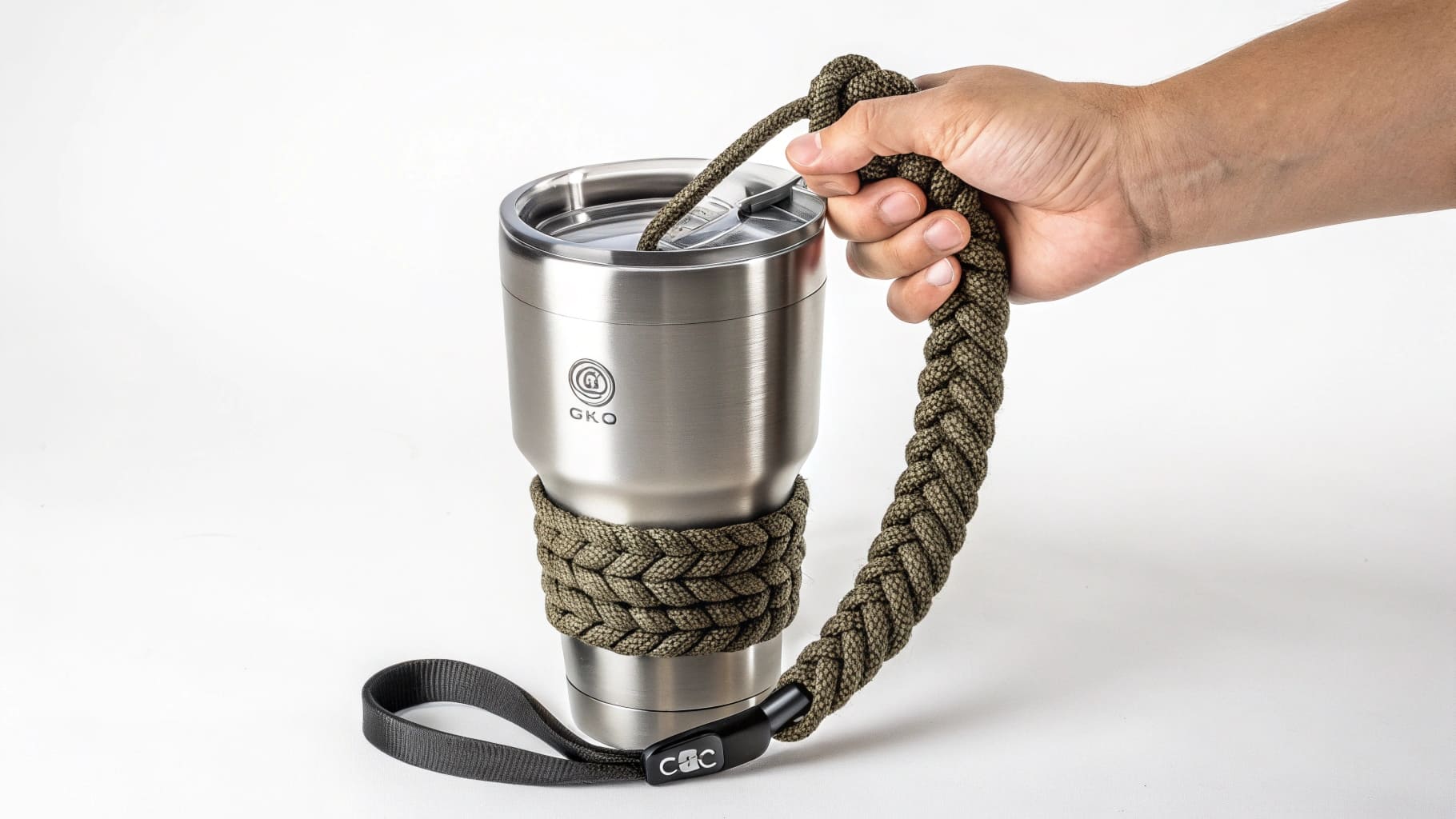
I test every new sample the same way. I fill the mug with water at 90°C. I wait ten minutes. Then I hold the handle for five seconds. If it is too hot to hold comfortably, I reject the sample. This is a simple test, but most buyers skip it during the sampling stage and only discover the problem after their customers complain.
The solution is a thermal break. Good designs use one of two methods. The first is a food-grade silicone sleeve over the handle. Silicone does not conduct heat well5, so the surface stays cool even when the body is hot. The second is a dual-wall handle with an air gap inside. Air is a poor conductor. This is more expensive to produce but gives the cleanest aesthetic for premium retail.
The table below compares both approaches.
| Design Type | Heat Resistance | Cost Level | Best For |
|---|---|---|---|
| Silicone sleeve handle | High | Low to mid | Mass retail, promotional |
| Dual-wall air gap handle | Very high | Mid to high | Premium retail, gifting |
| Direct metal handle | None | Low | Not recommended for hot use |
Handle temperature also affects return rates. A mug that feels hot to hold gets returned or left on the shelf. High return rates damage your relationship with retailers. They damage your reorder volume. During factory visits and pre-production sampling, I always add handle heat testing to the standard checklist. It takes two minutes and prevents a serious customer experience problem.
How to Test if a Mug Is Food Safe?
A certificate is a document. It can be outdated. It can be faked. Knowing how to test a mug yourself gives you a second layer of protection.
Food safety verification combines field tests and third-party lab reports. Field tests give quick early signals. Lab reports give legal protection and accurate data. You need both. A mug that passes your field test but has no valid lab report is still a sourcing risk.

I use three field tests during the sampling stage. The first is the water soak test. I fill the mug with room-temperature water and leave it for 24 hours. Then I pour that water out and smell it. Any plastic or chemical smell points to a material problem. The second test is the boiling water cycle. I run five cycles of boiling water in the mug and smell the water after each cycle. Volatile compounds tend to release in the first few cycles. The third test is the visual surface check. I look at the inner wall under a strong light for pitting, rust spots, or coating residue.
These field tests help me catch obvious problems early. They do not replace lab testing. Proper certification requires reports from accredited third-party labs. The table below shows the key tests required for North American and European markets.
| Test | What It Checks | Standard Reference |
|---|---|---|
| Heavy metals (lead, cadmium) | Toxic metal leaching | FDA CFR / EU Reg 10/2011 |
| BPA migration | Plastic additive release | FDA CFR 177.1520 |
| Overall migration limit | Total substance transfer | EU Reg 10/2011 |
| Sensory test | Odor and taste change | LFGB §30 |
| Stainless steel composition | Steel grade verification | ASTM A276 / EN 10088 |
I always ask suppliers for lab reports dated within the past 12 months. I also ask whether any material or component supplier changed since the last test. If they changed a gasket supplier or switched to a different lid mold, the old report is no longer valid. Good suppliers track this and update their reports when anything changes. Suppliers who cannot answer this question quickly are suppliers I watch more carefully.
How Do You Protect Compliance Across Large Orders?
Getting a certified sample is step one. Keeping that same quality across 5,000 or 50,000 units is the real challenge. Most compliance failures happen not at sampling but during production.
Material substitution is the most common problem. A supplier quotes you a price based on virgin PP for the lid. Production pressure or raw material costs push them toward a cheaper blend. The finished product looks the same. The test report from the sample no longer applies.

I protect against this with three tools. The first is random batch testing. I arrange for third-party inspectors to pull samples from production runs at random intervals, not just from the final batch. Testing only the last batch gives the supplier too much control over what gets tested. Random pulls make substitution much harder to hide.
The second tool is contractual material clauses. My purchase agreements include a clause that requires the supplier to notify me in writing before changing any material, component, or sub-supplier. If they change without notice, the contract allows me to reject the shipment and claim costs. Most suppliers will not argue with this clause. The ones who push back are the ones I watch most closely.
The third tool is pre-qualified vendor lists. Some larger buyers now require their suppliers to source specific components, such as silicone seals or lid plastics, only from a list of pre-approved manufacturers. This gives the buyer direct control over the supply chain without owning a factory.
The table below shows the key risk points and the controls that address each one.
| Risk Point | Why It Matters | Control Method |
|---|---|---|
| Material substitution mid-run | Old test report no longer valid | Random batch testing |
| Sub-supplier change | New material, no updated report | Contractual notification clause |
| Certificate expiry | Outdated compliance data | Annual report renewal requirement |
| Fake test reports | No actual lab verification | Direct contact with named lab |
| Component-level gaps | Only body tested, not full mug | Full material disclosure sheet |
Supply chain risk management is not a luxury for big buyers. It applies to any order where a compliance failure would cost you more than the audit. For most retail buyers sourcing in volume, that threshold is very low. One recall or one retailer rejection can cost far more than the combined cost of every audit you skipped.
Conclusion
Food safety in insulated mugs covers every part, not just the steel. Verify materials, test handles, check lab reports, and protect your supply chain with clear contracts.
-
"Regulatory Status of Components of a Food Contact Material - FDA", https://www.fda.gov/food/packaging-food-contact-substances-fcs/determining-regulatory-status-components-food-contact-material. Food-contact regulations generally apply to the finished article and to materials or components that may contact food, supporting the need to assess lids, seals, handles, and other parts rather than only the metal body. Evidence role: general_support; source type: government. Supports: LFGB/FDA safety assessment should cover all mug components, not only the main body.. Scope note: This supports the regulatory principle but does not prove that every mug component requires the same test protocol in every jurisdiction. ↩
-
"Inventory of Food Contact Substances Listed in 21 CFR - FDA", https://www.fda.gov/food/packaging-food-contact-substances-fcs/inventory-food-contact-substances-listed-21-cfr. Regulatory and risk-assessment sources describe silicone rubber used in food-contact applications and evaluate its extractable or migratable substances, supporting the use of food-grade silicone for seals and sleeves when compliant with applicable limits. Evidence role: general_support; source type: institution. Supports: Food-grade silicone is an appropriate material choice for mug seals and sleeves when verified for food-contact compliance.. Scope note: This supports silicone as a common food-contact material but does not by itself verify any supplier’s silicone formulation or test result. ↩
-
"[PDF] Measurements of thermophysical properties of solid and liquid NIST ...", https://tsapps.nist.gov/publication/get_pdf.cfm?pub_id=928362. Materials references explain that molybdenum in 316 stainless steel improves resistance to localized corrosion compared with 304 stainless steel, providing context for its use where acidic or chloride-containing liquids may be encountered. Evidence role: mechanism; source type: education. Supports: 316 stainless steel is generally more corrosion-resistant than 304, including in more chemically aggressive beverage environments.. Scope note: This supports a general corrosion-resistance advantage; it does not establish that 316 is necessary for all coffee or juice uses. ↩
-
"Conduction - UCAR Center for Science Education", https://scied.ucar.edu/learning-zone/earth-system/conduction. Heat-transfer references describe conduction through continuous solid materials, and stainless steel has sufficient thermal conductivity for heat to move through a direct metal joint from a hot vessel body to a handle. Evidence role: mechanism; source type: education. Supports: A directly connected stainless-steel handle can conduct heat from the mug body to the user's hand.. Scope note: The source would explain the mechanism, while actual handle temperature depends on geometry, wall thickness, fill temperature, and exposure time. ↩
-
"List of thermal conductivities - Wikipedia", https://en.wikipedia.org/wiki/List_of_thermal_conductivities. Materials data sources report relatively low thermal conductivity for silicone rubber compared with metals, supporting its role as an insulating sleeve material on hot-drink handles. Evidence role: mechanism; source type: research. Supports: Silicone has low thermal conductivity relative to stainless steel and can reduce heat transfer to the hand.. Scope note: The insulating performance of a specific sleeve also depends on thickness, fit, formulation, and contact area. ↩