
Which Insulated Tumbler Finishes Resist Fingerprints, Stains, and Abrasion?
Buying the wrong tumbler finish is a costly mistake. Your customers return products, your brand takes the hit, and your margins shrink. The finish you choose matters more than most people think.
Powder-coated finishes resist fingerprints, stains, and abrasion better than any other option on the market today.1 A matte powder coat is the top choice for premium tumblers. It creates a thick, durable surface layer that handles daily wear and keeps the product looking clean after heavy use.
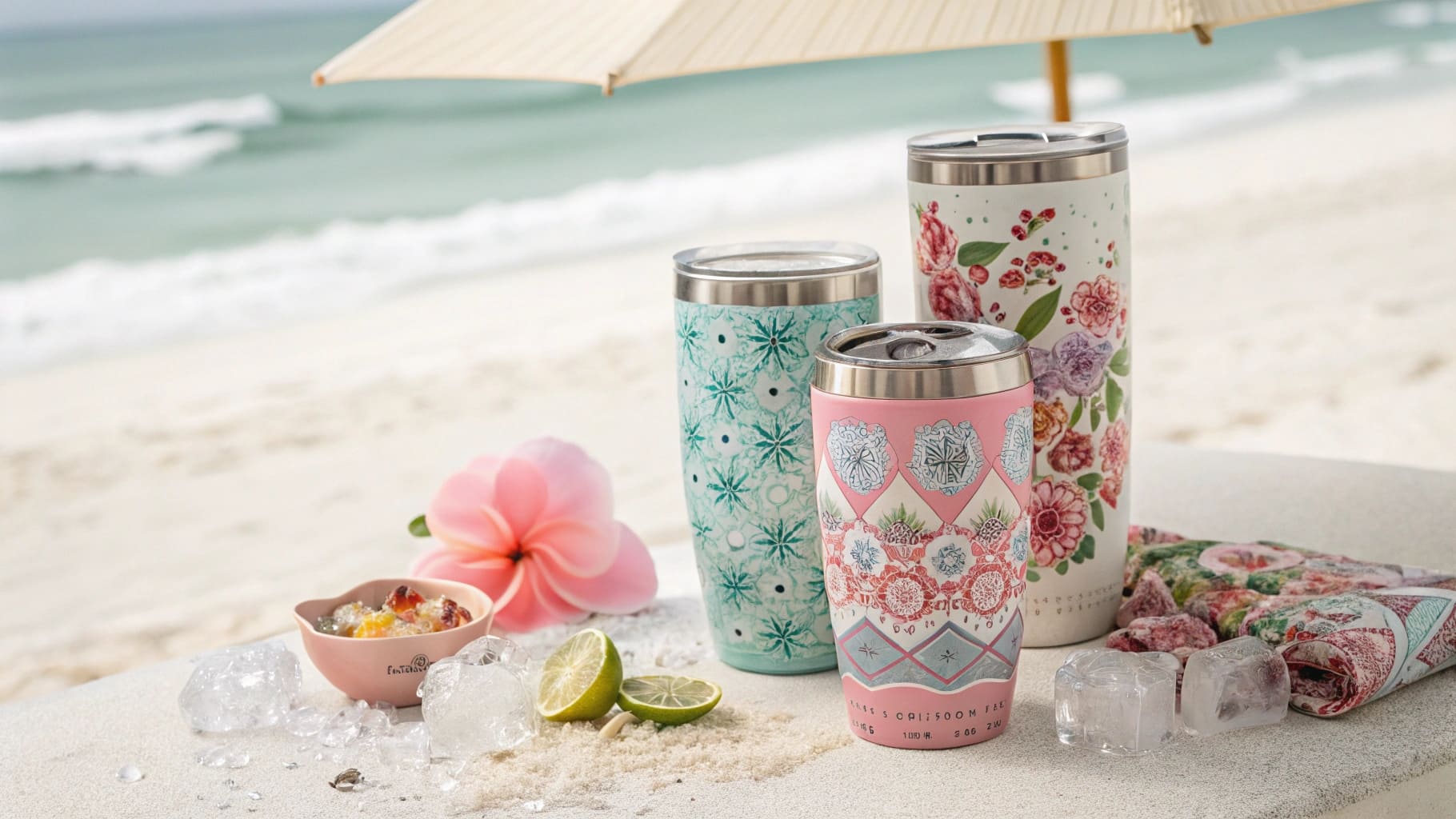
I have sourced stainless steel tumblers for years, and the finish question comes up in almost every buyer conversation I have. Most buyers focus on the steel grade or the lid design. Very few ask about the coating until a batch of tumblers comes back with scratched surfaces and visible fingerprints all over them. Once that happens, the question of finish becomes the first thing they ask next time. This post covers everything you need to know before that happens to you.
What's the Best Insulated Tumbler Finish?
Most buyers think any smooth coating will do the job. Then the complaints come in. Fingerprints show up, surfaces scratch, and the product looks worn after a few weeks of use.
Matte powder coating is the best finish for an insulated tumbler.2 It resists fingerprints, handles scratches from daily use, and holds up against common stains like coffee and tea. It outperforms glossy coatings, brushed finishes, and electroplated surfaces across all three of these areas.
Here is why the coating type matters so much. Different finishes perform very differently under real-world conditions. I have tested samples from multiple factories, and the gap between a good powder coat and a poor electroplated finish is not small. It is the difference between a product that looks new after six months and one that looks beaten up after six weeks.
How Does Powder Coating Work?
Powder coating is a dry finishing process. Electrostatically charged powder particles are sprayed onto the stainless steel surface.3 The coated piece then goes into a curing oven at high temperature. The heat causes the powder to flow and bond to the metal both mechanically and chemically.
The result is a coating layer that is typically between 60 and 120 microns thick. That is much thicker than a standard electroplated layer. The bonding process makes the coating hard and resistant to peeling, chipping, and scratching.
How Do the Main Finishes Compare?
| Finish Type | Fingerprint Resistance | Scratch Resistance | Stain Resistance | Cost Level |
|---|---|---|---|---|
| Matte Powder Coat | Excellent | Excellent | Excellent | Medium |
| Glossy Powder Coat | Fair | Good | Good | Medium |
| Brushed Stainless | Poor | Fair | Fair | Low |
| Electroplated | Poor | Poor | Fair | Low-Medium |
| Painted (non-powder) | Fair | Poor | Fair | Low |
Matte powder coating wins across every performance category that matters for daily use. The microscopic texture on a matte surface breaks up the light reflected from skin oils. This makes fingerprints much harder to see compared to a glossy surface, where oils sit flat and catch the light directly.
What Certifications Should You Ask For?
Do not take a supplier's word on coating durability. Ask for test results. The standard test for coating abrasion resistance is ASTM D4060, which is called the Taber Abrasion Test. This test runs a coated surface through a set number of wear cycles under a controlled load and measures how much material is lost. A supplier that cannot provide these results is a supplier you should treat with caution.
I always ask for physical samples before placing any large order. I run my own basic checks. I drag a key across the surface. I leave a coffee stain on it for 24 hours. I press my fingers all over it and look at it under direct light. These simple checks tell me a lot before I even open the lab report.
What Is the Best Material at Preventing Heat Loss From a Cup of Hot Liquid?
Many buyers assume that the steel grade is the biggest factor in keeping a drink hot. This leads them to pay more for 316 steel when the real performance driver is something else entirely.
Double-wall vacuum insulation is what keeps liquid hot in a tumbler. The vacuum gap between the inner and outer steel walls stops heat from moving through conduction and convection.4 A well-made vacuum tumbler keeps hot drinks hot for 6 to 12 hours. The steel grade matters far less than the construction quality of the vacuum itself.
I want to explain this more clearly because it is one of the most common misunderstandings I see from buyers who are new to sourcing tumblers. The material of the walls sets a baseline for safety and durability. But the thermal performance comes from the space between the walls, not from the walls themselves.
How Does Double-Wall Vacuum Insulation Work?
A double-wall vacuum tumbler has two layers of steel with a gap between them. During manufacturing, the air inside that gap is pulled out to create a vacuum. Heat moves from hot objects to cooler ones through three paths: conduction, convection, and radiation.
- Conduction moves heat through solid material. The vacuum gap breaks this path because heat cannot move through empty space the way it moves through metal.
- Convection moves heat through liquids and gases. With no air in the gap, there is nothing to carry heat from the inner wall to the outer wall.
- Radiation moves heat as electromagnetic energy. This path is harder to block, which is why some manufacturers add a copper plating layer to the inner wall surface5.
What Separates a Good Vacuum From a Poor One?
| Construction Factor | What to Look For | Why It Matters |
|---|---|---|
| Vacuum Pressure Level | Below 0.01 Pa | Lower pressure means less heat transfer through residual air |
| Copper Plating on Inner Wall | Present | Reflects radiant heat back into the liquid |
| Lid Seal Quality | Tight gasket, food-grade silicone | A poor lid seal loses heat fast regardless of wall quality |
| Wall Thickness | Consistent and even | Thin spots reduce insulation performance |
The vacuum pressure level is the most important number here. A vacuum at or below 0.01 Pa leaves almost no residual air molecules in the gap. This gives you the maximum blocking of heat transfer by conduction and convection. Factories that cut costs in this step produce tumblers that cool down far faster than the performance claims on the spec sheet suggest.
I have seen buyers choose a supplier based on a slightly lower unit price, only to get complaints from their end customers that drinks go cold in two hours instead of eight. The cost saving on the unit price disappears quickly when you factor in returns and damage to your brand reputation.
What Is the Safest Tumbler to Drink From?
Safety sounds simple. The tumbler is stainless steel, so it must be safe. But this thinking has caused real problems for importers, especially those selling into North America and Europe where testing requirements are strict.
The safest tumbler uses food-grade stainless steel for the body, BPA-free lid components, lead-free powder coating, and has third-party lab certification for heavy metal migration. Food contact compliance under FDA standards for the US market or LFGB standards for the EU market is the minimum acceptable requirement.
I want to be direct about where the real safety risks are. The steel body is rarely the problem. The risks are mostly in the lid, the gasket, and the coating. These are the parts that buyers and inspectors often give less attention to, and they are the parts that fail compliance tests most often.
Where Do Safety Problems Actually Come From?
The stainless steel body of a tumbler made from 304 or 316 steel is well understood and food-safe in normal use. 316 steel has higher corrosion resistance due to its molybdenum content6, which makes it a better choice for acidic drinks like citrus juice or coffee over long periods. But 304 steel is the accepted industry standard and passes all major food-contact regulations when the manufacturing quality is solid.
The lid is a different story. Many tumblers use plastic lid components that contain BPA or other plasticizers.7 These compounds can transfer into hot liquid, especially at high temperatures. The silicone gasket inside the lid is another risk point. Low-quality gaskets can contain fillers or plasticizers that do not meet food-contact standards.
Powder coating also carries a safety dimension. Lead-free certification matters here. Some low-cost coatings use pigments that contain lead or cadmium. These compounds can chip off or migrate from the coating surface into the drink over time.
What Documentation Should You Require From Suppliers?
| Document | What It Covers | Where It Applies |
|---|---|---|
| FDA Compliance Report | Food contact safety for steel and lid materials | United States |
| LFGB Test Report | Food contact safety for EU standards | European Union |
| Heavy Metal Migration Test | Lead, cadmium, and other heavy metals | Both markets |
| BPA-Free Certification | Lid and gasket materials | Both markets |
| MSDS (Material Safety Data Sheet) | Full material composition of coating | Both markets |
I request third-party lab reports from an independent testing body, not just a factory self-declaration. Factory-issued certificates have been falsified before. I have seen this firsthand. A certificate that comes from a recognized third-party lab such as SGS, Bureau Veritas, or Intertek is the only version I trust without further verification.
One more thing worth saying clearly: a tumbler that passes the steel body tests but fails on lid materials is still a non-compliant product. Every component that touches food or drink must pass, not just the main body.
Conclusion
Choose matte powder coat for durability, double-wall vacuum construction for heat retention, and always verify full compliance documentation for every component before committing to a supplier.
-
"Accelerated Corrosion Tests in Quality Labels for Powder Coatings ...", https://pmc.ncbi.nlm.nih.gov/articles/PMC8585214/. A neutral coating-technology source can support that powder coatings are commonly valued for durable, abrasion-resistant finishes and low visible wear; this would contextualize, but not independently prove, superiority over every tumbler finish on the market. Evidence role: general_support; source type: institution. Supports: Powder-coated finishes resist fingerprints, stains, and abrasion better than other common insulated tumbler finishes.. Scope note: The source may support powder coating durability generally rather than provide a direct head-to-head test of all tumbler finishes. ↩
-
"Coating approach clears up fingerprints | Penn State University", https://www.psu.edu/news/research/story/coating-approach-clears-fingerprints. A coatings or materials source can substantiate the mechanisms by which matte, textured powder coatings reduce visible smudging and improve wear resistance; the source would support the rationale for the preference, not a universal ranking of tumbler finishes. Evidence role: expert_consensus; source type: research. Supports: Matte powder coating is preferable for insulated tumblers when fingerprint resistance, scratch resistance, and stain resistance are prioritized.. Scope note: The evidence is likely to support comparative properties of matte powder coatings rather than establish a single 'best' finish for every use case. ↩
-
"[PDF] Electrostatic fluidized bed plastic powder coating process", https://scholarworks.uni.edu/cgi/viewcontent.cgi?article=3726&context=grp. A technical reference on powder coating describes electrostatic spray deposition, in which charged powder particles are directed toward a grounded metal substrate before curing. Evidence role: mechanism; source type: institution. Supports: Powder coating commonly uses electrostatically charged particles sprayed onto a metal surface.. Scope note: The source may describe metal substrates generally rather than stainless steel tumblers specifically. ↩
-
"CONSERVATION OF HEAT IN THERMOFLASK A flask ... - Facebook", https://www.facebook.com/100086691939822/posts/conservation-of-heat-in-thermoflask-a-flask-conserves-heat-by-minimizing-the-thr/786015587631499/. A physics or heat-transfer source explains that a vacuum greatly reduces heat transfer by conduction and convection because there are few or no gas molecules to carry thermal energy across the gap. Evidence role: mechanism; source type: education. Supports: A vacuum gap in double-wall insulation greatly reduces conductive and convective heat transfer.. Scope note: In real tumblers the vacuum is imperfect and heat can still transfer through radiation, lids, and structural joints. ↩
-
"Thermal Radiative Copper Oxide Layer for Enhancing Heat ... - PMC", https://pmc.ncbi.nlm.nih.gov/articles/PMC8624854/. A heat-transfer or materials source can support that low-emissivity metallic surfaces, including copper or reflective metal layers, reduce radiative heat transfer in vacuum insulation systems. Evidence role: mechanism; source type: education. Supports: A reflective copper or metallic layer can reduce radiative heat transfer in a vacuum-insulated vessel.. Scope note: The source may support the general radiative-heat-transfer mechanism rather than document specific tumbler manufacturing practices. ↩
-
"[PDF] Effect of Molybdenum Additions on the Microstructures and ... - OSTI", https://www.osti.gov/servlets/purl/1439854. A materials reference can document that Type 316 stainless steel contains molybdenum and generally has better pitting and corrosion resistance than Type 304 in chloride-containing or aggressive environments. Evidence role: mechanism; source type: education. Supports: 316 stainless steel has higher corrosion resistance than 304 stainless steel because of its molybdenum content.. Scope note: Higher corrosion resistance does not necessarily mean 316 is required for all beverage uses; performance depends on exposure conditions and manufacturing quality. ↩
-
"Bisphenol A (BPA): Use in Food Contact Application - FDA", https://www.fda.gov/food/food-packaging-other-substances-come-contact-food-information-consumers/bisphenol-bpa-use-food-contact-application. A public-health or regulatory source can support that BPA and certain plastic additives have been used in food-contact plastics and that migration from such materials is a recognized basis for safety assessment. Evidence role: general_support; source type: government. Supports: Plastic lid components may contain BPA or other additives relevant to food-contact safety testing.. Scope note: The source would support the possibility and regulatory relevance of BPA or additive migration, not prove that many current tumbler lids contain BPA. ↩
