
Which tests validate vacuum insulation on bottles to ISO/ASTM in 2026?
I see buyers trust insulation claims, then complaints arrive when bottles sweat or cool too fast, so I test before I place orders.
I validate vacuum insulation with ISO 20884 cold and hot retention tests, plus adapted ASTM thermal transmission checks when a buyer asks for North American proof. I also review leak tests, batch sampling, and third-party lab reports before I approve production.
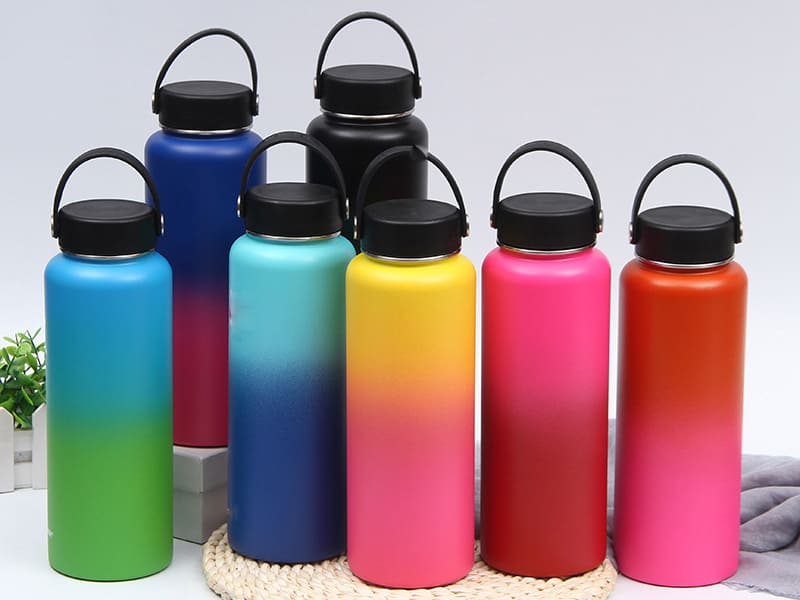
I learned this through many factory discussions with buyers who cared about quality but did not want to overpay. I do not treat vacuum insulation as a sales slogan. I treat it as a risk control point. When I speak with a buyer like Mark in Canada, I know he wants strong quality, fair pricing, clean certificates, and on-time shipment. I also know he may not have time to study welding, heat transfer, and lab methods. So I try to make the testing path clear before the order starts. A good bottle must pass the marketing test on the shelf, but it must also pass the temperature test in the lab and the trust test during repeat orders.
What is the purpose of vacuum insulation?
I see brands sell premium bottles, then refunds start when drinks get warm, so I define the insulation purpose before I discuss price.
I use vacuum insulation to slow heat transfer, stop condensation, protect packaging, and support premium pricing. A strong vacuum keeps cold drinks cold and hot drinks hot, but its real purpose is stable customer experience and fewer warranty claims.
What I connect to the buyer’s business risk
I do not see vacuum insulation as only a technical feature. I see it as the reason a stainless steel bottle can sell at a higher price in a crowded market. When a bottle holds ice well, the end user trusts the brand. When the outer wall stays dry, the carton, retail shelf, and gift box stay clean. When hot drinks stay warm for a clear time, the product promise feels real.
I usually ask for ISO 20884 test data because it gives me a more direct way to check hot and cold retention. I also ask the supplier to explain the test condition. I want to know the starting water temperature, room temperature, test time, lid condition, and bottle size. A weak supplier may only say “keeps cold for a long time.” I do not accept that as proof.
| What I check | Why I care | What I ask the supplier to show |
|---|---|---|
| I check cold retention | I want fewer complaints from summer buyers | I ask for ISO 20884 cold test results |
| I check hot retention | I want the product claim to match real use | I ask for ISO 20884 hot test results |
| I check condensation | I want cartons and displays to stay dry | I ask for sample checks after cold filling |
| I check certificate details | I want to avoid fake or recycled reports | I ask for model, capacity, date, and lab scope |
| I check batch control | I want repeat quality, not only one good sample | I ask for sampling records from production |
How I use ISO and ASTM in a practical way
I use ISO 20884 as the main reference for vacuum bottle insulation performance. I use ASTM with more care. I do not ask a supplier for a fake “ASTM vacuum bottle standard” because ASTM does not work that way for this product in most buying cases. When a North American buyer asks for ASTM support, I may accept adapted thermal transmission logic, such as methods based on ASTM C1199 ideas, but I still ask the supplier to state the method clearly. I want the report to be honest. A clear limited test is better than a broad certificate that says nothing real.
How do they make vacuum insulated bottles?
I have watched perfect samples fail later because tiny weld leaks grew slowly, so I audit the vacuum process early.
I make vacuum insulated bottles by forming inner and outer stainless walls, welding them together, removing air through a small port, and sealing that port. The vacuum gap cuts conduction and convection1, while copper coating can reduce radiation2.
Where I see the biggest quality risk
I see the vacuum process as the heart of the bottle. The factory first forms the inner liner and outer shell from stainless steel. Then the workers or machines join the parts at the mouth and bottom. The welding must be clean because a small defect can destroy the vacuum. After forming, the factory removes air from the space between the walls through a small opening. Then the opening is sealed. This sounds simple, but it is not simple in mass production.
I always pay close attention to the seal point. A bottle can look good, polish well, and carry a beautiful logo, but it can still lose vacuum if the seal is weak. I have seen buyers focus only on color, logo, and carton design. I understand that these points matter. But I also know that a bad vacuum turns a premium bottle into an ordinary metal container.
| Production step I audit | Failure I worry about | Evidence I prefer |
|---|---|---|
| I check stainless forming | I worry about uneven wall thickness | I ask for material and forming control records |
| I check welding | I worry about pinholes and weak joints | I ask for weld inspection records3 |
| I check vacuum extraction | I worry about poor air removal | I ask for process settings and sample checks |
| I check sealing | I worry about slow vacuum loss | I ask for leak test records |
| I check final insulation | I worry about mixed good and bad units | I ask for batch thermal test data |
How I confirm the process before shipment
I prefer a mix of testing methods because one test alone can miss problems. I like ISO 20884 temperature retention data because it shows the end result. I also like leak checks because they show whether the vacuum can survive after production. Some factories use vacuum decay checks. Some use thermal checks after hot water filling. Some do destructive testing on sample bottles from the batch. I do not need every factory to use the same machine, but I need the supplier to show a stable system.
Copper coating can also improve insulation because it reduces heat transfer by radiation. I do not treat copper coating as a must for every order because it adds cost. I treat it as a design choice. If a buyer wants a premium bottle line, I may suggest it. If a buyer wants a price-sensitive promotional order, I may focus more on stable vacuum, safe material, and honest testing.
What is vacuum insulated stainless steel?
I hear stainless steel called insulating material, then confusion hides weak design, so I separate the metal from the vacuum system.
Vacuum insulated stainless steel is a double-wall stainless product with an airless gap4 between the walls. The steel gives strength and food safety, while the vacuum space delivers most insulation performance. I confirm both material grade and thermal test results.
What I mean when I use this product term
I use the term “vacuum insulated stainless steel” very carefully. Stainless steel alone does not create strong insulation. Stainless steel is strong, clean, and suitable for repeated use. The vacuum gap does the main insulation work. This matters because some suppliers talk about stainless steel grade as if it proves thermal performance. I do not accept that. I need both material proof and performance proof.
For most water bottle orders, I look at food contact material, inner wall grade, outer wall grade, lid material, coating safety, and insulation test results. A bottle can use good stainless steel and still fail insulation if the vacuum seal is poor. A bottle can also pass a short internal test but fail a longer third-party test. So I match the report to the exact bottle model, capacity, lid type, and order batch.
| Claim I hear | What I check | Why I do not stop at the claim |
|---|---|---|
| I hear “food grade stainless steel5” | I check material and food contact documents | I know material grade does not prove insulation |
| I hear “keeps cold all day” | I check ISO 20884 cold test data | I need time and temperature details |
| I hear “ASTM tested” | I check which ASTM method was used | I want honest method use, not a vague badge |
| I hear “no condensation” | I test filled samples in real conditions | I want proof on the outside wall |
| I hear “premium vacuum” | I check leak control and batch sampling | I want repeat performance after shipping |
How I protect the buyer from certificate problems
I have seen certificate fraud become a real pain point for importers. A report may belong to another model. A report may be too old. A report may list a similar bottle but not the same capacity or lid. A report may show a lab name but hide the test method. This is why I read reports slowly. I check the report date, product photo, capacity, model code, test condition, and lab scope. I also compare the report with the physical sample.
For North American orders, I explain ASTM use in plain words. I do not promise that ASTM gives a single dedicated vacuum bottle pass mark. I explain that some thermal transmission principles can support a technical review, but ISO 20884 is still the cleaner way to discuss bottle hot and cold retention. This helps a buyer like Mark make a fair decision. He can compare suppliers without being pushed by empty claims. He can also tell his sales team what performance level they can promise in Canada.
Conclusion
I trust vacuum bottle claims only when ISO data, honest ASTM use, leak control, and batch checks tell the same story.
-
"Vacuum insulation panel core materials and modelling the thermal ...", https://dr.lib.iastate.edu/bitstreams/f77c7126-f49f-4b7f-b58d-7f1c941b1f20/download. A vacuum space eliminates conduction and convection by removing the air molecules that would otherwise transfer thermal energy between surfaces, leaving only radiative heat transfer as the primary mechanism. Evidence role: mechanism; source type: encyclopedia. Supports: the physical mechanism by which vacuum reduces heat transfer through conduction and convection. ↩
-
"Thermal Radiative Copper Oxide Layer for Enhancing Heat ... - PMC", https://pmc.ncbi.nlm.nih.gov/articles/PMC8624854/. Reflective metallic coatings such as copper or aluminum reduce radiative heat transfer across vacuum gaps by reflecting infrared radiation, with effectiveness dependent on the coating's emissivity and surface quality. Evidence role: mechanism; source type: research. Supports: the use of reflective metallic coatings to reduce radiative heat transfer in vacuum insulation. ↩
-
"List of welding codes", https://en.wikipedia.org/wiki/List_of_welding_codes. AWS D18.1 and similar welding standards provide specifications for inspection and acceptance criteria for stainless steel welds, including visual inspection and leak testing requirements relevant to pressure-tight assemblies. Evidence role: general_support; source type: institution. Supports: established welding quality standards applicable to stainless steel container manufacturing. Scope note: General welding standards may not specifically address vacuum bottle manufacturing parameters ↩
-
"Vacuum flask", https://en.wikipedia.org/wiki/Vacuum_flask. Vacuum flasks and insulated bottles employ double-wall construction with an evacuated space between inner and outer walls, a design principle dating to James Dewar's 1892 invention, reducing heat transfer to near-negligible levels. Evidence role: definition; source type: encyclopedia. Supports: the basic engineering design of vacuum insulated containers. ↩
-
"Food Grade Stainless Steel: 304 vs 316", https://www.azom.com/article.aspx?ArticleID=24472. Food-grade stainless steel typically refers to austenitic grades such as 304 (18/8) or 316 that meet FDA and EU food contact requirements, demonstrating resistance to corrosion and minimal metal migration under normal use conditions. Evidence role: definition; source type: government. Supports: regulatory standards defining food-grade stainless steel for food contact applications. ↩