
Which Stainless Steel Cups for Boats Handle Corrosion, Drainage, and Screws?
You picked the wrong cup for a boat trip once. The rust showed up fast. That mistake cost you more than you expected.
The best stainless steel cups for boats are made from 316 stainless steel. This grade contains molybdenum, which protects against saltwater damage. It also pairs with drainage-friendly designs and 316-grade screws or marine fasteners to stay rust-free in harsh coastal conditions.

Picking the right cup for a boat sounds simple. It is not. The wrong material grade, the wrong screw, or a cup that traps water in the wrong spot will all cause problems. I have seen buyers skip this research and end up with returns, complaints, and damaged brand reputations. This article breaks it all down so you do not make the same mistake.
Is 304 Stainless Steel Corrosion Resistant in Saltwater?
Most buyers assume 304 stainless steel handles everything. That assumption works on land. On a boat, it will cost you.
304 stainless steel resists corrosion well in freshwater and normal air. But saltwater is different. Chloride in saltwater attacks the metal surface directly, causing pitting and crevice corrosion.1 304 does not have the right composition to fight that off.

The reason 304 fails in saltwater comes down to one missing element: molybdenum. 304 stainless steel contains chromium and nickel.2 Both are good at forming a passive oxide layer that protects the metal surface. That layer works well against mild moisture and weak chemicals. But chloride ions, which are present in high amounts in seawater and salt spray, break through that layer easily.
Once the layer breaks down, the metal underneath starts to corrode. This shows up first as small pits on the surface. Over time, those pits grow deeper. On a cup, this means rust spots on the outer wall, around the rim, or near the base. On screws and hardware, it means rust staining and structural weakening.
Here is a quick comparison of how the two grades perform in different environments:
| Environment | 304 Stainless Steel | 316 Stainless Steel |
|---|---|---|
| Indoor / dry use | Excellent | Excellent |
| Freshwater exposure | Good | Excellent |
| Coastal air / salt spray | Poor | Good |
| Direct saltwater contact | Very poor | Acceptable |
| Prolonged saltwater immersion | Not recommended | Better choice |
For marine buyers, the short answer is this: 304 is fine for a bottle that stays on a desk or goes on a hike. It is not fine for a cup that lives on a boat, near the ocean, or in a coastal retail store with high humidity and salt in the air.
What Is the Best Stainless Steel for Marine Use?
You want one answer. The product line, the material grade, the finish. Here it is.
316 stainless steel is the best choice for marine use.3 It contains 2 to 3 percent molybdenum. That element adds a layer of chemical protection that 304 does not have. It resists chloride attack far better in salt spray and seawater environments.

The molybdenum in 316 stainless steel does one specific job. It stabilizes the passive oxide layer on the metal surface when chloride is present.4 Without molybdenum, that layer breaks down and the metal starts to pit. With it, the layer holds. This is why 316 is used across the marine industry, from boat fittings to coastal kitchen equipment to dive gear.
For a stainless steel water bottle or cup that will be sold into marine markets, 316 means longer product life, fewer warranty claims, and a better brand reputation among buyers who know what to look for.
There are also a few additional design features that matter for marine use beyond just the grade:
| Feature | Why It Matters for Marine Use |
|---|---|
| 316 stainless screws and hardware | Avoids rust staining from mixed-grade contact |
| Drainage-friendly base design | Prevents water pooling that speeds up crevice corrosion |
| Electropolished or powder-coated finish | Adds a surface barrier against salt spray |
| No exposed raw metal edges | Reduces entry points for chloride attack |
| Wide mouth opening | Easier to rinse and dry thoroughly after use |
The price difference between 304 and 316 material is real. From my experience sourcing stainless steel drinkware, 316 material typically costs 20 to 30 percent more than 304 at the raw material level. But for a buyer who is building a marine brand or selling into coastal retail, that cost difference pays off. Fewer returns, fewer complaints, and a product that actually does what it claims to do.
How Do I Know If My SS Is 304 or 316?
You cannot tell by looking. You need a test. Sellers who say otherwise are guessing.
Visual inspection cannot separate 304 from 316. Both look the same.5 The only reliable way to confirm the grade is through documentation or physical testing. This matters most when you are placing a large order from a new supplier.
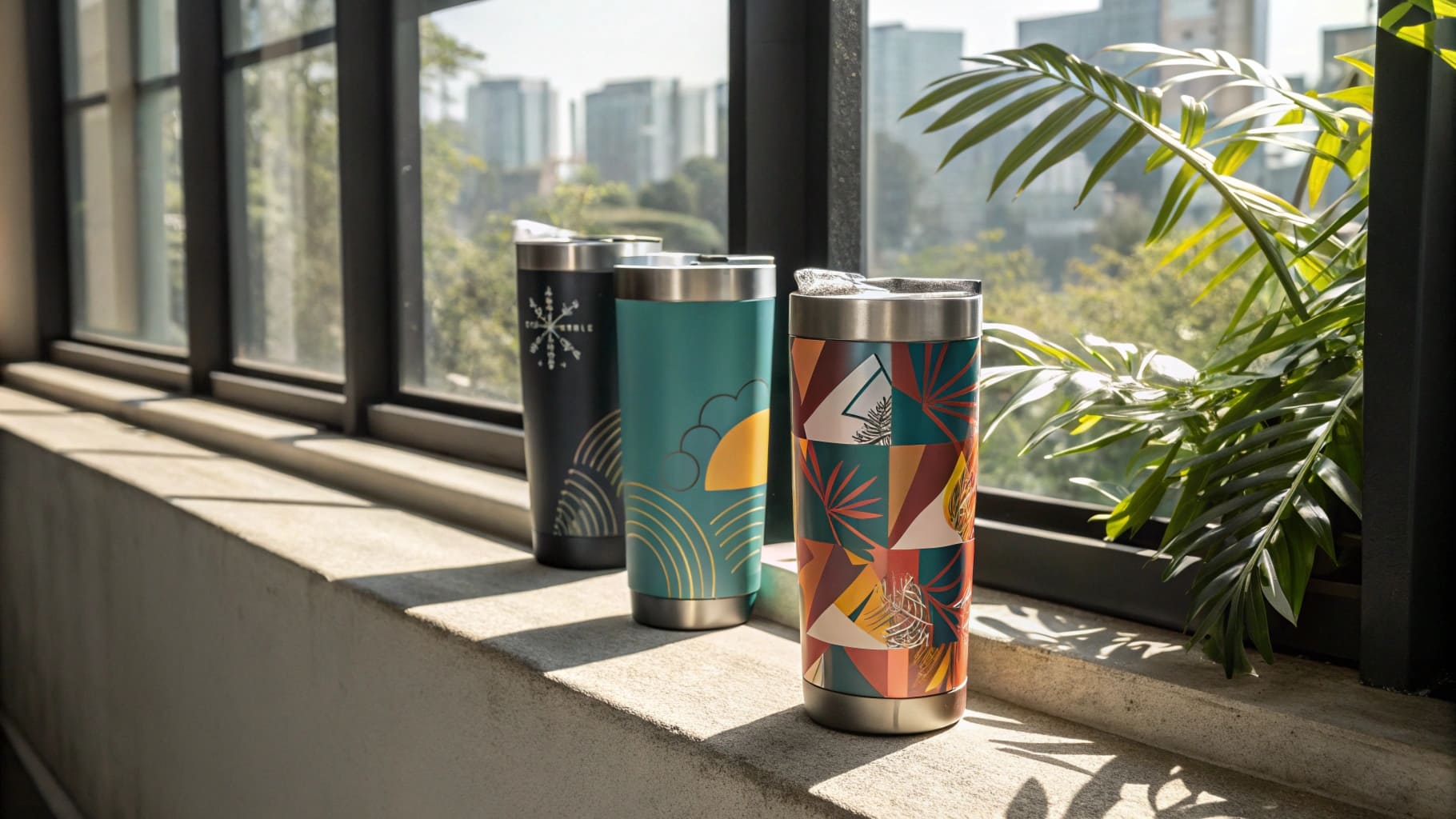
There are three practical ways to verify whether a stainless steel product is 304 or 316. Each has its own cost and reliability level.
Mill Test Certificates
A mill test certificate, also called an MTC or material certificate, is a document issued by the steel mill that made the raw material. It lists the exact chemical composition of the batch, including the percentage of chromium, nickel, molybdenum, and other elements. A reputable supplier should provide this document without hesitation. If they cannot, that is a red flag.
Third-Party XRF Testing
XRF stands for X-ray fluorescence. An XRF analyzer scans the metal surface and gives a full chemical breakdown in seconds.6 This is the most accurate field test available. Third-party inspection companies in China and other manufacturing countries offer this service. For large orders going into marine or medical applications, I always recommend requesting an XRF test before shipment.
PMI Testing
Positive Material Identification testing is similar to XRF but is often used for higher-stakes industrial applications. It confirms the alloy grade with precision. This is more common in industrial supply chains but is available for drinkware verification if needed.
Here is a side-by-side breakdown of each verification method:
| Method | Reliability | Cost | Best For |
|---|---|---|---|
| Visual inspection | None | Free | Not useful for grade ID |
| Mill Test Certificate | High (if authentic) | Included with order | First-step verification |
| XRF Testing | Very high | Low to moderate | Pre-shipment batch checks |
| PMI Testing | Very high | Moderate | High-stakes or large orders |
One more point worth knowing: certificate fraud does happen. I have heard from buyers who received certificates that did not match the actual material. This is why third-party verification matters for any order where material grade is a critical factor. Do not rely on a supplier's certificate alone if the order is large or the application is demanding. Pair the certificate with an independent XRF test for real confidence.
Conclusion
For boats, use 316 stainless steel. Test the grade before you order. Match the hardware and design to the same marine standard. That is how you avoid returns.
-
"Influence of Chloride Concentration on Stress Corrosion Cracking ...", https://pmc.ncbi.nlm.nih.gov/articles/PMC7763977/. Corrosion literature describes chloride ions as a major cause of passive-film breakdown in stainless steels, leading to localized pitting and crevice corrosion in seawater or salt-spray environments. Evidence role: mechanism; source type: paper. Supports: Chloride in saltwater can cause pitting and crevice corrosion in stainless steel.. Scope note: The mechanism is general to susceptible stainless steels; exact corrosion rates depend on alloy grade, temperature, oxygen, finish, and exposure conditions. ↩
-
"SAE 304 stainless steel - Wikipedia", https://en.wikipedia.org/wiki/SAE_304_stainless_steel. Alloy composition references for Type 304 stainless steel list chromium and nickel as principal alloying elements in the austenitic stainless steel grade. Evidence role: definition; source type: institution. Supports: 304 stainless steel contains chromium and nickel.. ↩
-
"Marine grade stainless - Wikipedia", https://en.wikipedia.org/wiki/Marine_grade_stainless. Marine corrosion guidance and alloy references commonly identify molybdenum-bearing Type 316 stainless steel as more resistant than Type 304 to chloride pitting in marine atmospheres and seawater exposure. Evidence role: expert_consensus; source type: institution. Supports: 316 stainless steel is generally preferred over 304 stainless steel for marine chloride environments.. Scope note: This supports 316 as a common preferred grade for chloride exposure, but the phrase “best choice” depends on cost, immersion duration, maintenance, and whether higher-alloy stainless steels or non-steel materials are considered. ↩
-
"Improving pitting resistance of Mo-containing stainless steels via ...", https://ui.adsabs.harvard.edu/abs/2024Corro.22711787X/abstract. Corrosion studies of molybdenum-bearing stainless steels report that molybdenum improves resistance to chloride-induced passive-film breakdown and repassivation behavior, reducing susceptibility to localized pitting. Evidence role: mechanism; source type: paper. Supports: Molybdenum improves the stability of stainless steel passive films in chloride environments.. Scope note: The source would support the corrosion mechanism at the alloy level; it may not directly test consumer drinkware products. ↩
-
"Incoming Material Verification: How US Manufacturers Save Millions ...", https://elvatech.com/incoming-material-verification-how-us-manufacturers-save-millions-with-positive-material-identification-equipment/. Positive material identification guidance notes that stainless steel grades with similar appearance generally require documentation or analytical testing, such as XRF or other PMI methods, to verify alloy composition. Evidence role: expert_consensus; source type: institution. Supports: 304 and 316 stainless steels cannot be reliably distinguished by visual inspection alone.. Scope note: The source supports the need for analytical identification in general; minor surface finish differences may still be visually apparent without revealing alloy grade. ↩
-
"X-ray Methods for Chemical Imaging at Micro to Mesoscales | NIST", https://www.nist.gov/mml/mmsd/microscopy-and-microanalysis-research-group/x-ray-methods-chemical-imaging-micro-mesoscales. X-ray fluorescence descriptions from scientific or government sources explain that XRF rapidly identifies elemental composition from a material surface by detecting characteristic fluorescent X-rays. Evidence role: mechanism; source type: government. Supports: XRF can rapidly analyze the elemental composition of a stainless steel surface.. Scope note: XRF provides elemental composition rather than every metallurgical property, and accuracy can vary with calibration, surface condition, and instrument type. ↩