
Is Insulated Coffee Mug Procurement More Complex Than You Think?
Buying insulated coffee mugs in bulk looks simple. But one wrong call on specs or supplier standards, and you are stuck with rejected goods and missed deadlines.
Stainless steel insulated coffee mugs are the strongest product category for B2B buyers who want consistent margins, low return rates, and easy branding.1 Choosing the right mug type, material, and supplier standard is what separates a profitable order from a costly one.

I have been in this industry long enough to know that most procurement problems do not start at the factory. They start when the buyer is not clear on what they actually need. The next three sections break down the decisions that matter most. Read carefully, because each one directly affects your margin.
What Is the Difference Between a Thermos and a Tumbler?
You place an order for insulated mugs. The factory ships tumblers. Your client wanted thermos-style bottles. Now you have a problem.
A thermos has a narrow mouth and a screw-on lid. It is built for maximum heat retention over many hours. A tumbler has a wider mouth, a flip or sliding lid, and works well for both hot and cold drinks.2 They serve different customers and require different production setups.

Why Does This Distinction Matter in Procurement?
The difference between a thermos and a tumbler is not just about shape. It affects your entire order process.
Tumblers use more complex lid assemblies. They often include silicone gaskets, spring-loaded mechanisms, or push-button seals.3 Each of these parts adds to the production cost and increases the chance of quality issues. Thermos-style bottles are simpler in design. Their narrow mouth and screw cap are easier to manufacture consistently.
Here is a side-by-side breakdown to make this clearer:
| Feature | Thermos | Tumbler |
|---|---|---|
| Mouth opening | Narrow | Wide |
| Lid type | Screw-on cap | Flip, slide, or push-button |
| Primary use | Hot beverages, long retention | Hot and cold, on-the-go drinking |
| Production complexity | Lower | Higher |
| MOQ impact | Lower typical MOQ | Higher MOQ due to lid parts |
| Customization ease | Good for color and logo | Better for shape and lid design |
| Target market | Outdoor, travel, utility | Retail, promotional, lifestyle |
When I talk to buyers sourcing for the first time, I always ask: who is your end customer, and where will they use this product? That one question points directly to whether they need a thermos or a tumbler. Getting this wrong means your product does not fit the shelf or the customer, no matter how good the quality is.
The market trend is also worth noting. Tumblers are growing faster in the retail and promotional products space.4 They are easier to drink from without tipping your head back. They fit cup holders. They look good on a desk. These are small things, but they drive purchase decisions at the consumer level. For B2B buyers, that means better sell-through for your clients, which means repeat orders for you.
What Coffee Mug Is Better Than YETI?
Every buyer I meet asks this question. They want a product that beats YETI on price without losing on quality. The real answer is not about finding a brand that beats YETI.
YETI built its name in the premium outdoor market.5 Trying to beat them by name is not the right strategy. The smarter move is to build a product that competes on value for your specific customer group, not against YETI's brand identity.
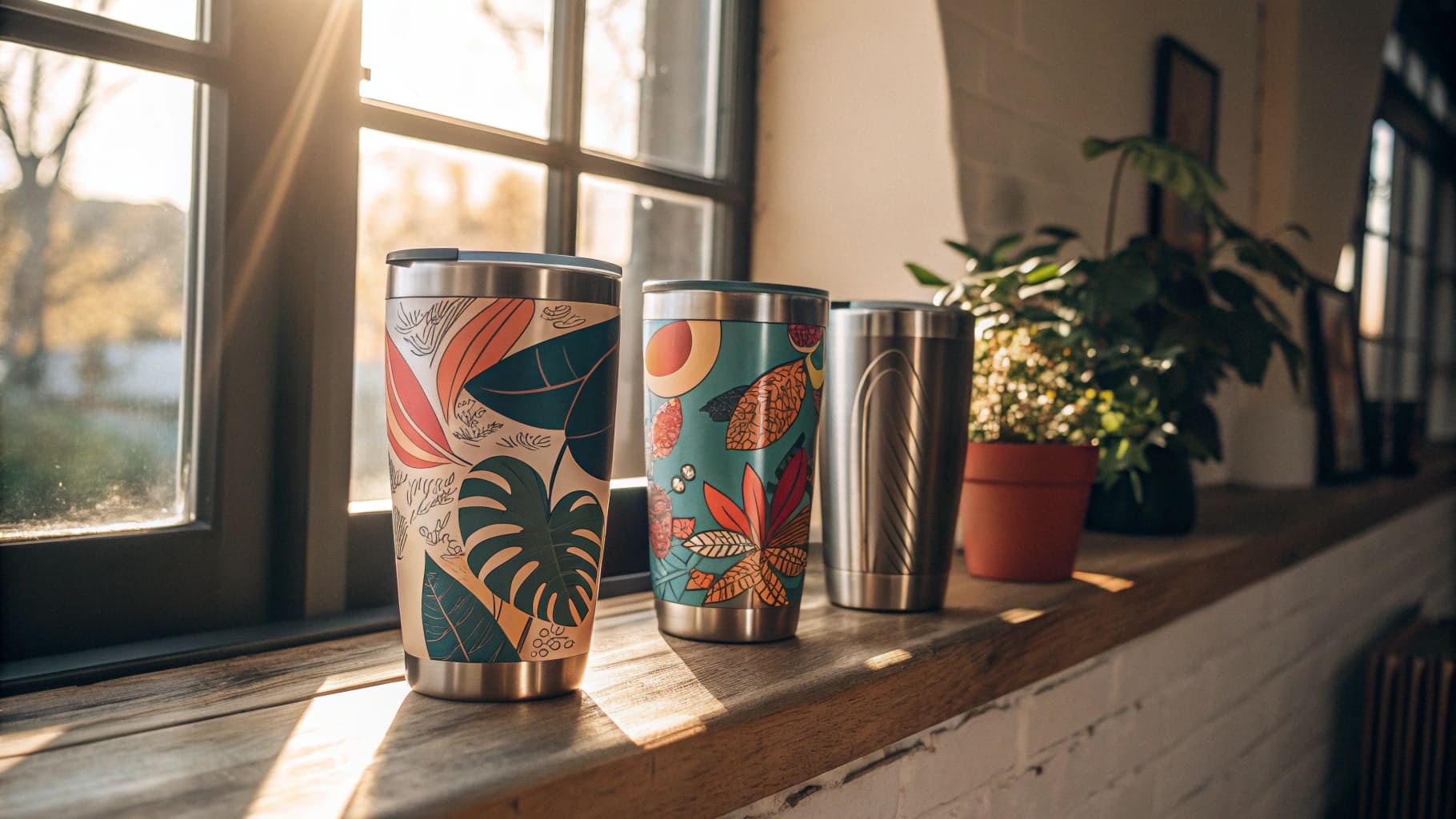
How Do You Build a Better Value Proposition Than a Premium Brand?
YETI charges a premium because of brand recognition. That is their advantage. Your advantage as a private label buyer is something YETI cannot offer: full customization at a lower cost.
Many factories in China produce double-wall vacuum insulated mugs with insulation performance that matches or goes beyond what YETI offers at the product level.6 They use the same grade of stainless steel. They apply the same vacuum sealing process. The difference is in the brand name on the outside, not the engineering on the inside.
Here is how to think about your product positioning compared to YETI:
| Procurement Priority | YETI Approach | Private Label Approach |
|---|---|---|
| Brand recognition | Very high | Built through your brand |
| Unit cost | High retail markup | Lower FOB, higher margin |
| Customization | Limited | Full Pantone, logo, lid design |
| Lead time | Fixed retail cycle | Negotiable with factory |
| AQL standard | Premium | Defined by you and factory |
| Certificate flexibility | Standardized | Customized per market need |
When I evaluate a factory for mug procurement, I focus on four things. First, do they follow a clear AQL inspection plan? This tells me how serious they are about consistency. Second, can they match Pantone colors accurately across a full production run? Color drift between batches is one of the most common complaints in this category. Third, what certifications do they hold, and can they provide originals? Certificate fraud is real, and I have seen it happen. Fourth, what is their actual capacity for small-batch or custom lid work?
If a factory scores well on all four, they can produce a product that your customer will choose over YETI every time, because your price is better and your branding is exclusive to them.
Are Glass or Ceramic Mugs Better?
A buyer once told me he was considering ceramic mugs for a corporate gift order. His thinking was that ceramic feels more premium. He was not wrong about the feeling. But he was wrong about the fit.
Glass and ceramic mugs work well in fixed settings like a café or a desk. They fall apart quickly as a procurement choice when your customer needs portability, durability, or real insulation.
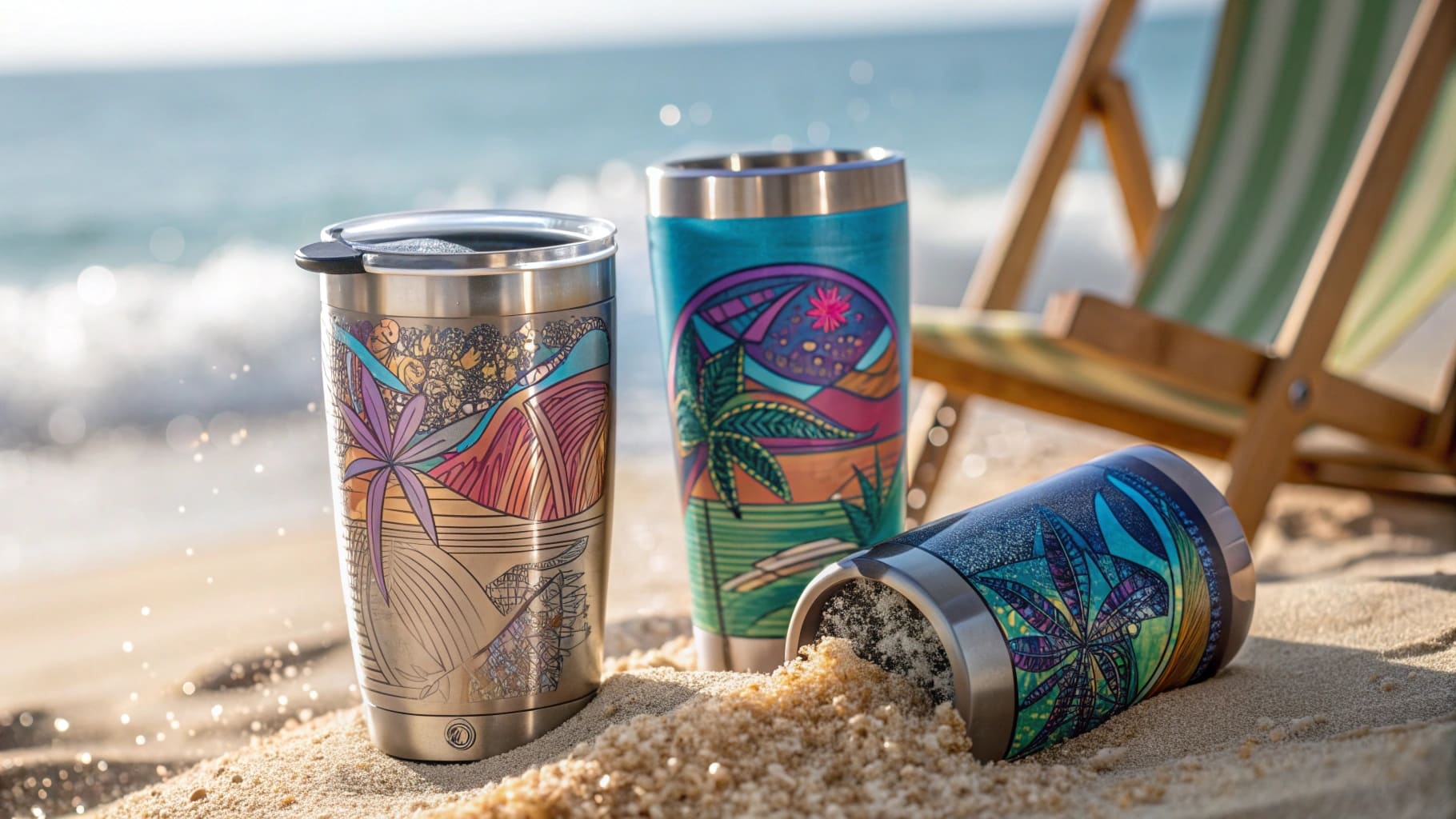
Why Does Stainless Steel Win for B2B Mug Procurement?
Glass and ceramic each have strengths. Glass looks clean and works well in a café where the customer wants to see the drink. Ceramic is low-cost and easy to print for basic promotional merchandise. But both materials have limits that show up fast in a B2B context.
Here is a direct comparison across the key procurement factors:
| Factor | Glass | Ceramic | Stainless Steel |
|---|---|---|---|
| Insulation | None | Low | High, double-wall vacuum |
| Breakage risk | Very high | High | Very low |
| Shipping cost | High, needs padding | Moderate | Low, lightweight |
| Return rate | High | Moderate | Low |
| Customization | Limited | Moderate | Full color, laser, lid design |
| Durability | Poor | Moderate | Excellent |
| Ergonomic features | Limited | Limited | Non-slip base, grip zones |
| Target use | Café, home | Desk, promo | Mobile, retail, corporate |
For B2B buyers targeting retail shelves or corporate gifting programs, stainless steel solves the two problems that always come up: temperature control and product life. Glass and ceramic cannot hold temperature. A stainless steel vacuum mug keeps a drink hot for six to twelve hours depending on the design.7 That is the feature your end customer actually uses every day.
There is also a logistics argument. Glass and ceramic break in transit. That means more packaging, higher freight cost, and higher return rates. Stainless steel ships well even without heavy padding. For large volume orders crossing the Pacific, that difference adds up in real dollars.
The ergonomic design options in stainless steel also go far beyond what glass or ceramic allow. You can add a non-slip silicone base, a textured grip zone, a weighted bottom for stability, or a comfort-shaped handle. These are design features that retail buyers notice. They are also the kind of details that separate a strong product from a forgettable one.
Conclusion
Know your mug type, define your value clearly, and choose stainless steel for durability and margins. These three decisions drive every profitable mug procurement order.
-
"Insulated Drinkware Market Share Report, 2026-2033", https://www.persistencemarketresearch.com/market-research/insulated-drinkware-market.asp. Industry category data on reusable drinkware and promotional products can support the claim that stainless-steel insulated mugs are a commercially significant and commonly branded product category. Evidence role: statistic; source type: institution. Supports: Stainless steel insulated coffee mugs are a strong B2B category because they support margins, low returns, and branding.. Scope note: Such sources may substantiate demand and branding suitability, but they may not directly prove buyer margins or return rates without company-level data. ↩
-
"List of glassware - Wikipedia", https://en.wikipedia.org/wiki/List_of_glassware. Consumer product standards or reference descriptions of tumblers describe them as open or wide-mouth drinking vessels, often sold with travel lids for hot and cold beverages. Evidence role: definition; source type: encyclopedia. Supports: A tumbler is generally a wider-mouth drinking vessel commonly adapted with travel lids for hot and cold drinks.. Scope note: Definitions vary across markets, so the citation would support common usage rather than a legally fixed product classification. ↩
-
"Uniquer 4 Pcs Tumbler Lid Gasket, Travel Mug Replacement Gasket ...", https://www.amazon.com/Tumbler-Replacement-Universal-Silicone-Leak-proof/dp/B0DLJTZKWP. Technical documentation on reusable beverage container lids shows that spill-resistant tumbler lids commonly rely on gaskets, seals, sliding closures, or spring-loaded mechanisms. Evidence role: mechanism; source type: paper. Supports: Tumbler lids often include additional sealing and opening components such as gaskets, sliders, buttons, or springs.. Scope note: The citation would support common lid mechanisms, not prove that all tumblers are more complex than all thermos lids. ↩
-
"Insulated Tumblers Market | Global Market Analysis Report - 2035", https://www.futuremarketinsights.com/reports/insulated-tumblers-market. Market reports or promotional-products association data can document growth in insulated tumblers or drinkware sales within retail and promotional channels. Evidence role: statistic; source type: institution. Supports: Tumblers are experiencing faster growth in retail or promotional product channels than comparable drinkware categories.. Scope note: Available data may cover broader drinkware categories rather than tumblers alone, so the support may be contextual unless the source separates tumbler sales. ↩
-
"yeti-20260103", https://www.sec.gov/Archives/edgar/data/1670592/000167059226000013/yeti-20260103.htm. Company filings and business profiles describe YETI as an outdoor-products brand positioned around premium coolers and drinkware. Evidence role: historical_context; source type: other. Supports: YETI developed its brand identity in the premium outdoor-products market.. Scope note: A company filing can establish market positioning but should be read as partly self-descriptive rather than independent brand evaluation. ↩
-
"China Steel Exports Report - International Trade Administration", https://www.trade.gov/data-visualization/china-steel-exports-report. Trade and manufacturing sources can show that China is a major producer of stainless-steel vacuum drinkware, while standardized thermal-retention tests can compare product-level insulation performance across brands. Evidence role: general_support; source type: research. Supports: Chinese factories can manufacture double-wall vacuum insulated mugs with performance comparable to premium branded products when tested at the product level.. Scope note: This would provide contextual support for manufacturing capability and test comparability, but a direct YETI-versus-private-label claim requires independent comparative testing of specific models. ↩
-
"Improved and Insulated Beverage Container - Improved - SAM.gov", https://sam.gov/workspace/contract/opp/780d96197f224eaa9fb0582f5a2ebf0e/view. Thermal testing standards and studies of vacuum-insulated containers show that double-wall vacuum construction can substantially slow heat loss and that measured heat-retention time varies by vessel design. Evidence role: mechanism; source type: paper. Supports: Double-wall stainless-steel vacuum mugs can keep drinks hot for several hours, with performance varying by design.. Scope note: The six-to-twelve-hour range depends on test conditions such as initial temperature, ambient temperature, lid design, and fill volume. ↩