
Which Insulated Tumbler Finishes Resist Fingerprints, Stains, and Abrasion?
You pick a tumbler. It looks great. Three months later, your customers complain about chips, smudges, and rust spots. That kills your brand fast.
The finishes that best resist fingerprints, stains, and abrasion are powder coat, brushed stainless steel, and properly applied electroplate. Each finish has strengths and trade-offs. The right choice depends on your target market and how hard the product gets used daily.
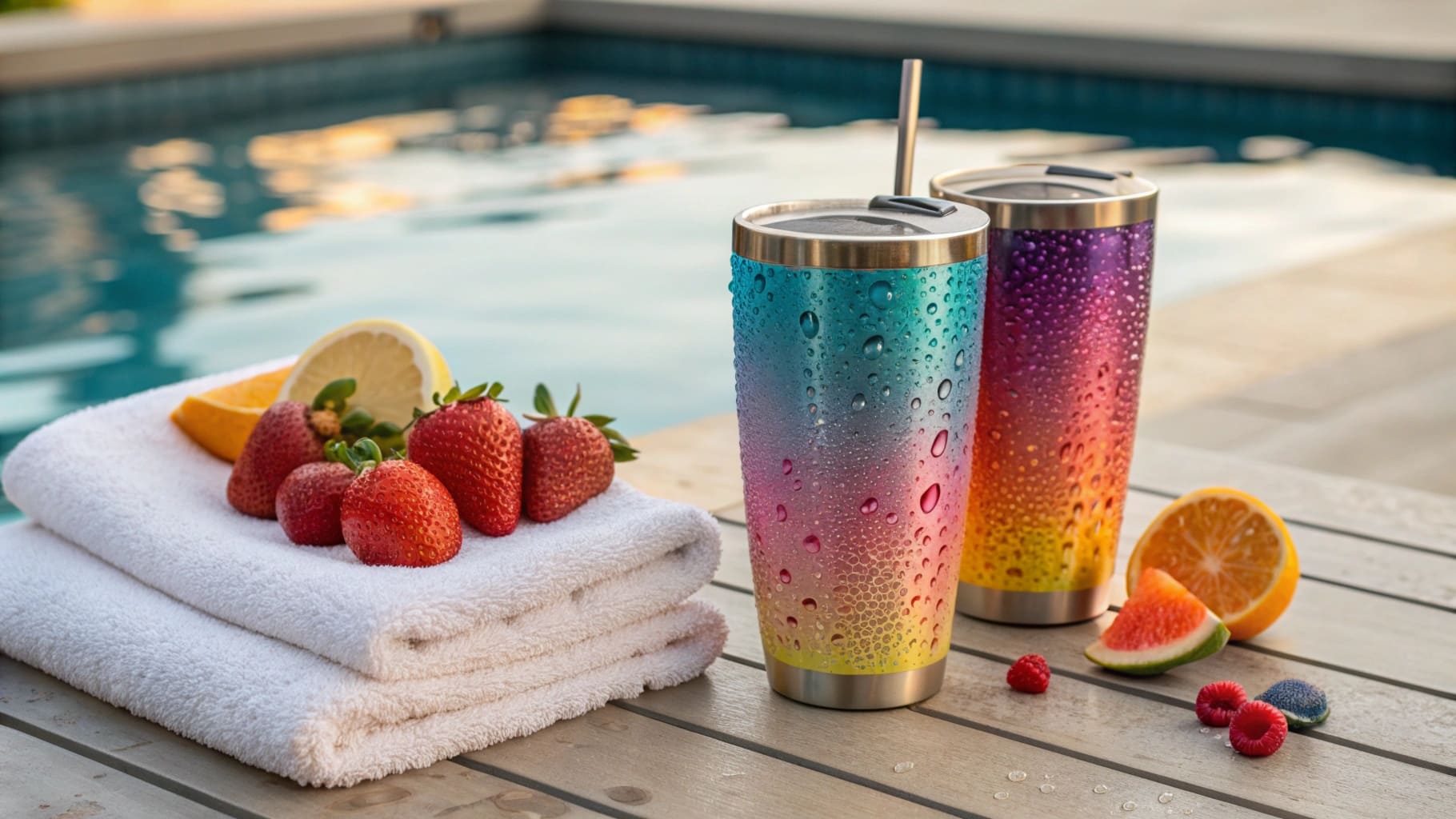
I have seen many buyers focus on price first and finish quality second. That order is wrong. A tumbler with a weak finish creates returns, complaints, and lost repeat orders. I want to walk you through what actually matters when you evaluate tumbler finishes for your product line. This will save you from expensive mistakes I have seen other buyers make.
Which Is the Best Insulated Tumbler?
You want to stock the best. But your supplier shows you ten options and every one of them claims to be premium. How do you actually tell the difference?
The best insulated tumbler for a B2B buyer combines vacuum insulation that holds cold for 12 to 24 hours, a finish that survives daily use without chipping or staining, and a seal that does not leak. No single brand owns all three of these qualities anymore.
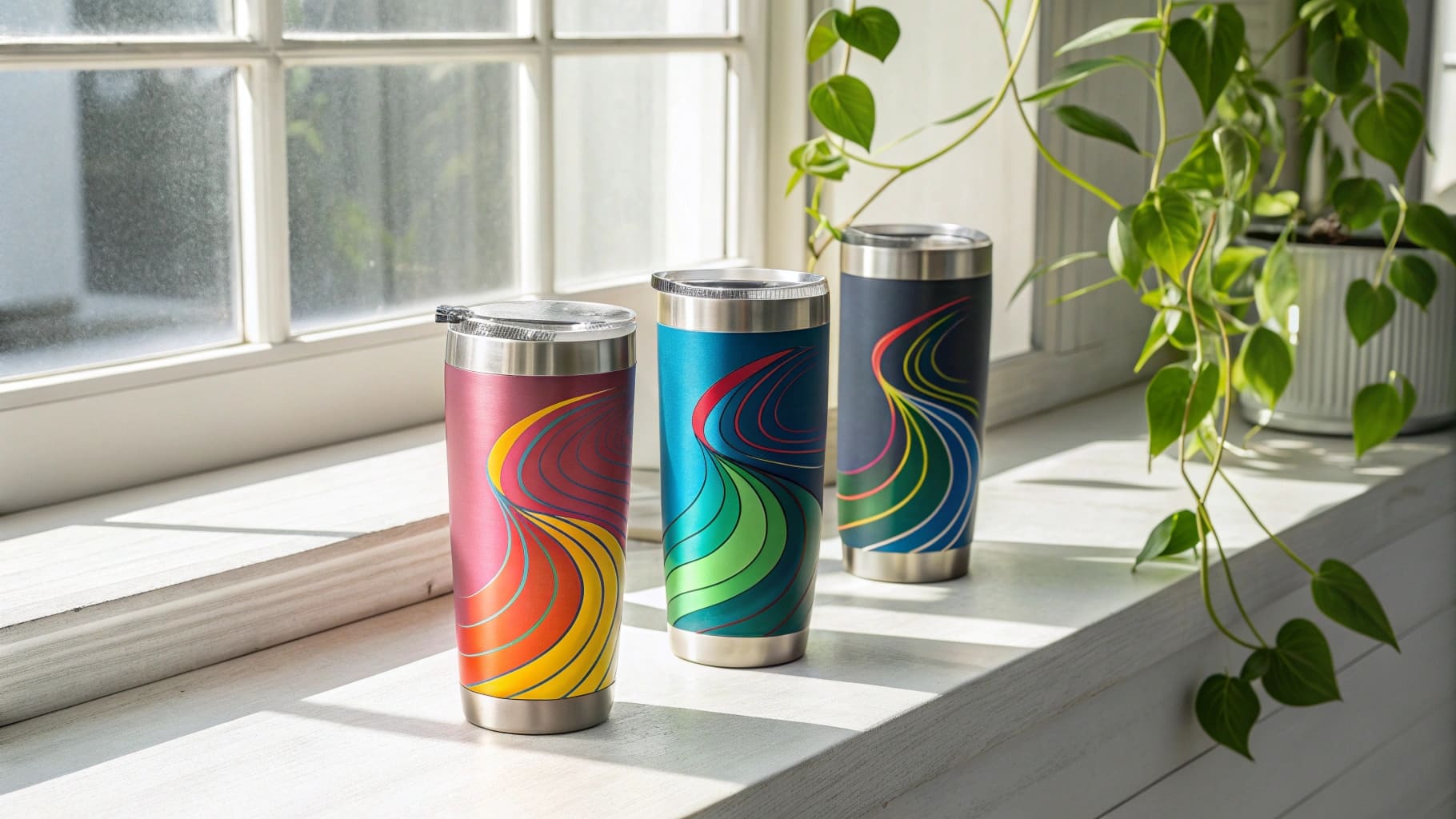
How to Break Down "Best" Into Real Specs
The word "best" means nothing without a target market. I always ask my buyers one question first: who is the end user and how hard will they use this product? That answer changes everything about which tumbler I recommend.
Here is how I break down the three main finish types against real performance needs:
| Finish Type | Fingerprint Resistance | Abrasion Resistance | Stain Resistance | Best Market Fit |
|---|---|---|---|---|
| Matte Powder Coat | High | High | Medium | Corporate gifts, outdoor brands |
| Brushed Stainless (#4 polish) | Medium | Medium-High | High (316 grade) | Coastal markets, minimalist brands |
| Electroplate (chrome) | Low | Medium | High | Luxury retail, premium gifting |
Powder coat is applied through an electrostatic process.1 It creates a protective layer between 25 and 50 microns thick. That layer outperforms standard paint by three to five times in abrasion testing. I always ask suppliers to confirm the curing temperature. It should be between 180 and 200 degrees Celsius. Coatings cured at lower temperatures fail early under daily commercial use.
Brushed stainless steel is the honest workhorse of tumbler finishes. The #4 polish level creates fine parallel lines across the surface. Those lines hide minor scratches better than a mirror polish does.2 If you are buying for corporate gift accounts or high-volume commercial buyers, brushed stainless is very forgiving. I recommend 316-grade steel over 304 for buyers in coastal regions or humid climates3. The difference in corrosion resistance is significant in those environments.
Electroplate looks expensive and it should. But it shows fingerprints easily. The critical spec most buyers miss is plating thickness. A commercial-grade tumbler needs a minimum copper underlayer of 0.3 to 0.5 microns, plus a chrome top layer of 0.1 to 0.15 microns4. Suppliers cutting costs often plate thinner than this. Thin plating chips within six to twelve months of daily use. Always request a cross-section report or third-party plating thickness test before placing a large order.
For finish durability overall, I ask every supplier for a salt spray test result. This test follows the ASTM B117 standard. A serious quality finish should show no degradation after 500 hours of salt spray exposure. If a supplier cannot provide this data, that tells me something important about how they approach quality control.
What Is Better Than Stanley Tumbler?
Stanley is everywhere right now. But that does not mean it is the right product for every buyer or every market position.
Stanley built its reputation on vacuum insulation performance and brand story. Several manufacturers now match or beat its insulation specs at 30 to 40 percent lower minimum order quantities. For new brands testing the market, that flexibility matters more than the name.

Where Other Options Actually Win
I work with buyers who want to build their own brand rather than resell someone else's name. For those buyers, the Stanley comparison is useful as a benchmark, not as a ceiling.
Here is what the competitive landscape actually looks like when you break it down by key spec:
| Feature | Stanley Benchmark | What to Ask Your Supplier |
|---|---|---|
| Cold retention | 24 hours | Request third-party test report |
| Hot retention | 7 hours | Same — do not accept self-reported data |
| Finish durability | Powder coat, good | Request ASTM B117 salt spray result (500+ hours) |
| MOQ flexibility | High for smaller brands | Look for suppliers offering 300–500 unit runs |
| Customization | Limited for new accounts | Prioritize suppliers with in-house color matching |
The real gap between Stanley and alternatives is not performance anymore. It is brand equity. Stanley has decades of story-building behind it. A new brand cannot buy that overnight. What a new brand can do is match the performance specs and build a stronger finish quality story because they chose their supplier more carefully than big retail brands do.
I have seen startup founders win shelf space by showing retail buyers their salt spray test data and their FDA-approved gasket certification. Those documents are not exciting. But they answer the questions a serious buyer always asks before they commit to a new product line.
If you are comparing suppliers to the Stanley benchmark, focus on these three things: vacuum insulation test data, finish durability test data, and the supplier's quality control process for detecting defects before shipment. A supplier who cannot hand you all three of these without hesitation is not ready for a serious wholesale relationship.
What Do You Seal Tumblers With?
A tumbler that leaks is a product that gets returned. Getting the seal right is not complicated, but it is easy to order wrong if you do not know what to ask for.
Professional manufacturers use food-grade silicone gaskets. They do not use adhesive sealants. Adhesive sealants degrade with heat cycling and cleaning. They are not appropriate for a product that goes into a dishwasher or holds hot liquid regularly.
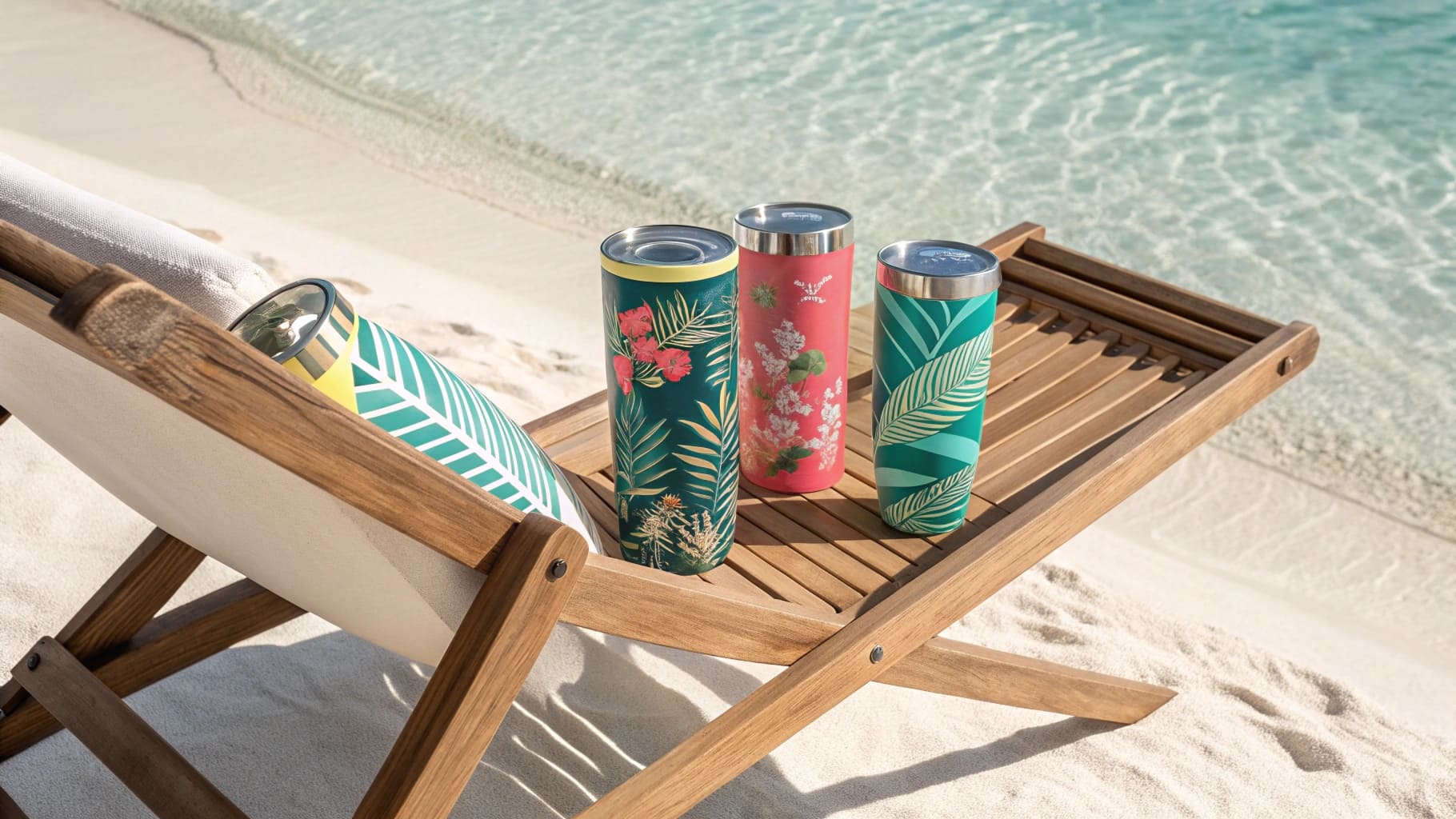
What the Gasket Spec Actually Tells You About Quality
The gasket is small. Most buyers barely look at it. But it tells you a lot about how a manufacturer thinks about long-term product performance.
Here is what I check on every tumbler sample I evaluate for a buyer:
| Gasket Spec | What to Look For | Why It Matters |
|---|---|---|
| Material | FDA-approved, BPA-free silicone | Required for food-contact compliance in North America and Europe |
| Placement | Rim-integrated or lid-integrated | Rim placement is more common; lid-integrated is harder to replace if worn |
| Compression set | Less than 25% after 1,000 hours at 70°C (ASTM D395) | High compression set means the gasket loses its shape and leaks over time |
| Fit tolerance | Consistent across batch | Request batch samples, not just one hero unit |
The compression set test is the one most buyers skip. It is the most important one. A gasket that passes this test holds its shape after repeated heat exposure and pressure cycles. A gasket that fails it looks fine when new and starts leaking six months into use. That is the kind of problem that triggers a wave of customer complaints right after your peak sales season.
Gasket placement also affects how easy the product is to maintain. A gasket on the lid rim is easy for the end user to remove, clean, and replace if needed. A gasket integrated deeper into the body is more leak-proof but harder to service. For corporate gift buyers who want a clean unboxing experience and low maintenance, rim placement is usually the better call.
I always ask suppliers to send me the ASTM D395 compression set data alongside the sample. If they do not have it, I ask them to run the test before we move to a production quote. Suppliers who push back on this request are telling me they have not tested their gaskets properly. That is a red flag I take seriously.
Conclusion
Finish quality, insulation performance, and a certified gasket are the three things that separate a strong tumbler from a costly return problem. Choose specs first, then price.
-
"Electrostatic Powder Coating: A Complete Guide - Grinnell CS", https://cs.grinnell.edu/lunar-note/electrostatic-powder-coating-a-complete-guide-1767648544. A technical coating reference can verify that powder coating commonly uses electrostatic spray deposition followed by thermal curing to form a continuous coating film. Evidence role: definition; source type: institution. Supports: Powder coating is applied by an electrostatic process.. ↩
-
"Mirror Stainless Steel Sheet vs Brushed Finish", https://www.sakysteel.com/news/mirror-stainless-steel-sheet-vs-brushed-finish-a-complete-comparison-guide/. A materials or finishing reference can explain that directional brushed finishes visually mask small scratches more effectively than highly reflective mirror finishes; this is a surface-appearance principle rather than a quantified durability result. Evidence role: mechanism; source type: education. Supports: Brushed stainless-steel lines hide minor scratches better than mirror polish.. Scope note: The source would support visual masking, not necessarily greater scratch resistance. ↩
-
""Polarization and corrosion behavior of 316L stainless steel and ...", https://voljournals.utk.edu/utk_gradthes/13738. A corrosion-engineering source can document that 316 stainless steel contains molybdenum and generally has better resistance to chloride-induced pitting than 304 stainless steel, making it more suitable for marine or coastal exposure. Evidence role: expert_consensus; source type: education. Supports: 316 stainless steel is preferable to 304 stainless steel for coastal or humid environments.. Scope note: Actual corrosion performance still depends on alloy quality, surface finish, cleaning, and chloride concentration. ↩
-
"Decorative Copper-Nickel-Chromium - Tech Plate", http://www.techplate.com/chrome2.html. An electroplating handbook or surface-engineering source can support the role of copper underlayers and chromium top layers in plated finishes and provide typical thickness ranges; the exact minimums for tumblers may be purchaser specifications rather than universal standards. Evidence role: general_support; source type: institution. Supports: Commercial electroplated tumbler finishes may specify copper and chromium layers in the stated micron ranges.. Scope note: Likely supports plating-layer function and comparable ranges, not a globally mandated tumbler minimum. ↩
