
Do Hip Flasks Change the Taste of Your Drink?
You spent good money on a bottle of bourbon. The last thing you want is a cheap flask turning it into something that tastes like spare change. That is a real problem, and it is more common than most buyers realize.
A high-quality stainless steel hip flask does not change the taste of your drink.1 The key is proper material grade, passivation treatment, and clean weld finishing. When all three are done right, your spirit tastes exactly the same coming out of the flask as it did going in.
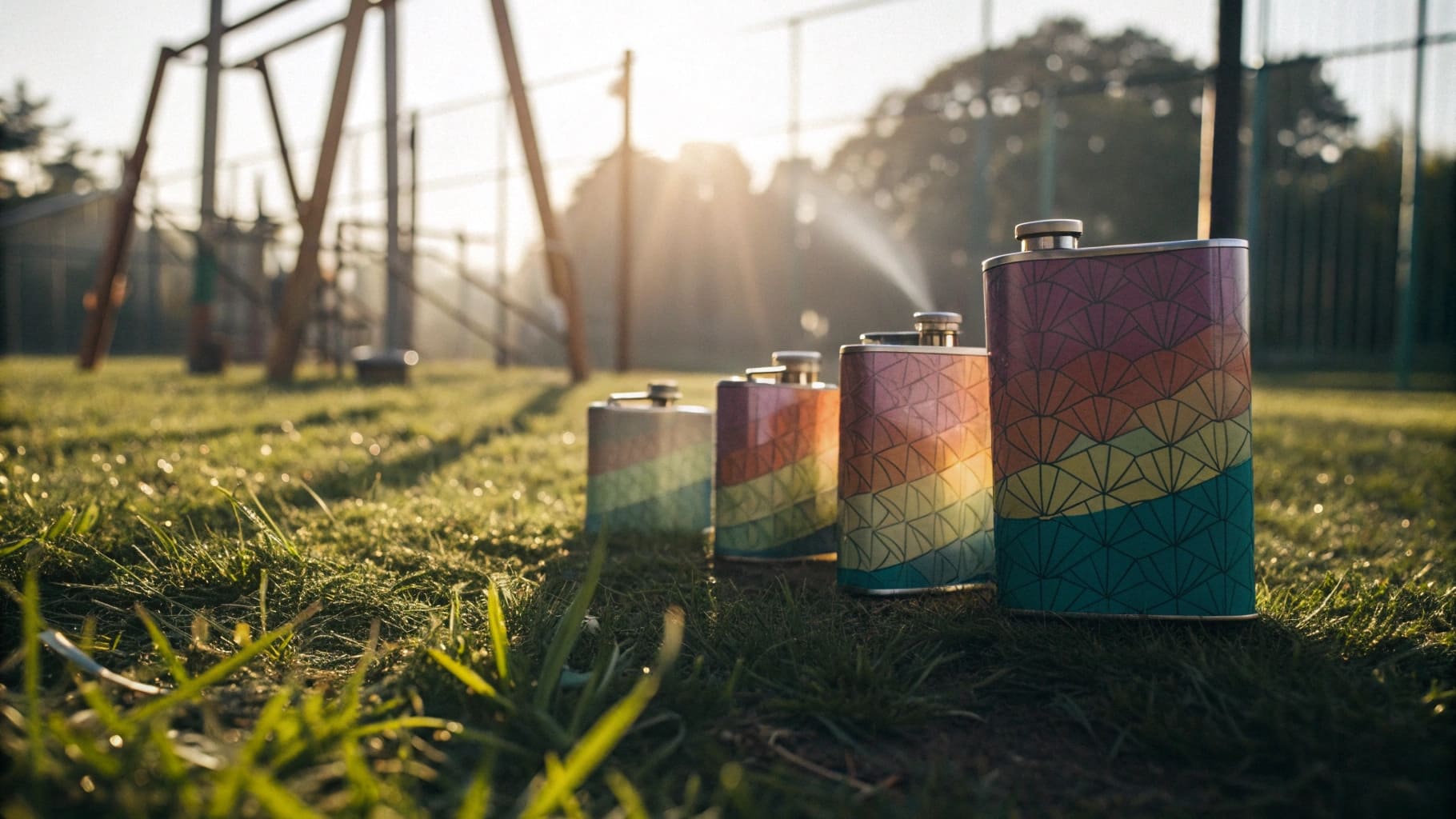
Most buyers focus on how a flask looks. That is the wrong place to start. The finish on the outside matters far less than what is happening on the inside. And once you understand what to look for inside a flask, you will never evaluate a product the same way again. Let me walk you through each part of it.
What Are Hip Flasks Good For?
A hip flask seems simple. But the buyers I work with are often surprised by how many ways it actually gets used in a B2B context.
Today, a hip flask does two things at once. It carries a drink. And it carries a brand. For procurement officers sourcing promotional merchandise or gift items, that second job is often the more important one.
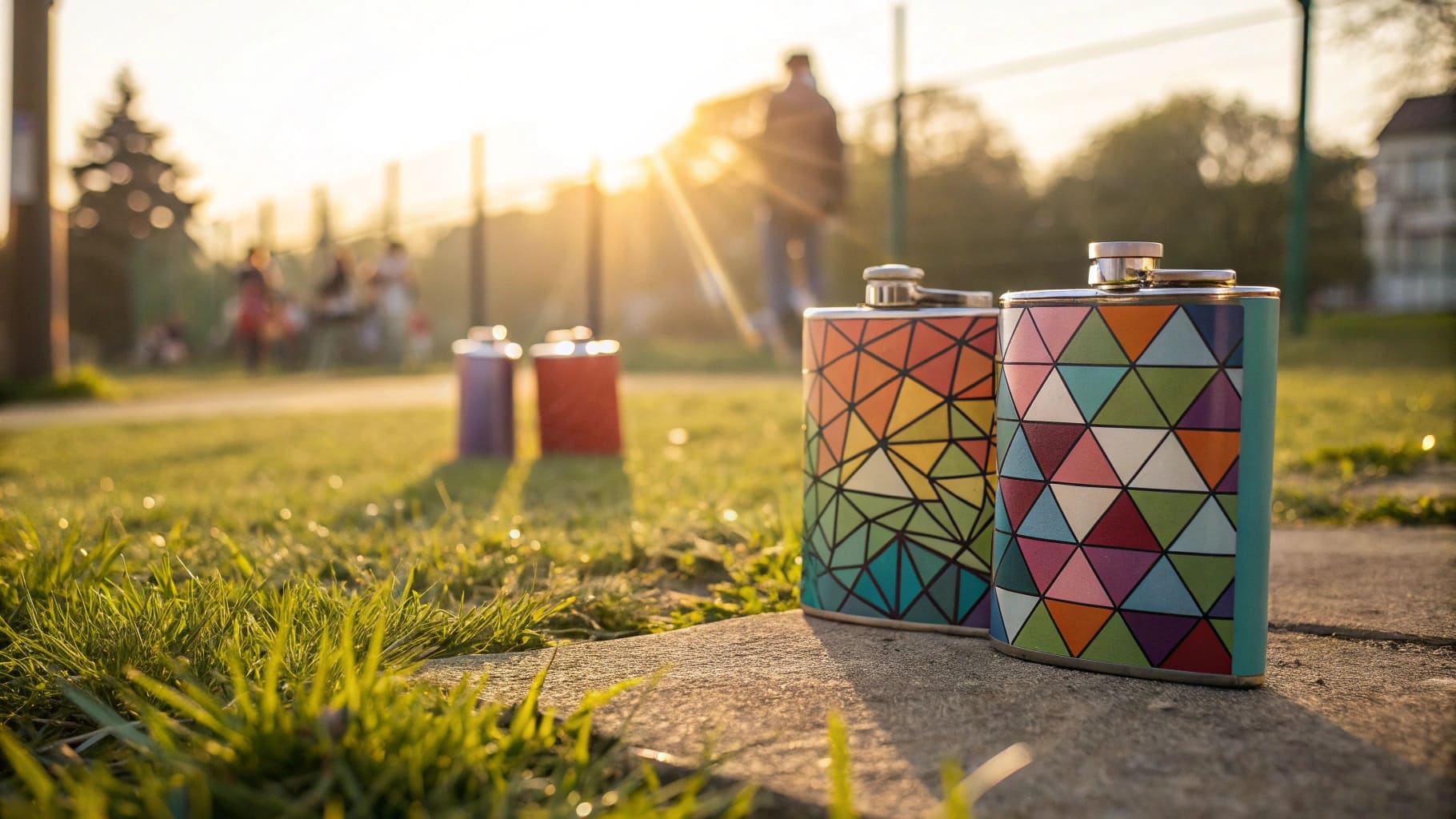
The Two Markets That Drive Hip Flask Demand
The first market is traditional. Outdoor enthusiasts, travelers, and spirit drinkers buy hip flasks to take their drink of choice somewhere a glass bottle cannot go. This group cares about capacity, durability, and leak-proof performance. They are using the flask, not displaying it.
The second market is what I see growing fast among my customers. Brand owners in the spirits industry, corporate gifting companies, and lifestyle brands are using hip flasks as premium merchandise. A well-made flask with a clean logo and a good weight in the hand tells a story about the brand it represents.
Here is how those two markets compare across the specs that matter most:
| Factor | Traditional Use | Brand Merchandise Use |
|---|---|---|
| Material Priority | Durability | Appearance and taste neutrality |
| Finish | Functional | Premium, branded |
| Capacity | 6–8 oz common | 4–6 oz more giftable |
| Certification Need | Basic food safety | FDA or LFGB preferred |
| Customization | Low | High |
I work with buyers who are building a product line around the second category. For them, the flask has to look good in a gift box and perform well enough that the end customer keeps it. That means the interior has to be right. A flask that leaves a metallic taste after one use will damage the brand it was supposed to represent.
This is why material grade and interior finishing are not just technical details. They are brand decisions. A flask made from 304 or 316 stainless steel with proper passivation creates a barrier between the metal and the liquid.2 The drink stays clean. The brand stays safe.
Does Stainless Steel Change the Taste of Bourbon?
This is the question I hear most often from buyers targeting the spirits market. And the honest answer is: it depends entirely on how the flask was made.
Poorly treated stainless steel does change the taste of bourbon.3 A metallic note creeps in within hours. But a flask with the right steel grade and proper surface treatment holds the spirit's character intact for days.

The Three Manufacturing Factors That Decide Taste
There is no mystery here once you break it down. Taste contamination in a stainless steel flask comes from one of three sources: the wrong steel grade, incomplete passivation, or rough weld zones. Fix all three, and the taste problem disappears.
Steel Grade
Not all stainless steel behaves the same way in contact with acidic liquids like bourbon. The chromium and nickel content in the alloy determines how reactive the surface is. Here is how the common grades compare:
| Steel Grade | Chromium % | Nickel % | Taste Neutrality | Best Use Case |
|---|---|---|---|---|
| 201 | 16–18% | 3.5–5.5% | Poor | Low-cost, non-food |
| 304 | 18–20% | 8–10.5% | Good with passivation | Standard food use |
| 316 | 16–18% | 10–14% | Excellent | Premium spirits, gifting |
316 steel contains molybdenum, which makes it more resistant to corrosion from acidic and salty liquids.4 For bourbon, which is slightly acidic, 316 is the safer choice when taste neutrality is critical.
Passivation Quality
Passivation is a chemical treatment that builds a chromium oxide layer on the surface of the steel.5 That layer is what makes the surface inert. Without it, or with a thin or uneven layer, the bare metal sits in contact with the liquid and releases trace metal ions.
I ask every supplier I work with for passivation certificates that show the chromium oxide layer thickness. A properly passivated 316 flask shows zero detectable taste change in bourbon after 72 hours of contact. Inadequately treated 304 steel can show measurable metal ion release within 24 hours. That is not a small difference.
Weld Zone Finishing
The weld seam inside a flask is the most vulnerable point. Welding creates heat, and heat disrupts the passive layer at the weld zone.6 If the manufacturer does not re-treat the weld area after joining, that seam becomes a site where oxidation happens. It is also a surface that is hard to clean, which means flavor residue from previous fills can affect the next one.
I specifically ask suppliers whether they use TIG welding and whether post-weld electropolishing is applied to the interior. Electropolishing removes microscopic surface peaks that regular polishing misses.7 It leaves a surface that liquid cannot grip. The result is a flask that is easier to clean and more resistant to taste transfer.
What to Look for in a Hip Flask?
Most buyers evaluate a flask by handling a sample. That tells you about weight, feel, and visible finish. It does not tell you anything about what matters most.
The real quality of a hip flask lives in three places: the surface treatment certificate, the weld quality inside, and the cap seal under real conditions. All three are invisible until you ask the right questions.

A Practical Evaluation Framework for B2B Buyers
I have been through enough supplier audits to know which steps actually protect you and which ones just feel thorough. Here is the framework I use and recommend to my customers.
Surface Roughness (Ra Value)
Ra value measures how smooth a surface is at the microscopic level. A lower Ra value means fewer microscopic peaks and valleys where liquid can cling or react. Premium flasks should have an interior Ra below 0.4 micrometers. This level is achieved through electropolishing, not standard mechanical polishing. Ask your supplier to provide Ra test data for interior surfaces.
| Ra Value | Surface Quality | Impact on Taste |
|---|---|---|
| Above 1.6 µm | Rough | High risk of flavor retention and metallic notes |
| 0.8–1.6 µm | Standard | Acceptable for basic use |
| 0.4–0.8 µm | Good | Low risk |
| Below 0.4 µm | Premium (electropolished) | Minimal to no taste impact |
Certification Requirements
For buyers entering the US or Canadian market, FDA certification covers basic food contact safety. For European distribution, LFGB is the standard.8 Both validate that the material and surface treatment meet requirements for food and beverage contact. Neither is enough on its own to confirm taste neutrality.
I recommend pairing any food safety certificate with a separate passivation certificate and, where possible, a third-party taste test report. Some premium suppliers offer this documentation. If a supplier cannot produce it, that is information too.
Cap Seal Testing
This one gets overlooked more than anything else I have listed. A flask that leaks in a jacket pocket or a carry-on bag is a product return waiting to happen. The seal mechanism needs to hold under pressure variation, because altitude changes in air travel affect internal pressure inside the flask.
Ask for batch test data showing liquid retention over 24 hours across temperature ranges. A simple fill-and-invert test at your end is a reasonable baseline, but it does not replicate the conditions your end customer will put the product through.
What to Request from Your Supplier
When I am sourcing hip flasks for a customer who needs premium quality, this is the documentation list I start with:
- Passivation certificate with chromium oxide layer data
- Interior surface Ra value test results
- TIG weld confirmation and post-weld treatment process description
- FDA or LFGB food contact certification
- Cap seal pressure test data
- Optional: third-party taste neutrality test report
A supplier who can provide all of this is a supplier who knows their product and stands behind it. That confidence matters when your customer's brand is on the side of the flask.
Conclusion
A good hip flask protects both the drink inside and the brand outside. Material grade, passivation, weld quality, and seal performance are the four factors that decide whether yours does the job right.
-
"Long-term continuous corrosion of 316L stainless steel by ... - PMC", https://pmc.ncbi.nlm.nih.gov/articles/PMC12714886/. Food-grade stainless steels are widely used for beverage and food-contact applications because their passive chromium-rich surface generally limits corrosion and metal transfer under normal use conditions. Evidence role: general_support; source type: institution. Supports: A high-quality stainless steel hip flask does not change the taste of your drink.. Scope note: This supports the general material rationale, but it does not directly prove sensory neutrality for every hip flask design or spirit. ↩
-
"Reconstruction of the Passive Layer of AISI 304 and 316 Steel After ...", https://pmc.ncbi.nlm.nih.gov/articles/PMC11678228/. Stainless steels such as AISI 304 and 316 rely on a passive chromium oxide surface film that acts as a corrosion-resistant barrier between the alloy and surrounding media. Evidence role: mechanism; source type: education. Supports: Properly passivated 304 or 316 stainless steel creates a protective barrier between the metal and liquid.. Scope note: This supports the barrier mechanism generally, not the performance of a specific flask manufacturer or batch. ↩
-
"Stainless Steel Leaches Nickel and Chromium into Foods During ...", https://pmc.ncbi.nlm.nih.gov/articles/PMC4284091/. Studies of metal release from stainless steel food-contact articles show that surface condition, alloy composition, and exposure chemistry can affect migration of metallic elements into food simulants, providing a plausible basis for metallic off-flavors. Evidence role: mechanism; source type: paper. Supports: Poorly treated stainless steel can alter the taste of bourbon through metal release or surface reactions.. Scope note: Metal migration data support plausibility of taste effects but may not directly measure bourbon sensory changes. ↩
-
"Enhanced Wear Resistance of AISI-316 Steel by Low-Temperature ...", https://ui.adsabs.harvard.edu/abs/2021JMEP...30.8947N/abstract. Materials references identify molybdenum in Type 316 stainless steel as improving resistance to pitting and crevice corrosion, especially in chloride-containing environments. Evidence role: mechanism; source type: encyclopedia. Supports: 316 stainless steel contains molybdenum and has greater corrosion resistance in challenging liquids than many common stainless grades.. Scope note: The strongest documented advantage concerns chloride-rich media; applicability to bourbon is contextual rather than a direct test. ↩
-
"[PDF] Corrosion fatigue crack initiation in duplex stainless steel paper ...", https://nvlpubs.nist.gov/nistpubs/Legacy/IR/nistir6309.pdf. Standards and technical references define stainless steel passivation as a chemical treatment that removes free iron and promotes a chromium-rich oxide surface layer responsible for corrosion resistance. Evidence role: definition; source type: government. Supports: Passivation is a chemical treatment associated with formation or enhancement of a chromium oxide layer on stainless steel.. Scope note: Different passivation methods exist, and not all standards describe the layer as being deliberately “built” to a measured thickness. ↩
-
"Corrosion of the heat-affected zone of stainless steel weldments", https://hero.epa.gov/reference/4188986/. Welding of stainless steel can produce heat-affected zones and surface oxides that reduce corrosion resistance unless cleaned and passivated after fabrication. Evidence role: mechanism; source type: institution. Supports: Welding heat can disrupt stainless steel’s passive layer at the weld zone.. Scope note: The evidence supports corrosion vulnerability at welds generally, not the sensory effect of a specific flask seam. ↩
-
"[PDF] roughness reduction of additively manufactured steel by - OSTI", https://www.osti.gov/servlets/purl/1638686. Electropolishing is described in surface-finishing literature as an electrochemical process that preferentially removes microscopic high points, reducing surface roughness and improving cleanability. Evidence role: mechanism; source type: research. Supports: Electropolishing removes microscopic surface peaks and produces a smoother stainless steel surface than ordinary mechanical finishing.. Scope note: The source may support surface smoothing and cleanability, while taste-transfer reduction remains an inferred application. ↩
-
"Regulatory Status of Components of a Food Contact Material - FDA", https://www.fda.gov/food/packaging-food-contact-substances-fcs/determining-regulatory-status-components-food-contact-material. Regulatory sources describe U.S. FDA requirements for food-contact materials and Germany’s LFGB framework for food and feed safety, supporting their relevance to food-contact compliance in those markets. Evidence role: historical_context; source type: government. Supports: FDA-related food-contact compliance is relevant in the U.S. market, while LFGB is a key European/German food-contact safety framework.. Scope note: The phrasing “FDA certification” can be imprecise because FDA generally regulates food-contact substances and compliance rather than issuing a universal product certificate. ↩