
Tumbler for sublimation: coating thickness, Delta E targets, cure profiles?
I see many buyers lose money when a beautiful sample becomes dull, cracked, or off-color after bulk decoration.
I qualify a sublimation tumbler by checking the polymer coating thickness, Delta E color result, and cure profile. I expect a stable coating, tight color control, and proper heat curing before I treat the tumbler as ready for B2B orders.
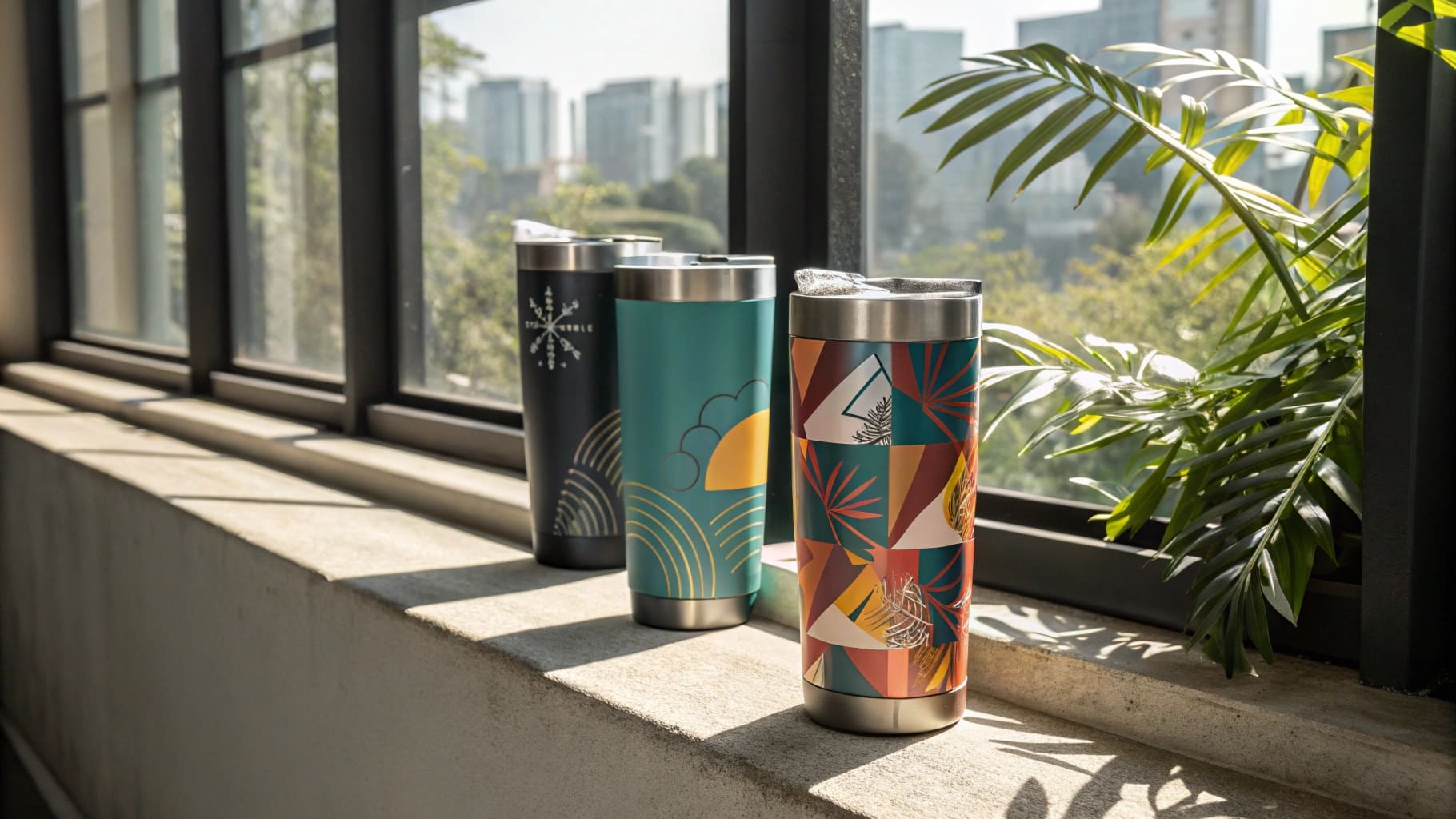
I have learned that sublimation tumblers are not just stainless steel cups with a white surface. I treat them as coated industrial products. When I speak with procurement officers, I try to move the conversation away from only price and capacity. I ask about the coating recipe, the coating thickness range, the color target, the curing window, and the inspection method. These details decide whether a Canadian distributor can rebrand the product with confidence or face customer complaints after the selling season starts.
What are sublimation tumblers?
I often see buyers think all white tumblers can take heat transfer, and that mistake can damage a whole promotion order.
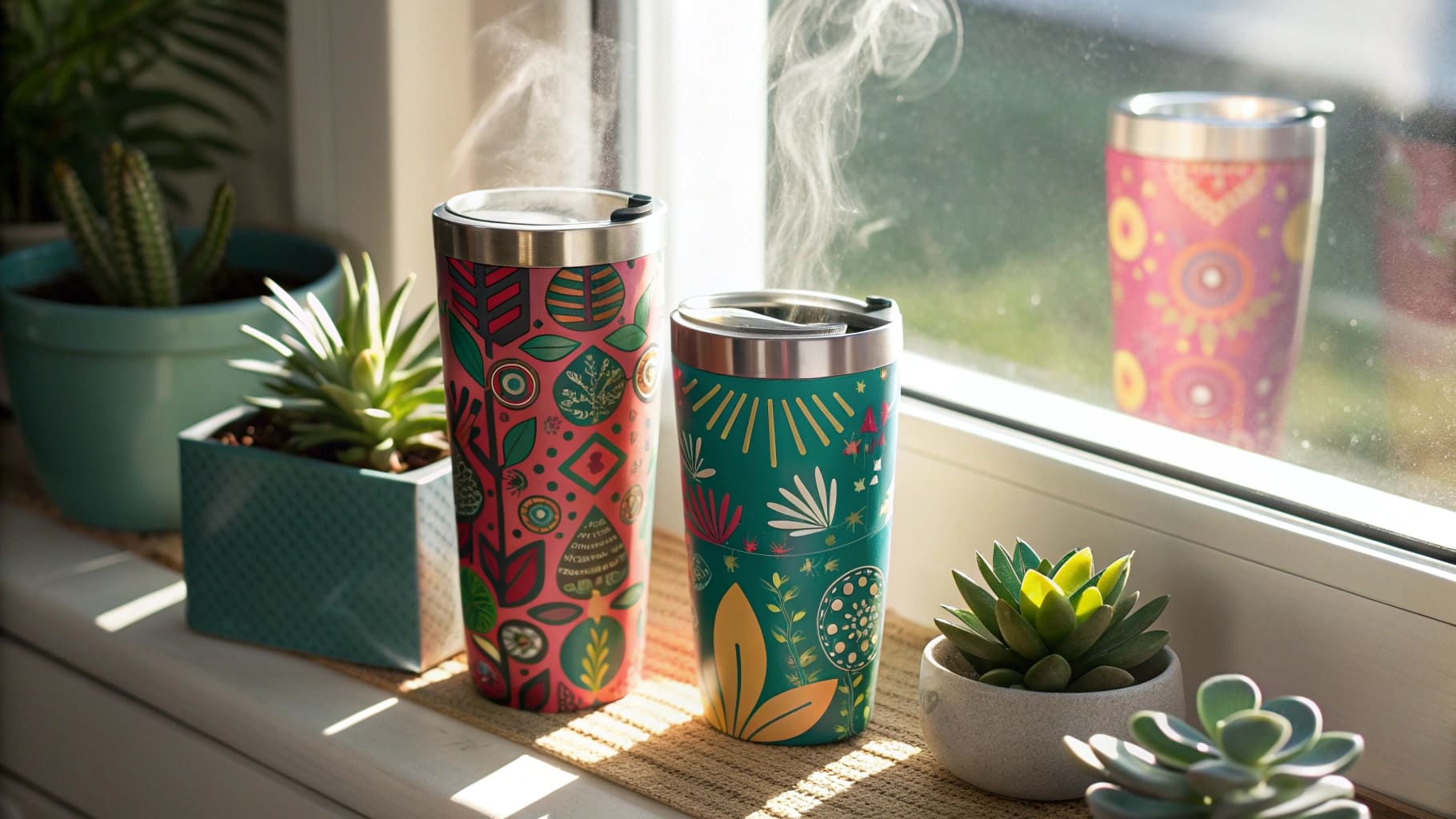
I define sublimation tumblers as stainless steel drinkware1 with a special polymer coating that accepts sublimation ink under heat and pressure. I use them for full-color logos, photos, retail designs, and corporate gift programs.
I look at the tumbler as a coated product
I do not judge a sublimation tumbler by shape only. I judge it by the way the stainless steel body, surface treatment, coating, and final printing result work together. The body needs good forming. The weld area needs control. The surface needs proper cleaning before coating. The coating needs an even film. The final product needs stable color after heat transfer.
| Area I check | What I want to see | Why I care |
|---|---|---|
| Stainless steel body | Clean surface and stable shape | I need the coating to sit on a reliable base |
| Polymer coating | Even coverage with no pinholes | I need the ink to transfer without blank spots |
| Color after transfer | Small visible difference from the design | I need brand colors to stay trusted |
| Wash resistance | No peeling or yellowing | I need the end user to keep using the product |
| Packing | Protected surface before decoration | I need fewer scratches during shipping |
I separate promotional use from professional use
I see a real difference between a cheap promotional tumbler and a professional sublimation tumbler. A cheap item may look acceptable before printing, but it may fail after heat press, dishwasher exposure, or long shelf storage. A professional tumbler needs a coating that can handle repeated heat transfer and real end-user use. I also care about consistency between batches. One sample does not prove a factory can supply stable bulk orders. I prefer to inspect several cartons from a trial run, not only the golden sample from the sales team.
What is the coating used for sublimation?
I see coating failures create the worst disputes because the buyer has already paid for product, freight, and decoration labor.
I usually work with polyester-based polymer coatings2 for sublimation tumblers. I expect the coating to bond with sublimation ink during heat transfer and to stay attached to stainless steel after washing, handling, and normal use.
I focus on coating thickness first
I treat coating thickness as one of the first technical points in a sublimation tumbler project. Most reliable sublimation-ready tumblers use a polyester-based coating in a controlled micron range. In many projects, I see a practical target around twenty to forty microns. I do not want the coating too thin because it may cause weak color density, uneven transfer, and early wear. I do not want the coating too thick because it may crack, feel plastic-like, or create a poor hand feel.
| Coating condition | What I may see | Risk for the buyer |
|---|---|---|
| Too thin | Weak color and uneven transfer | I may receive complaints about dull designs |
| Controlled range | Smooth color and normal touch | I can support commercial decoration work |
| Too thick | Cracking or artificial texture | I may lose premium brand feeling |
| Uneven coating | Spots and shade differences | I may face rejection after inspection |
I connect coating quality with Delta E
I use Delta E as a practical way to discuss color accuracy. I do not want a supplier to say only that the color is “good.” I want measurable test results. A lower Delta E means the printed result is closer to the original design. For corporate gifts, brand color control matters. A buyer may accept a small color difference for a casual retail design, but a brand owner may reject an order if the logo red, blue, or green looks wrong.
| Delta E result | How I read it | My B2B decision |
|---|---|---|
| Below two | I see strong color control | I consider it suitable for brand orders |
| Around two to three | I review the design and buyer tolerance | I ask for approval before bulk use |
| Above three | I expect visible color difference | I avoid premium brand projects |
| Unmeasured | I do not have enough proof | I request testing before order confirmation |
I do not ignore adhesion and chemical resistance
I also ask about adhesion tests, rubbing tests, and washing simulation3. A coating can print well on the first day and still fail later. I once reviewed a sample that printed beautifully, but the coating edge lifted after repeated hot water cleaning. That case reminded me that sublimation performance is not only about image quality. It is also about the bond between coating and steel. For wholesale buyers, this point matters because complaints arrive late. By the time the end user sees peeling or yellowing, the distributor may already have sold the stock and built a bad customer experience.
What are the settings for sublimation tumblers?
I see many buyers blame the tumbler when the real problem is an uncontrolled heat press setting or an unknown cure profile.
I treat sublimation settings as two different systems. I check the factory cure profile for the coating, and I also check the decoration heat press setting used for ink transfer.
I separate curing from decoration
I always separate coating cure conditions from sublimation printing conditions. The factory cure profile is used to bond the coating to the stainless steel body. This process usually happens before the buyer receives the tumbler. It controls adhesion, hardness, chemical resistance, and long-term stability. The decoration setting is different. It is the time, temperature, and pressure used by the buyer or decorator to transfer the image onto the coated tumbler.
| Process | Who controls it | What it affects |
|---|---|---|
| Coating cure | Factory | Adhesion, hardness, yellowing risk, durability |
| Heat transfer | Decorator | Image sharpness, color density, ghosting, wrap marks |
| Cooling method | Decorator | Color stability and surface stress |
| Storage before printing | Buyer or warehouse | Dust, scratches, and moisture issues |
I ask for the factory cure profile
I want to know how the supplier cures the coating. A common industrial window may involve high heat for a controlled period, often around one hundred eighty to two hundred degrees Celsius for several minutes4, based on the coating system. I do not treat this as one fixed rule because each coating formula can differ. I ask the supplier to give the actual profile, not a general answer. Under-cured coating can peel, soften, or discolor5. Over-cured coating can turn yellow, become brittle, or lose a clean white look6 before printing.
| Cure result | What I may notice | What I ask next |
|---|---|---|
| Under-cured | Soft surface or weak adhesion | I ask for adhesion and wash test data |
| Properly cured | Stable white surface and strong bond | I approve deeper sampling |
| Over-cured | Yellow tone or brittle surface | I ask the factory to adjust the oven profile |
| Unknown profile | No process control proof | I slow down the order process |
I check decoration settings with real samples
I also test the heat press setting on real samples before bulk decoration. I do not rely only on a standard online setting because press type, wrap pressure, paper, ink, and room conditions can change the result. I ask decorators to record time, temperature, pressure, paper type, and cooling method. I then compare the final print against the design and check for ghosting, dull color, uneven edges, and surface marks. If the same tumbler prints well in one setup and poorly in another, I know the problem may sit in the decoration workflow, not only in the product.
I use these settings to protect the buying season
I care about these technical settings because B2B buyers work with seasons. A delayed shipment or failed decoration run can miss a summer campaign, holiday gift order, or retail launch. I prefer to solve these questions before a deposit, not after the goods arrive. When I supply sublimation tumblers, I want the buyer to receive clear product data, stable samples, and honest production timing. I know that a company owner or procurement officer may not have deep coating knowledge, so I make the information simple and useful. I believe this is how supplier communication should work.
Conclusion
I trust sublimation tumblers only when coating thickness, Delta E, cure profile, and decoration settings are controlled before bulk production begins.
-
"Depositing Al-Based Metallic Coatings onto Polymer ...", https://sites.usc.edu/composites/files/2020/05/J-279.pdf. Stainless steel, particularly austenitic grades such as 304 and 316, is commonly used for drinkware due to corrosion resistance, food safety compliance, durability, and compatibility with surface treatments including polymer coatings. Evidence role: general_support; source type: education. Supports: the suitability of stainless steel as a substrate for coated drinkware applications. Scope note: The article does not specify which stainless steel grades are optimal for sublimation coating adhesion or discuss surface preparation requirements. ↩
-
"Dye-sublimation printing", https://en.wikipedia.org/wiki/Dye-sublimation_printing. Polyester-based coatings are widely used in dye sublimation applications because polyester molecules can form temporary bonds with disperse dyes under heat, allowing dye migration into the polymer matrix. Evidence role: mechanism; source type: research. Supports: the chemical compatibility between polyester polymers and sublimation dyes during heat transfer. Scope note: This describes the general mechanism rather than specifying tumbler coating formulations, which may include proprietary additives. ↩
-
"D3359 Standard Test Methods for Rating Adhesion by Tape Test", https://www.astm.org/d3359-23.html. Organizations such as ASTM International publish standardized test methods for coating evaluation, including cross-hatch adhesion testing (ASTM D3359), abrasion resistance (ASTM D4060), and accelerated weathering or washing protocols. Evidence role: general_support; source type: institution. Supports: standardized test methods for evaluating coating adhesion, abrasion resistance, and wash durability. Scope note: The article does not specify which standards or test protocols should be applied to sublimation tumbler coatings. ↩
-
"Powder coating", https://en.wikipedia.org/wiki/Powder_coating. Industrial thermosetting polymer coatings, including polyester-based systems, are commonly cured at temperatures between 160°C and 220°C for durations of 10 to 30 minutes, depending on coating formulation and film thickness. Evidence role: general_support; source type: research. Supports: typical curing temperature ranges for thermosetting polymer coatings on metal substrates. Scope note: Optimal cure schedules depend on specific resin chemistry, catalyst systems, and substrate properties rather than being universal across all polyester coatings. ↩
-
"Strength in Adhesion: A Multi-Mechanics Review Covering ...", https://pmc.ncbi.nlm.nih.gov/articles/PMC12526568/. Incomplete curing of thermosetting polymers results in insufficient crosslink density, leading to reduced mechanical strength, poor solvent resistance, lower glass transition temperature, and inadequate adhesion to substrates. Evidence role: mechanism; source type: research. Supports: the relationship between incomplete polymer crosslinking and coating performance defects. Scope note: Specific failure manifestations depend on coating chemistry, degree of under-cure, and service conditions rather than following a single pattern. ↩
-
"The Kinetic Study of the Influence of Common Modifiers on the Curing ...", https://pmc.ncbi.nlm.nih.gov/articles/PMC10857267/. Excessive thermal exposure during polymer curing can cause thermal degradation, oxidation, and chain scission, resulting in discoloration (often yellowing), increased brittleness, and formation of carbonyl chromophores that reduce whiteness. Evidence role: mechanism; source type: research. Supports: the degradation mechanisms that occur when polymer coatings are exposed to excessive thermal energy. Scope note: The specific temperature and time thresholds for over-cure degradation vary significantly among polymer chemistries and antioxidant packages. ↩