
Are wide-mouth lids cross-compatible on 18-32oz bottle SKUs without drift?
I see buyers lose money when one “universal” lid leaks across sizes. A small neck drift can become claims, delays, and dead stock.
Wide-mouth lids can be cross-compatible on 18-32oz bottle SKUs when the neck finish, thread pitch, gasket seat, and tolerance control stay the same. I always confirm this with technical drawings, sample checks, and leak tests1 before I approve mass production.
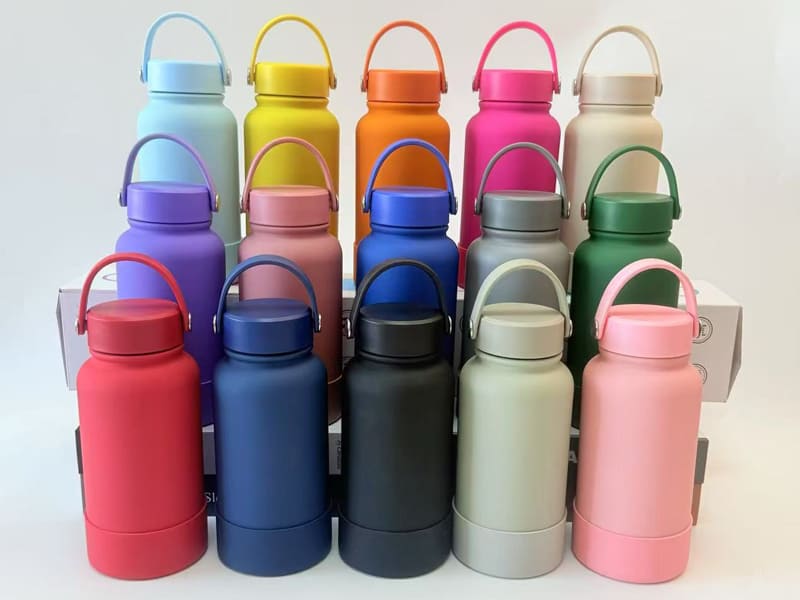
I treat wide-mouth lid compatibility as a supply chain question, not only a product design question. If one lid fits 18oz, 24oz, and 32oz bottles without seal drift, I can reduce lid SKUs, simplify spare parts, lower packaging work, and make reorders easier. If the lid only “almost fits,” I may still pass the first visual check, but I will fail later when bottles travel by sea, sit in hot warehouses, or reach end users during peak season. That is why I do not trust verbal promises. I ask for neck drawings, mold control records, gasket material details, and real water leak tests across the full bottle range.
Are wide mouth jars harder to seal?
I have seen wide-mouth parts look safer because they feel stronger. That feeling can hide a real sealing risk when the gasket or thread is not controlled.
Wide-mouth jars are not harder to seal by default. They become harder to seal when the wider opening, larger gasket area, or loose thread tolerance allows uneven pressure. I check the sealing surface, cap torque, and gasket compression2 before I trust the design.

How I Look At Wide-Mouth Sealing Risk
I do not see wide-mouth sealing as a single yes-or-no issue. I see it as a balance between contact area, pressure, material, and process control. A wider mouth gives the user clear benefits. It is easier to add ice, clean the inside, fill powder, and drink fast. But that same wide opening also creates a larger sealing path. If the lid gasket has uneven thickness, the seal may look normal but leak under side pressure. If the thread pitch changes between mold cavities, the lid may close too early or too late. If the stainless steel neck has polishing variation, the gasket may not sit flat.
I usually ask my team to test the smallest and largest capacity in the same series. I do this because size changes can pull the bottle body and neck through different forming steps. The neck should not change, but real production can still create drift.
| My check point | What I want to confirm | Why I care |
|---|---|---|
| Neck outer diameter | I want the same dimension across all sizes | I need one lid to start smoothly |
| Thread pitch | I want the same rotation and closing feel | I need steady gasket pressure |
| Gasket seat | I want a flat and clean sealing land | I need leak resistance |
| Lid torque | I want a stable close force | I need users to close it by hand |
| Mold cavity control | I want each cavity to match the drawing | I need repeat orders to stay safe |
What I Usually Tell A Buyer
I tell a buyer that a wide-mouth design is not a problem if the supplier controls the neck finish. In stainless steel bottles, I often see wide-mouth openings around 63mm to 70mm. This range is popular in North America and Europe because outdoor and fitness users like easy cleaning and ice access. But I also tell the buyer that popularity does not prove compatibility. I need proof from samples and data.
For B2B orders, I prefer one lid design for 18oz, 24oz, and 32oz bottles when the product line allows it. I also prefer one gasket specification and one lid carton system. This choice helps me reduce spare lid inventory. It also helps the buyer sell replacement lids later. But I only approve it when the sealing test passes across all sizes, all colors, and all key lid versions.
What size label for wide mouth Mason jar lid?
I have seen nice packaging fail because the label size was guessed. A label that is too large wrinkles, lifts, and makes the product look cheap.
For a wide mouth Mason jar lid, I usually use a round label around 2.5 to 2.75 inches for the flat top area. If the design needs full coverage, I confirm the real lid diameter and keep clear space near the rim.
How I Choose A Lid Label Size
I choose the label size after I measure the actual lid, not after I read a catalog name. “Wide mouth” sounds standard, but different lid suppliers may have small shape differences. A Mason jar wide mouth lid is often around 86mm across the outside. The flat label area is smaller because the rim, curve, or raised edge takes space. If I place artwork too close to the edge, the label may wrinkle during application. It may also peel during transport if cartons rub against each other.
I use the same thinking for stainless steel bottle lids. A lid top may look flat in a photo, but the usable label area may be limited by handle holes, sip covers, buttons, texture, or logo embossing. If the buyer plans to rebrand in Canada or Europe, I ask for the label die line early. This keeps the packaging team, factory team, and sales team aligned before mass production.
| My label choice | When I use it | My reason |
|---|---|---|
| Small center label | I use it for simple logos | I avoid the rim and reduce peeling |
| Medium round label | I use it for brand plus short text | I balance cost and clear display |
| Full top label | I use it for strong shelf branding | I confirm the lid shape first |
| Side sticker on carton | I use it for warehouse control | I keep SKU handling simple |
| QR or barcode label | I use it for tracking | I support inspection and logistics |
Why Label Planning Matters For B2B Orders
I think label planning matters more in wholesale than in small retail orders. A startup founder may focus on the product photo. A procurement officer may focus on carton marks, barcode rules, warehouse labels, and customs documents. If the lid label does not match the real lid surface, the factory may slow down the packing line. If the label glue is weak, the distributor may receive cartons with loose labels. If the artwork covers a curved area, the product may look poor after rebranding.
I also connect label decisions with lid compatibility. If one wide-mouth lid fits several bottle sizes, I can use one lid label for many SKUs. This can reduce artwork files, printing plates, label MOQ, and packing mistakes. It also helps the buyer reorder faster. But if the lid shape changes by capacity, every label plan becomes more complex. I ask for physical samples with final labels before I lock the order.
What is the difference between wide mouth and standard mason jars?
I have seen buyers compare only price between wide mouth and standard mouth designs. That shortcut can create cleaning issues, filling problems, and wrong lid inventory.
The main difference is the opening size. A wide mouth jar has a larger opening, so filling and cleaning are easier. A standard mouth jar has a narrower opening, so it may cost less3 and use different lids.

How I Compare Wide Mouth And Standard Mouth Designs
I compare the two designs by use case first. I do not start with the unit price. A wide mouth design gives more access. A user can add ice cubes, fruit, powder, tea bags, or cleaning brushes more easily. This is why wide-mouth stainless steel bottles sell well for outdoor, gym, and travel use. A standard mouth design can feel more controlled for drinking. It may also use less material in the neck and lid area. But it may not fit the same user habit.
In Mason jars, the market often talks about regular mouth and wide mouth lids. In stainless steel bottles, I usually talk about standard-mouth and wide-mouth openings by millimeter size. Standard-mouth stainless steel bottles often use a smaller opening, while wide-mouth bottles often sit around 63mm to 70mm. The exact number depends on the supplier and product line. I never assume that two “wide mouth” products are the same.
| My comparison point | Wide mouth | Standard mouth |
|---|---|---|
| Opening access | I get easier filling and cleaning | I get a narrower access point |
| Ice cube use | I get better fit for ice | I may need smaller ice |
| Lid size | I need a larger lid system | I can use a smaller cap system |
| Seal control | I need careful gasket pressure | I still need thread control |
| User market | I see strong outdoor and fitness demand | I see simple daily drinking demand |
| Inventory plan | I can standardize if the neck is controlled | I can standardize within its own line |
Why This Difference Affects Cross-Compatible Bottle SKUs
I see the mouth design as the base of the whole SKU system. If I choose wide mouth for 18oz to 32oz bottles, I must decide whether one neck finish will serve all capacities. If yes, I can build a cleaner product family. I can use the same lid, same gasket, same spare lid bag, and same quality checklist. This helps a distributor who buys in bulk and sells under a local brand. It also helps when the buyer wants mixed colors or mixed sizes in one shipment.
But I also know the risk. A supplier may use different molds for different capacities. The product photos may look the same, but the neck may drift. The drift may be small, but the seal may change. I ask for technical drawings that show the neck outer diameter, inner diameter, thread form, thread pitch, gasket seat width, and tolerance range. I also ask the supplier to test lids across different bottle sizes, not only on the matching bottle from the same sample box.
I prefer this simple rule. I do not approve cross-compatibility until I can close the same lid on each capacity, shake the bottle, invert it, test it under normal pressure, and confirm the user closing feel. I also keep one golden sample in the office. I use it later when the next production run starts, because repeat orders can drift too.
Conclusion
I trust wide-mouth lid cross-compatibility only when drawings, tolerances, samples, and leak tests all match across the full 18-32oz bottle line.
-
"Examination of Flexible and Semirigid Food Containers for ...", https://foodsafety.wisc.edu/wp-content/uploads/sites/1026/2024/02/BAM_TestingFlexiblePkg.pdf. Industry standards such as ASTM F2096 provide standardized methods for detecting gross leaks in packaging through bubble emission testing, while pressure decay and vacuum methods offer quantitative assessment of seal integrity across different closure systems. Evidence role: general_support; source type: institution. Supports: Standardized leak testing methods exist for validating closure performance. ↩
-
"Behavioral Study of Elastomeric O-Rings Built into Coaxial Sealing ...", https://pmc.ncbi.nlm.nih.gov/articles/PMC12073473/. Seal effectiveness in threaded closures depends on achieving sufficient gasket compression to create continuous contact pressure between the closure and container finish, with inadequate compression leading to leak paths. Evidence role: mechanism; source type: research. Supports: Proper gasket compression creates the contact pressure necessary for effective sealing. Scope note: Optimal compression values vary by gasket material and closure design ↩
-
"Containers and Packaging: Product-Specific Data", https://www.epa.gov/facts-and-figures-about-materials-waste-and-recycling/containers-and-packaging-product-specific. Material costs in packaging closures scale with component size, as larger diameter closures require proportionally more resin, metal, or composite material for both the cap structure and gasket, though per-unit cost differences may be partially offset by economies of scale in high-volume production. Evidence role: general_support; source type: other. Supports: Smaller closures generally require less material than larger ones. Scope note: Actual cost differences depend on material type, production volume, and manufacturing process efficiency ↩