
Toddlers' Steel Cups vs Plastic: Which One Actually Wins?
You've been sourcing plastic toddler cups for years. They're cheap, easy to ship, and your buyers know them well. But something has shifted, and it's costing you.
Steel toddler cups outperform plastic in three areas that matter most to B2B buyers: regulatory compliance, product durability, and per-unit cost over time. Stainless steel meets FDA, LFGB, and REACH standards without chemical additives, breaks down less than 5% within three years, and delivers a lower cost-per-use despite a higher upfront price.
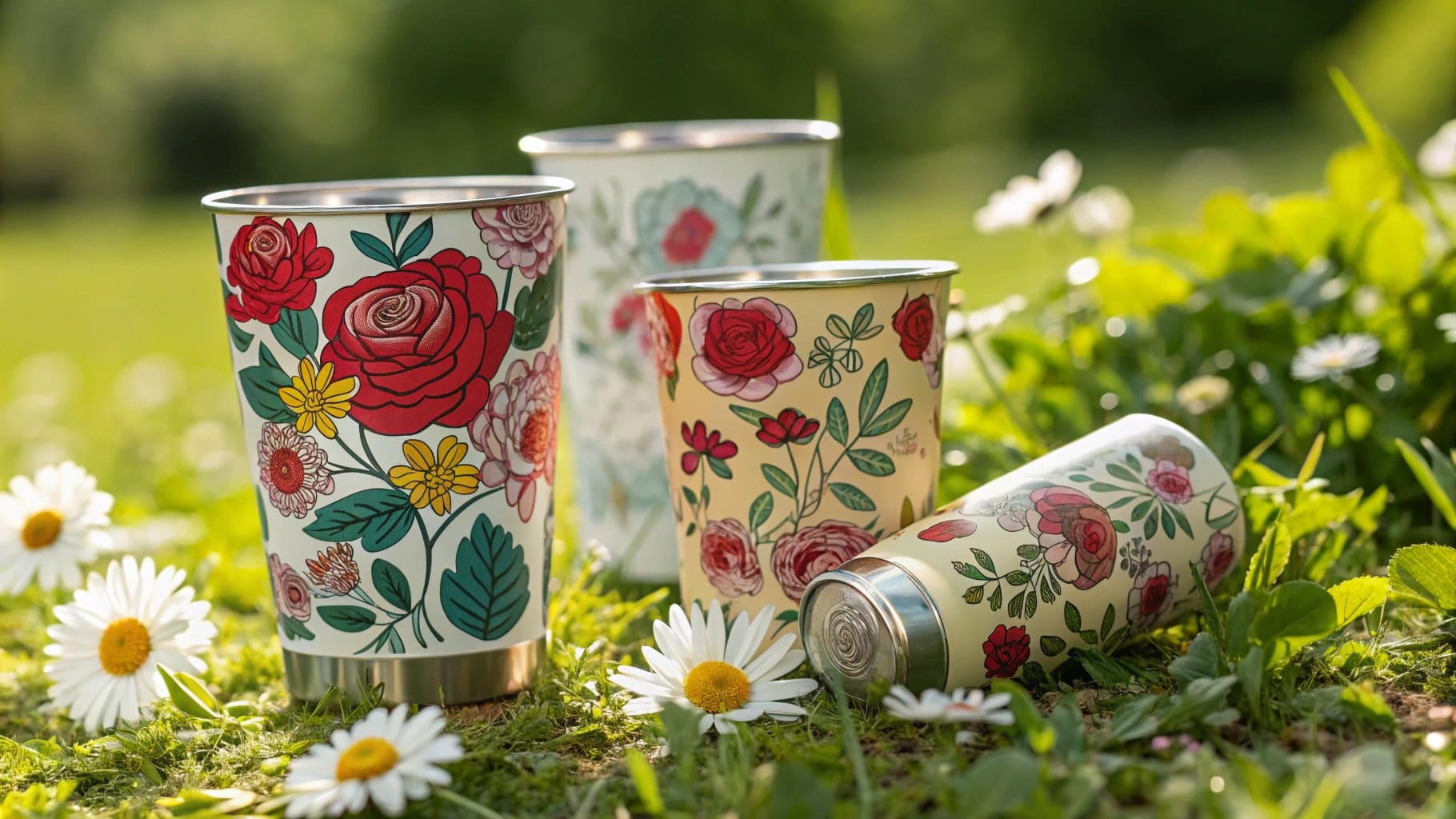
I've been supplying stainless steel drinkware to North American and European buyers for years. What I see now is different from what I saw five years ago. Buyers who used to ask only about MOQ and price are now asking about certifications first. Retailers like Target and Whole Foods are restructuring their children's drinkware shelves1. And procurement officers are starting to frame their RFQs around material type before anything else. The market is splitting into two lanes. Plastic is holding on in low-cost channels, but steel is taking the premium and eco-conscious segments fast. If you're building a brand that sells to health-aware parents, this article will help you make a clearer sourcing decision.
Are Steel Cups Better Than Plastic?
You're comparing a $2 plastic cup to a $5 steel cup. On paper, the plastic wins. But paper math is not the same as real business math.
Steel cups are better than plastic for toddler products when you measure across the full product life cycle. Higher upfront costs are offset by lower breakage, fewer returns, stronger compliance positioning, and better brand perception in premium retail channels.
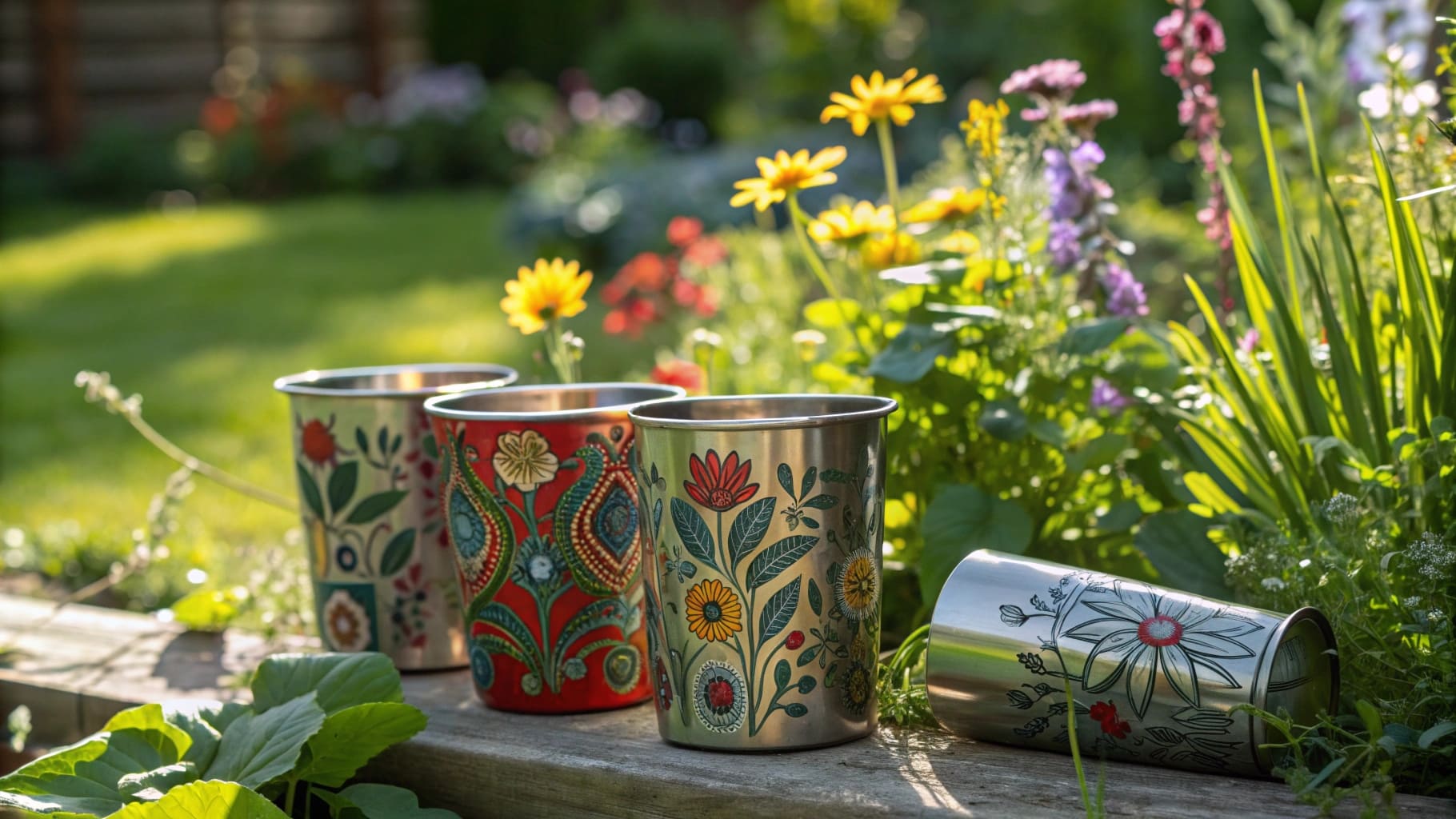
Let me break this down the way I explain it to buyers who are used to plastic sourcing.
The first thing most buyers look at is FOB price. Steel cups typically cost two to three times more than a comparable plastic cup at the factory level. That gap is real, and I won't pretend it isn't. But that number only tells part of the story.
Plastic toddler cups have a breakage and retirement rate of 35% to 50% within the first year. Cracks form at the base, lids warp under heat, and surface scratches make them look old fast. Parents replace them. Retailers return them. Brands absorb the cost in one form or another. Steel cups, by contrast, show a failure rate below 5% over three years. The product simply holds up.
Here's how the unit economics actually compare:
| Metric | Plastic Cup | Stainless Steel Cup |
|---|---|---|
| FOB Unit Cost | $1.80 – $2.50 | $4.50 – $6.00 |
| Average Lifespan | 8 – 12 months | 3 – 4 years |
| Breakage / Retirement Rate (Year 1) | 35% – 50% | Under 5% |
| Estimated Replacements Over 3 Years | 2 – 3 units | 0 – 1 units |
| Estimated 3-Year Cost Per SKU | $5.40 – $7.50 | $4.50 – $6.00 |
| Return / Complaint Rate | Higher | Low |
When you run the numbers this way, the steel cup is not more expensive. It is cheaper. And that is before you factor in the compliance savings and the brand positioning that comes with a "plastic-free" product label in a premium retail environment.
Is Stainless Steel Better Than Plastic for Kids?
Parents are reading labels more carefully than ever. Retailers are responding to that. If your product can't pass a basic health question from a buyer's QA team, you're going to lose the account.
Stainless steel is better than plastic for kids' drinkware because it does not contain BPA, phthalates, or other chemical additives found in many plastic formulations. It does not leach under heat or UV exposure, and it meets the strictest food-contact regulations in the US and Europe without requiring reformulation.

I want to explain why this matters from a compliance and cost angle, not just a health angle. Because for B2B buyers, these two things are connected.
Plastic drinkware sold in North America and Europe requires certification against a growing list of restricted substances. BPA-free is the basic requirement. Then come phthalate-free standards, REACH compliance in the EU, and state-level regulations like California's Proposition 65 in the US.2 Each market has a slightly different set of requirements, and keeping your plastic SKUs compliant across all of them adds real cost and complexity.
Food-grade stainless steel, specifically 304 (18/8) grade, does not contain these substances by nature. You are not adding chemicals to achieve compliance. The material is already clean. This means one set of certifications covers you across most major markets.
Here's a side-by-side view of the compliance landscape:
| Compliance Factor | Plastic | Stainless Steel |
|---|---|---|
| BPA-Free Certification Required | Yes | Not applicable |
| Phthalate-Free Testing Required | Yes | Not applicable |
| REACH Compliance (EU) | Requires ongoing testing | Inherently compliant |
| FDA Food-Contact Approval | Formulation-dependent | Standard for 304/316 grade |
| LFGB (Germany) | Requires additive review | Standard testing applies |
| Certification Cost Reduction vs Plastic | — | 30% – 40% lower |
For brands managing SKUs across the US, Canada, and Europe, that 30% to 40% reduction in certification cost is not a small number. It compounds across product lines and sourcing cycles. I've seen buyers simplify their entire QA process just by switching the base material.
Beyond compliance, there is also the question of brand trust. Stainless steel communicates quality before a parent even picks up the product. In premium retail and DTC contexts, that perception difference is part of what justifies a higher shelf price.
Do Stainless Steel Cups Have Microplastics?
Microplastics in children's products is not a future concern. Studies have already detected them in children's bodies3. Retailers and buyers are starting to act on that data.
No, stainless steel cups do not contain or produce microplastics. The material does not degrade under normal use, temperature changes, or UV exposure. It does not shed particles into beverages. This makes it a direct solution to one of the fastest-growing concerns in children's drinkware.

This is where I think the conversation is moving the fastest right now. Two or three years ago, most buyers asked about BPA. Today, the microplastic question is coming up in RFQs and retailer audits with increasing frequency.
Plastic cups break down over time. This is not a defect. It is how the material behaves. Repeated washing, exposure to hot liquids, UV light from sunlight, and physical wear all cause the plastic surface to degrade and shed tiny particles.4 In toddler products, where cups are washed daily and often filled with warm drinks, this process happens faster.
Stainless steel does not behave this way. The material is stable. It does not shed particles under heat, abrasion, or UV exposure. A steel cup that has been washed 500 times is materially the same as the day it was made5.
Here is how the two materials compare on this specific issue:
| Factor | Plastic | Stainless Steel |
|---|---|---|
| Microplastic Shedding | Yes, increases over time | None |
| Degradation Under Heat | Warps and releases particles | Stable |
| UV Exposure Impact | Accelerates breakdown | No impact |
| Dishwasher Safe (Long Term) | Degrades with cycles | Yes, without degradation |
| Safe for Hot Liquids | Risk of leaching | Yes, no leaching |
| Marketing Position | Defensive | Positive differentiator |
For brands selling into Whole Foods, premium baby boutiques, or DTC subscription models, the ability to say "plastic-free" and "no microplastics" is a real marketing asset. Some of my buyers have restructured their entire toddler line around this single message, and their sell-through rates have improved.
More importantly, as retailers tighten their product standards, having this answer ready before the buyer asks it puts you in a much stronger position during negotiation.
Conclusion
Steel toddler cups beat plastic on compliance cost, durability, safety, and long-term unit economics. For premium brands, the sourcing decision is already clear.
-
"Shopping at Whole Foods should mean less plastic waste - PIRG", https://pirg.org/articles/shopping-at-whole-foods-should-mean-less-plastic-waste/. Trade press reporting and retailer sustainability commitment disclosures would be needed to substantiate the claim that Target and Whole Foods are actively restructuring their children's drinkware shelves, as no specific policy announcements or buyer communications are cited in the article. Evidence role: case_reference; source type: other. Supports: That major US retailers including Target and Whole Foods are shifting their children's drinkware assortments toward plastic-free or stainless steel products. Scope note: Retailer shelf assortment decisions are not always publicly documented; the claim may reflect the author's direct commercial experience rather than verifiable public policy statements from either retailer. ↩
-
"Bisphenol A (BPA) - Proposition 65 Warnings Website", https://www.p65warnings.ca.gov/fact-sheets/bisphenol-bpa. The European Chemicals Agency's REACH regulation restricts substances of very high concern in consumer products, while the US FDA regulates food-contact materials and California's Proposition 65 requires warnings for products containing listed chemicals including BPA and certain phthalates, collectively creating a multi-jurisdictional compliance burden for plastic drinkware manufacturers. Evidence role: definition; source type: government. Supports: That plastic children's drinkware sold in the US and EU is subject to BPA-free, phthalate-free, REACH, and Proposition 65 compliance requirements. Scope note: Specific compliance thresholds and testing requirements vary by jurisdiction and product category; the article's summary is accurate in general terms but does not capture the full complexity of each regulatory framework. ↩
-
"Microplastics and our health: What the science says", https://med.stanford.edu/news/insights/2025/01/microplastics-in-body-polluted-tiny-plastic-fragments.html. Research published in peer-reviewed journals, including studies detecting microplastic particles in human blood and stool samples, supports the claim that microplastics have been found in children's bodies, though the health implications of such exposure remain an active area of investigation. Evidence role: statistic; source type: paper. Supports: That scientific studies have detected microplastic particles in children's bodies. Scope note: Studies detecting microplastics in human biological samples do not always isolate children's drinkware as the specific exposure pathway, making direct causal attribution to cup material a contextual rather than direct inference. ↩
-
"Microplastic Release from Single-Use Plastic Beverage Cups - PMC", https://pmc.ncbi.nlm.nih.gov/articles/PMC11121293/. Peer-reviewed studies on plastic degradation have documented that thermal stress, UV radiation, and mechanical abrasion accelerate the fragmentation of plastic polymers into micro- and nano-scale particles, a process relevant to food-contact plastic items subjected to repeated dishwasher cycles and hot liquid exposure. Evidence role: mechanism; source type: paper. Supports: That repeated washing, heat exposure, UV light, and physical abrasion cause plastic drinkware to shed microplastic particles. Scope note: Much of the published research focuses on plastic degradation in environmental contexts such as marine or soil systems; direct studies on microplastic shedding specifically from toddler cups under household use conditions are more limited. ↩
-
"Towards a durability test for washing-machines - PMC - NIH", https://pmc.ncbi.nlm.nih.gov/articles/PMC5824671/. Materials science literature on stainless steel corrosion resistance and accelerated dishwasher cycle testing would be needed to substantiate the claim that a stainless steel cup remains materially unchanged after 500 wash cycles, as this specific figure is not attributed to any published test protocol in the article. Evidence role: mechanism; source type: research. Supports: That stainless steel cups maintain material integrity after hundreds of dishwasher cycles without degradation. Scope note: Long-term dishwasher durability can be affected by detergent chemistry, water hardness, and temperature settings; the 500-cycle figure appears illustrative rather than derived from a specific standardized test. ↩