
Is storing lighter fluid in flasks unsafe? Material risks and warning labels?
I see this mistake in product sourcing. A simple flask looks strong, but lighter fluid turns it into a leak, fire, and liability risk.
Storing lighter fluid in a flask is unsafe. I design food-grade drinkware for beverages, not volatile fuels. Lighter fluid can attack seals, leak, build vapor pressure, and leave toxic residue. I would never approve a flask for that use unless it is engineered and labeled for chemicals.
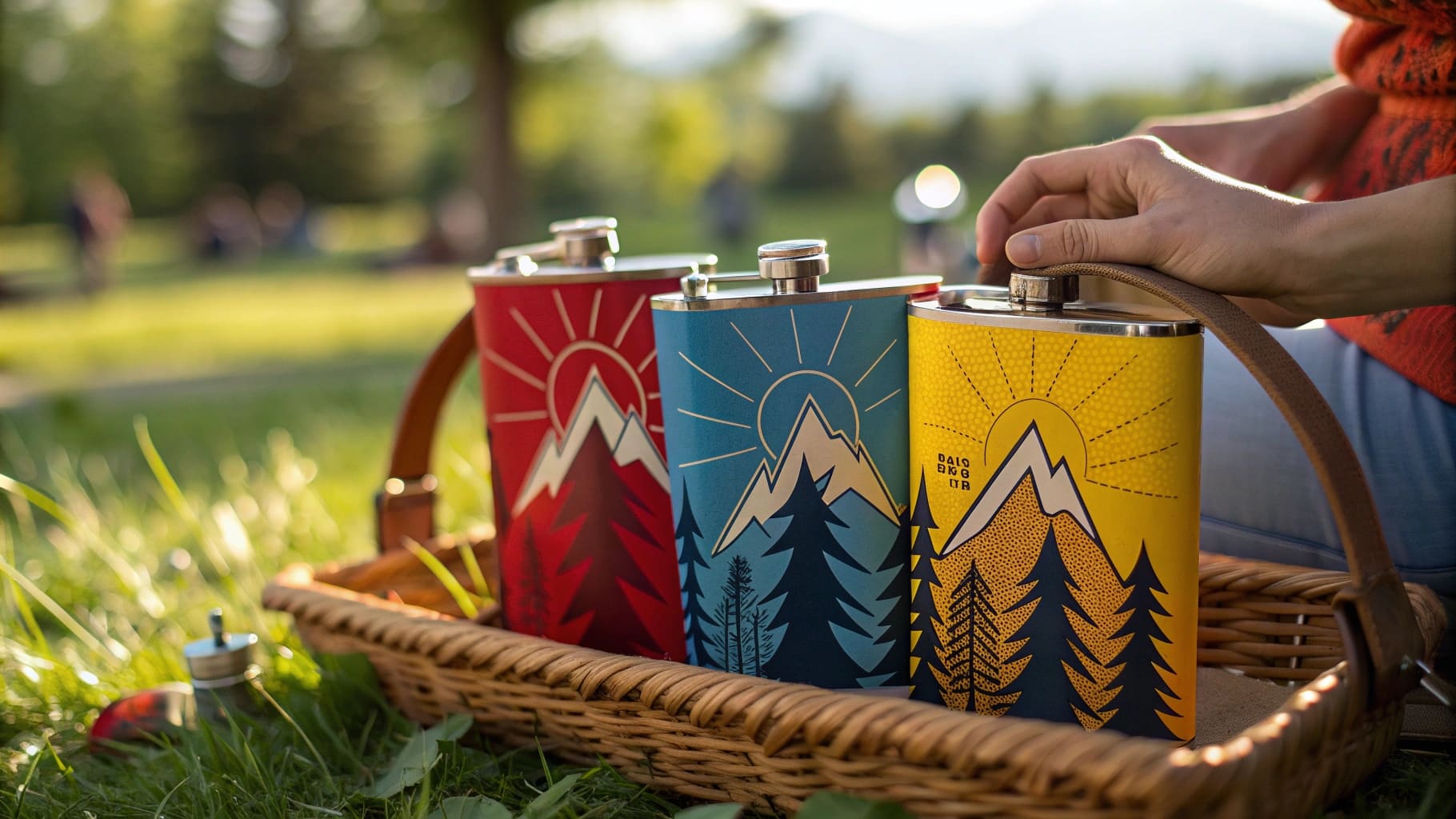
I have seen buyers focus only on the stainless steel body. I understand why. A polished flask looks solid, and stainless steel has a strong reputation. But I always look at the full product system. The body, cap, gasket, coating, printing, and label all matter. If one part fails, the whole product fails. This is even more important when a buyer plans to rebrand and sell the flask in another market. A safety mistake does not stay in the factory. It reaches the shelf, the customer, and the brand name.
Are metal flasks safe?
I hear this question often. Metal feels safe, but a safe drinking flask can become unsafe when the liquid does not match the material design.
Metal flasks are safe when I use them for their intended purpose, such as water, tea, coffee, or non-corrosive drinks. They are not safe for lighter fluid, gasoline, solvents, or other volatile chemicals unless the whole container is built and certified for that purpose.

How I judge flask safety by use case
I do not judge a flask by the word “metal” only. I judge it by the real use. In my factory work, I treat a flask as a food-contact product first. The stainless steel body is only one part. The lid may include plastic threads. The cap may use silicone or rubber. The product may also have a powder coating, paint, laser logo, or printed warning text. Each part must match the liquid inside.
Common food-grade stainless steel, such as grade three zero four or grade three one six, performs very well for normal beverages.1 I trust it for water bottles, coffee mugs, tumblers, cups, and hip flasks when the liquid is suitable. But lighter fluid is not a beverage. It contains petroleum-based hydrocarbons. These chemicals can weaken soft sealing parts. A weak seal can leak even when the steel body still looks perfect.
| My safety check | Beverage flask result | Lighter fluid result |
|---|---|---|
| Stainless steel body | I expect strong performance | I still do not approve chemical storage |
| Silicone or rubber seal | I expect normal sealing | I expect possible swelling or damage |
| Cap and threads | I expect normal use | I expect leakage risk |
| Printed logo and coating | I expect normal handling | I expect stain, odor, or damage risk |
| Warning label | I require food-use guidance | I require clear chemical prohibition |
I also look at the buyer’s sales channel. If a Canadian distributor sells a flask with a private label, the end user may assume it is safe for many liquids. I do not want that assumption. I want the label to say the intended use clearly. A safe product is not only a strong product. A safe product is also a correctly explained product.
What are the hazards of flasks?
I have seen small misuse create big claims. A flask with the wrong liquid can leak, release vapor, contaminate drinks, and catch fire.
The main hazards of misusing flasks are fire, vapor pressure, seal failure, toxic exposure, and cross-contamination. Lighter fluid is highly flammable. If it leaks near heat or sparks, the risk becomes serious. If the flask is reused for drinks, residue can harm the user.
Why the risk is larger than a simple leak
I always separate ordinary quality issues from safety issues. A small scratch is a quality issue. A cap that leaks water is a quality issue. A flask that leaks lighter fluid is a safety issue. The same physical defect has a much higher risk when the liquid is flammable.
Lighter fluid can release vapor in a sealed space. I do not want vapor trapped in a consumer flask. A beverage flask is not a chemical fuel can. It does not normally include a pressure relief design.2 If the product sits in a hot car or near a stove, the risk increases. The user may not see the vapor. The user may only notice odor or wetness after the liquid has already escaped.
I also worry about cross-contamination. If someone uses a flask for lighter fluid and later fills it with water or liquor, the residue may remain in threads, seams, seals, and corners.3 A quick rinse is not enough. I do not design drinkware with chemical cleaning recovery in mind.
| Hazard I check | What can happen | Why I care as a supplier |
|---|---|---|
| Seal damage | The cap may leak during storage or transport | The product can become a fire source |
| Vapor buildup | Pressure may rise in a closed flask | The user may not expect this danger |
| Flammable leakage | Liquid may reach a spark or heat source | A small leak can become a large accident |
| Toxic residue | Chemical traces may remain after rinsing | Later beverage use can harm health |
| Brand damage | Complaints may move from user to seller | The buyer may face returns and claims |
I have learned that warning labels reduce confusion. They do not replace good design, but they help set the boundary. I prefer simple wording. I use plain statements such as “Food and beverage use only,” “Do not store flammable liquids,” and “Do not store chemicals or petroleum products.” I do not hide this in small text when the market needs a clear warning.
What should you not put in a flask?
I know many buyers want one product for many uses. That idea sounds efficient, but the wrong liquid can destroy safety fast.
I would not put lighter fluid, gasoline, paint thinner, fuel alcohol, cleaning solvents, strong acids, strong alkalis, or unknown chemicals in a drink flask. I also treat carbonated drinks with care because pressure can build in containers that lack a pressure-safe design.
How I define the prohibited list for private-label products
I define the prohibited list before production, not after a complaint. This matters for wholesale buyers because the product may travel through many hands. A procurement officer may approve the design. A distributor may add a brand. A retailer may sell it with simple marketing text. A consumer may then use it in a way that nobody expected. I want the warning label to close that gap.
I treat petroleum-based liquids as a clear “no.” Lighter fluid, gasoline, and paint thinner belong in containers designed for chemicals. I also treat fuel alcohol and cleaning solvents as unsafe for drink flasks. They may attack seals, leave strong odor, or create vapor risk. Strong acidic or alkaline chemicals are also not acceptable. They can damage parts and make the flask unsafe for any future food use.
Even beverages need common sense. A standard flask may not be designed for carbonated drinks. Pressure from carbonation can build, especially if the flask is shaken or heated.4 I prefer pressure-tested designs when the buyer plans to market a bottle for sparkling drinks.
| Liquid type | My decision | My reason |
|---|---|---|
| Water, tea, and coffee | I approve normal use | The product is designed for these drinks |
| Lighter fluid | I reject use | The fire, vapor, and seal risks are too high |
| Gasoline and paint thinner | I reject use | These are petroleum chemicals, not beverages |
| Fuel alcohol | I reject use | The liquid can be flammable and unsafe |
| Cleaning solvents | I reject use | The residue and seal risks are serious |
| Strong acids and alkalis | I reject use | These liquids can damage materials |
| Carbonated drinks | I require a suitable design | Pressure needs control |
For branded orders, I ask buyers to confirm the target market rules. I also provide food-contact documents, material information, and packaging warnings when needed. I want the buyer to check certificates, not just receive them. I know certificate fraud exists in the market. I also know delayed answers create sourcing stress. So I prefer direct communication about test reports, carton labels, instruction sheets, and warning statements before the goods ship.
Conclusion
I treat lighter fluid in flasks as unsafe. I approve drinkware for beverages, clear labels, real documents, and honest material limits.
-
"Study of the Corrosion Resistance of Austenitic Stainless Steels during ...", https://pmc.ncbi.nlm.nih.gov/articles/PMC5503400/. The U.S. FDA recognizes austenitic stainless steels including grades 304 and 316 as safe for repeated food contact due to their corrosion resistance and low metal migration rates under normal use conditions. Evidence role: general_support; source type: government. Supports: the suitability of 304 and 316 stainless steel grades for food contact applications. ↩
-
"1926.152 - Flammable liquids. | Occupational Safety and Health ...", https://www.osha.gov/laws-regs/regulations/standardnumber/1926/1926.152. OSHA standards for flammable liquid containers require specific design features including pressure relief mechanisms for containers exceeding certain capacities, whereas consumer beverage containers follow food contact standards that do not mandate such safety features. Evidence role: general_support; source type: government. Supports: the regulatory design requirements that distinguish chemical storage containers from beverage containers. Scope note: The citation addresses regulatory frameworks rather than specific engineering design differences ↩
-
"Plastic Food Container Safety - PMC - NIH", https://pmc.ncbi.nlm.nih.gov/articles/PMC11193405/. Studies of container decontamination show that petroleum-based compounds can form persistent films in threaded joints and gasket interfaces, requiring specific detergents or solvents for complete removal rather than water rinsing alone. Evidence role: general_support; source type: research. Supports: the difficulty of removing hydrocarbon residues from container surfaces through casual rinsing. Scope note: The citation addresses general decontamination challenges rather than lighter fluid specifically in flask designs ↩
-
"Dry Ice Safety", https://www.hhs.nd.gov/sites/www/files/documents/DOH%20Legacy/Dry%20Ice%20Safety.pdf. Dissolved carbon dioxide in carbonated beverages exhibits inverse solubility with temperature, with pressures potentially reaching 400-600 kPa at 40°C compared to 200-300 kPa at 4°C, and agitation accelerates gas release from solution, further increasing headspace pressure. Evidence role: mechanism; source type: research. Supports: the pressure generation mechanism in sealed carbonated beverages under temperature and agitation. ↩