
How long can liquor stay in a flask when liners, headspace, seals, and AQL tests matter?
I have seen buyers choose beautiful flasks, then face taste complaints because the cap seal, liner, and fill level were never tested together.
I tell buyers that liquor can stay in a quality stainless steel flask for days or weeks when the steel is clean, the liner is safe, headspace is low, and the seal is tight. I usually find the gasket limits storage time before the steel does.
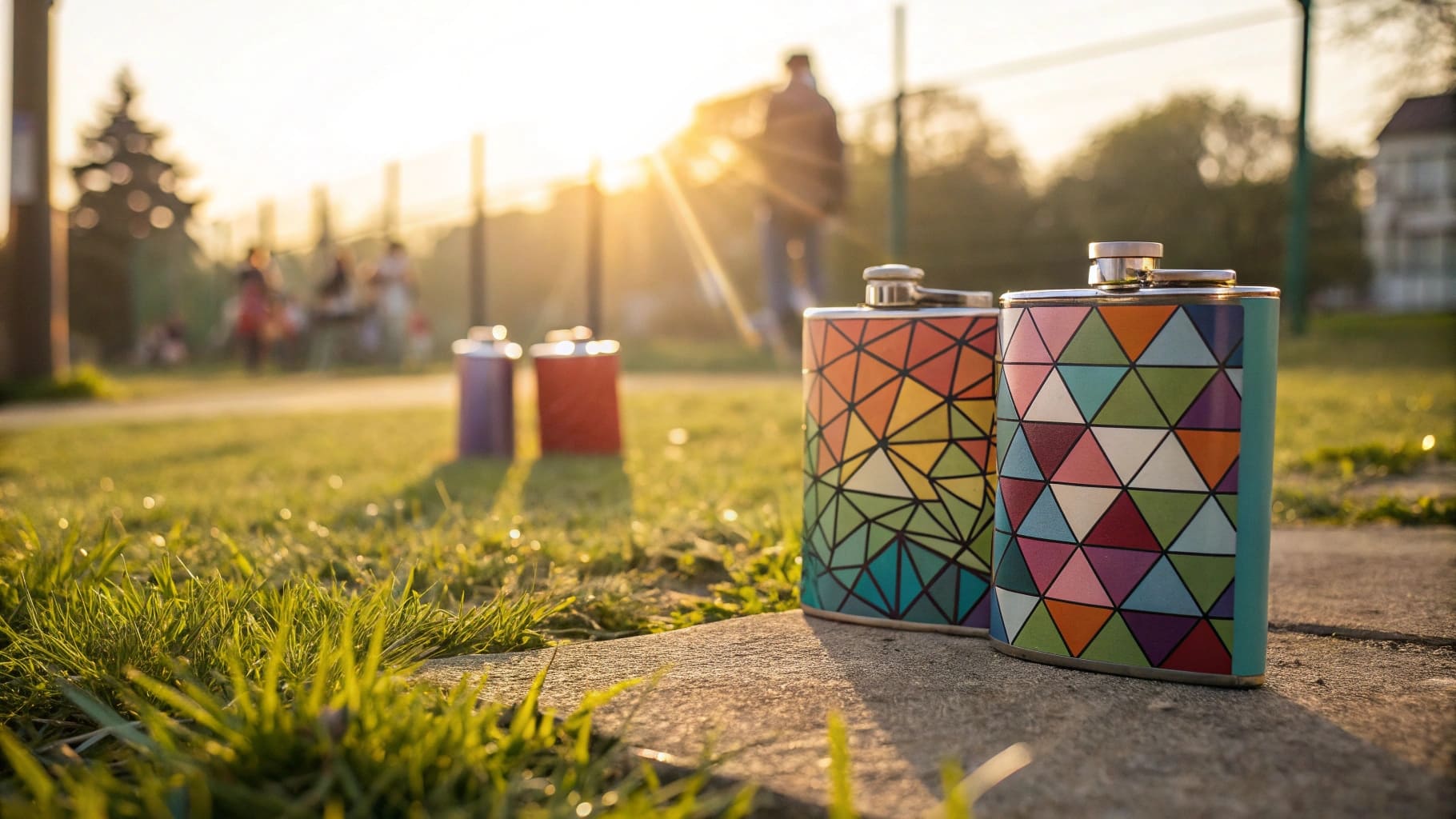
I write this from the factory side, where a small flask can create a large problem for a brand. The simple answer looks easy. The real order decision is not easy. I need to know how the flask body, inner surface, cap, gasket, and packing test work as one system. A buyer may ask me for stainless steel, but the user will judge smell, taste, leakage, and trust. I have learned this in sample rooms and after-sales calls. I now treat every liquor flask as a storage system, and I check the weak points before I talk about storage time.
Does tequila go bad in a flask?
I have seen tequila blamed for bad taste, when the real problem was a hidden coating or a poor gasket inside a cheap flask.
I do not see tequila go bad in a stainless steel flask like fresh food. I see tequila lose aroma, pick up off-flavors, or oxidize when the flask has too much air, a weak seal, an unclean surface, or an undisclosed liner.

What I check when tequila is the target drink
| Area I check | What I ask for | What I want to avoid |
|---|---|---|
| Inner metal | I ask for food-contact stainless steel proof | I avoid unknown metal grades |
| Inner surface | I ask if the flask is bare steel or coated | I avoid hidden liners |
| Gasket | I ask for food-grade silicone or safe sealing material1 | I avoid strong smell and swelling |
| Cleaning | I ask for oil-free and residue-free production | I avoid polishing paste smell |
| Fill level | I ask the buyer how long the user may store tequila | I avoid too much headspace |
I treat tequila as a useful test drink because it has a clear aroma. I can often smell a problem before I can explain it with a report. If the flask has clean bare stainless steel, tequila contact is not my main concern. The concern moves to the cap and the inner surface finish. Some low-tier factories may use an internal coating to cover rough polishing or lower material quality. I do not like that practice when the buyer wants liquor storage. Tequila can be acidic enough to expose a weak liner over time, and a user may taste a plastic note, a rubber note, or a metal note. I also watch headspace. A half-filled flask has more air inside, so aroma change can happen faster2. A nearly full flask gives less oxygen space, but the cap still needs room to seal well. I tell buyers to test the real use case. I do not only test water. I test alcohol contact, smell, taste transfer, and cap leakage after shaking.
How long can you leave liquor in a metal flask?
I get nervous when a buyer asks only for a storage time, because no flask can answer that question without its cap system.
I usually treat a metal flask as safe for short storage when it has verified food-grade stainless steel and a tested seal. Longer storage needs alcohol immersion testing, leak testing, gasket checks, and clear use guidance for the buyer.
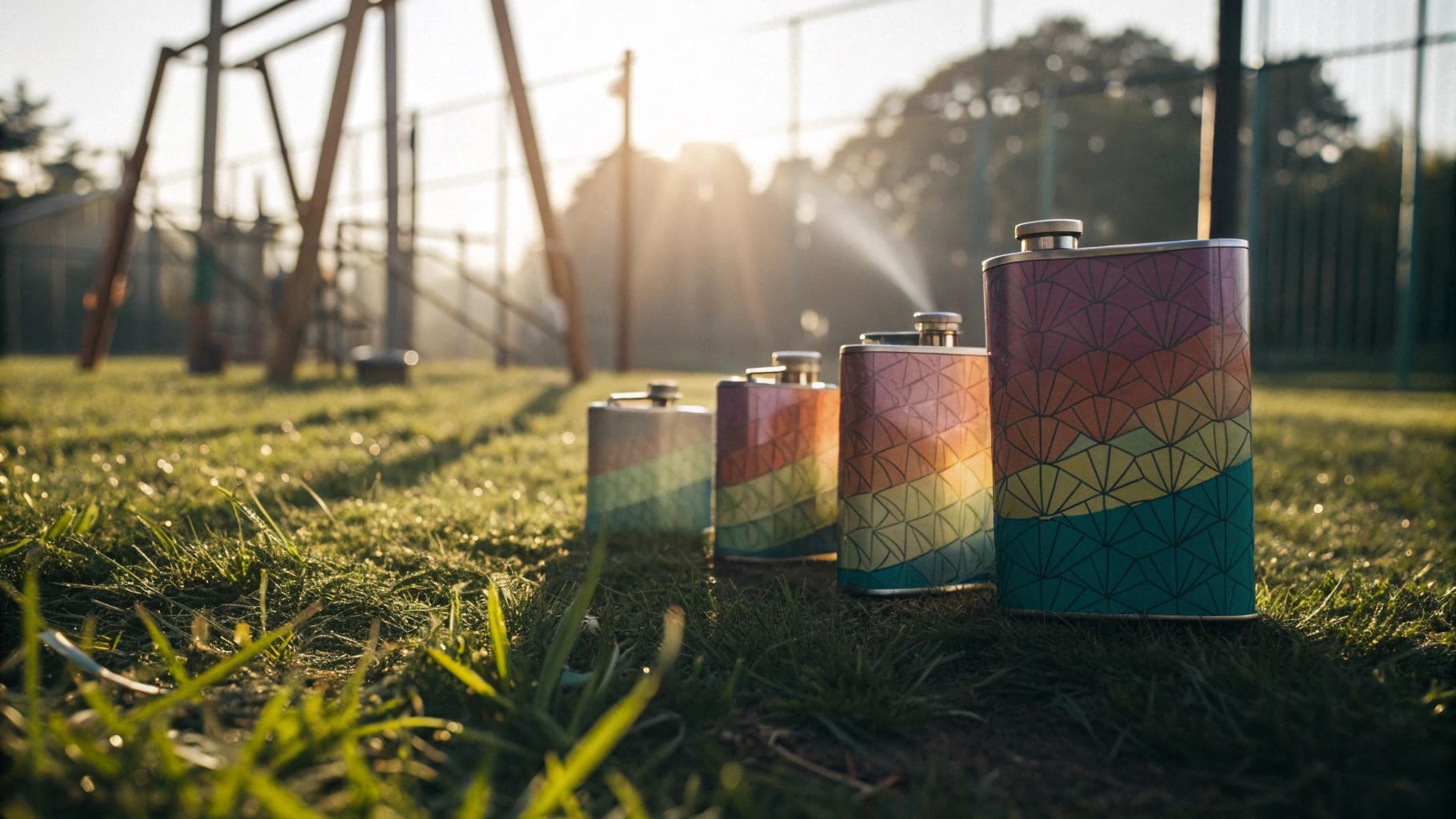
How I decide a practical storage claim
| Use case I hear from buyers | My practical view | My test focus |
|---|---|---|
| Same-day event gift | I focus on leakage and smell | I test cap fit and cleaning |
| Weekend outdoor use | I focus on seal strength | I test shaking, inversion, and alcohol contact |
| Rebranded retail item | I focus on repeat user trust | I test taste transfer and gasket life |
| Premium brand order | I focus on proof and records | I test by AQL inspection and batch records |
I do not promise an open-ended storage claim just because the flask uses food-grade stainless steel. The steel may be safe for alcohol, but the full product still has a cap, a thread, a gasket, and sometimes a welded or pressed structure. I see the gasket as the first weak point. If the gasket is too soft, it may deform3. If the gasket material is poor, it may smell. If the cap thread is loose, alcohol can slowly evaporate. High-proof spirits make this more obvious because they are more active and more noticeable to the nose. I also use AQL inspection to protect the buyer before shipment4. I want samples from the batch, not only golden samples from the sample room. I check leakage after inversion and shaking. I check cap torque by hand and by fitting feel. I check smell after the flask is closed for a period of time. I also check carton packing because a delayed or damaged shipment can ruin the selling season. A good storage claim must come from real tests, not from a material certificate alone.
Is alcohol safe for stainless steel?
I trust stainless steel, but I do not trust every product that looks like stainless steel from the outside.
I consider alcohol safe for food-grade stainless steel when the metal is properly selected, cleaned, and passivated. I see the real risk in unknown coatings, poor welding, dirty polishing residue, or non-food-grade seals rather than quality stainless steel itself.

What material proof means to me
| Proof point I request | Why I request it | What I still check |
|---|---|---|
| Material declaration | I need to know the stainless steel grade | I check if it matches the order |
| Food contact report | I need proof for the buyer file | I check model and factory names |
| Alcohol immersion test | I need real contact evidence | I check smell, color, and surface change |
| Gasket material report | I need seal safety | I check odor and compression |
| AQL inspection record | I need batch control | I check defects before shipment |
I prefer common food-contact stainless steel such as three zero four grade for most flask projects, and I discuss three one six grade when the buyer wants a more premium position or a special use case. From a chemical contact view, quality stainless steel is stable with spirits such as tequila, whiskey, vodka, and rum. I still do not stop my work at the material name. I have seen certificates that looked correct but did not match the product, the supplier, or the shipment. I now ask for clear documents, and I match the report details with the order details. I also ask about passivation and cleaning because stainless steel can be safe but still carry surface residue from production5. Polishing compound, cutting oil, or dirty water can create smell complaints. I do not want my buyer to discover that after rebranding in Canada or Europe. I also check welding and edge finishing. A rough inside seam can hold residue and create a cleaning problem. Alcohol safety is not only about steel grade. I see it as material plus surface plus seal plus factory control.
Conclusion
I treat liquor flasks as a small storage system, not only a steel shell. Good material, tight seals, low headspace, and AQL tests protect buyers.
-
"21 CFR 177.2600 -- Rubber articles intended for repeated ...", https://www.ecfr.gov/current/title-21/chapter-I/subchapter-B/part-177/subpart-C/section-177.2600. Food-grade silicone elastomers are regulated under FDA 21 CFR 177.2600, which specifies composition and migration limits for rubber articles intended for repeated food contact. Evidence role: general_support; source type: government. Supports: that food-grade silicone is approved for food-contact applications. ↩
-
"The Impact of Oxygen at Various Stages of Vinification ... - PMC", https://pmc.ncbi.nlm.nih.gov/articles/PMC7142352/. Increased headspace in sealed containers exposes spirits to greater oxygen contact, accelerating oxidation of volatile aroma compounds and ethanol, which can alter flavor profiles over time. Evidence role: mechanism; source type: research. Supports: the effect of headspace and oxygen on aroma stability in alcoholic beverages. ↩
-
"Compression Set of Elastomeric Materials", https://www.stockwell.com/compression-set-testing/. Compression set, measured per ASTM D395, quantifies the permanent deformation of elastomers under load; excessive compression set in soft gaskets can compromise seal integrity over time. Evidence role: mechanism; source type: research. Supports: how gasket hardness and compression set affect sealing performance. ↩
-
"ISO 2859-1", https://chemistry.unt.edu/~tgolden/courses/iso2859-1.pdf. The Acceptable Quality Limit (AQL) is a statistical sampling standard defined in ISO 2859-1, used to determine the maximum number of defective units acceptable in a production batch during inspection. Evidence role: definition; source type: institution. Supports: the definition and application of AQL in quality inspection. ↩
-
"astm-a-967.pdf", https://www.galvanizeit.com/uploads/resources/astm-a-967.pdf. Passivation is a chemical treatment, typically with nitric or citric acid, that removes free iron and enhances the chromium oxide layer on stainless steel, improving corrosion resistance and cleanliness for food-contact applications. Evidence role: definition; source type: institution. Supports: the purpose and method of stainless steel passivation. ↩