How Do Hip Flask Private Label Programs Work for Engraving, Coatings, Gift Boxes, and MOQ?
Many buyers like hip flasks, but a weak private label plan turns a premium gift into slow stock. I fix that before production starts.
A hip flask private label program lets me customize the flask, logo, surface coating, gift box, and accessories under one buyer brand. I match engraving, color, packaging, inspection, and MOQ to the target market, so the buyer can test demand without taking heavy stock risk.
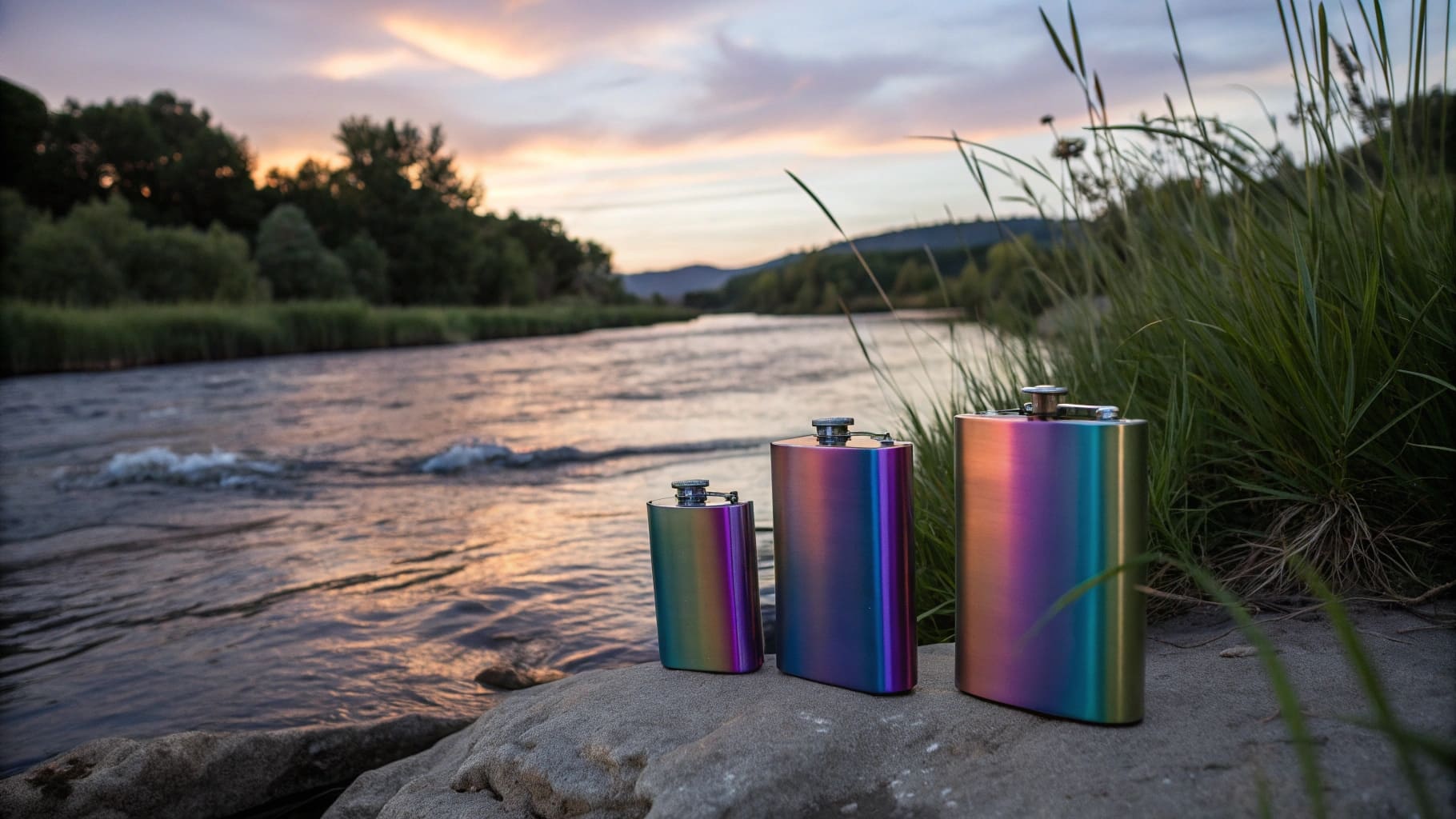
I have seen many buyers treat hip flasks like simple drinkware. I think that is a costly mistake. A water bottle often sells on daily use. A hip flask often sells on emotion, gift value, brand story, and presentation. I usually ask one question before I quote a project. I ask where the buyer will sell it and who will receive it. That answer changes the engraving method, coating level, box style, inspection plan, and MOQ. A corporate gift order does not need the same setup as an outdoor brand order. A wedding gift set does not need the same packaging as a liquor brand promotion. This is why I build the private label plan first, then I build the flask around it.
What Does a Hip Flask Look Like?
Many buyers picture one standard flask, but small design choices change comfort, cost, logo space, and perceived value. I check these details first.
A hip flask is usually a curved, pocket-friendly stainless steel container for small beverages. I often see six to eight ounce models with a screw cap, smooth front panel, rounded corners, and a shape that fits close to the body.
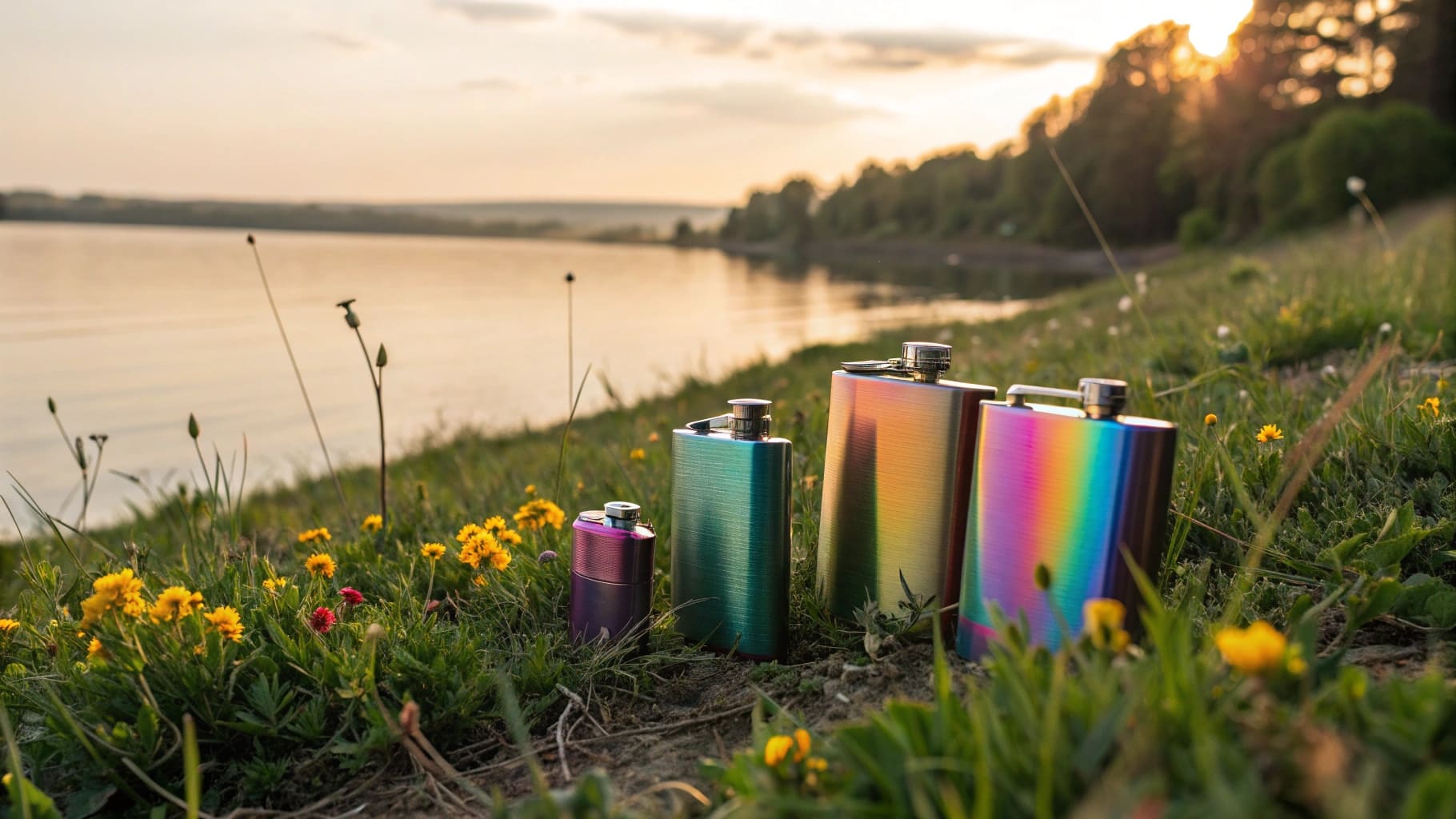
How I Read the Shape for Private Label Work
| Design point | What I look for | How I use it in private label |
|---|---|---|
| Curved body | I check comfort and pocket fit | I use it for classic gift positioning |
| Flat logo area | I check enough space for marking | I use it for engraving or printing |
| Cap style | I check leakage risk and user feel | I use it to control quality complaints |
| Surface finish | I check polish, brush, or coating base | I use it to match brand image |
| Outer wrap | I check leather, silicone, or metal | I use it to raise gift value |
I look at a hip flask as a small product with a large brand surface. The front panel looks simple, but it controls most of the buyer’s result. If the buyer wants a clean executive gift, I often suggest brushed stainless steel with laser engraving1. This looks stable and does not feel cheap. If the buyer wants a bold retail product, I may suggest powder coating in a custom color2. The coating must be tested, because a scratched flask can damage the brand faster than a late reply. I also check the curve. A deep curve feels better in the pocket, but it can make printing harder. I prefer to confirm the logo size before sampling. I also check the cap thread, the welding line3, and the inside finish. Some buyers only ask about price. I still explain these points, because a low price does not help if the flask leaks in a customer’s hand.
What Should I Put in a Hip Flask?
Many brands sell hip flasks as alcohol items only, but this narrow view can limit the market. I help buyers match contents with user scenes.
I usually recommend that buyers position hip flasks for small servings of spirits, such as whiskey, bourbon, rum, or brandy. Some brands also use them as compact beverage carriers for outdoor or gift programs, based on local rules and customer habits.
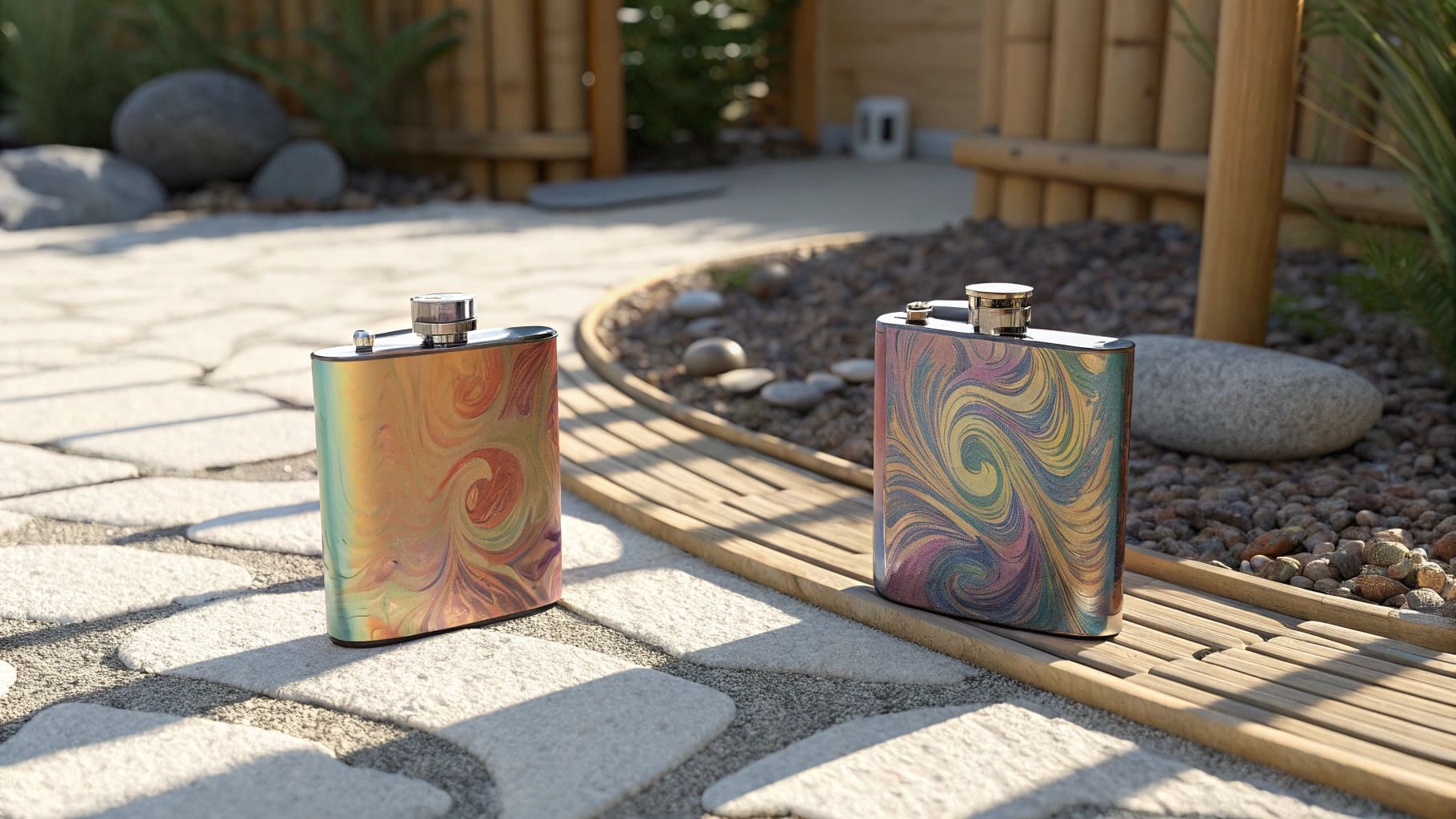
How I Match Contents to the Buyer’s Market
| Use scene | Common content | Private label direction |
|---|---|---|
| Executive gift | I see whiskey or brandy positioning | I use clean engraving and a premium box |
| Wedding gift | I see celebratory spirits positioning | I use names, dates, and matched sets |
| Outdoor item | I see compact drink carrying | I use stronger coating and simple packaging |
| Retail accessory | I see lifestyle branding | I use color, texture, and shelf-ready boxes |
| Liquor promotion | I see brand sampling support | I use logo focus and strict color control |
I do not tell every buyer to put the same message on a hip flask. I first study the end user. A Canadian distributor may rebrand the flask for gift shops, corporate clients, and event planners. Each channel needs a different product feeling. If the buyer sells to company owners, I keep the design quiet and solid. If the buyer sells to wedding planners, I focus on names, dates, and gift box presentation. If the buyer sells to outdoor brands, I care more about grip, coating strength, and packable size. I also remind buyers to follow local rules on alcohol use and product claims4. This point matters because a flask is tied to beverage culture. I can supply the flask, the funnel, the small cups, the cloth bag, and the gift box. But I still need the buyer to define the use scene. When that part is clear, I can choose the right surface, logo method, MOQ, and inspection standard.
What Are Five Uses of Flasks?
Many buyers see only one sales channel, so they miss better margin options. I use five use cases to plan the whole private label program.
I see five strong uses for hip flasks: corporate gifts, wedding gifts, outdoor accessories, personal luxury items, and promotional products for liquor or hospitality brands. Each use needs a different mix of engraving, coating, packaging, and MOQ.
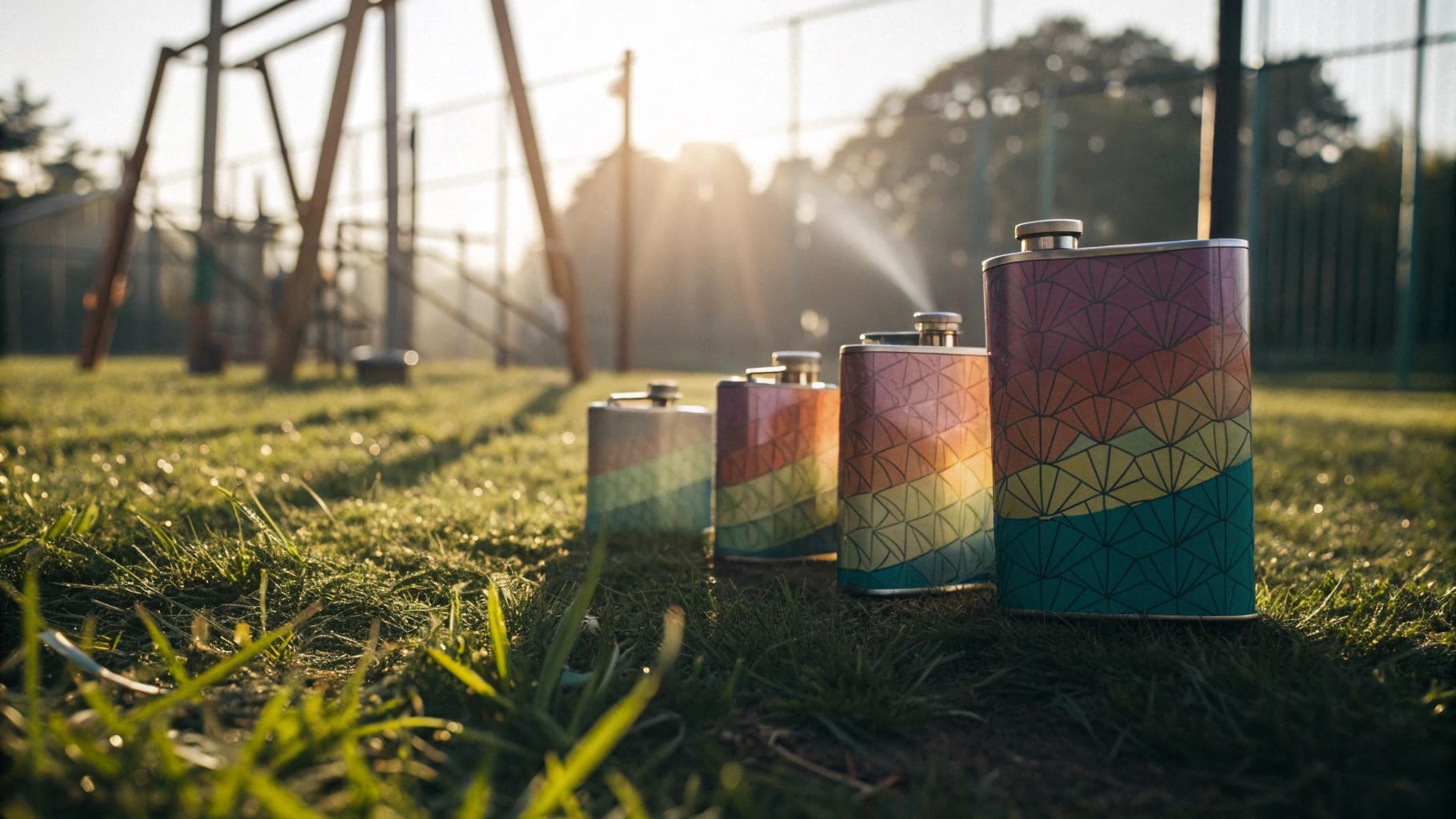
How I Build the Program Around the Use Case
| Use case | What I focus on | Best customization choice |
|---|---|---|
| Corporate gifting | I focus on trust and clean branding | I use laser engraving and rigid boxes |
| Wedding events | I focus on memory and personalization | I use names, dates, and gift sets |
| Outdoor recreation | I focus on durability and grip | I use powder coating or silicone sleeves |
| Personal luxury | I focus on material and finish | I use polished steel, leather wrap, or metal badges |
| Liquor promotion | I focus on brand recall | I use strong logo placement and color matching |
I build MOQ around risk, not only around factory convenience. For engraving only, I can often support a lower starting quantity because the base flask stays the same. This helps a buyer test a new market without heavy stock pressure. For custom coatings, I need more units because color setup, coating loss, and quality checks take more work. For gift boxes, I also need to check paper, insert, print color, and packing strength. A premium private label set may include the flask, funnel, shot cups, cleaning brush, cloth bag, and custom box. That set can sell at a higher margin, but it also needs stronger planning. I have learned this from projects where buyers wanted a beautiful box but forgot carton strength for export shipping. The box looked good, but the corners could fail during transport. I now check packaging structure, carton drop risk5, and shipping schedule early. This helps buyers avoid missed peak seasons. It also helps me give clear payment terms, inspection steps, and production timing before both sides commit.
How I Decide Between Engraving, Coating, Gift Boxes, and MOQ
| Program level | What I include | When I suggest it |
|---|---|---|
| Basic private label | I include logo engraving on standard stock color | I suggest it for market testing |
| Mid-level private label | I include coating, logo, and simple packaging | I suggest it for retail or event orders |
| Premium private label | I include custom finish, box, inserts, and accessories | I suggest it for high-margin gift programs |
I prefer to keep the first order practical. A buyer may want custom coating, leather wrap, a molded box, metal badge, funnel, cups, and full color cartons at the same time. I can make that plan, but I will ask if the selling channel already proves the price point. If the answer is not clear, I often suggest a smaller engraving program first. It gives the buyer real feedback from customers. After that, we can add color coating, premium packaging, and accessories. This step-by-step method protects cash flow. It also reduces communication problems. I know many procurement officers are strong in sales but not technical in production. I do not expect them to know coating thickness, welding control, or carton compression. I explain these points in simple terms. I also prepare samples, photos, inspection notes, and certificates in a clear way. This reduces the risk of fake certificates, late shipment surprises, and quality disputes after delivery.
Conclusion
I build hip flask private label programs around use, quality, packaging, and MOQ, so buyers can protect margin and reduce supply risk.
-
"Want to engrave stainless steel, what should i buy? : r/Laserengraving", https://www.reddit.com/r/Laserengraving/comments/118d8ze/want_to_engrave_stainless_steel_what_should_i_buy/. Fiber lasers create permanent marks on stainless steel through localized heating that alters the oxide layer or removes material; typical engraving depths range from 0.02 to 0.5 mm depending on laser power and pass count, producing high-contrast marks resistant to wear and environmental exposure. Evidence role: mechanism; source type: research. Supports: How laser engraving creates permanent marks on stainless steel. Scope note: Engraving permanence depends on laser parameters, steel grade, and surface finish; some polished surfaces may show better contrast than brushed finishes. ↩
-
"What is Powder Coating & Why is it a Game Changer on Drinkware?", https://greenssteel.com/blogs/news/what-is-powder-coating-and-why-is-it-a-game-changer-on-drinkware?srsltid. Powder coating applies dry thermoplastic or thermoset polymer powder electrostatically to metal surfaces, then cures it under heat to form a durable finish; the process requires proper surface preparation and temperature control for adhesion to stainless steel substrates. Evidence role: mechanism; source type: education. Supports: The technical process of applying powder coating to stainless steel products. Scope note: This describes the general powder coating process; specific application to curved beverage containers may require specialized fixturing and food-contact coating formulations. ↩
-
"Fabrication and Testing of DOE Standard Canister Closure ...", https://inldigitallibrary.inl.gov/sites/sti/sti/Sort_80527.pdf. Stainless steel flasks typically use TIG (tungsten inert gas) or laser welding to join body halves along seams; weld quality directly affects leak resistance and requires inspection for penetration depth, porosity, and surface finish, often verified through pressure testing or leak detection methods. Evidence role: mechanism; source type: education. Supports: Welding processes and inspection requirements in stainless steel container manufacturing. Scope note: Manufacturing methods vary by price point and production volume; seamless deep-drawn construction eliminates body welds but may still require welding for cap attachment points or bottom closure. ↩
-
"MCL - Section 445.571 - Michigan Legislature", https://www.legislature.mi.gov/Laws/MCL?objectName=mcl-445-571. Alcohol-related products and marketing claims are subject to regional regulations governing beverage alcohol promotion, age restrictions, health claims, and packaging standards; in the United States, the Alcohol and Tobacco Tax and Trade Bureau (TTB) and state authorities regulate alcohol container labeling and promotional materials. Evidence role: expert_consensus; source type: government. Supports: Regulatory oversight of alcohol-related product marketing and distribution. Scope note: Regulations vary significantly by jurisdiction; hip flasks as empty containers may face different requirements than pre-filled products, and promotional use may trigger additional restrictions. ↩
-
"Package Drop Testing", https://unitload.vt.edu/facilities/distribution-packaging-lab/package-drop-testing.html. The International Safe Transit Association (ISTA) publishes package testing protocols that include drop tests from heights corresponding to typical handling scenarios; for example, ISTA 3A specifies drops from 30 inches for packages under 50 pounds to simulate warehouse and delivery handling. Evidence role: general_support; source type: institution. Supports: Industry standards for package performance testing. Scope note: Specific test requirements vary by shipping method, carrier, package weight, and fragility classification; gift box packaging for retail display may require different testing than bulk shipping cartons. ↩