
Do 20oz Insulated Tumblers Meet Healthcare Gifting Claims and Compliance?
Healthcare gifting programs carry real legal risk. One wrong move on product value or documentation can trigger serious regulatory penalties. This is not a space where guessing is safe.
20oz insulated tumblers can meet healthcare gifting compliance requirements. In the U.S., Anti-Kickback Statute and Sunshine Act rules typically cap promotional gift values at $10–$25 per recipient annually1. When purchased in volume, a quality 20oz tumbler can land well within this range while still offering strong perceived value.

Healthcare procurement is not the same as standard bulk gifting. The product you choose, the price you pay, and the paperwork you keep all carry compliance weight. I have worked with B2B buyers across North America and Europe, and the 20oz tumbler sits in a very specific sweet spot — useful enough to matter, affordable enough to stay legal. Here is what you need to know before you place your order.
What Temperature Does a 20oz Sublimation Tumbler Hold?
Temperature performance is one of the most common questions I get from healthcare procurement buyers. They are not just picking a gift. They are picking something that medical staff will use through a 12-hour shift.
A quality 20oz double-wall vacuum insulated tumbler keeps cold drinks at 40–45°F for 12–24 hours. It holds hot drinks at 140–160°F for 6–8 hours. These numbers make it practical for long hospital shifts where staff rarely get a break.
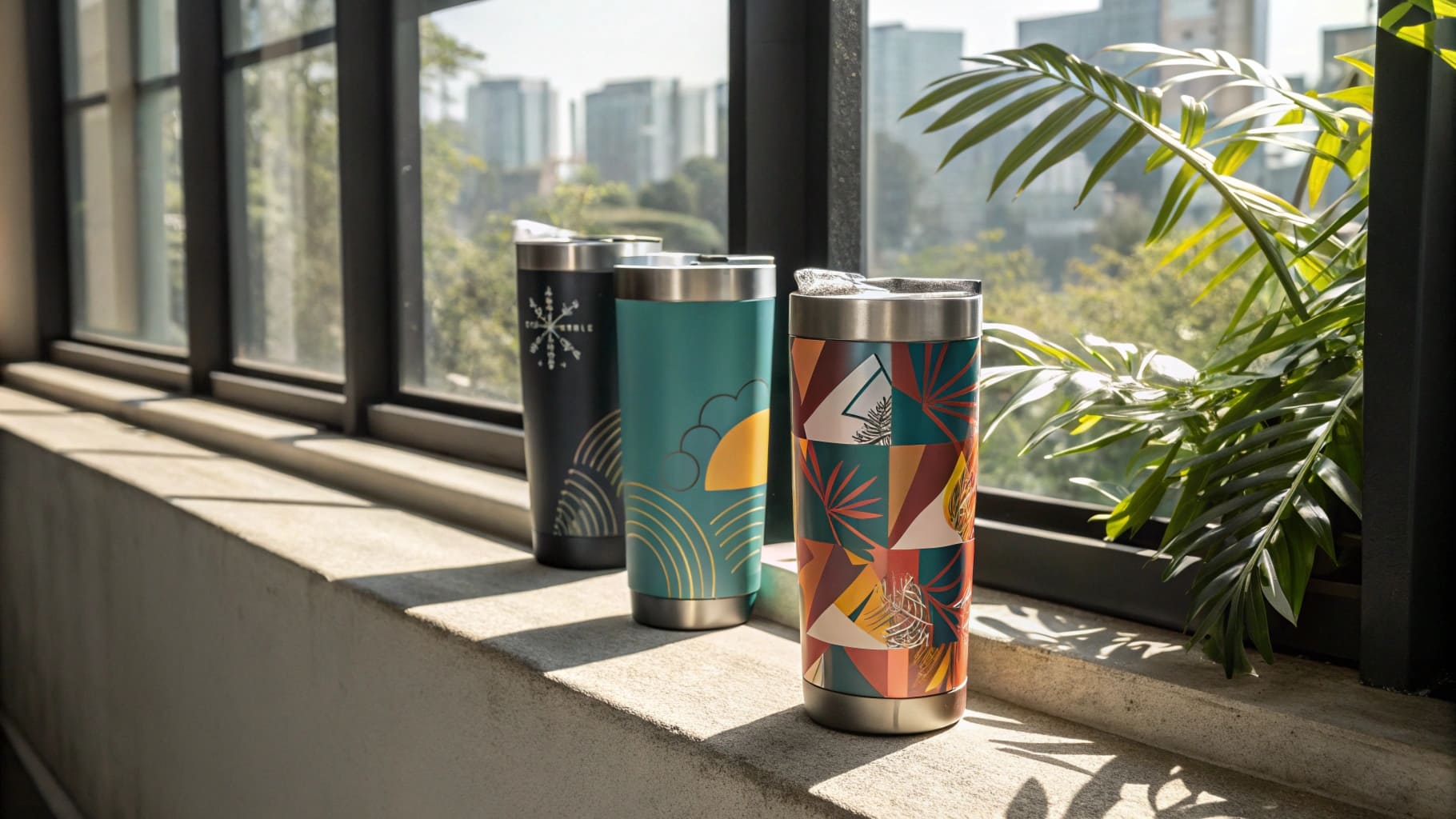
How Sublimation Affects Temperature Performance
Some buyers assume sublimation tumblers perform differently from standard insulated tumblers. This is a fair concern, but the answer is straightforward.
Sublimation decoration requires a powder coating on the outer wall. The curing process reaches 350–400°F2. This happens during manufacturing, not during use. Once the tumbler is finished and cooled, the insulation performance is identical to any other double-wall vacuum insulated product.
The heat during curing does not damage the vacuum seal between the inner and outer walls3. The seal is what creates the insulation. As long as the manufacturer applies the vacuum seal correctly and the powder coating process is controlled, you get the same temperature retention.
Here is a simple comparison:
| Feature | Standard Tumbler | Sublimation Tumbler |
|---|---|---|
| Cold retention | 12–24 hours | 12–24 hours |
| Hot retention | 6–8 hours | 6–8 hours |
| Outer wall coating | Paint or bare steel | Powder coat for sublimation |
| Insulation mechanism | Double-wall vacuum | Double-wall vacuum |
| Decoration method | Laser engraving or pad print | Sublimation print |
The key variable is manufacturing quality, not the decoration method. A poorly made sublimation tumbler will underperform. A well-made one will hold temperature just as well as any premium stainless steel tumbler. When I source tumblers for healthcare clients, I always request batch temperature retention test reports before finalizing an order. This is a basic quality check that separates reliable suppliers from unreliable ones.
For healthcare gifting specifically, hot retention matters more than most buyers realize. A doctor or nurse starting a shift at 6am wants their coffee still warm three hours later4. A tumbler that cannot deliver on that basic promise becomes clutter, not a useful gift. That outcome is bad for your brand.
What Is the Best 20oz Tumbler?
"Best" means different things depending on who is asking. For a healthcare procurement program, best is not about style or color. It is about function, safety, and price compliance.
For healthcare use, the best 20oz tumbler is one built from food-grade 304 stainless steel, fitted with a BPA-free lid, and priced at a landed cost that keeps the unit value within regulatory limits. Everything else is secondary.
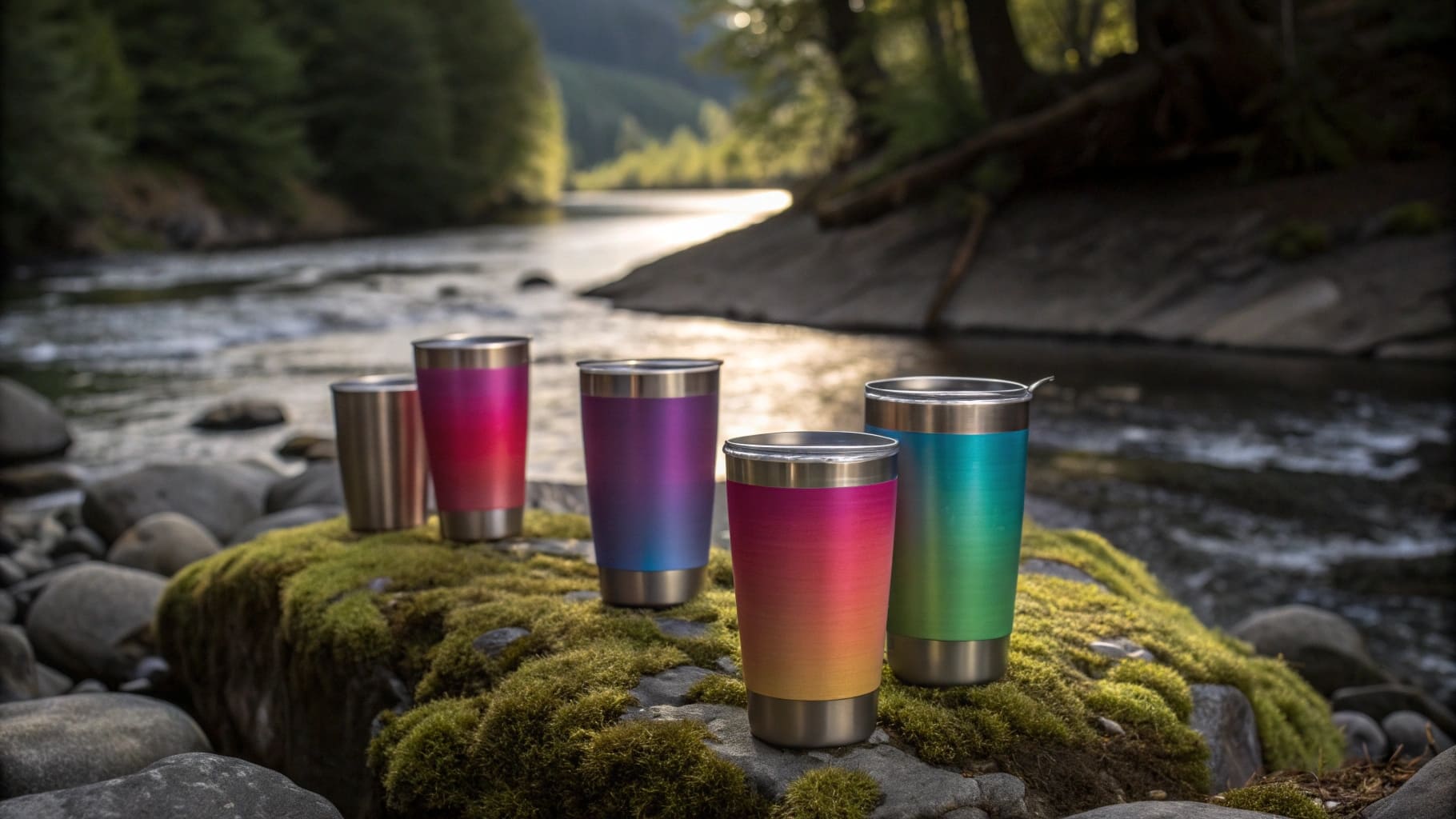
What to Prioritize When Choosing a Healthcare-Compliant Tumbler
Breaking down "best" into clear criteria makes the buying decision much easier. I use the following framework when advising healthcare procurement clients.
Material safety comes first. The inner wall must be 304 or 316 stainless steel. 304 is the standard. 316 offers better corrosion resistance5 and is worth the small price premium for premium gifting tiers. Both are food-safe. Avoid tumblers from suppliers who cannot confirm the steel grade in writing.
Lid design matters more than most people think. Healthcare workers move fast. A lid that leaks, sticks, or is hard to clean becomes a liability. Look for lids that are BPA-free, dishwasher-safe, and have a simple sliding or push-button mechanism.
Certifications give you legal cover. For U.S. markets, FDA-compliant materials are the baseline. For European healthcare markets, you also need CE marking and REACH compliance6 for any part of the product that contacts the beverage.
| Criteria | U.S. Healthcare Market | European Healthcare Market |
|---|---|---|
| Material standard | FDA-compliant, 304 SS | REACH-compliant, 304 SS |
| Certification needed | FDA, food safety batch cert | CE marking, REACH |
| BPA-free lid | Required | Required |
| Documentation | Fair market value assessment | Fair market value assessment |
| Gift value cap | $10–$25 per recipient | Varies by country |
Landed cost controls compliance. You may love a tumbler at $18 unit cost, but once you add freight, duties, and import fees, the landed cost may push it over your regulatory cap. I always calculate landed cost before finalizing any order, not after. This is especially important for buyers importing from China into the U.S. or EU.
Brand execution has to be clean. Healthcare gifting is about professional image. A poorly printed logo or a lid that does not align with the body damages the brand. For healthcare clients, I recommend laser engraving for logos when budget allows. It is permanent, it looks professional, and it does not add the compliance complexity of sublimation if you want to keep things simple.
What Size Are 20oz Tumblers?
Physical dimensions matter more than most buyers think. A tumbler that does not fit a car cup holder does not get used. A tumbler that is too tall for a hospital locker does not get kept. Both outcomes waste your gifting budget.
A standard 20oz tumbler is 6.5–7 inches tall with a 3.5-inch base diameter7. This size fits most standard vehicle cup holders, which is a real daily-use advantage for healthcare workers who commute between facilities.

Why Size Is a Strategic Factor in Healthcare Gifting
Size is not just a physical spec. It connects directly to how often the tumbler gets used and how much brand exposure you actually get from the gift.
Healthcare workers move between clinics, hospitals, and patient homes. Many drive. A tumbler that fits their car cup holder travels with them. That is daily brand exposure. A tumbler that does not fit stays on a desk or gets left at home.
Here is a size reference across common tumbler capacities:
| Capacity | Height | Base Diameter | Fits Cup Holder? |
|---|---|---|---|
| 12oz | 4.5–5 inches | 3 inches | Yes |
| 16oz | 5.5–6 inches | 3.3 inches | Yes |
| 20oz | 6.5–7 inches | 3.5 inches | Yes (most vehicles) |
| 30oz | 8–8.5 inches | 3.5 inches | Tight fit |
| 40oz | 9.5–10 inches | 4 inches | Often no |
The 20oz size hits the most practical balance. It is large enough for a full coffee or water serving. It is small enough to fit standard cup holders and hospital locker spaces. For a full 8–12 hour shift, 20oz is the volume most healthcare workers actually finish.
From a compliance angle, the 20oz size also lands at a price point that stays within most healthcare gifting value caps. Larger tumblers cost more. A 30oz or 40oz tumbler, even at volume pricing, may push your landed cost above the $25 threshold8 that many healthcare compliance programs use as a hard cap. The 20oz avoids that problem while still delivering a gift that feels substantial.
One more practical point: lids are part of the size equation. A tumbler lid that protrudes significantly can push the total height above what fits in a locker slot or bag pocket. I always ask suppliers for lid-on dimensions, not just body height. This small detail has saved me from fielding complaints from clients whose gifts did not fit where they needed to.
Conclusion
Healthcare gifting compliance is specific and non-negotiable. The 20oz insulated tumbler works because it balances real daily utility, regulatory price compliance, and professional brand execution within one product.
-
"General Questions Regarding Certain Fraud and Abuse Authorities", https://oig.hhs.gov/faqs/general-questions-regarding-certain-fraud-and-abuse-authorities/. The U.S. Department of Health and Human Services Office of Inspector General has issued guidance establishing nominal value thresholds for permissible gifts to healthcare professionals under the Anti-Kickback Statute; the Sunshine Act, administered by CMS, separately governs reporting of transfers of value to covered recipients. Evidence role: statistic; source type: government. Supports: The specific dollar caps on promotional gifts under the Anti-Kickback Statute and Physician Payments Sunshine Act as established by OIG guidance and CMS regulations. Scope note: Applicable thresholds may vary by context, state law, and specific safe harbor provisions; the article's stated $10–$25 range should be verified against current OIG advisory opinions and CMS regulations rather than treated as a universal cap. ↩
-
"How to Sublimate on Powder-Coated Tumblers | Step-by-Step Guide", https://www.youtube.com/watch?v=8EhmGqPeFBg. Dye sublimation printing relies on heat and pressure to convert solid dye into gas that bonds with a polymer substrate; on metal drinkware, a powder or polymer coating is applied to the outer wall to serve as the sublimation receptor, with transfer typically occurring at temperatures between 350°F and 400°F. Evidence role: mechanism; source type: education. Supports: The sublimation printing process requires a polymer-based coating substrate and involves heat transfer at specific temperatures to bond dye molecules to the coating. Scope note: Exact curing temperatures vary by ink formulation, coating type, and equipment; this range reflects common industry practice rather than a single universal standard. ↩
-
"Lead in stainless steel tumblers and vacuum insulation, explained ...", https://www.instagram.com/reel/C_d7Rg8y_dw/. In double-wall vacuum insulated drinkware, the vacuum is typically drawn and sealed at the base of the tumbler during manufacturing; the integrity of this seal depends on the quality of the weld and seal materials, which in properly manufactured products are designed to withstand post-processing temperatures including those used in powder coat curing. Evidence role: mechanism; source type: education. Supports: The vacuum seal in double-wall stainless steel drinkware can withstand the temperatures used in powder coat curing when the manufacturing sequence is properly controlled. Scope note: This claim is process- ↩
-
"Hospital staff nurses' work hours, meal periods, and rest breaks. A ...", http://stacks.cdc.gov/view/cdc/191903. Research on healthcare worker occupational conditions documents that nurses and physicians commonly work 8–12 hour shifts with irregular or abbreviated break periods, which affects hydration and nutrition behaviors during the workday. Evidence role: general_support; source type: paper. Supports: Healthcare workers, particularly nurses and physicians, frequently work extended shifts with limited break opportunities, affecting their ability to consume beverages at optimal times. Scope note: The connection between shift length and preference for temperature-retaining drinkware is inferential; no direct research specifically linking insulated tumbler utility to healthcare worker satisfaction is cited. ↩
-
"[PDF] Stainless Steel (SS) Safety Profile - FDA", https://www.fda.gov/media/165146/download. Grade 304 stainless steel (18% chromium, 8% nickel) is widely used in food processing and drinkware applications; grade 316 adds molybdenum, which enhances resistance to chloride corrosion and pitting, making it preferable in more chemically aggressive environments. Evidence role: definition; source type: institution. Supports: The compositional and corrosion-resistance differences between 304 and 316 stainless steel grades and their suitability for food-contact applications. Scope note: Both grades are generally recognized as food-safe; the practical performance difference in typical drinkware use is modest and context-dependent. ↩
-
"EU - Labeling/Marking Requirements", https://www.trade.gov/country-commercial-guides/eu-labelingmarking-requirements. The EU REACH Regulation (EC No 1907/2006) governs the use of chemical substances in articles placed on the European market; EU Regulation (EC) No 1935/2004 establishes the framework for food contact materials, with specific measures applicable to metals and alloys. Evidence role: definition; source type: government. Supports: REACH regulation requirements for chemical substances in articles, and EU food contact material regulations applicable to stainless steel drinkware sold in European markets. Scope note: CE marking requirements depend on the product category and applicable directives; not all consumer drinkware requires CE marking, and the article's blanket assertion should be verified against the specific regulatory pathway for promotional gifting items. ↩
-
"What size should I use for a 20oz skinny tumbler? - Facebook", https://www.facebook.com/groups/1655261694953377/posts/1824609691351909/. Dimensions for 20oz insulated tumblers vary by manufacturer; the cited height and base diameter figures represent a commonly observed range across commercially available products rather than a formally standardized specification. Evidence role: general_support; source type: other. Supports: Typical physical dimensions of 20oz insulated tumblers as commonly manufactured. Scope note: No single industry standard governs tumbler dimensions; buyers should verify lid-on and lid-off measurements directly with suppliers, as variation across manufacturers is common. ↩
-
"Policy Statement Regarding Gifts of Nominal Value - OIG - HHS.gov", https://oig.hhs.gov/documents/special-advisory-bulletins/887/OIG-Policy-Statement-Gifts-of-Nominal-Value.pdf. OIG guidance on the Anti-Kickback Statute has historically referenced nominal value thresholds in the context of permissible gifts to healthcare professionals; exceeding such thresholds may implicate safe harbor provisions and require additional compliance documentation. Evidence role: general_support; source type: government. Supports: The regulatory basis for a $25 per-item value threshold in healthcare promotional gifting and its practical implications for product selection. Scope note: The $25 figure is not a single universally codified limit; applicable thresholds depend on the specific safe harbor, state law, and institutional compliance policies, and should be confirmed with legal counsel before use as a procurement decision rule. ↩