
Are Stainless Steel Straws Compliant for 2026? LFGB, FDA, Prop 65 Checks
Regulations are getting stricter. If you source stainless steel straws and skip compliance checks, you risk losing contracts, shipments, and buyer trust fast.
Stainless steel straws can meet LFGB, FDA, and Prop 65 requirements for 20261 when made from food-grade 304 or 316 steel, free from harmful coatings or welding contaminants, and tested by a certified third-party lab for lead, cadmium, and nickel migration.
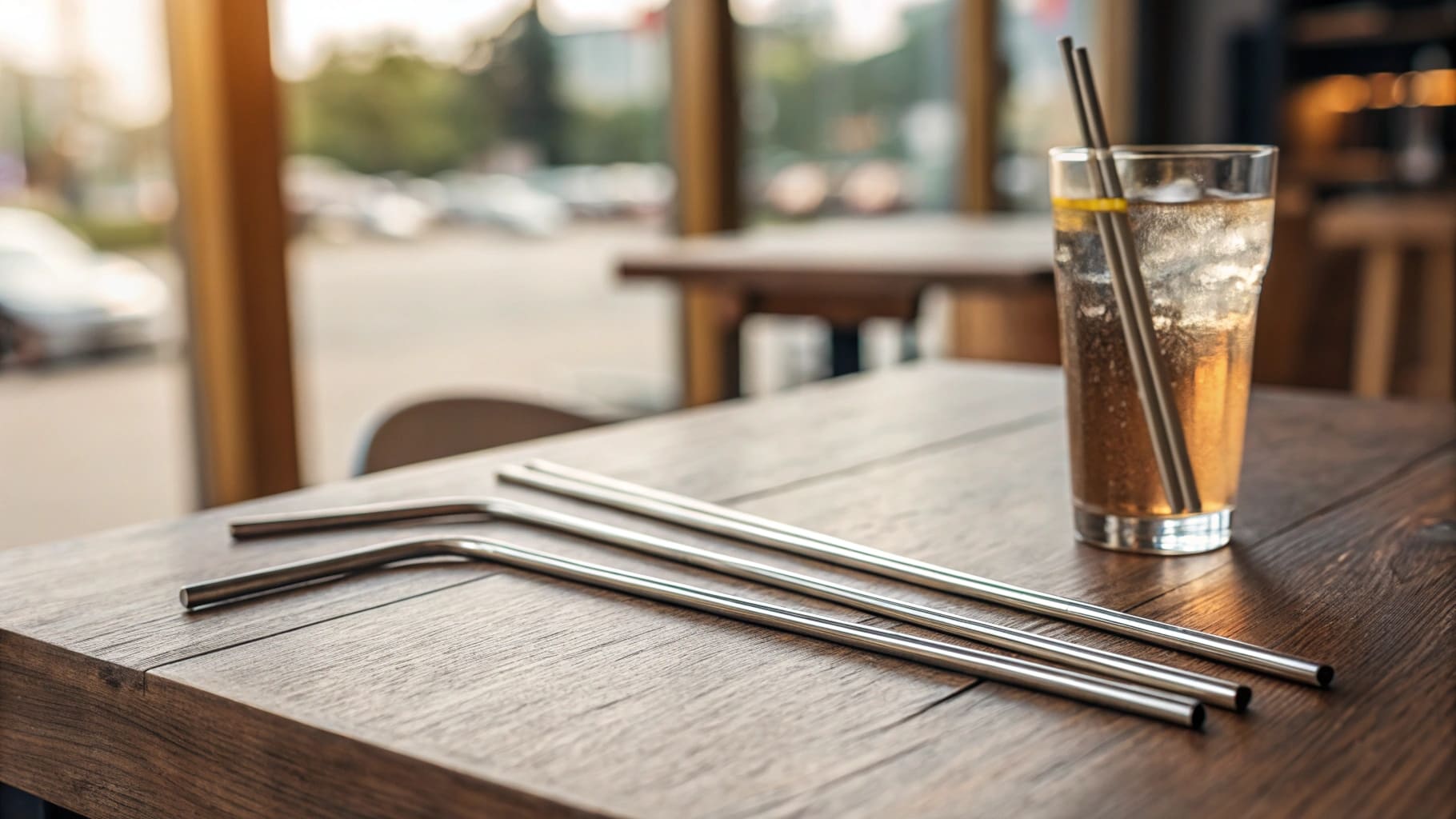
I talk to buyers every week who think compliance is a one-time box to tick. They pick a supplier, get a certificate PDF, and move on. That works until it doesn't. A shipment gets held at customs. A retail partner requests updated lab reports. A California distributor flags a Prop 65 issue. By then, the damage is done. The truth is that compliance is not a document. It is an ongoing process, and the buyers who understand this are the ones who build lasting supply chains. Let me walk you through what actually matters for 2026.
Are Stainless Steel Straws Safe for Kids?
Parents are reading labels more carefully than ever. If your brand targets families and you cannot answer this question clearly, you will lose the sale to someone who can.
Stainless steel straws are safe for kids when they use food-grade 304 or 316 steel, have smooth rounded edges, and come with soft silicone tips.2 They contain no BPA, phthalates, or microplastics. Third-party lab reports confirming zero harmful metal migration make this claim credible and defensible in retail.
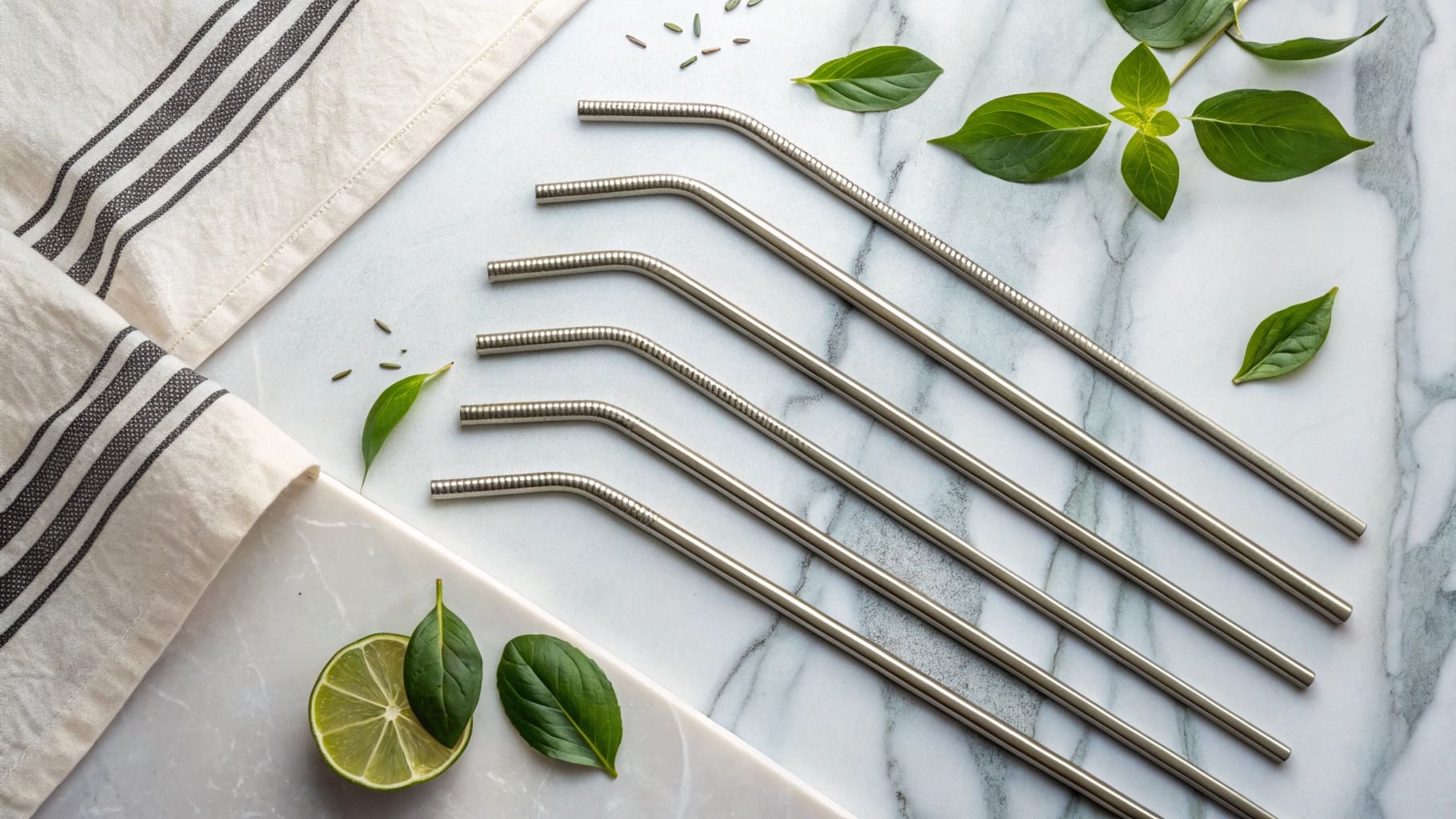
I have worked with buyers who specifically source straws for children's product lines. Their first question is always about the tip and the edge finish. A sharp seam on a straw that a child puts in their mouth is a liability. A poorly welded joint that traps moisture becomes a hygiene problem. These are not theoretical risks. They are the exact points where cheap manufacturing shows up.
Here is how to evaluate a supplier's kid-safe straw before you commit to an order:
| Check Point | What to Look For | Why It Matters |
|---|---|---|
| Steel Grade | 304 or 316 food-grade | Lower grades may leach nickel or chromium |
| Edge Finish | Machine-polished, no sharp seams | Prevents cuts or injuries during use |
| Silicone Tip Option | Food-grade silicone, no BPA | Protects teeth, adds comfort for young users |
| Straw Length | Shorter options (15–18 cm) | Better fit for kids' cups and smaller hands |
| Lab Testing | Third-party migration test for Pb, Cd, Ni | Confirms no harmful metal transfer into drinks |
| Weld Quality | Smooth internal seam, no gaps | Gaps trap bacteria and are hard to clean |
The "non-toxic" label carries real weight in the children's product market. But it has to come with documentation. A supplier who hands you a clean, signed lab report from an accredited testing body is giving you something you can actually use when a retail buyer or a parent asks the hard question. Without it, "non-toxic" is just a marketing word, and savvy buyers know the difference.
I always tell the brands I work with: your supplier's paperwork is your insurance. Get it before the order ships, not after.
What Are the Best Non-Toxic Straws?
The reusable straw market is crowded. Bamboo, glass, silicone, paper, and stainless steel all compete for the same shelf space. Buyers need to know which one actually wins on safety before they build their sourcing strategy.
Stainless steel straws are among the best non-toxic options available.3 They contain no BPA, no plastic polymers, and no organic materials that can harbor bacteria. When made from food-grade steel and tested for metal migration, they outperform most alternatives on both safety and durability.
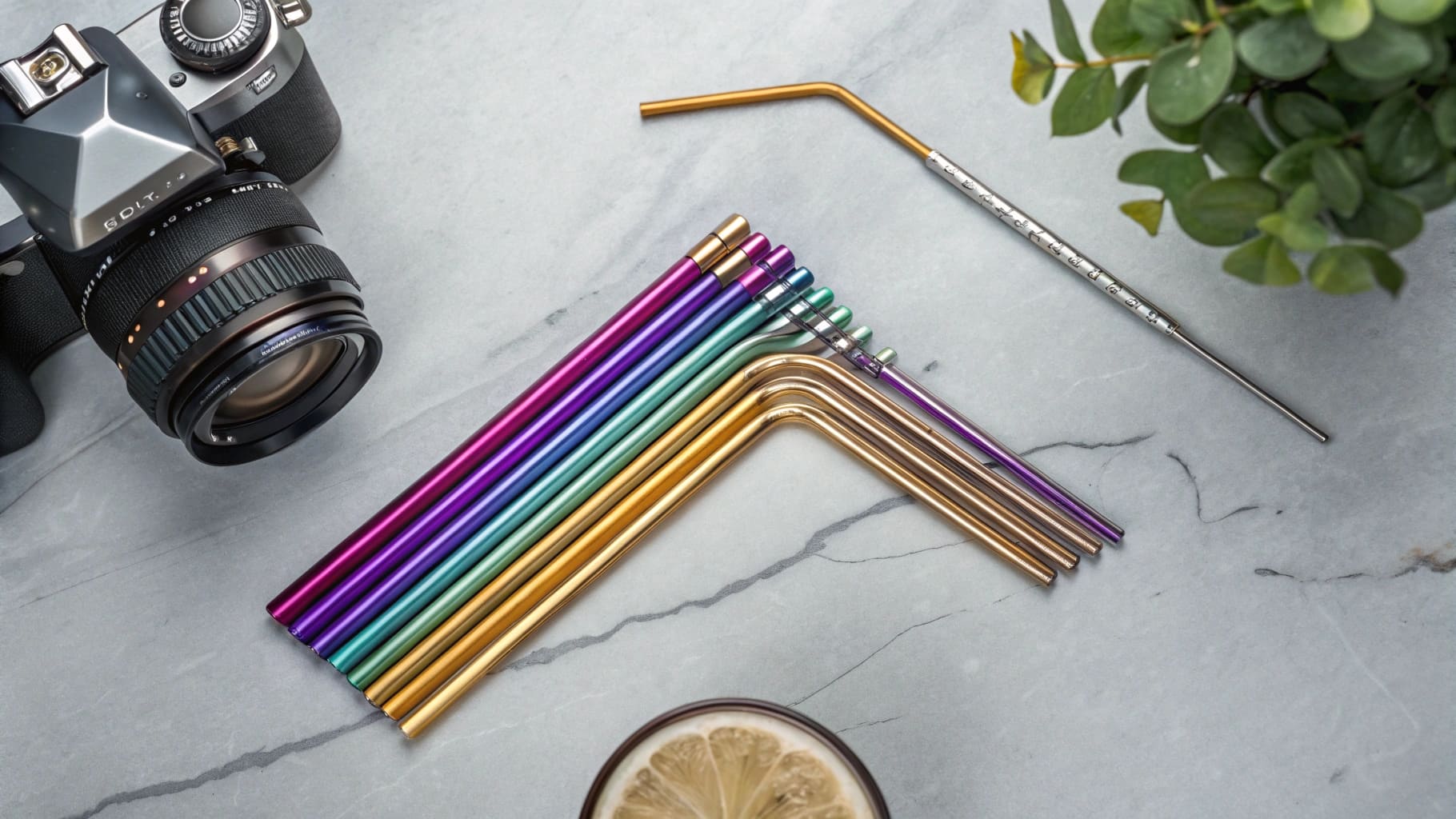
I have looked at this from the supplier side for years, and the comparison keeps pointing back to the same conclusion. Let me break it down by material so the picture is clear.
| Straw Material | BPA-Free | Microplastic Risk | Bacterial Resistance | Durability | Certifiable |
|---|---|---|---|---|---|
| Stainless Steel | Yes | None | High (non-porous) | Very High | Yes (FDA, LFGB, Prop 65) |
| Bamboo | Yes | None | Low (porous, absorbs moisture) | Medium | Limited |
| Glass | Yes | None | High | Low (breakable) | Yes |
| Silicone | Yes | Low | Medium | Medium | Yes |
| Paper | Yes | Low | Very Low | Very Low | Partial |
| Plastic | No | High | Low | Medium | Partial |
Stainless steel stands out because it is non-porous. That matters more than most buyers realize. A porous material like bamboo absorbs liquid, builds up residue, and becomes difficult to clean thoroughly.4 A stainless steel straw cleans completely with a standard brush and hot water. For bulk buyers supplying cafes, offices, or retail packs, that cleaning reliability is a real selling point.
The certification angle is also important here. Stainless steel straws can be tested under FDA food contact guidelines, LFGB standards for the European market, and Prop 65 heavy metal disclosure requirements for California.5 Not every material has this kind of regulatory pathway. When your buyer is a large retailer or a corporate procurement team, they want compliance documentation, and stainless steel is the easiest material to certify and document properly.
From my experience, brands that lead with compliance data in their product listings and sell sheets close deals faster. They are not just selling a straw. They are selling proof.
Is It Safe to Drink Out of a Stainless Steel Straw?
This is the question consumers type into Google late at night before they add something to their cart. If you are a brand or importer, your ability to answer it clearly and confidently affects both conversion and returns.
Yes, it is safe to drink out of a stainless steel straw. Food-grade stainless steel is non-reactive, does not leach chemicals into drinks, and resists bacteria when cleaned properly.6 It is the same material used in professional kitchen equipment and medical tools worldwide.
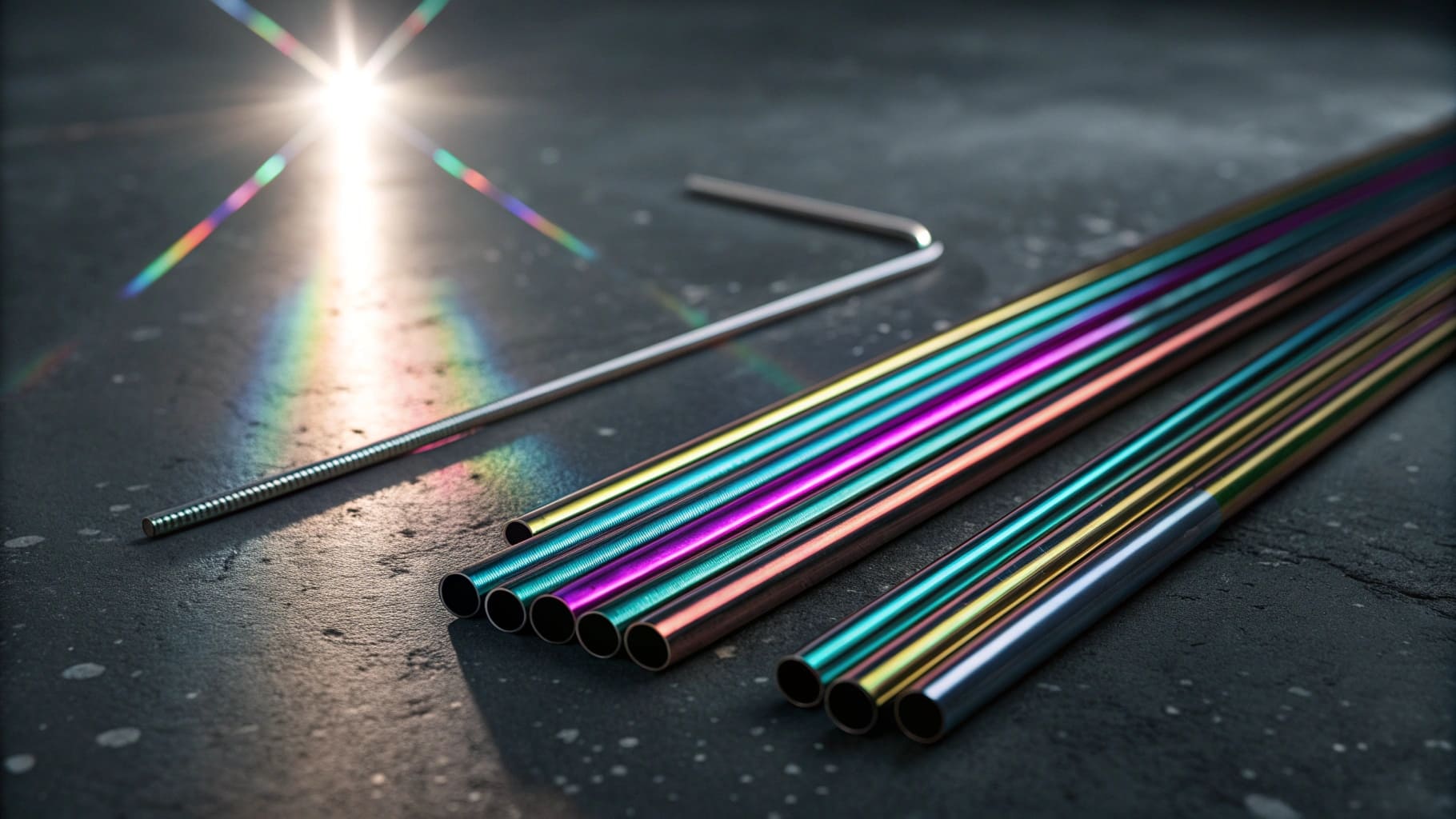
I want to address the concern that comes up most often: does stainless steel affect the taste of a drink? The short answer is no, not when the steel is the right grade and the manufacturing is clean. 304 stainless steel is the standard food-contact grade used globally. 316 stainless steel adds molybdenum for extra corrosion resistance and is often preferred for acidic drinks like lemonade or coffee.7 Neither grade adds taste or smell to beverages under normal conditions.
The real risk is not the steel itself. The risk is in how the straw is made.
| Risk Area | What Goes Wrong | How to Check |
|---|---|---|
| Welding Seams | Low-quality welds may introduce metal contaminants | Ask for internal seam inspection photos and weld quality reports |
| Surface Coatings | Decorative paint or powder coat may contain heavy metals | Request lab test for surface coating materials |
| Cheap Steel Grades | Non-food-grade alloys may leach nickel or chromium | Confirm steel grade in writing and request material certificates |
| No Third-Party Testing | Supplier claims safety but offers no documentation | Only accept third-party lab reports from accredited bodies |
| Poor Cleaning Design | Straws too narrow to clean lead to bacterial buildup | Check internal diameter and verify cleaning brush is included |
For importers selling into the US market, Prop 65 is the one that catches people off guard. California requires clear disclosure when a product exposes consumers to chemicals above certain thresholds, including lead and cadmium. A straw made from proper 304 or 316 steel with no surface coatings will pass. A straw with a decorative painted finish from an unverified supplier may not. This is why sourcing decisions have to go deeper than the price per unit.
At Icobottle, I have seen firsthand how a well-documented compliance file changes a buyer's confidence level. When I can hand a buyer a folder with material certificates, migration test results, and LFGB or FDA compliance letters, the conversation shifts from "can I trust this?" to "how many units can you ship?" That is the position every serious supplier should be in going into 2026.
Conclusion
For 2026, compliance is your competitive edge. Stainless steel straws made from food-grade steel, tested by third-party labs, and backed by LFGB, FDA, and Prop 65 documentation will win the deals that matter.
-
"Food Packaging & Other Substances that Come in Contact with Food", https://www.fda.gov/food/food-ingredients-packaging/food-packaging-other-substances-come-contact-food-information-consumers. Government food-contact and Proposition 65 materials identify stainless steel articles as products whose compliance depends on material composition, migration or exposure assessment, and applicable warning thresholds. Evidence role: general_support; source type: government. Supports: The source should show that food-contact stainless steel articles are regulated through food-contact safety and migration requirements, while California Proposition 65 addresses consumer exposure warnings for listed chemicals.. Scope note: Such sources define regulatory frameworks and do not certify that any particular straw model complies. ↩
-
"Toy Safety Business Guidance", https://www.cpsc.gov/Business--Manufacturing/Business-Education/Toy-Safety. Children's product safety rules and standards commonly address accessible sharp edges and points as foreseeable injury hazards, supporting the need for rounded, smooth straw ends in products intended for children. Evidence role: general_support; source type: government. Supports: The source should support that children's products are evaluated for accessible sharp edges or points and that mouth-contact products require attention to material safety.. Scope note: Child-product sharp-edge standards provide contextual safety support and may not apply directly to all reusable straws unless they are marketed as children's products. ↩
-
"Review on metal packaging: materials, forms, food applications ...", https://pmc.ncbi.nlm.nih.gov/articles/PMC7270472/. Food-contact materials literature describes stainless steel as a durable, corrosion-resistant, and cleanable material, which provides contextual support for treating it as a low-toxicity reusable straw option. Evidence role: general_support; source type: research. Supports: The source should support that stainless steel is widely accepted for food-contact use because it is durable, corrosion-resistant, and cleanable under appropriate conditions.. Scope note: This would not directly prove that stainless steel is objectively 'best' among all straw materials; a direct comparative lifecycle and toxicology assessment would be needed for that ranking. ↩
-
"Bulletin #3108, Safe Cutting Boards: Materials, Usage, and ...", https://extension.umaine.edu/publications/3108e/. Materials studies describe bamboo and other plant-based substrates as porous and moisture-absorbing, a property that can make residue removal and consistent sanitation more challenging than for nonabsorbent metal surfaces. Evidence role: mechanism; source type: paper. Supports: The source should support that bamboo or comparable plant-based materials are porous and can absorb moisture, which affects residue retention and cleaning.. Scope note: Evidence on bamboo boards or packaging is contextual; direct testing on bamboo drinking straws would provide stronger support. ↩
-
"Regulatory Status of Components of a Food Contact Material - FDA", https://www.fda.gov/food/packaging-food-contact-substances-fcs/determining-regulatory-status-components-food-contact-material. Regulatory materials from FDA, German or European food-contact authorities, and California OEHHA show that stainless steel straws may be assessed as food-contact articles and, where relevant, for Proposition 65 listed-chemical exposure. Evidence role: historical_context; source type: government. Supports: The source should support that food-contact articles are evaluated for safe use under FDA and European/German frameworks, while Proposition 65 addresses exposure to listed chemicals such as lead and cadmium.. Scope note: The frameworks differ in legal scope and test methods; passing one does not automatically establish compliance with the others. ↩
-
"[PDF] FDA Food Code 2022: Full Document", https://www.fda.gov/media/164194/download. Food-contact guidance and surface-hygiene studies support the use of stainless steel because its corrosion resistance and cleanability limit chemical release and microbial persistence when surfaces are properly maintained. Evidence role: mechanism; source type: research. Supports: The source should support that food-grade stainless steel is corrosion-resistant and cleanable, and that proper cleaning reduces microbial contamination on stainless steel surfaces.. Scope note: The statement should not imply zero leaching or inherent sterility; corrosion, acidic exposure, damaged surfaces, or inadequate cleaning can change performance. ↩
-
"[PDF] Effect of Molybdenum Additions on the Microstructures and ... - OSTI", https://www.osti.gov/servlets/purl/1439854. Materials references describe type 316 stainless steel as a molybdenum-bearing austenitic alloy with improved corrosion resistance relative to type 304, supporting its selection for more corrosive service conditions. Evidence role: mechanism; source type: education. Supports: The source should support that 316 stainless steel includes molybdenum and that this improves resistance to corrosion, especially pitting or chloride-related corrosion, compared with 304.. Scope note: This supports the corrosion-resistance rationale; it does not directly prove that 316 is necessary for ordinary lemonade or coffee use. ↩