
Dishwasher-Safe Tumbler Claims: Are Suppliers Actually Telling You the Truth?
Every time I hear a supplier say "yes, fully dishwasher safe," I pause. That claim sounds simple. It rarely is.
Dishwasher safety in stainless steel tumblers depends mostly on seal design and pressure venting, not the steel body. Suppliers who skip proper testing or vague on details often leave buyers with products that fail after a few wash cycles, causing returns and brand damage.

I have worked with buyers who placed large orders based on that one phrase: "dishwasher safe." Some of those orders ended well. Others came back with customer complaints about warped lids, broken seals, and mold growing inside cracks they could not even see. The difference was never the steel. The steel was almost always fine. The difference was always what surrounded the steel. This post breaks down what actually makes a tumbler dishwasher safe, what to ask your supplier, and how to verify that the answer you get is real.
Are Reduce Tumblers Dishwasher Safe?
"Dishwasher safe" printed on a box does not always mean the whole product survives the dishwasher. Which part was tested, and how many times?
Reduce tumblers, like most vacuum-insulated tumblers, use a stainless steel outer wall and inner wall with a vacuum layer between them1. That vacuum layer is what keeps drinks cold or hot. The steel itself handles heat well. However, the lid, seals, and gaskets are a different story. These parts are usually made from silicone or rubber. They can warp, shrink, or crack under repeated high-heat dishwasher cycles2.
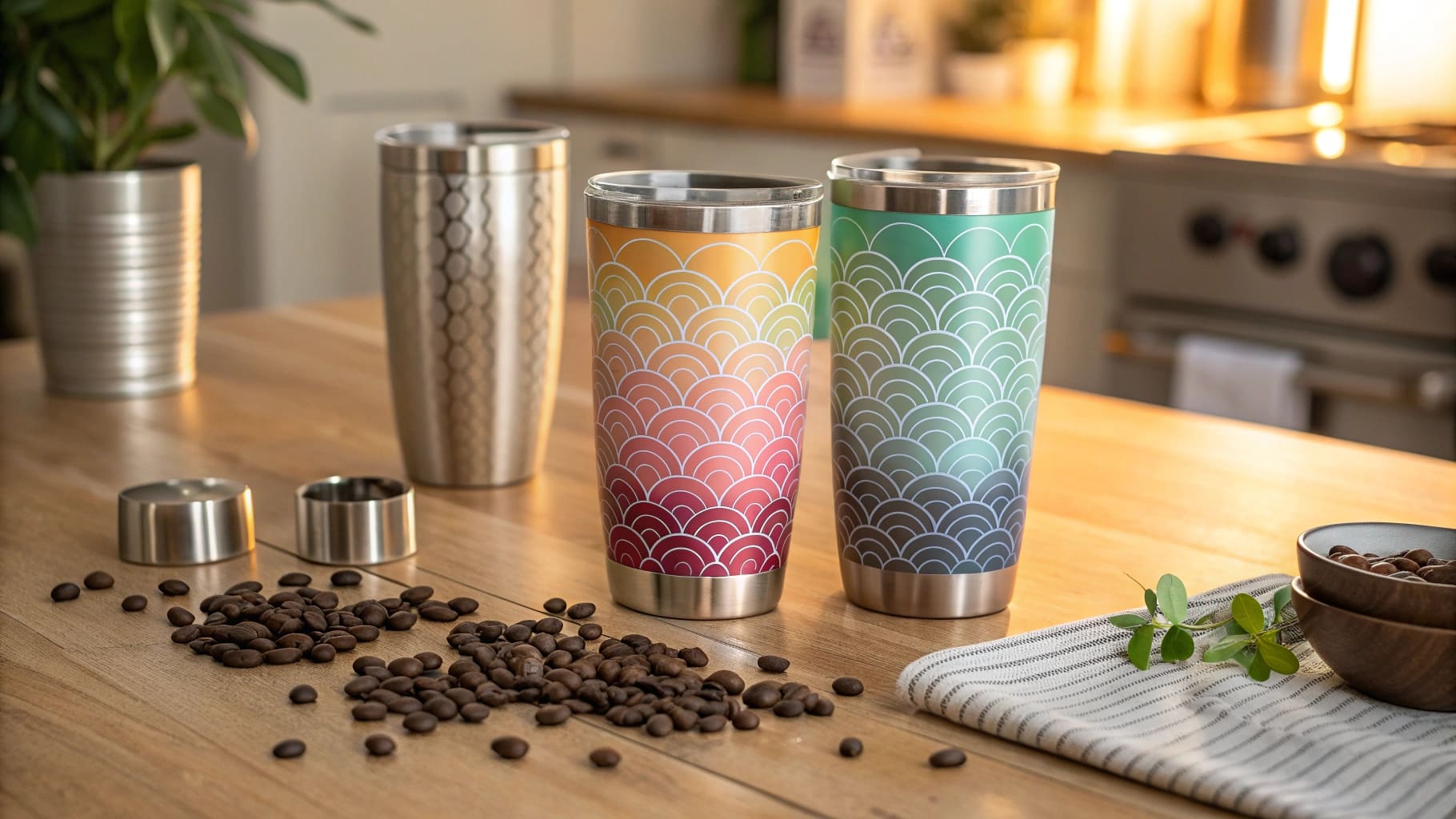
The phrase "dishwasher safe" on most tumblers refers to the steel body only. The lid is often recommended for top-rack washing only, at lower temperatures3. Some lids are not safe for dishwashers at all. When buyers skip this distinction, they end up with products that technically passed a single internal wash test but fail real-world repeated use.
Here is what I always check before accepting any dishwasher-safe claim:
| Component | Common Material | Dishwasher Risk Level |
|---|---|---|
| Outer body | 304 or 316 stainless steel | Low |
| Inner wall | 304 or 316 stainless steel | Low |
| Lid body | Plastic or stainless steel | Medium |
| Lid gasket / seal | Silicone or rubber | High |
| Pressure vent | Silicone plug or valve | High |
| Decorative coating | Powder coat or paint | Medium |
The gasket and pressure vent are where problems always start. A pressure vent is a small hole or valve built into vacuum-insulated lids to release steam and prevent the lid from being forced off by pressure changes during washing4. If this vent is too small, steam gets trapped. If it is poorly sealed, water gets in after the wash cycle and sits inside the vacuum chamber, causing rust from the inside or mold growth you cannot see.
A well-designed tumbler addresses all of these points before it ever reaches a buyer. A poorly designed one uses marketing words to cover up weak engineering.
Can a Stainless Steel Tumbler Go in the Dishwasher?
Yes, but only if the full product was tested together, not just the steel body alone. This is the question most buyers forget to ask clearly.
The stainless steel body of a tumbler can handle dishwasher heat easily. Grade 304 steel handles temperatures up to around 870°C. A dishwasher runs between 50°C and 75°C5. The steel will not warp, rust, or degrade. The steel is not your problem. Your problem is the system around the steel.
I once visited a production line where the steel bodies were being tested rigorously. Temperature tests, pressure tests, vacuum retention tests. Impressive. Then I asked about the lid seals. The answer was a standard durability test. One round. Not a dishwasher cycle simulation. Not a repeated heat and detergent exposure test. Just a basic pull test to see if the seal stayed in place. That gap between how the steel was tested and how the seals were tested is exactly where buyer problems come from.
Here is what a proper dishwasher compatibility test for a full tumbler product should include:
| Test Type | What It Checks | Minimum Cycle Count |
|---|---|---|
| High-heat wash cycle | Seal and gasket deformation | 100 cycles |
| Detergent exposure test | Material degradation from alkaline detergent | 50 cycles |
| Pressure vent function test | Steam release under closed dishwasher conditions | 100 cycles |
| Vacuum retention post-wash | Insulation performance after repeated washing | 50 cycles |
| Moisture intrusion test | Water entering vacuum layer or lid joints | 30 cycles |
When I ask suppliers for test data and they hand me a single-page internal document with no specific cycle counts or temperatures listed, I treat that the same way I treat an unsigned certificate. It is not enough. Real dishwasher-safe claims come with third-party lab reports, specific temperature ranges tested, and clear cycle counts. Anything less is a marketing claim, not a verified product specification.
Buyers who serve retail markets carry this responsibility further down the chain. Your end customers will put the product in the dishwasher without reading the care instructions. The product needs to survive that, or you need to be very clear about what the claim covers and pass that information along with proper labeling.
What Makes a Mug Not Dishwasher Safe?
Most mugs fail in the dishwasher for the same three reasons: weak seals, no pressure venting, and coatings that cannot handle detergent.
A mug or tumbler becomes dishwasher unsafe when its weakest component fails under heat, pressure, or chemical exposure. This is almost never the steel. It is the parts around the steel that were built to a lower standard or simply not designed with dishwasher use in mind.
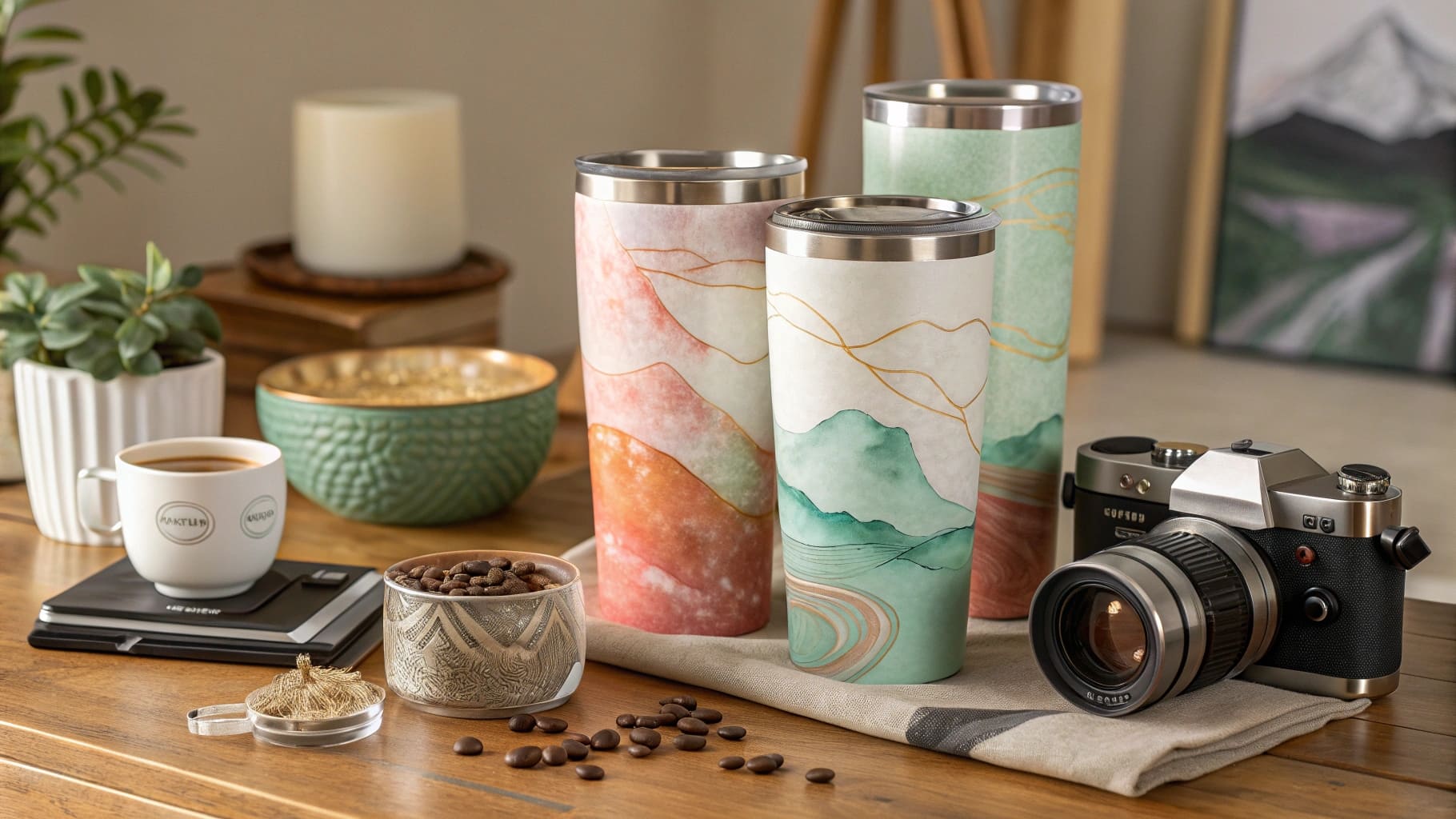
Powder coat and painted finishes are a common failure point that buyers overlook. A tumbler with a custom color or logo done through powder coating can look perfect when it ships. After thirty dishwasher cycles, the finish can chip, peel, or fade. This matters more for branded products because the logo degrades with the coating. Buyers ordering custom-branded tumblers for retail distribution need to confirm that the finish was tested specifically under dishwasher conditions, not just standard handling tests.
The three main reasons a tumbler is not dishwasher safe:
| Failure Cause | What Happens | Visible to Buyer Before Purchase? |
|---|---|---|
| Silicone seal degradation | Lid leaks, mold forms inside cracks | No |
| No pressure vent or blocked vent | Steam builds up, lid warps or seal breaks | No |
| Coating not dishwasher rated | Logo or color fades, chips, or peels | No |
| Vacuum layer moisture intrusion | Insulation fails, condensation forms on body | No |
| Plastic lid components | Lid warps or discolors at high heat | Sometimes |
None of these failures are visible when you first receive the product. They appear after use. This is why testing data matters more than visual inspections. An incoming quality check will not catch a seal that begins to fail after forty wash cycles. Only proper pre-production testing and third-party verification will catch that before the product reaches your customer.
For buyers sourcing from overseas suppliers, I recommend two things. First, request the specific test report for dishwasher performance, including cycle count, temperature, and detergent type used. Second, request separate confirmation for each product component, not just the body. A claim that covers the body but not the lid is a claim that will produce customer complaints.
At Icobottle, I apply this standard to every tumbler we produce. The body, the lid, the seal, the vent, and the coating are all tested as a complete system. The test report covers the full product, not selected parts. When I send a buyer a dishwasher-safe claim, I can back it up with the documentation to match.
Conclusion
Dishwasher safety is about seals, vents, and verified testing. The steel is fine. Ask for the full test report, not just a label claim.
-
"Vacuum flask - Wikipedia", https://en.wikipedia.org/wiki/Vacuum_flask. A technical description of vacuum flasks can substantiate that insulated drinkware commonly uses double walls separated by a vacuum or low-conductivity space to reduce heat transfer. Evidence role: definition; source type: encyclopedia. Supports: Vacuum-insulated tumblers generally use stainless steel inner and outer walls with a vacuum layer between them.. Scope note: The source would define the general construction principle and may not describe the specific Reduce tumbler model. ↩
-
"[PDF] Elastomer degradation in water utility systems via loss of carbon ...", https://ir.library.louisville.edu/cgi/viewcontent.cgi?referer=&httpsredir=1&article=2278&context=etd. Polymer-aging literature can support that elastomers and plastics may undergo dimensional change, cracking, or loss of mechanical properties after repeated exposure to heat, water, and alkaline detergents. Evidence role: mechanism; source type: paper. Supports: Silicone, rubber, or plastic lid components can degrade under repeated high-heat dishwasher exposure.. Scope note: The exact failure mode depends on polymer formulation, temperature, detergent chemistry, and cycle count. ↩
-
"Why do manufacturers specify that things are top-rack dishwasher ...", https://www.reddit.com/r/explainlikeimfive/comments/1gjgt0i/eli5_why_do_manufacturers_specify_that_things_are/. Consumer-product safety or appliance guidance can support that dishwasher upper racks are commonly advised for heat-sensitive plastics because they are generally farther from the heating element and direct high-heat exposure. Evidence role: general_support; source type: government. Supports: Heat-sensitive tumbler lids are often limited to top-rack dishwasher placement.. Scope note: Rack-temperature profiles vary by dishwasher model and cycle, so the evidence would support the rationale rather than a universal temperature guarantee. ↩
-
"[PDF] Steam Safety Relief Valves | NIH", https://orf.od.nih.gov/TechnicalResources/Documents/Technical%20Bulletins/23TB/Steam%20Safety%20Relief%20Valves%20-%20September%202023%20Technical%20Bulletin_508.pdf. A physics or engineering source on steam pressure and pressure-relief mechanisms can support that venting allows gas or steam to escape and reduces pressure buildup in closed containers. Evidence role: mechanism; source type: education. Supports: A pressure vent can release steam and reduce pressure buildup in a closed tumbler lid.. Scope note: The source may explain the general pressure-relief principle rather than documenting pressure vents in all vacuum-insulated tumbler lids. ↩
-
"[XLS] Instructions - Energy Star", https://www.energystar.gov/sites/default/files/specs/Copy%20of%20ENERGY%20STAR%20Draft%20Final%20Test%20Reporting%20Template%20for%20Residential%20Dishwashers.xlsx. Appliance-efficiency or public-health guidance can support that domestic dishwasher wash and rinse temperatures commonly fall in the approximate 50–75°C range, depending on cycle and model. Evidence role: statistic; source type: government. Supports: Typical dishwasher operating temperatures are far below the service temperatures tolerated by 304 stainless steel.. Scope note: Dishwasher temperatures vary by machine, selected program, water-heater setting, and sanitizing cycle. ↩