
Bottle Cleaning Brushes: Which Bristles, Tip Guards, MOQ, and Cartons?
Buying a bottle brush sounds simple. But pick the wrong one, and your customers complain, your returns go up, and your brand takes a hit.
A good bottle cleaning brush uses food-grade silicone bristles, includes a tip guard to protect the bottle interior, ships in master cartons of 50–100 sets, and has a standard MOQ of 500–1,000 units. Choosing the right spec protects your product quality and your brand reputation.
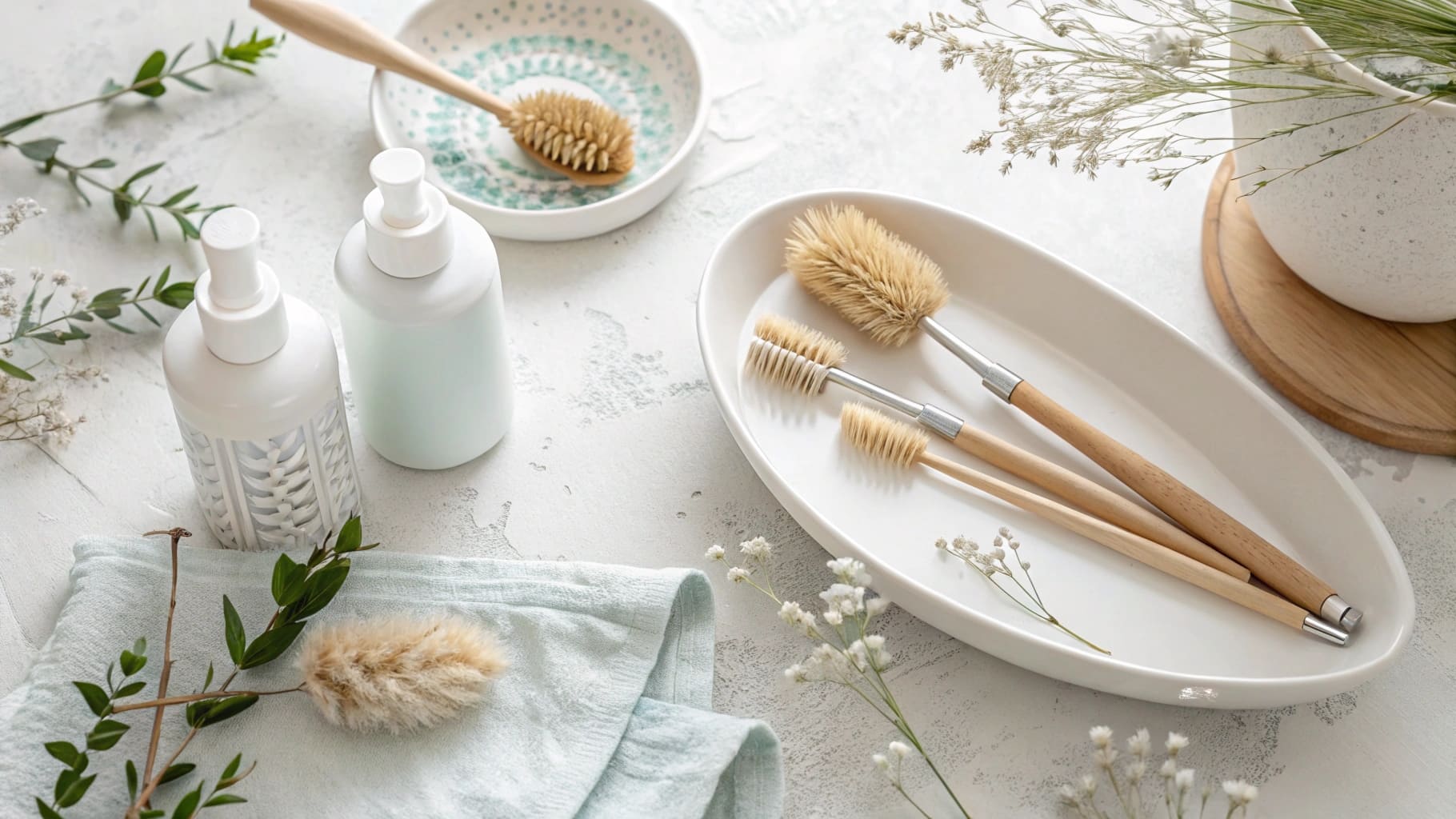
Most B2B buyers focus on the bottle itself. The brush feels like a small detail. But I've seen it cause real problems — scratched interiors, customer complaints, and products returned because they were "too hard to clean." Getting the brush right is part of getting the whole product right. Here's what you need to know before you place your next order.
What Is the Best Material for Baby Bottle Brushes?
You find a supplier. They send you samples. The bristles look fine, but you have no idea if they're safe for your customers — or your market's compliance requirements.
Silicone is the best material for bottle brushes today.1 It is heat-resistant, BPA-free, and does not harbor bacteria. Nylon works too, but it falls short on safety certifications that buyers in Europe and North America expect.
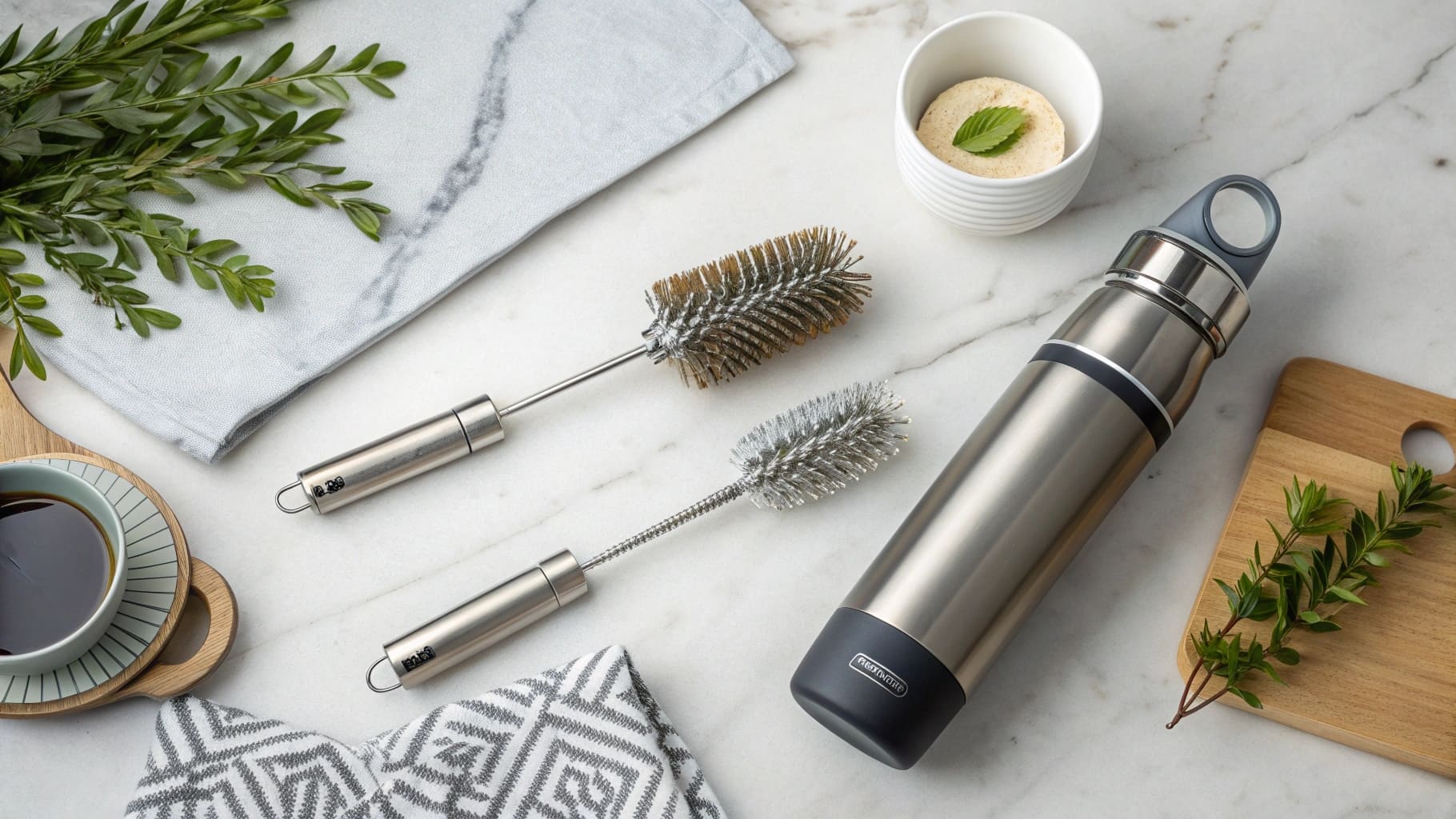
Let me break this down further, because material choice affects more than just safety.
Silicone vs. Nylon: What Actually Matters for B2B Orders
Most of my customers sourcing for the North American or European market ask specifically for silicone bristles. The reason is simple. Their end customers read labels. They check for BPA-free, food-grade, and dishwasher-safe markings. If your brush doesn't meet those expectations, the bottle bundle loses value.
Here's how the two main materials compare:
| Feature | Silicone Bristles | Nylon Bristles |
|---|---|---|
| Heat resistance | Up to 230°C | Around 100°C |
| Dishwasher safe | Yes | Often not |
| BPA-free | Yes | Depends on grade |
| Bacterial growth | Low resistance | Higher risk |
| Surface scratch risk | Very low | Low to moderate |
| Cost | Slightly higher | Lower |
| Certification fit (EU/US) | Strong | Weaker |
Silicone costs a little more per unit. But for B2B buyers who are selling premium stainless steel bottles under their own brand, the trade-off is worth it. A brush that fails a safety check can pull your entire product from shelves. A brush that meets food-grade standards protects everything downstream.
I always recommend silicone to buyers who are targeting retail in North America or Europe. If cost is a hard constraint, I ask them about their end market first, then we work backward from the certification requirements.
What Is a Bottle Washing Brush Used For?
You already know it cleans bottles. But if that's all you think it does, you're missing why the design details matter so much.
A bottle washing brush cleans the inside of narrow-neck bottles, removes residue from threaded caps and lids, and protects the interior surface during scrubbing. The right brush reaches every part of the bottle without scratching the lining or coating.2
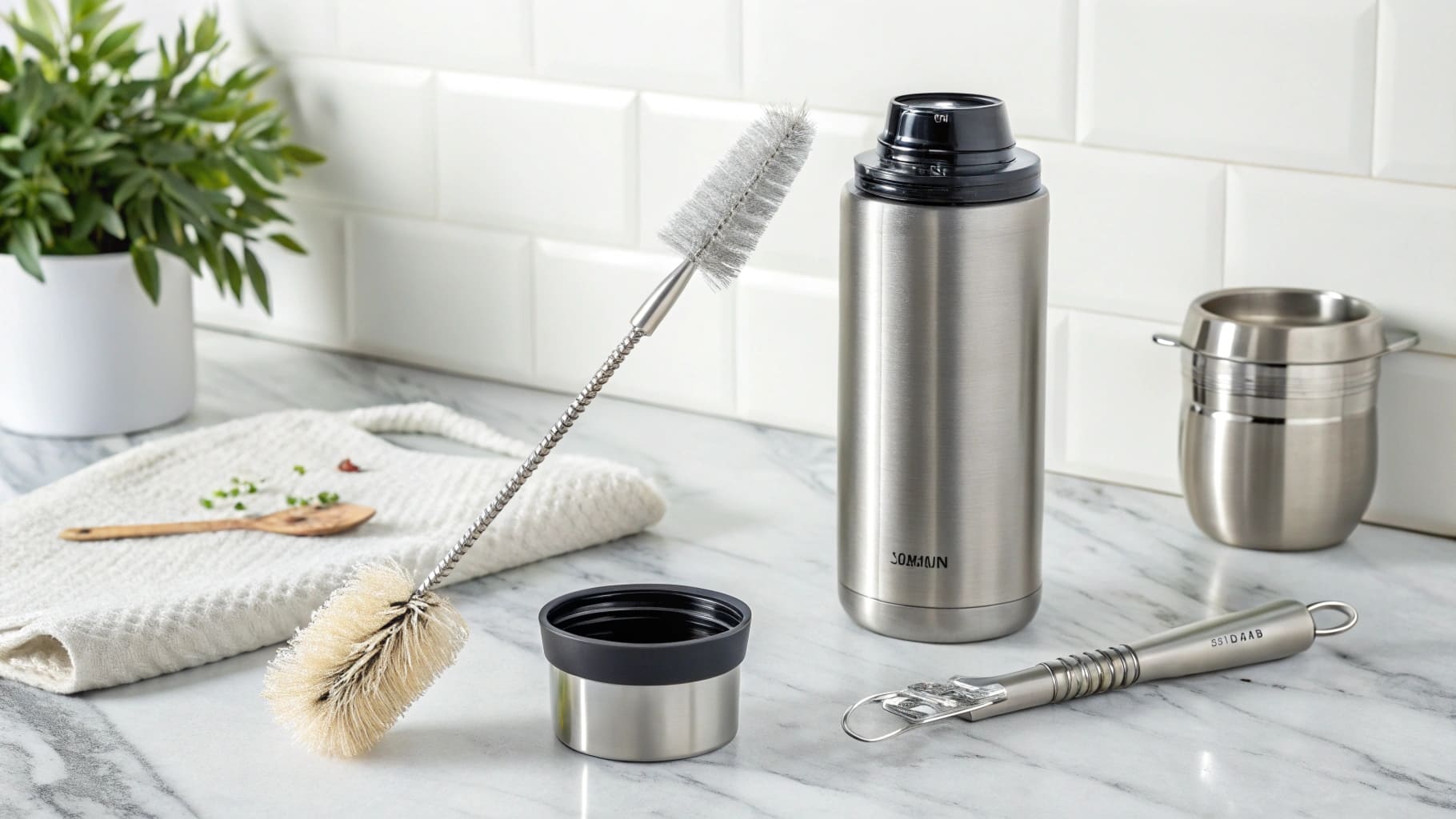
This is where most buyers don't go deep enough. They look at the bristles and ignore everything else. But the design of the brush tells you a lot about how well it will actually perform — and how your end customers will feel about your product.
Breaking Down the Functional Design of a Good Bottle Brush
Think about what a stainless steel insulated bottle actually looks like inside. It has a narrow neck. It has threads at the top. It has a double-wall construction that gives it thermal properties3. A bad brush can scratch the interior, damage the coating, or fail to reach the bottom properly.
Here are the design features that matter:
| Design Feature | Why It Matters |
|---|---|
| Tip guard | Prevents the wire core from scratching the interior bottom |
| 360-degree bristle coverage | Cleans the full circumference without multiple passes |
| Flexible neck | Reaches the bottom of tall, narrow bottles |
| Ergonomic handle | Reduces hand fatigue during thorough cleaning |
| Stiff base bristles | Scrubs threaded cap areas effectively |
The tip guard is the one I get asked about most. Some buyers see it as optional. It isn't. The wire or plastic core at the center of the brush will hit the bottom of the bottle on every stroke. Without a tip guard, that contact scratches the interior over time.4 For double-wall insulated bottles, those scratches can affect thermal performance and give your customers a reason to complain.
I tell buyers this directly: the tip guard is not a premium feature. It is a basic requirement for any brush sold alongside a quality stainless steel bottle.
What Are the Benefits of a Bottle Brush?
You might wonder why you should bother including a brush at all. It adds complexity. It adds cost. It adds another SKU to manage.
Including a quality bottle brush with your stainless steel bottles increases customer satisfaction, reduces returns, and raises the perceived value of your product bundle. Customers who have the right cleaning tool are more likely to maintain the bottle properly and stay happy with their purchase.
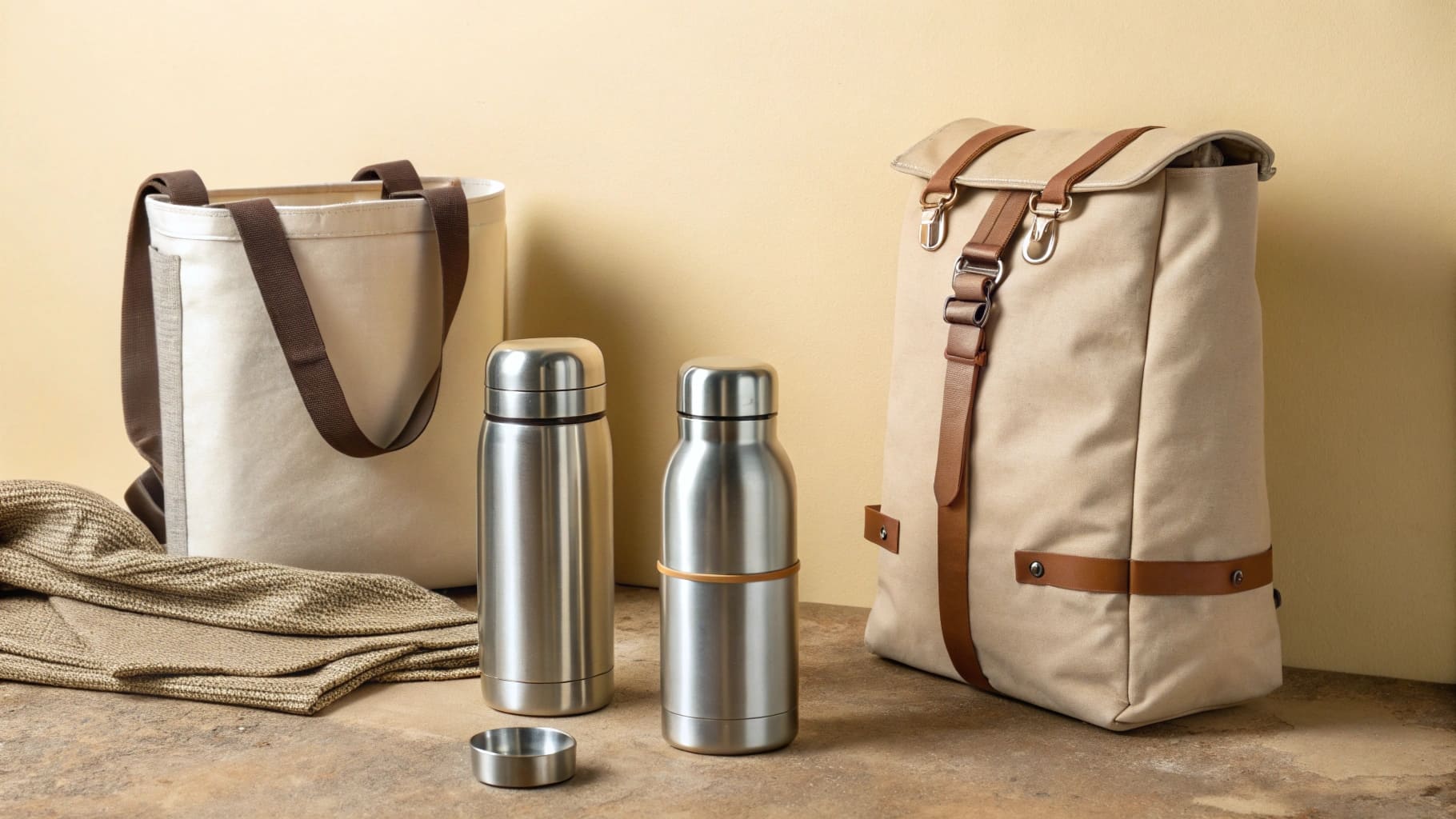
This is where the business case becomes very clear. The brush is not just an accessory. It is a tool that protects your reputation after the sale.
How a Brush Affects Your Numbers and Your Brand
I've spoken with buyers who added a brush to their bundle and saw a direct drop in after-sale complaints. The reason is simple. Stainless steel bottles with narrow necks are hard to clean without the right tool. When customers struggle to clean the bottle, they blame the bottle. When they have a proper brush, the problem disappears.
Here is what that looks like from a business perspective:
| Business Factor | Without Brush | With Brush |
|---|---|---|
| Customer complaints about cleaning | Common | Rare |
| Return rate | Higher | Lower |
| Perceived product value | Standard | Premium |
| Repeat purchase likelihood | Moderate | Higher |
| Brand review quality | Mixed | More positive |
Beyond customer experience, there is a procurement benefit too. When you order brushes as part of a stainless steel bottle bundle, you can often negotiate a lower MOQ on the brush component. Suppliers are more willing to move on MOQ when the brush order is tied to a larger bottle order.
Standard MOQ for bottle brush sets runs between 500 and 1,000 units, depending on how much customization you need. If you want a custom logo on the handle or a specific color to match your brand, expect the MOQ to sit closer to 1,000 units. Master cartons typically hold 50 to 100 brush sets, with carton dimensions around 45×35×30 cm. These numbers are worth knowing before you talk to your supplier, so you can plan your storage and shipping costs accurately.
Conclusion
Choose silicone bristles, insist on a tip guard, bundle brushes with your bottles, and confirm MOQ and carton specs before you commit to an order.
-
"Chemistry Recommendations for Submissions of Food Contact ...", https://www.fda.gov/regulatory-information/search-fda-guidance-documents/guidance-industry-preparation-premarket-submissions-food-contact-substances-chemistry. Food-contact material guidance from regulators such as the FDA or BfR can support that compliant silicone elastomers are widely used for repeated food-contact applications, providing contextual support for silicone’s suitability in bottle-brush bristles. Evidence role: expert_consensus; source type: government. Supports: Silicone is the preferred or suitable material for modern bottle cleaning brush bristles.. Scope note: Such sources can support suitability and compliance conditions, but they do not prove silicone is universally the “best” material in every brush design or market. ↩
-
"[PDF] Artificial Linear Brush Abrasion - National Laboratory of the Rockies", https://www.nrel.gov/docs/fy21osti/75028.pdf. Research on cleaning-tool abrasion and surface roughness can support the mechanism that softer bristles and protected contact points reduce scratching of coated or polished surfaces during repeated cleaning. Evidence role: mechanism; source type: paper. Supports: A properly designed bottle brush can clean internal surfaces while reducing scratch risk.. Scope note: Such evidence would usually be general to surface abrasion and may not directly test the exact bottle-brush design described in the article. ↩
-
"Vacuum flask - Wikipedia", https://en.wikipedia.org/wiki/Vacuum_flask. Educational physics and engineering sources explain that double-wall or vacuum-insulated containers reduce heat transfer by limiting conduction and convection, supporting the statement that bottle construction provides thermal performance. Evidence role: mechanism; source type: education. Supports: Double-wall construction is responsible for the thermal properties of insulated bottles.. Scope note: This supports the insulation mechanism generally, not the performance of any specific stainless steel bottle model. ↩
-
"Scaling Effects on Materials Tribology: From Macro to Micro Scale", https://pmc.ncbi.nlm.nih.gov/articles/PMC5459061/. Tribology and surface-abrasion studies show that repeated contact between harder or exposed tool components and a softer or finished surface can produce scratches, supporting the mechanism behind using a guarded brush tip. Evidence role: mechanism; source type: paper. Supports: An unguarded brush core can increase the risk of interior scratching during repeated bottle cleaning.. Scope note: This would be indirect support unless the source specifically tests bottle-brush tips inside stainless steel bottles. ↩
