
Are Tumblers Good for Both Hot and Cold? Thermal Metrics for B2B Buyers
You ordered 5,000 tumblers. Customers complain their drinks go warm too fast. Your brand takes the hit. That is the real cost of skipping thermal metrics.
A quality insulated tumbler keeps hot drinks above 140°F for six or more hours and cold drinks below 45°F for a similar period1. This depends on double-wall vacuum insulation and consistent manufacturing. For B2B buyers, these numbers matter more than any brand name or marketing claim.
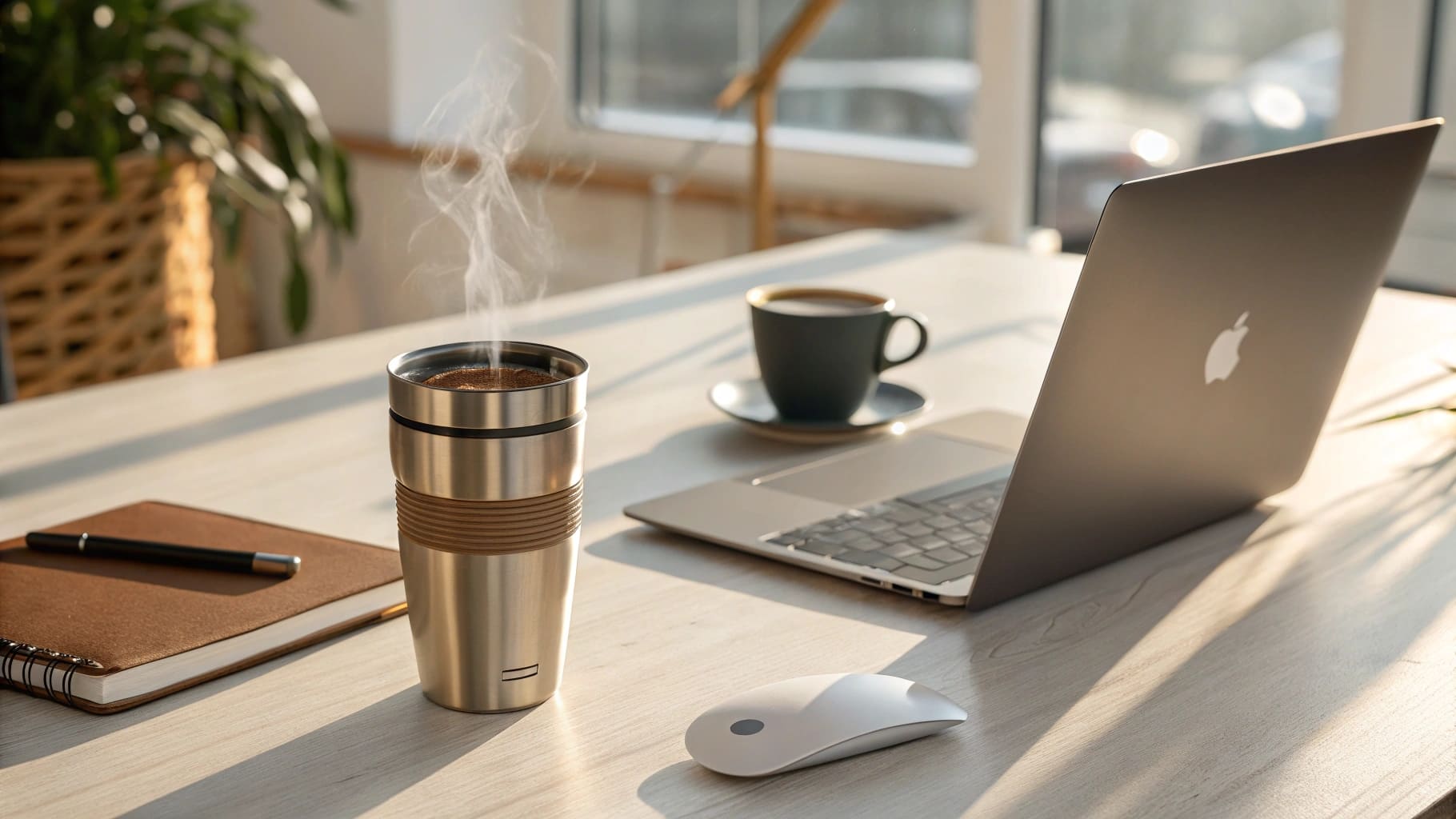
I have sourced stainless steel tumblers for years. Most suppliers talk about "hot and cold performance." Very few back it up with real test data. This post breaks down what thermal performance actually means, how to measure it, and what to check before placing a bulk order.
Who Makes the Best Insulated Tumbler?
Every supplier says they make the best tumbler. You cannot know that until you test one. And by then, your deposit is already paid.
The best insulated tumbler comes from a manufacturer with documented thermal test results, consistent vacuum sealing processes, and traceable material grades2. No single brand name guarantees quality. The process and materials behind the product do.
What Separates a Good Manufacturer from a Great One?
I have visited factories and reviewed dozens of supplier proposals over the years. The difference between average and top-tier manufacturers usually comes down to three things: material grade, vacuum sealing quality control, and third-party testing.
Most suppliers use 304 stainless steel, which works well for standard water and coffee applications. A smaller number offer 316 stainless steel. The difference matters if your end customers are in coastal markets or drink acidic beverages like juice or sports drinks. 316 steel resists corrosion better and lasts longer3. This directly reduces warranty claims on your end and protects your brand reputation in the long run.
Vacuum sealing is where most manufacturing defects happen. Even a tiny gap in the seal destroys thermal performance across an entire batch. A strong manufacturer tests vacuum integrity at multiple points during production, not just at the final inspection stage. Ask your supplier how they catch defects mid-process. If they cannot answer clearly, that is a problem.
| Factor | 304 Stainless Steel | 316 Stainless Steel |
|---|---|---|
| Corrosion Resistance | Good | Excellent |
| Best For | Water, coffee, general use | Acidic drinks, coastal markets |
| Cost | Standard | Higher |
| Warranty Risk | Moderate | Lower |
Third-party lab reports are the clearest signal of a reliable supplier. I always request these before committing to a bulk order. If a supplier cannot produce an independent test report, I treat that as a red flag. Certificate fraud is a real problem in this space, and independent verification is the only way to protect yourself from it.
Why Is It Easier to Hold a Steel Tumbler With Cold Milk Than One With Hot Milk?
You pick up a tumbler filled with hot coffee and the outside feels warm. You pick up one with cold milk and it stays dry and room temperature. That difference is not random. It tells you a lot about how well the insulation actually works.
With a quality vacuum-insulated tumbler, the outer wall stays close to room temperature regardless of what is inside4. Cold drinks create almost no heat transfer to the outside surface. Hot liquids would heat the outer wall very fast in a single-wall metal container, but vacuum insulation blocks that transfer almost completely.
How Vacuum Insulation Changes the Physics
The space between the inner and outer wall of a double-wall tumbler contains near-zero air. Heat moves through air easily. Without air, heat has almost no path to travel from the inside wall to the outside wall5. This is the core principle that makes vacuum insulation work in both directions.
This is why a good tumbler stays dry when filled with cold milk. The outer surface does not drop below the dew point of the surrounding air, so condensation does not form6. It is also why the outside does not get dangerously hot when the tumbler is filled with boiling water.
For B2B buyers, the outer wall temperature differential is a measurable and testable metric. When a tumbler is filled with a hot liquid, the outer surface should not rise more than 10 to 15°F above room temperature. If it does, the vacuum seal has a problem. This single check tells you more about insulation quality than most supplier spec sheets ever will.
| Scenario | Single-Wall Steel | Double-Wall Vacuum |
|---|---|---|
| Hot liquid inside | Outer wall gets very hot | Outer wall stays near room temperature |
| Cold liquid inside | Condensation forms on outer wall | No condensation |
| Heat transfer rate | High | Very low |
| Safe to handle | Risky with hot drinks | Safe in both cases |
I once received a sample batch where the outer wall got noticeably warm within ten minutes of filling with hot water. That batch failed the thermal check and I did not proceed with the order. Catching this early on a sample saved me from a much bigger problem with a full production run.
Are Tumblers Good for Cold Drinks?
Most people associate tumblers with hot coffee. But cold performance is equally important for your end customers. If someone fills a tumbler with iced water and it warms up in two hours, they will not buy again and they will not recommend your brand.
A well-made insulated tumbler keeps cold drinks below 45°F for six hours or more. This depends on the same vacuum insulation that handles hot liquids. The physics work equally well in both directions when the manufacturing is done right.
Cold Retention Metrics You Should Test Before Buying
Cold performance is easy to test yourself and easy to fake on paper. I always run my own sample tests alongside any lab report a supplier provides. The two should match. When they do not, that tells you something important about how that supplier operates.
The test I use is simple. Fill the tumbler with water at 35°F. Leave it at room temperature, around 70°F. Check the internal temperature at two hours, four hours, and six hours. A quality tumbler should stay below 45°F at the six-hour mark. Anything above that signals weak insulation or a compromised seal.
| Time Mark | Cold Retention Standard | What Failure Looks Like |
|---|---|---|
| 2 hours | Below 40°F | Above 45°F |
| 4 hours | Below 43°F | Above 50°F |
| 6 hours | Below 45°F | Above 55°F |
There are a few other factors that directly affect cold retention in bulk orders. The lid seal matters just as much as the wall insulation7. A loose or poorly fitted lid lets warm air in and cold air out, and no amount of vacuum insulation in the walls can compensate for that. I check lid fit and seal quality on every sample I receive before approving any batch.
The volume of the tumbler also plays a role. A larger tumbler holds more liquid, which has more thermal mass and stays cold longer than a smaller one with the same wall construction. If your target market includes people using tumblers for full-day hydration or outdoor use, a 30oz or 40oz size will perform better in real-world conditions than a 12oz version with identical wall quality.
For B2B buyers targeting the premium end of the market, I recommend requesting both hot and cold retention reports from an independent laboratory, not just the supplier's own internal test results. The cost of this step is small compared to the cost of a bad batch reaching your customers and damaging the brand you have worked to build.
Conclusion
Thermal performance is measurable. Focus on retention metrics, material grade, and independent test data. That protects your brand, your buyers, and your bottom line.
-
"[PDF] Vacuum insulation panel core materials and modelling the thermal ...", https://dr.lib.iastate.edu/bitstreams/f77c7126-f49f-4b7f-b58d-7f1c941b1f20/download. Controlled thermal-retention tests of vacuum-insulated drinkware can document whether a container maintains specified hot and cold liquid temperatures over a multi-hour interval; this supports the use of time-temperature benchmarks rather than brand claims. Evidence role: statistic; source type: research. Supports: A quality insulated tumbler can maintain hot drinks above 140°F and cold drinks below 45°F for about six hours under controlled conditions.. Scope note: The source would support the benchmark only under stated test conditions such as starting temperature, ambient temperature, fill volume, and lid position; it would not prove all tumblers meet the benchmark. ↩
-
"Metrological Traceability: Frequently Asked Questions and NIST Policy", https://www.nist.gov/metrology/metrological-traceability. Quality-management standards and guidance on traceability describe documented testing, process control, and material traceability as mechanisms for ensuring repeatable product quality. Evidence role: expert_consensus; source type: institution. Supports: Manufacturers with documented test results, controlled sealing processes, and traceable material grades are better positioned to deliver consistent product quality.. Scope note: Such standards support the general procurement principle; they do not establish that any specific tumbler manufacturer is superior. ↩
-
"Study of the Corrosion Resistance of Type 304L and 316 Austenitic ...", https://www.academia.edu/33778701/Study_of_the_Corrosion_Resistance_of_Type_304L_and_316_Austenitic_Stainless_Steels_in_Acid_Chloride_Solution. Materials-engineering sources explain that 316 stainless steel contains molybdenum and generally has greater resistance to chloride-induced corrosion than 304 stainless steel. Evidence role: mechanism; source type: education. Supports: 316 stainless steel has better corrosion resistance than 304 stainless steel, particularly in chloride-rich or coastal environments.. Scope note: The source supports improved corrosion resistance, especially in chloride environments; service life still depends on exposure, cleaning, fabrication, and use conditions. ↩
-
"Vacuum flask - Simple English Wikipedia, the free encyclopedia", https://simple.wikipedia.org/wiki/Vacuum_flask. Descriptions of vacuum flasks state that the evacuated layer between walls reduces heat transfer, helping keep the exterior surface nearer to ambient temperature than a single-wall metal container. Evidence role: mechanism; source type: encyclopedia. Supports: A well-made vacuum-insulated tumbler should have a much smaller exterior temperature change than a single-wall metal container.. Scope note: The degree to which the outer wall remains near room temperature depends on lid design, fill temperature, ambient conditions, wall thickness, and vacuum quality. ↩
-
"[PDF] Chapter 11. How Thermal Energy is Transferred", https://web.phys.ksu.edu/fascination/Chapter11.pdf. Heat-transfer texts explain that a vacuum suppresses conduction through gases and eliminates convection, leaving radiation and solid contact points as the main remaining heat-transfer paths. Evidence role: mechanism; source type: education. Supports: Removing air from the wall gap greatly reduces conductive and convective heat transfer in an insulated tumbler.. Scope note: The phrase “almost no path” is simplified; heat can still move by radiation and through structural bridges such as the neck, base, or lid. ↩
-
"Learning Lesson: Drawing Conclusions - Dew Point Temperature Map", https://www.noaa.gov/jetstream/dew-point-temperature-map. Meteorological and thermodynamics references define dew point as the temperature at which air becomes saturated and water vapor condenses on a cooler surface. Evidence role: definition; source type: government. Supports: Condensation forms when a surface falls below the dew point, so an insulated tumbler avoids sweating if its exterior remains above that temperature.. Scope note: This supports the condensation mechanism generally; actual condensation also depends on local humidity, airflow, and surface temperature variation. ↩
-
"Vacuum flask - Wikipedia", https://en.wikipedia.org/wiki/Vacuum_flask. Studies and technical explanations of vacuum flasks note that heat loss can occur through non-vacuum components such as the cap, neck, stopper, or openings, making closure design important to overall thermal retention. Evidence role: mechanism; source type: research. Supports: Lid seal and closure design materially affect the thermal performance of an insulated tumbler.. Scope note: The source supports the importance of lid and neck heat paths; whether the lid matters “just as much” as the wall insulation depends on the specific tumbler design. ↩
