
Bottle cleaning brushes for OEM: bristles, tip guards, MOQ, and cartons in 2026?
I see buyers add cheap brushes to premium bottles, then complaints start. Loose bristles hurt trust. A simple OEM checklist keeps the kit clean and profitable.
For OEM bottle cleaning brushes, I check bristle material, tip guard shape, handle strength, MOQ, carton weight, HS code, and replacement plan before I quote. These points control customs cost, cleaning result, damage rate, shipping space, and repeat orders for stainless steel bottle kits.
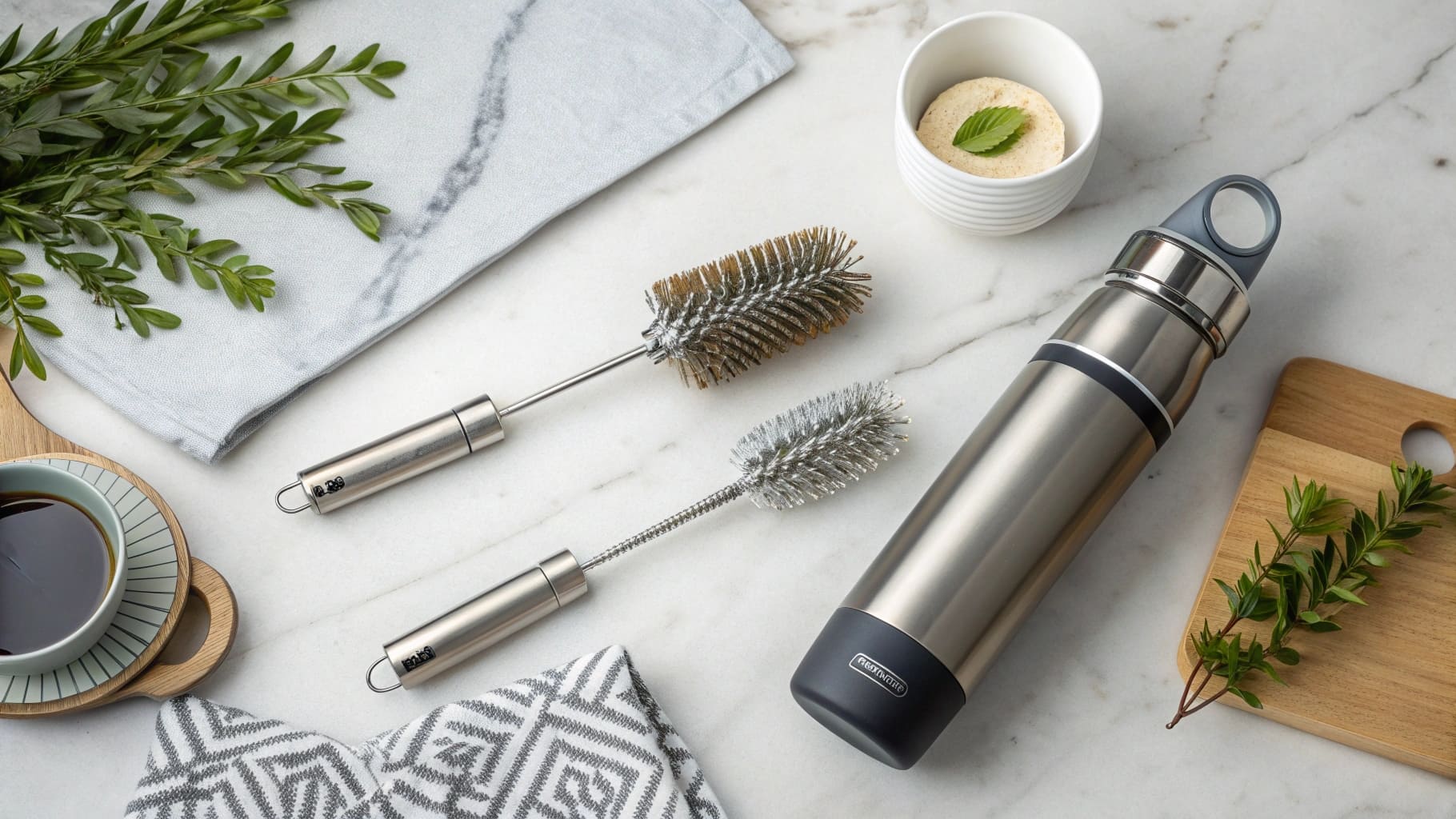
I treat bottle brushes as small products with large business impact. I have seen buyers spend weeks on bottle shape, logo color, and cap design, then choose the brush in five minutes. I do not think this is safe. A brush touches the inside of the bottle. It also touches the buyer’s brand promise. If the brush bends, sheds, smells, breaks in the carton, or clears customs under the wrong code, the whole kit looks weak. I look at bristles, silicone heads, tip guards, MOQ, carton packing, and documents together, because one weak point can damage the full order.
What is the HS code for cleaning brushes?
I see customs delays start with one wrong code. The brush looks simple. The cost becomes serious when the carton waits at port.
I normally see bottle cleaning brushes declared under HS code 9603.90 or 9603.29, based on design and use. I always ask my forwarder and my buyer to confirm the final import code before mass shipment, because local customs can read the same brush in different ways.
How I check the HS code before production
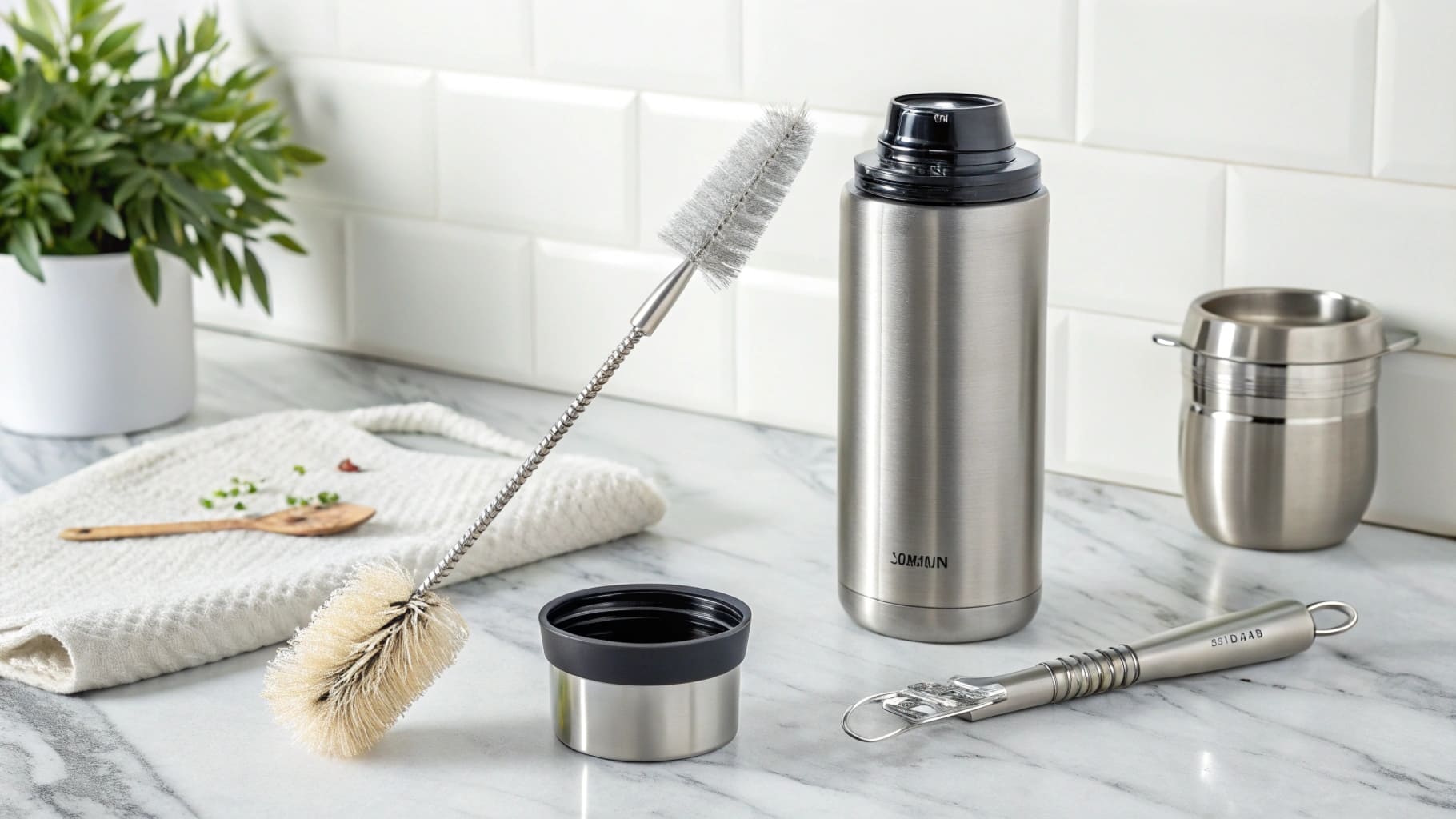
I do not treat the HS code as a small office detail. I treat it as part of the buying cost. When I prepare an OEM quote for bottle cleaning brushes, I first look at the brush structure. A long bottle brush with nylon bristles, a stainless steel core, and a hanging loop may be treated differently from a short hygiene brush or a silicone cleaning tool. I also check how the buyer plans to sell it. A brush sold as part of a stainless steel water bottle kit may need clear wording on the invoice, packing list, and carton marks.
| Item I check | Why I check it | What I ask before shipment |
|---|---|---|
| I check the brush type | The code can change by use and build | I ask if the brush is sold alone or in a kit |
| I check the material | Nylon, silicone, steel, and plastic may affect documents | I ask for material details on the product sheet |
| I check the import market | Canada, America, and Europe may read codes differently | I ask the buyer to confirm with the local broker |
| I check the invoice wording | A vague name can slow customs | I use a clear name like bottle cleaning brush |
| I check carton data | Customs and freight teams need matching details | I confirm carton size, weight, and quantity |
I prefer to confirm the code before the sample order becomes a mass order. I have learned this from real export work. A buyer may focus only on unit price, but a small duty gap can change the landed cost when the order is large. I also ask the supplier to keep the same product name across quotation, proforma invoice, packing list, and commercial invoice. I do this because mismatched words can create questions at customs. For OEM buyers, I suggest keeping one product file with the HS code, brush photo, material list, carton data, and test record. This file saves time when the same brush is reordered.
How often are you supposed to replace bottle brushes?
I see old brushes create hygiene doubts fast. A bottle can be premium, but a worn brush can make the whole brand feel careless.
I recommend replacing nylon bottle brushes every three to six months under regular use1. I set a longer life claim for high-grade silicone only after testing. For branded kits, I print care advice clearly, because brush replacement can reduce complaints and also create repeat sales.
How I turn replacement into a better OEM plan
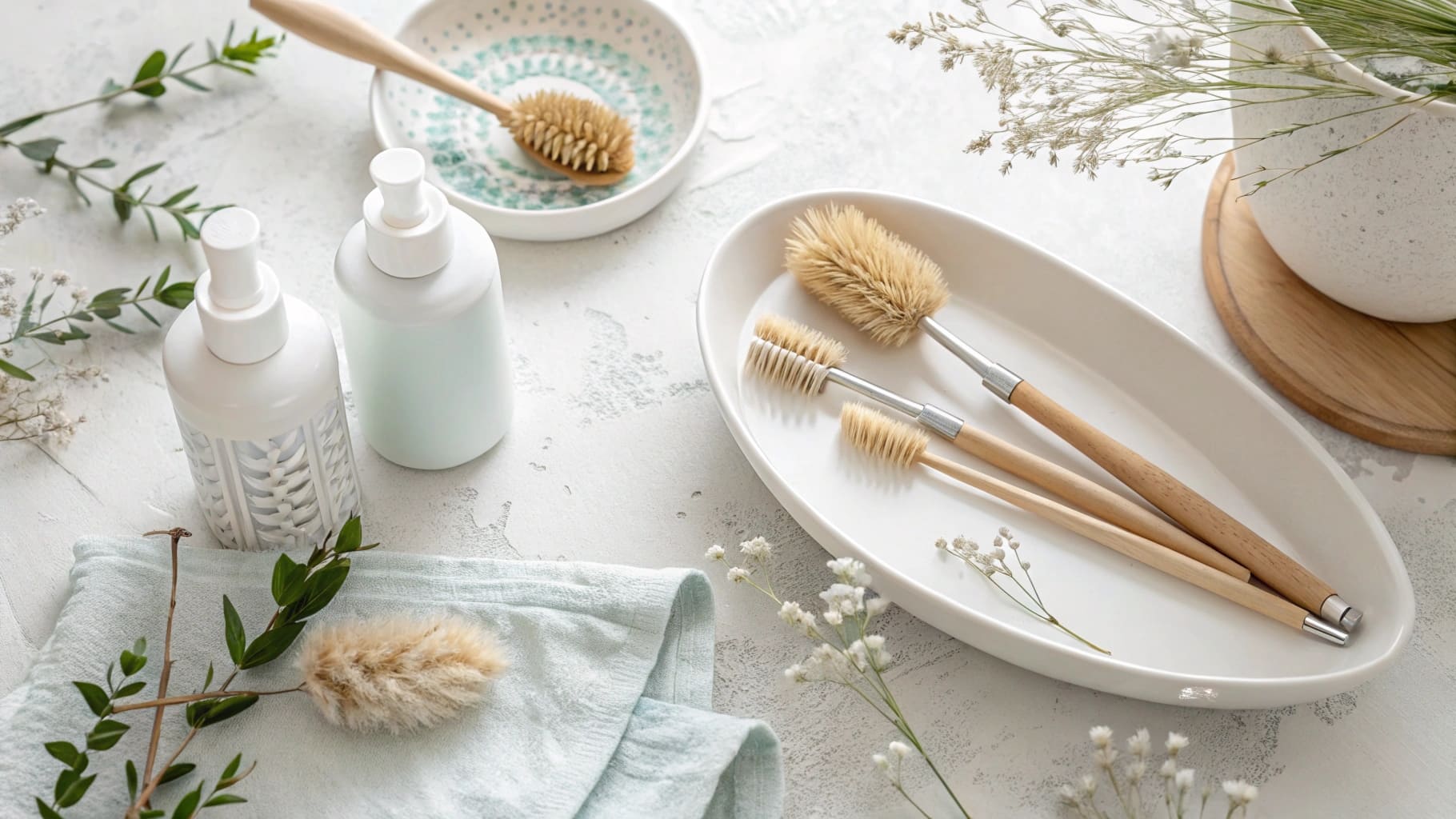
I do not see replacement advice as only a user care note. I see it as part of the product plan. When I supply stainless steel water bottles with cleaning brushes, I ask what kind of customer will use the kit. A gym user who drinks protein shakes may wear out a brush faster than an office user who drinks water only. A coffee user may need a brush that handles oil and smell2. Hard water can also make a brush look old sooner3. So I do not use one promise for every project.
| Use case I consider | Brush stress level | Replacement message I would print |
|---|---|---|
| I see daily water use | Low to medium | I suggest changing the brush every few months |
| I see coffee or tea use | Medium | I suggest rinsing and drying after each use |
| I see protein shakes | High | I suggest earlier replacement if smell remains |
| I see travel and outdoor use | High | I suggest storing the brush dry |
| I see office gift kits | Low | I keep the message simple and clean |
I also connect replacement plans with MOQ. If a buyer wants to sell a bottle kit with one brush inside, I may suggest extra brushes as an add-on pack. This can help the buyer create repeat sales. Some buyers ask for a small first order, but the brush factory may need a higher MOQ for custom color, custom handle, or printed paper card. I explain this early. I do not want the buyer to discover it after the bottle order is ready.
Cartons matter here too. A long brush can bend if the carton is too soft or too full. I ask for inner bags, fixed bundling, and a carton layout that protects the brush head. I also check carton weight, because weak cartons can deform during sea shipment. When I approve a sample, I also look at the packed sample. I care about the brush after it travels, not only when it sits nicely on a desk.
Do silicone bottle brushes actually work?
I see buyers choose silicone because it sounds modern. But a weak silicone brush only looks clean. It may leave oil and residue inside.
I find silicone bottle brushes work when the head has enough firmness, edge contact, and reach. Good silicone can remove coffee oil and shake residue without scratching stainless steel4. Weak silicone only moves dirt around. I test samples with real stains before I approve any OEM order.
How I compare silicone brushes with nylon bristle brushes
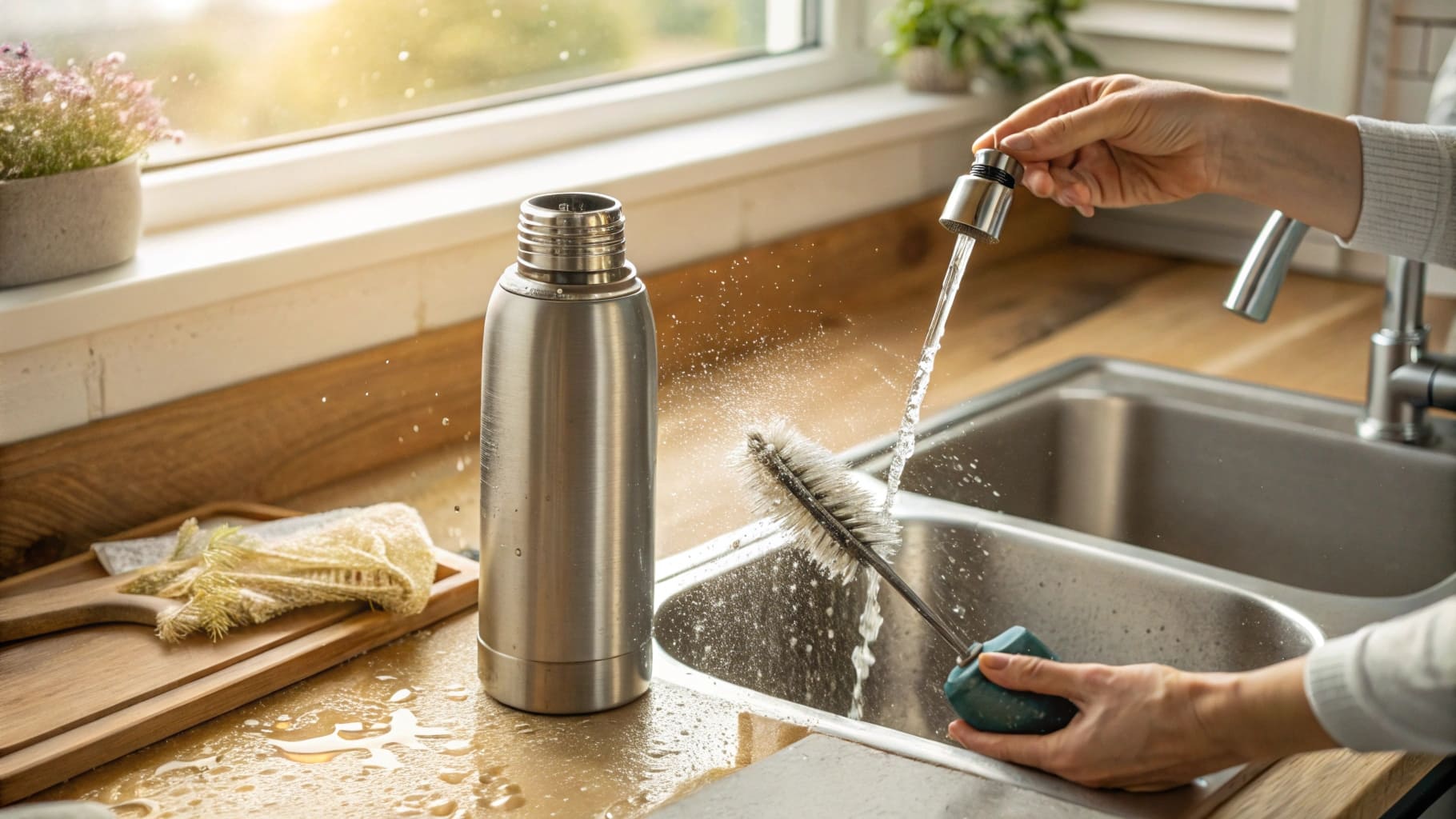
I do not think silicone is always better, and I do not think nylon is always cheaper in the real cost. I compare them by cleaning result, user feeling, life span, and brand position. A nylon bristle brush can clean very well when the bristles are dense and fixed tightly. But low-grade bristles can shed. They can also trap water and smell if the brush is stored badly. A silicone brush usually dries faster5. It can look more premium. It can also support an eco-friendly message. But the head must be designed well. If the silicone fingers are too soft, they bend away from the bottle wall.
| Brush type I test | Strong point | Risk I watch |
|---|---|---|
| I test nylon bristles | Good scrubbing power | Bristle shedding and smell |
| I test silicone heads | Fast drying and long life | Weak contact with residue |
| I test sponge tips | Soft cleaning feel | Short life and odor risk |
| I test hybrid brushes | Balanced cleaning power | Higher cost and more complex QC |
| I test steel wire cores | Better reach and bend control | Rust risk if material is poor |
Tip guards are also important. I like a rounded tip or covered end, because the brush should not scratch the inside of a stainless steel bottle. I also check the joint between the handle and head. If the head loosens after a few uses, the customer will blame the brand, not the factory. For premium buyers, I test the brush with coffee oil, fruit smoothie, and protein shake residue. I do this because clean water testing is too easy. I also ask for material statements when the brush will touch food or drink containers. I want the buyer to have clean documents, stable quality, and a product story that sales teams can explain.
For MOQ, silicone often needs more planning. Custom silicone color may need a higher minimum than standard nylon. If the buyer wants a logo on the handle, a private label card, or a custom carton, I separate each MOQ clearly. I do this so the buyer can see which part drives the cost. A clear MOQ table prevents hard talks later. It also helps a buyer like me decide whether the brush should be a gift item, a retail add-on, or part of a premium bottle set.
Conclusion
I treat OEM bottle brushes as brand tools, not free extras. I check code, cleaning power, replacement timing, MOQ, and cartons before mass production.
-
"4 Steps to Food Safety", https://www.foodsafety.gov/keep-food-safe/4-steps-to-food-safety. Research on kitchen hygiene tools has documented progressive microbial colonization of brush bristles with repeated use, supporting periodic replacement as a hygiene measure; specific replacement intervals vary across studies and depend on use frequency, cleaning practices, and bristle material. Evidence role: general_support; source type: research. Supports: Studies on kitchen cleaning tool hygiene indicate that brushes accumulate microbial contamination over time and periodic replacement is recommended to maintain sanitary conditions. Scope note: Published studies focus primarily on dish and kitchen brushes rather than dedicated bottle brushes, so the three-to-six-month figure cited in the article may not be directly corroborated by a single authoritative source. ↩
-
"Lipid analysis of Coffea arabica Linn. beans and their possible ...", https://pubmed.ncbi.nlm.nih.gov/9135777/. Food chemistry research identifies coffee as containing lipid fractions, including diterpene esters such as cafestol and kahweol palmitate, that can deposit on container surfaces and contribute to residual odors; effective removal of these lipophilic compounds requires cleaning tools capable of mechanical disruption of the adhered film. Evidence role: mechanism; source type: research. Supports: Coffee contains lipid compounds including diterpenes and triglycerides that can adhere to container surfaces and contribute to persistent odors if not fully removed during cleaning. Scope note: Studies on coffee lipid fouling focus primarily on brewing equipment and filter materials rather than reusable bottle interiors, so the direct applicability to stainless steel bottle cleaning is inferred. ↩
-
"Calcium carbonate scale control, effect of material and inhibitors", https://pubmed.ncbi.nlm.nih.gov/14982176/. Studies on hard water scaling document that calcium and magnesium carbonate deposits adhere to polymer and fiber surfaces, potentially causing stiffening of flexible bristles, surface discoloration, and reduced cleaning effectiveness over time, consistent with the observation that hard water accelerates the visible aging of cleaning tools. Evidence role: mechanism; source type: research. Supports: Hard water mineral deposits, primarily calcium and magnesium carbonates, can accumulate on polymer surfaces and fibers, contributing to stiffening, discoloration, and accelerated apparent wear. Scope note: Published research focuses primarily on scale formation on hard surfaces and appliances rather than on cleaning brush bristles specifically, so the mechanism is inferred by analogy. ↩
-
"Silicone toothbrushes: A scoping review of an underutilized tool in ...", https://pmc.ncbi.nlm.nih.gov/articles/PMC13102209/. Material science literature on silicone elastomers indicates that Shore A hardness values and surface friction coefficients govern the abrasion behavior of silicone against hard substrates such as stainless steel; lower-hardness silicone formulations are generally considered non-abrasive to polished metal surfaces under normal cleaning forces. Evidence role: mechanism; source type: research. Supports: Silicone's Shore A hardness and surface energy properties determine its abrasion potential against metal surfaces, with softer silicone formulations generally posing lower scratch risk on stainless steel. Scope note: Direct comparative studies specifically evaluating silicone bottle brush heads against stainless steel bottle interiors under realistic cleaning conditions are limited in the published literature. ↩
-
"Moisture Absorption Characteristics of Nanoparticle-Doped Silicone ... - PMC", https://pmc.ncbi.nlm.nih.gov/articles/PMC8124887/. Polymer reference data indicate that silicone elastomers have water absorption rates typically below 0.1% by weight, substantially lower than nylon 6 or nylon 6,6 which can absorb 1–3% or more under saturated conditions, a difference that supports faster drying behavior for silicone-based cleaning tools. Evidence role: mechanism; source type: research. Supports: Silicone polymers exhibit very low water absorption compared to nylon, which contributes to faster surface drying after water exposure. Scope note: Drying time in practical use also depends on brush geometry, ambient humidity, and airflow, so material absorption data alone do not fully predict real-world drying performance. ↩